

Best Time for Women Safaris in Uganda
May 1, 2026
How Mother Gorillas Carry Out Their Responsibilities
May 2, 2026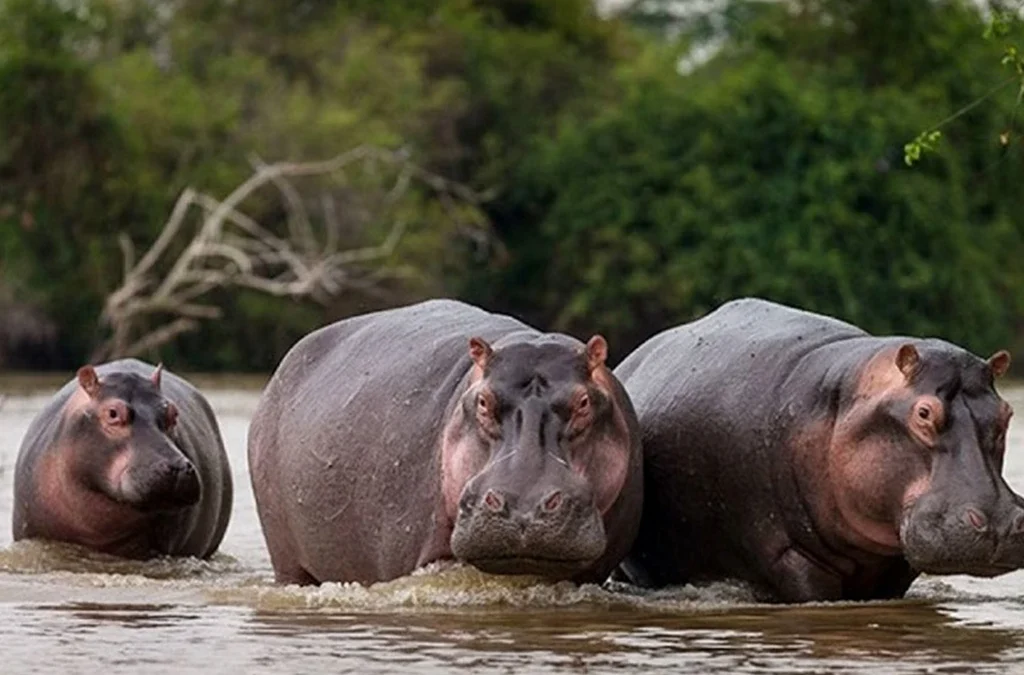
A hippo’s day may look peaceful at first glance. You’ll often find them half-submerged, with only their eyes, ears, and nostrils visible above the water. They drift slowly through rivers and lakes, barely moving, as if time itself has slowed down. However, that calm surface hides a very different reality. Hippos rank among Africa’s most territorial and powerful animals. Watching them in the wild reveals a fascinating mix of social behavior, raw strength, and quiet dominance.
During my travels across Uganda, I quickly realized that hippos are not rare sightings. In fact, they are one of the most reliable animals to encounter on a safari, especially around the country’s major water systems. Still, where you choose to go makes a big difference in how you experience them.
Murchison Falls National Park: Where the Nile Belongs to Hippos
Murchison Falls National Park offers one of the most dramatic settings to observe hippos in Uganda. Here, the Nile River cuts through the landscape, creating wide channels, calm pools, and powerful currents. As you approach the stretch between Paraa and the base of the falls, the presence of hippos becomes unmistakable.
I remember the first time I joined a boat cruise along this section. The air filled with low grunts and occasional splashes long before I saw the animals themselves. Then, suddenly, dozens of rounded backs appeared across the water. Some remained still, while others shifted position, nudging each other in tightly packed groups known as pods.
Boat cruises provide the best way to experience hippos here. They bring you close enough to appreciate their size and behavior without putting you at risk. At the same time, the surrounding scenery—riverbanks dotted with elephants, buffaloes, and birds—adds depth to the experience. It feels alive, layered, and constantly changing.
Queen Elizabeth National Park: A Gathering Along Kazinga Channel
If Murchison feels expansive, Queen Elizabeth National Park offers something more concentrated. The Kazinga Channel, which connects Lake George and Lake Edward, supports one of the highest densities of hippos in Africa. This narrow waterway becomes a stage where hippos gather in remarkable numbers.
As the boat moves slowly along the channel, you begin to notice how tightly packed the animals are. Their bodies press against each other, leaving little space between pods. Occasionally, a hippo opens its massive jaws in a display that feels both lazy and threatening. At other times, you’ll witness brief moments of tension—water churning, heads colliding, and loud grunts echoing across the channel.
Early morning light enhances the entire scene. It reflects off their wet skin, giving them a polished, almost sculptural look. Birds add another layer of life. I often spotted herons and oxpeckers resting comfortably on the backs of hippos, completely at ease despite the size and strength beneath them.
During the dry season, the experience intensifies. As water levels drop, hippos cluster even closer together. This creates more interaction, more noise, and occasionally more conflict. It’s one of the few places where you can truly sense the social structure of these animals in action.
Lake Mburo National Park: A Quieter, Closer Encounter
For a more relaxed and intimate experience, Lake Mburo National Park offers a different perspective. Unlike the larger parks, Mburo feels quieter and less crowded. Its network of lakes and wetlands provides a calm environment where hippos move between feeding and resting areas with less disturbance.
I found that hippo sightings here feel more personal. Instead of large, noisy pods, you often encounter smaller groups near the edges of the water, especially around papyrus swamps and sandy shores. The atmosphere feels gentler, shaped by birdsong and the occasional call of a fish eagle overhead.
Because the park is compact, you don’t need long hours to find hippos. Evening and early morning walks near the lakes sometimes reveal them returning from grazing or settling into the water for the day. It’s a slower, more reflective experience, ideal for travelers who prefer a quieter connection with nature.
Other Places to Spot Hippos in Uganda
Beyond the well-known parks, hippos appear in several other parts of Uganda. Lake Albert and Lake Kyoga both support healthy populations, although sightings there tend to feel less structured and more dependent on timing.
Near Jinja, along the Nile River, hippos occasionally surface in calmer sections away from strong currents. While they are not the main attraction in this area, spotting one unexpectedly adds excitement to any river-based activity.
Wetland regions also offer interesting combinations of wildlife. In places like Mabamba Swamp, hippos sometimes share habitats with rare bird species. Although they are not always the focus, their presence highlights the richness of Uganda’s aquatic ecosystems.
Why Hippos Matter to Uganda’s Ecosystems
At first, hippos may seem like passive animals, but they play an active role in shaping their environment. Each night, they leave the water to graze on grass across nearby floodplains. As they move and feed, they redistribute nutrients back into the water through their waste.
This natural process supports fish populations and encourages the growth of aquatic plants. In many ways, hippos act as ecosystem engineers, quietly maintaining the balance of life in rivers and lakes.
However, their presence also creates challenges. As human populations expand closer to wetlands, encounters between hippos and local communities become more frequent. Crops can be damaged, and fishermen sometimes face risks when working in shared waters.
Efforts to manage this balance continue across Uganda. Conservation programs aim to protect hippo habitats while supporting communities that live alongside them. Responsible tourism plays a role here as well. When visitors respect wildlife guidelines and support conservation-focused initiatives, they contribute to long-term sustainability.
The Best Time to See Hippos in Uganda
Timing influences how you experience hippos. During the dry seasons, from December to February and June to August, water levels drop across many regions. As a result, hippos gather in smaller, concentrated pools, making them easier to find and observe.
Even within a single day, certain hours stand out. Early mornings and late afternoons bring more activity. At these times, hippos communicate, shift positions, and prepare for their nightly grazing. The softer light also makes it easier to see details—ripples in the water, subtle movements, and interactions within the group.
Midday, on the other hand, tends to be quieter. Most hippos remain still, conserving energy under the heat of the sun. While sightings are still possible, the experience feels less dynamic.
Experiencing Hippos Responsibly
Watching hippos in the wild requires respect and awareness. Although they may look calm, they can react quickly if they feel threatened. Keeping a safe distance, especially on boat cruises, ensures both your safety and the well-being of the animals.
Guides and rangers play an important role in this. They understand hippo behavior and know how to approach them without causing stress. Listening to their instructions enhances the experience and helps protect these animals for future visitors.
Ultimately, seeing hippos in Uganda goes beyond simply ticking off a wildlife checklist. It becomes a moment of connection with one of Africa’s most iconic species. Whether you encounter them along the Nile, in the crowded waters of Kazinga Channel, or in the corners of Lake Mburo, each sighting offers a reminder of how alive and interconnected these ecosystems truly are.


