
How Mother Gorillas Carry Out Their Responsibilities
May 2, 2026
Why Tourists Visit Bwindi Impenetrable National Park
May 4, 2026
The first time I heard a lion roar in the wild, it didn’t feel like just a sound it felt like a force. It rolled across the savannah, deep and powerful, echoing through the vast wilderness of Queen Elizabeth National Park in Uganda. In that moment, one thing became unmistakably clear: lions don’t just communicate they command attention.
Although often called the “king of the jungle,” lions don’t live in jungles at all. Instead, they thrive in open savannahs and grasslands. In Uganda, they are most famously found in Queen Elizabeth National Park, particularly in the Ishasha sector, as well as Murchison Falls National Park and Kidepo Valley National Park. Despite habitat loss and human pressure reducing their historical range, their complex communication system remains one of the most fascinating in the animal kingdom.
Life Inside a Pride in Uganda’s Wilderness
To understand how lions communicate, you first need to understand how they live. Unlike most cats, lions are highly social animals. In Uganda’s national parks, they form close-knit family groups known as prides, usually made up of related females, their cubs, and a coalition of one or more males.
Lionesses form the backbone of the pride. In places like Kasenyi plains (Queen Elizabeth National Park) and the open savannahs of Murchison Falls, they hunt together, raise cubs collectively, and maintain strong social bonds.
Male lions live a different life. When young males reach about two to three years old, they are pushed out of the pride. In Uganda’s vast landscapes, these nomads roam widely, sometimes forming coalitions with brothers. Over time, they attempt to take over existing prides especially in lion-rich areas like Ishasha, famous for its tree-climbing lions.
In such a competitive and dynamic environment, communication is not optional it’s essential for survival.
The Language of Sound Across Uganda’s Savannahs
Lions use a wide range of vocalizations, each carrying a specific meaning. The most iconic, of course, is the roar.
A lion’s roar can travel up to eight kilometers, often echoing across the plains of Kidepo Valley National Park or along the Nile in Murchison Falls National Park. Male lions use it to declare territory, warn rivals, and attract females. When you hear it during a night game drive, it sends a clear message: this land is occupied.
But roaring is just one part of their communication. Lions also grunt, growl, snarl, hiss, and even purr. Softer contact calls help pride members locate each other especially useful in tall grasslands like those found in Queen Elizabeth National Park.
Sometimes, entire prides roar together. This chorus reinforces unity and strength, with even cubs joining in using high-pitched calls as they learn the language of survival.
Silent Coordination During the Hunt
When lions hunt in Uganda’s national parks, silence becomes their greatest weapon.
On the open plains of Kasenyi or the remote valleys of Kidepo, hunts begin with subtle visual cues. One lion spots prey often Uganda kob, buffalo, or warthog and others follow its gaze. Without a sound, they spread out, taking strategic positions.
Some circle behind while others prepare for ambush. This silent teamwork allows them to execute precise and effective hunts. It’s not chaos it’s coordination built on trust, experience, and communication without words.
Scent: The Invisible Language of Territory
Beyond sound and sight, scent plays a powerful role in how lions communicate in Uganda’s wild landscapes.
Male lions mark their territory by spraying urine and scratching trees, especially along well-used paths in parks like Murchison Falls. These scent markings act as warnings to rival males while also conveying detailed information about age, strength, and reproductive status.
When lions detect these scents, they often perform the Flehmen response curling back their lips to analyze chemical signals more deeply.
Lionesses also communicate through scent, particularly when ready to mate. These pheromones can travel across distances, ensuring that communication continues even when lions are far apart.
Visual Signals That Speak Without Sound
In Uganda’s open savannahs, visibility plays a key role in lion communication.
A male lion’s mane is more than just a striking feature it’s a signal of strength and dominance. In areas like Ishasha and Kidepo, darker, fuller manes often indicate healthier and more dominant males.
Body language is equally important. A dominant lion walks confidently, head raised. A submissive lion lowers its body and avoids eye contact. These subtle signals help avoid unnecessary fights, which can be risky even for top predators.
Touch: Strengthening Bonds Within the Pride
Among pride members in Uganda’s national parks, touch reinforces social bonds.
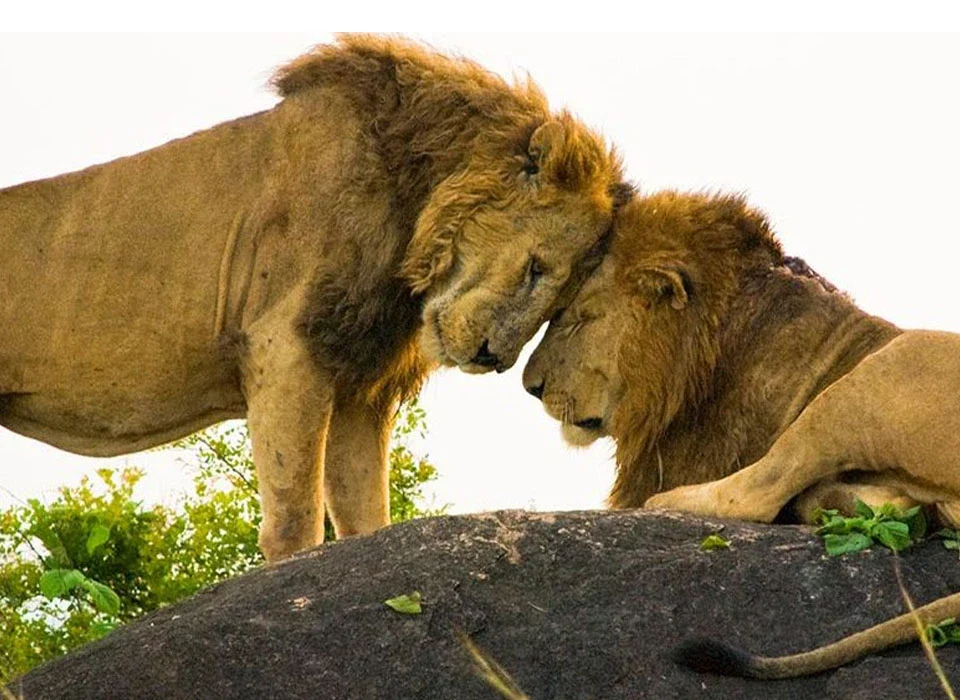
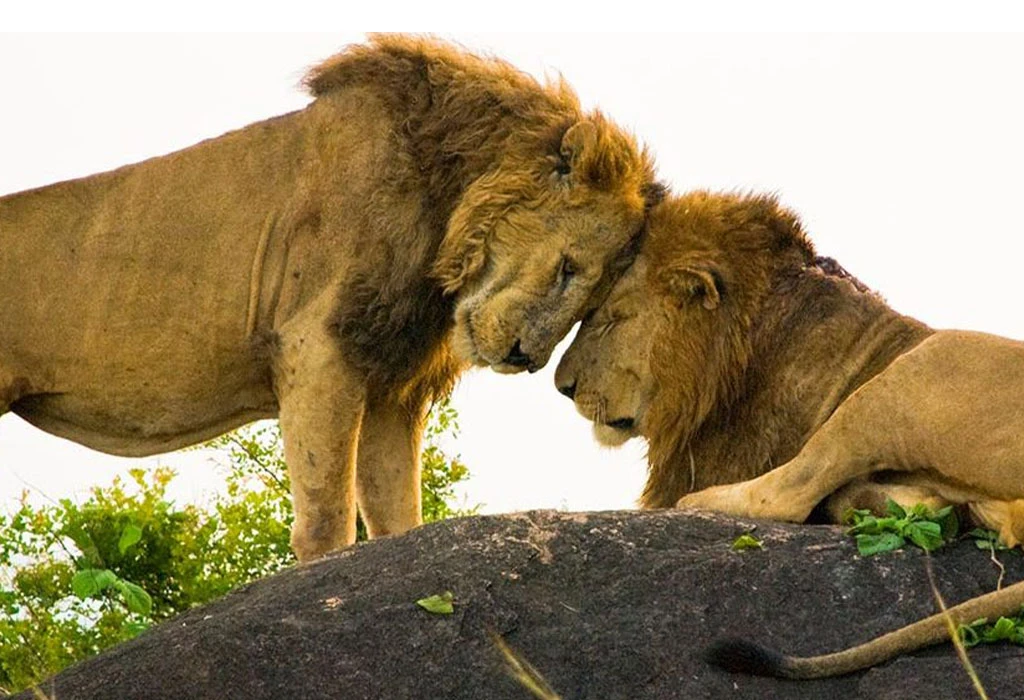
Head rubbing is a common greeting, often seen when lions reunite after time apart. In Queen Elizabeth National Park, you might spot lions nuzzling, licking, or gently brushing against each other in the early morning light.
Cubs eagerly participate, playing and rubbing against adults. Grooming also strengthens relationships, helping maintain unity within the pride.
Why Roaring Matters in Uganda’s Wild
While lions use multiple communication methods, roaring remains their most powerful tool.
In Uganda’s national parks, a strong roar acts as a warning and a declaration of dominance. Younger males roaming areas like Kidepo or Murchison Falls listen carefully, assessing whether a resident male is still strong enough to defend his pride.
If the roar weakens, it may invite a challenge. Many pride takeovers begin this way through sound before sight. It’s a constant cycle of power, shaped by communication as much as strength.