What are the major attractions in Rwanda?
October 1, 2026
Gorilla Safari in Uganda During the Rainy Season
October 1, 2026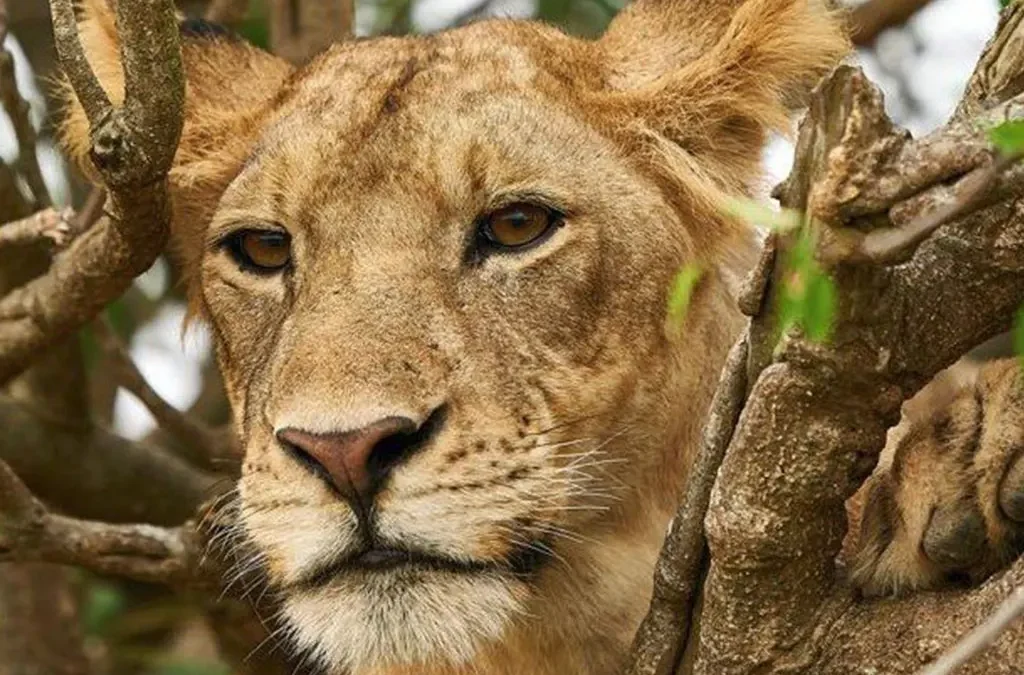
Queen Elizabeth National Park is one of Uganda’s most diverse safari destinations, and exploring the Ishasha Sector and Kazinga Channel allows travelers to experience two remarkably different sides of the park. From wildlife-filled waterways and huge hippo groups to open savannah plains and famous tree-climbing lions, these areas offer memorable experiences for both first-time and experienced safari travelers.
The Kazinga Channel is particularly famous for its concentration of hippos, crocodiles, elephants, buffaloes, and waterbirds. A boat cruise provides an easy way to watch wildlife gathering along the shoreline while enjoying beautiful views across the channel.
Ishasha, meanwhile, offers a quieter and more remote safari atmosphere. Its open grasslands, scattered fig trees, and woodland support topis, Uganda kobs, elephants, buffaloes, and the famous tree-climbing lions. Therefore, combining Ishasha and Kazinga Channel creates a more complete Queen Elizabeth National Park safari.
Discover Queen Elizabeth National Park
Queen Elizabeth National Park lies in western Uganda and protects a remarkable combination of savannah, wetlands, forests, lakes and volcanic landscapes. Because these habitats vary considerably, the park supports a wide range of mammals and birds.
One of the park’s greatest advantages is that travelers can experience several ecosystems within the same safari. The central section around Mweya and the Kazinga Channel provides excellent opportunities for game drives and boat cruises, while the southern Ishasha Sector offers a quieter wilderness experience.
The park also works well as part of a longer southwestern Uganda itinerary. After exploring the Ishasha Sector and Kazinga Channel, travelers can continue toward Bwindi Impenetrable National Park for mountain gorilla trekking.
The Kazinga Channel
The Kazinga Channel is one of the defining attractions of Queen Elizabeth National Park. The approximately 32-kilometre waterway connects Lake George with Lake Edward and provides a permanent source of water for wildlife.
As a result, animals from the surrounding grasslands frequently visit the channel to drink, bathe, feed or cool themselves. This makes the shoreline particularly productive for wildlife viewing.
A boat cruise also gives visitors a different perspective from a traditional game drive. Instead of searching across large areas of savannah, you can slowly travel along the water and observe animals gathering naturally along the banks.
Kazinga Channel Boat Cruise
The Kazinga Channel boat cruise is one of the most popular activities in Queen Elizabeth National Park. Cruises generally operate at scheduled times and take visitors along sections where wildlife is commonly concentrated.
The experience usually lasts around two to three hours. During this time, there is enough opportunity to photograph wildlife, observe birds, and enjoy the changing scenery.
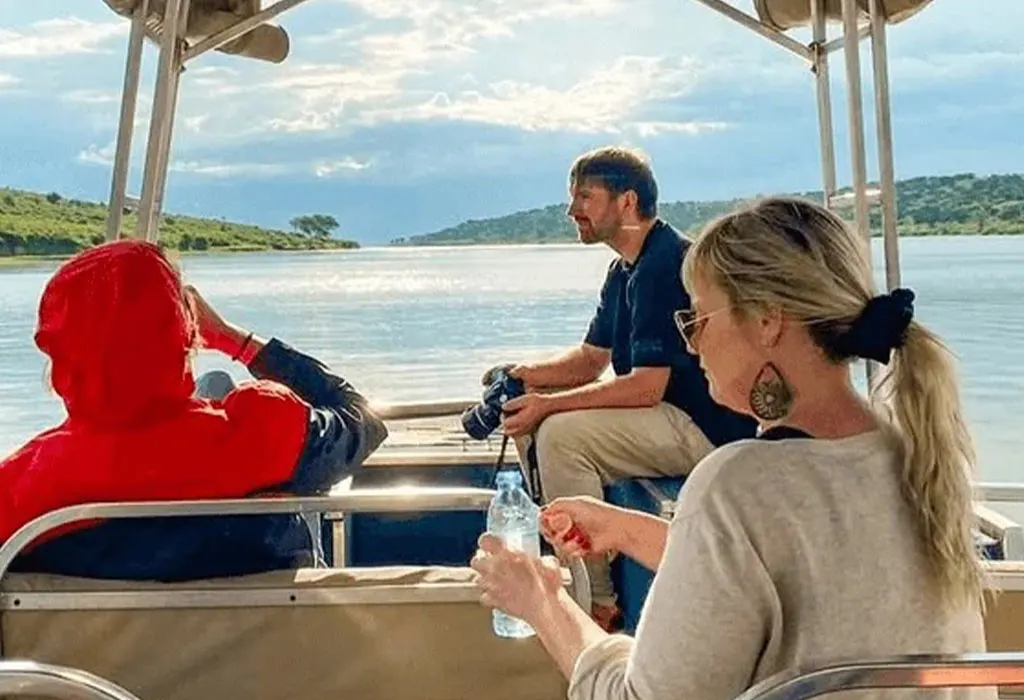
Some of the highlights may include:
- Large hippo groups resting in shallow water.
- Nile crocodiles lying along muddy banks.
- Elephants approaching the channel to drink or bathe.
- Buffaloes gathering near the shoreline.
- Waterbirds feeding around marshy sections.
However, wildlife remains unpredictable. Every cruise is different, and the exact animals you see will depend on the season, weather, and daily movements of wildlife.
Hippos Along the Kazinga Channel
Hippos are among the most noticeable animals during a Kazinga Channel boat safari. Large groups often rest partly submerged in the water, particularly during warmer periods of the day.
You may hear their distinctive calls before the boat reaches them. Once nearby, you can watch them surface, yawn, vocalize, and move through the water.
Although hippos spend much of their time in water, they remain powerful and potentially dangerous wild animals. For this reason, visitors should remain inside the boat and follow the instructions of their guide and boat crew.
Crocodiles and Other Aquatic Wildlife
Nile crocodiles are another important attraction along the Kazinga Channel. They often lie motionless on exposed banks, making them surprisingly difficult to notice until an experienced guide points them out.
Waterbucks and other antelopes may also appear near the shoreline. Depending on the season, you can see different animals moving between the water, grasslands, and nearby woodland.
This constant movement is part of what makes a Kazinga Channel wildlife experience so interesting. Rather than watching animals in a fixed setting, you observe them using an important natural water source.
Elephants and Buffaloes at the Water
Elephants can create some of the most memorable moments on the Kazinga Channel. Herds may approach the water to drink, bathe and cool themselves.
From the boat, you can sometimes watch young elephants staying close to their mothers while larger individuals enter the water. These encounters also provide excellent photography opportunities.
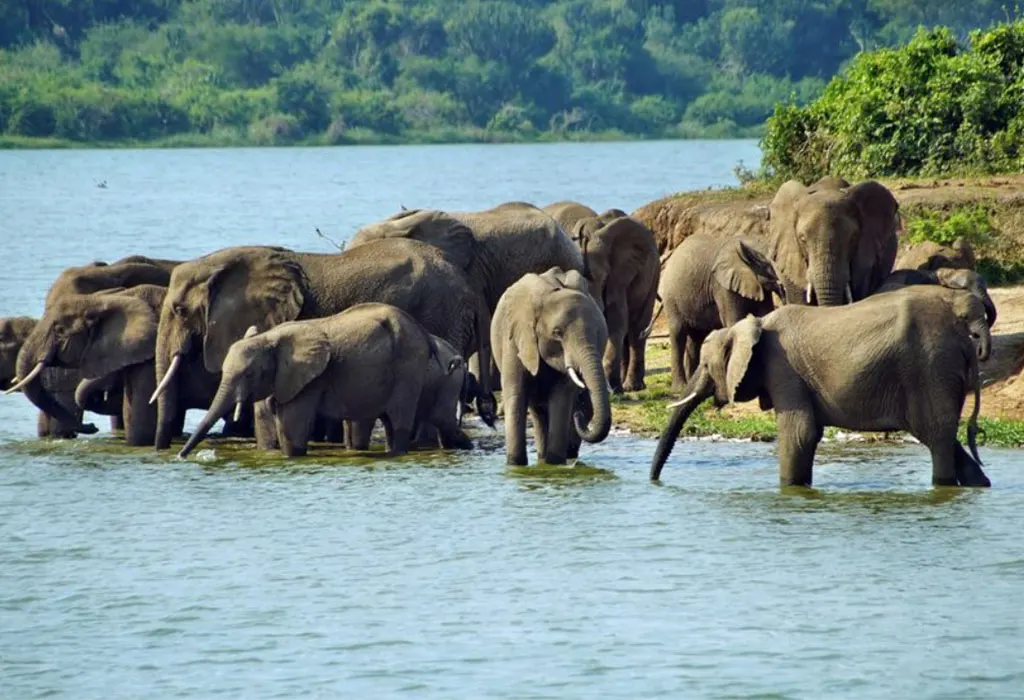
Cape buffaloes are equally impressive. Large herds may gather close to the channel, especially when surrounding water sources become less reliable during drier periods.
Seeing elephants, buffaloes, hippos and birds within the same stretch of shoreline demonstrates the ecological importance of the channel.
Birdwatching on the Kazinga Channel
The Kazinga Channel is also an excellent destination for birdwatching in Uganda. Open water, marshes, muddy banks, and surrounding vegetation create habitats for numerous bird species.
African fish eagles are among the most recognizable birds. Pied kingfishers can also be seen hovering above the water before diving for fish.
Other species you may encounter include:
- Yellow-billed storks.
- African jacanas.
- Herons and egrets.
- Various kingfishers and waders.
Bird numbers and species can vary according to season and local conditions. Carrying binoculars therefore makes the Kazinga Channel boat cruise even more rewarding.
Exploring the Ishasha Sector
After experiencing the water-based wildlife viewing around Kazinga, traveling south into Ishasha reveals a completely different side of Queen Elizabeth National Park.
The Ishasha Sector features broad savannah plains, scattered trees, woodland and riverine vegetation. Compared with the central areas of the park, it often feels quieter and more remote.
That sense of space is one of Ishasha’s biggest attractions. During a game drive, you may spend considerable time exploring the plains without encountering many other safari vehicles.
For travelers interested in wildlife photography, predator tracking and less crowded safari environments, an Ishasha Sector game drive can become one of the highlights of a Uganda safari.
The Famous Tree-Climbing Lions of Ishasha
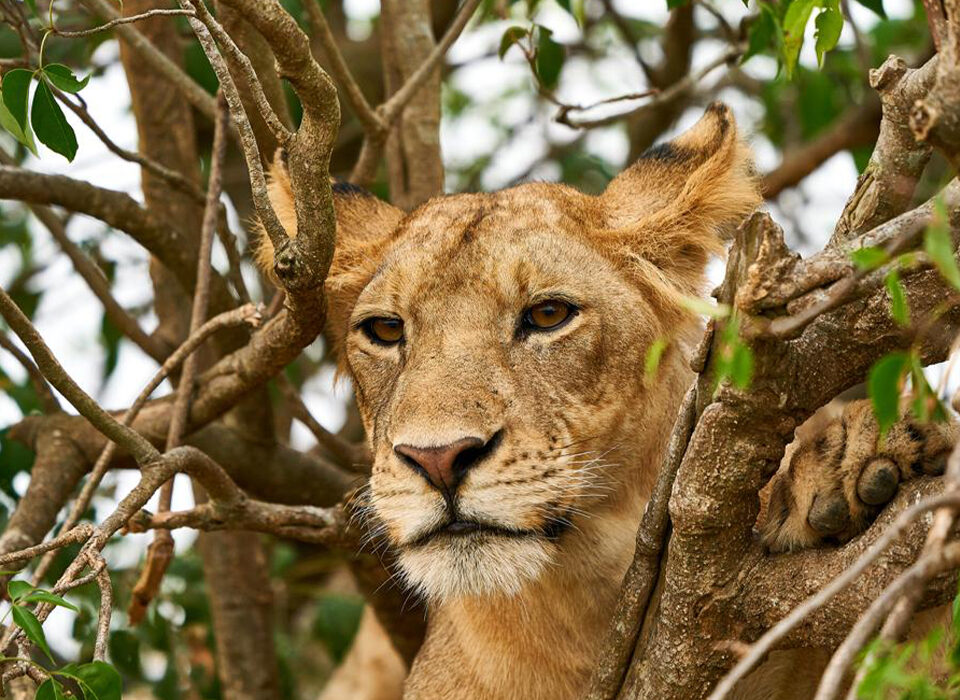
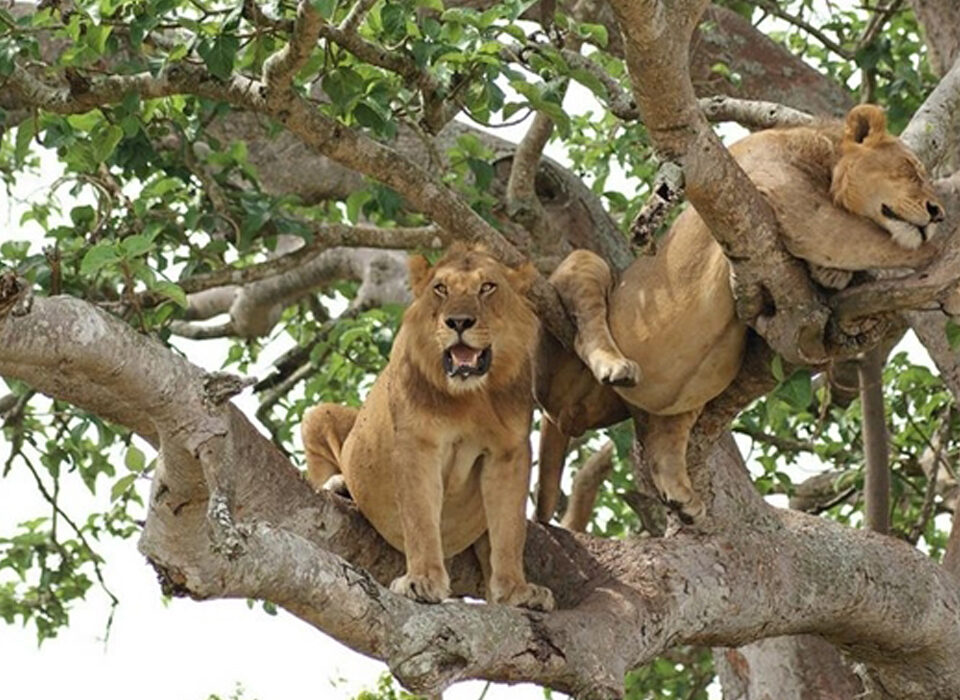
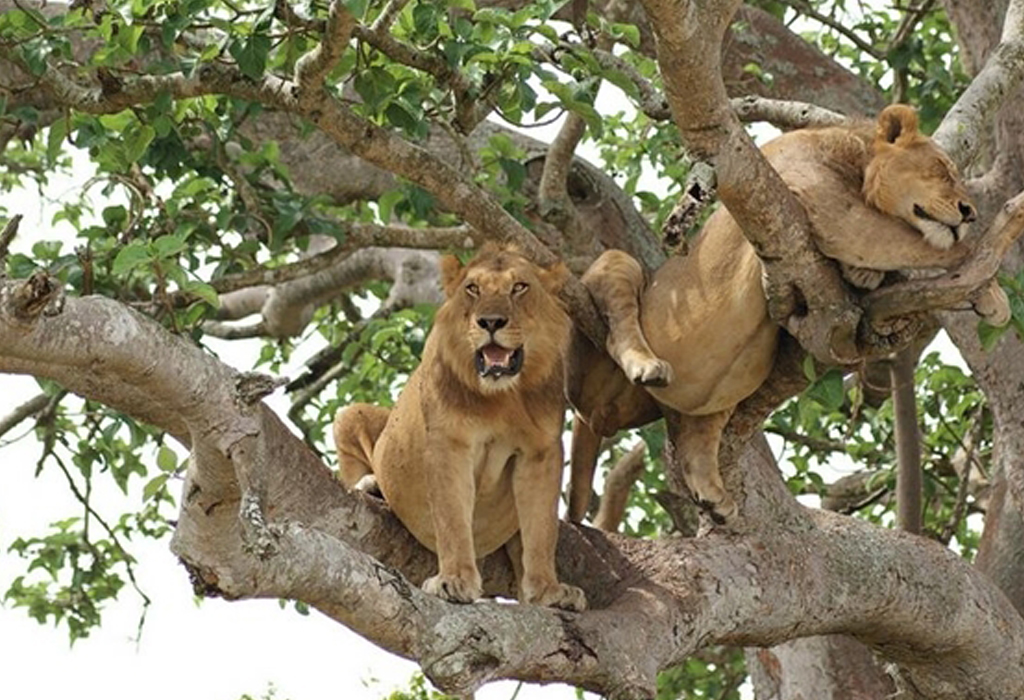
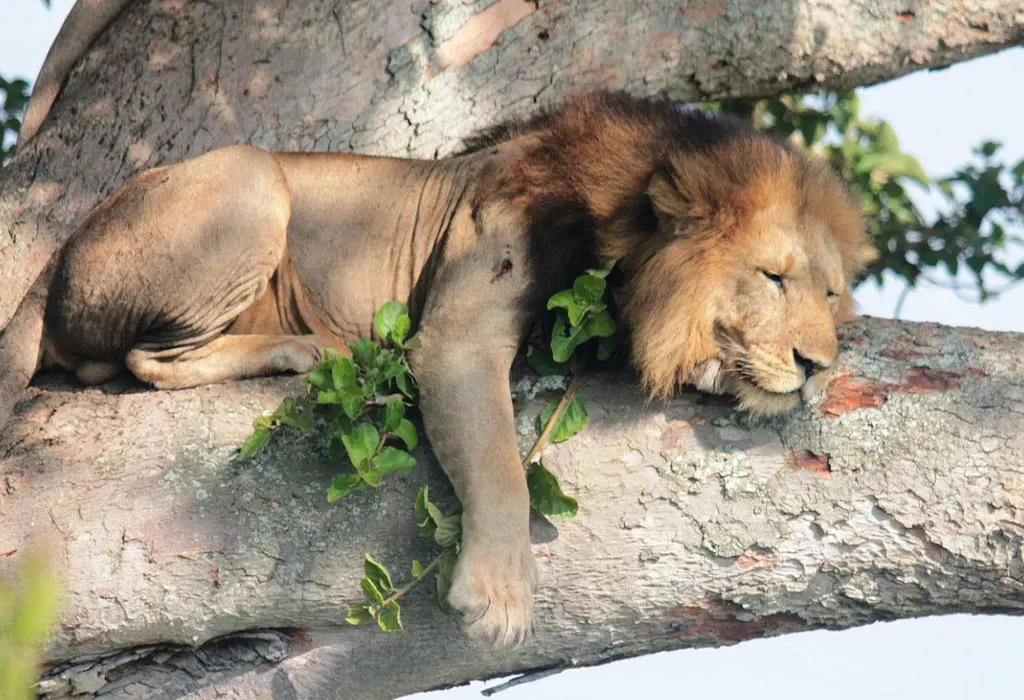
The tree-climbing lions are undoubtedly the most famous attraction in Ishasha. Lions in this area are well known for resting on branches of large fig and other trees.
Finding a lion stretched across a tree branch several metres above the ground is an unusual and memorable sight. The elevated position also gives the animals a broad view across the surrounding plains.
Researchers and wildlife observers have suggested several possible reasons for this behavior. Lions may climb trees to escape insects, catch a breeze, avoid heat at ground level, or simply find a comfortable resting place.
However, tree-climbing lions are wild animals, so sightings cannot be guaranteed. They may remain on the ground or move into areas where they are difficult to locate. A patient guide from Experiya Tour Company can help travelers understand the landscape and search for wildlife responsibly.
Wildlife Beyond the Tree-Climbing Lions
Although the lions attract considerable attention, Ishasha has much more to offer. Topis are particularly characteristic of the sector, while Uganda kobs can often be found across the grasslands.
Elephants move through the woodland and open plains, while buffaloes and other herbivores contribute to the sector’s diverse wildlife population.
Leopards also occur within the wider ecosystem, although their secretive nature makes sightings unpredictable.
Therefore, travelers should not approach an Ishasha game drive with the expectation of seeing only lions. Taking time to appreciate the landscape, antelopes, elephants and birds often creates a richer safari experience.
The Ishasha Landscape
The landscape itself makes Ishasha special. Open grasslands stretch toward woodland patches and riverine vegetation, while large fig trees provide distinctive features across the plains.
The open terrain also allows visitors to scan considerable distances for animals. During early mornings and late afternoons, softer sunlight can create excellent conditions for wildlife and landscape photography.
If your itinerary allows, spend enough time in Ishasha for a proper game drive instead of treating the sector simply as a route toward Bwindi.
Ishasha Sector and Kazinga Channel Compared
The Ishasha Sector and Kazinga Channel complement each other because they provide two different safari experiences.
The Kazinga Channel focuses on aquatic wildlife and boat-based viewing, while Ishasha offers land-based game drives through open savannah.
Kazinga Channel highlights
- Boat cruises.
- Hippos and crocodiles.
- Elephants and buffaloes
- Scenic shoreline photography.
Ishasha highlights
- Tree-climbing lions.
- Topis and Uganda kobs.
- Elephants and buffaloes.
- Open savannah landscapes.
- A quieter safari atmosphere.
Visiting both areas therefore gives travelers a broader understanding of Queen Elizabeth National Park.
Traveling Between Kazinga Channel and Ishasha
Ishasha lies south of the main Kazinga Channel and Mweya areas. The journey between them normally takes several hours, depending on road conditions, wildlife stops, and the exact route.
The drive should not simply be viewed as a transfer. It provides an opportunity to observe the changing landscapes of Queen Elizabeth National Park.
During rainy periods, some roads may become muddy or rough. A suitable four-wheel-drive safari vehicle is therefore particularly useful when exploring remote sections of the park.
Best Time to Visit Ishasha and Kazinga Channel
You can visit the Ishasha Sector and Kazinga Channel throughout the year. However, the drier periods from June to August and December to February are popular because roads are generally easier to navigate.
During drier conditions, animals may also become more dependent on permanent water sources, making areas around the Kazinga Channel particularly productive.
The wetter seasons bring greener landscapes and can provide excellent conditions for photography and birdwatching. On the other hand, heavy rainfall can make some Ishasha tracks more difficult to navigate.
Regardless of when you travel, it is wise to prepare for changing weather and maintain some flexibility in your itinerary.
Where to Stay
Queen Elizabeth National Park has accommodation options around both its central and southern areas. Your choice should depend on your budget, itinerary and the amount of time you want to spend in each section.
Travelers focusing on the Kazinga Channel can stay around Mweya and nearby areas, providing convenient access to game drives and boat cruises.
Those who want more time in Ishasha can choose accommodation within or near the southern sector. Staying closer to Ishasha reduces driving time and allows more time for game viewing.
Experiya Tour Company can help travelers arrange accommodation according to their preferred safari style, budget, and itinerary.
Combining Ishasha With Gorilla Trekking
One major advantage of visiting Ishasha is its location along the route toward Bwindi Impenetrable National Park. This makes the sector particularly useful for travelers planning a Uganda safari and gorilla trekking experience.
A well-planned itinerary can begin with game drives around Queen Elizabeth National Park and a Kazinga Channel boat cruise. You can then travel south through Ishasha before continuing toward Bwindi.
This combination brings together several major attractions:
- Queen Elizabeth wildlife safaris.
- Kazinga Channel boat cruises.
- Ishasha tree-climbing lions.
- Bwindi gorilla trekking.
- Local cultural experiences.
For many travelers, this creates a logical southwestern Uganda safari route without unnecessary backtracking.
How Many Days Should You Spend?
Two or three days can provide a good introduction to Queen Elizabeth National Park. However, additional time allows you to explore the park at a more relaxed pace.
A two-day itinerary could include a game drive and Kazinga Channel boat cruise before continuing toward Ishasha. A three-day itinerary provides more flexibility for additional game viewing and a dedicated Ishasha experience.
If you are continuing to Bwindi, Experiya Tour Company can organize the route around your gorilla trekking schedule and preferred activities.
Responsible Wildlife Viewing
Responsible tourism is essential when visiting both Ishasha and the Kazinga Channel. Wildlife should always be observed without disturbing its natural behavior.
Visitors should follow park regulations and listen carefully to guides and rangers. Vehicles should remain on designated tracks, while drivers should avoid chasing or surrounding animals.
At the Kazinga Channel, passengers should follow boat crew instructions and avoid actions that could disturb wildlife along the shoreline.
Responsible viewing helps protect the animals and habitats that make Queen Elizabeth National Park such an important destination.
Planning an Ishasha Sector and Kazinga Channel Safari
The easiest way to experience both areas is to include them in a wider Queen Elizabeth National Park itinerary.
A well-paced safari can begin with a game drive in the central park area followed by an afternoon Kazinga Channel boat cruise. The following day can focus on traveling south and exploring Ishasha.
Because tree-climbing lions are wild and unpredictable, patience is important. A good safari is not simply about collecting sightings; it is also about understanding the landscape and observing natural behavior.
From Ishasha, travelers can continue toward Bwindi for gorilla trekking or proceed according to their wider Uganda safari plans.
Final Thoughts
Exploring the Ishasha Sector and Kazinga Channel gives travelers the opportunity to experience two distinctive environments within Queen Elizabeth National Park.
The Kazinga Channel provides memorable boat-based wildlife viewing, with opportunities to see hippos, crocodiles, elephants, buffaloes, and numerous bird species. Ishasha, on the other hand, offers open savannah, fewer vehicles in many areas and the possibility of encountering its famous tree-climbing lions.
Together, these destinations create a well-rounded Queen Elizabeth National Park safari. Whether you are photographing elephants beside the channel, watching hippos surface near the boat or searching fig trees for lions in Ishasha, each experience adds something different to your journey.
For travelers continuing toward Bwindi, combining Kazinga and Ishasha is especially practical. With careful planning, Experiya Tour Company can incorporate both destinations into a wider Uganda wildlife and gorilla trekking itinerary.
Frequently Asked Questions About Ishasha Sector and Kazinga Channel
1. What is the Ishasha Sector famous for?
Ishasha is best known for its tree-climbing lions. The sector also supports topis, Uganda kobs, elephants, buffaloes, and other wildlife within its open savannah and woodland habitats.
2. What is the Kazinga Channel famous for?
The Kazinga Channel is famous for its high concentration of wildlife along the shoreline. Hippos, crocodiles, elephants, buffaloes, and numerous waterbirds are among the main attractions.
3. Can I visit Ishasha and Kazinga Channel on the same safari?
Yes. Many Uganda safari itineraries combine both areas. The Kazinga Channel is in the central part of Queen Elizabeth National Park, while Ishasha lies farther south.
4. How long is the Kazinga Channel boat cruise?
A typical Kazinga Channel boat cruise takes approximately two to three hours, although the exact duration can vary depending on the operator and conditions.
5. Are tree-climbing lions guaranteed in Ishasha?
No. Tree-climbing lions are wild animals, and their movements are unpredictable. They may be resting in trees, moving through the grasslands, or staying in areas that are difficult to observe.
6. What animals can I see on the Kazinga Channel?
Common sightings can include hippos, Nile crocodiles, elephants, buffaloes, and a wide range of waterbirds. Other animals may also approach the channel to drink.
7. What is the best time to visit Ishasha?
Ishasha can be visited throughout the year. The drier months are often preferred because roads are generally easier to navigate, while wetter months offer greener scenery and can be rewarding for photography and birdwatching.
8. Can I combine Ishasha with gorilla trekking?
Yes. Ishasha is strategically positioned for travelers continuing toward Bwindi Impenetrable National Park. Combining an Ishasha game drive with gorilla trekking creates a diverse southwestern Uganda safari.
9. How many days do I need for Queen Elizabeth National Park?
Two to three days can provide a good introduction, including game drives and a Kazinga Channel boat cruise. Travelers continuing to Ishasha and Bwindi may benefit from a longer itinerary.
10. Can Experiya Tour Company organize an Ishasha and Kazinga Channel safari?
Yes. Experiya Tour Company can help organize a Uganda safari combining Queen Elizabeth National Park, the Kazinga Channel, Ishasha and, where appropriate, Bwindi gorilla trekking. The itinerary can be planned around your available time, accommodation preferences, and safari interests.