
How Do Gorillas Communicate? Understanding Their Language, Sounds and Social Signals
October 31, 2026
6 Surprising Facts About Hippos in Africa
October 31, 2026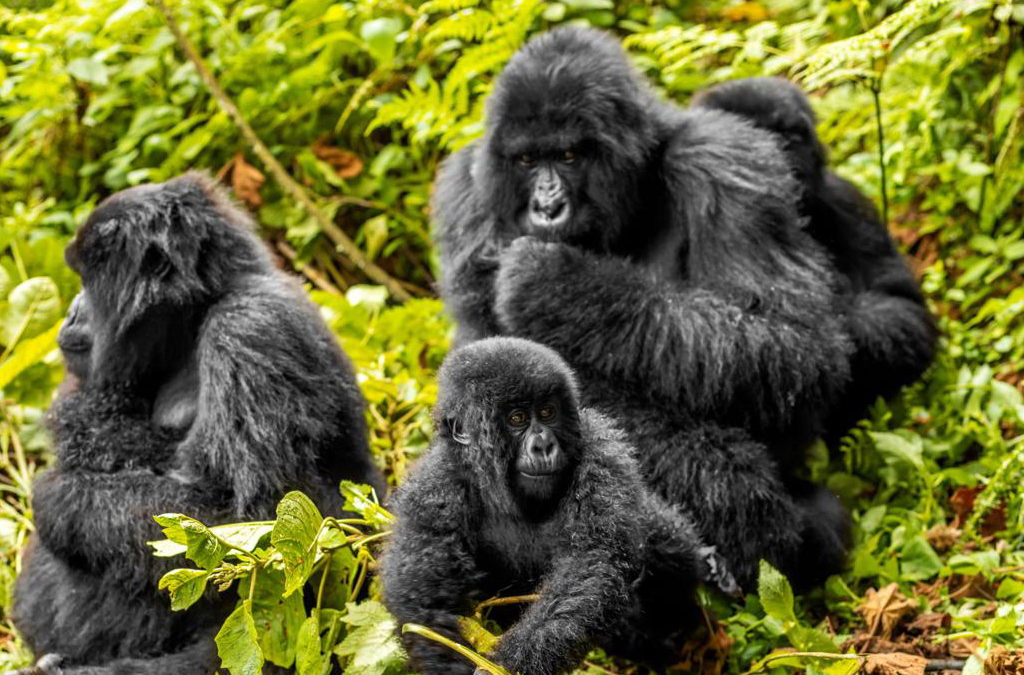
Have you ever looked into the eyes of a mountain gorilla during a trek in Uganda or Rwanda and wondered how closely these magnificent animals are related to humans? Their expressive faces, social relationships and remarkable intelligence reveal fascinating similarities.
Scientists estimate that humans share approximately 98% of their DNA with gorillas. Although chimpanzees and bonobos are our closest living relatives, gorillas also belong to the great ape family and share an ancient evolutionary history with us.
Understanding how closely gorillas are related to humans involves examining their genetics, physical characteristics, intelligence, communication and social behaviour. These similarities become particularly interesting when observing mountain gorillas in their natural habitats.
For visitors exploring Uganda and Rwanda, gorilla trekking offers an unforgettable opportunity to observe these fascinating primates. Experiya Tour Company organises gorilla trekking experiences that introduce travellers to the remarkable wildlife and conservation efforts protecting these endangered animals.
1. How Much DNA Do Humans Share with Gorillas?
One of the most fascinating discoveries in modern genetics is the remarkable similarity between human and gorilla DNA. Research indicates that humans share approximately 98% of their DNA with gorillas, although the precise percentage depends on the genetic comparison methods used.
Chimpanzees and bonobos share approximately 98.8% of their DNA with humans, making them our closest living relatives.
These genetic similarities exist because humans, gorillas, chimpanzees and bonobos evolved from common ancestors millions of years ago. Their evolutionary paths eventually separated, producing the different species we recognise today.
However, sharing approximately 98% of DNA does not mean gorillas are almost human. Even relatively small genetic differences can influence important characteristics, including brain development, physical appearance, reproduction and behaviour.
Scientists continue studying these genetic differences to understand human evolution and the biological characteristics that distinguish great apes.
2. When Did Humans and Gorillas Share a Common Ancestor?
Humans and gorillas did not evolve directly from one another. Instead, both species descended from ancient primate populations that lived millions of years ago.
Scientific estimates suggest that the human and gorilla evolutionary lineages separated approximately 8–10 million years ago. Their ancestral populations gradually developed different characteristics as they adapted to their respective environments.
The human lineage later separated from the ancestors of chimpanzees and bonobos. Consequently, chimpanzees and bonobos remain our closest living relatives.
Humans, gorillas, chimpanzees, bonobos and orangutans belong to the great ape family. Although they have developed different physical features and behaviours, they retain several characteristics inherited from common ancestors.
Understanding this evolutionary connection helps explain why gorillas share many biological and behavioural similarities with humans.
3. Genetic Differences Between Humans and Gorillas
Despite their genetic similarities, humans and gorillas have important biological differences. These differences influence their movement, communication, reproduction and physical development.
Brain development: Humans have considerably larger brains relative to their body size. This supports advanced language, abstract thinking, complex reasoning and technological development. Gorillas are also intelligent, demonstrating learning abilities, memory and problem-solving skills.
Movement: Humans walk upright on two legs, while gorillas primarily move on all fours using their knuckles for support. Their powerful arms and broad shoulders help them navigate forest environments.
Reproduction: Human and gorilla reproductive systems share basic biological characteristics, but their reproductive strategies differ. Gorilla family groups commonly consist of a dominant silverback, several adult females and their offspring.
Physical development: Gorillas have thick body hair, powerful jaws, large canine teeth and muscular limbs. Humans have relatively little body hair and different skeletal adaptations associated with upright walking.
These differences demonstrate how evolution shapes species according to their environments and survival requirements.
4. Physical Similarities Between Gorillas and Humans
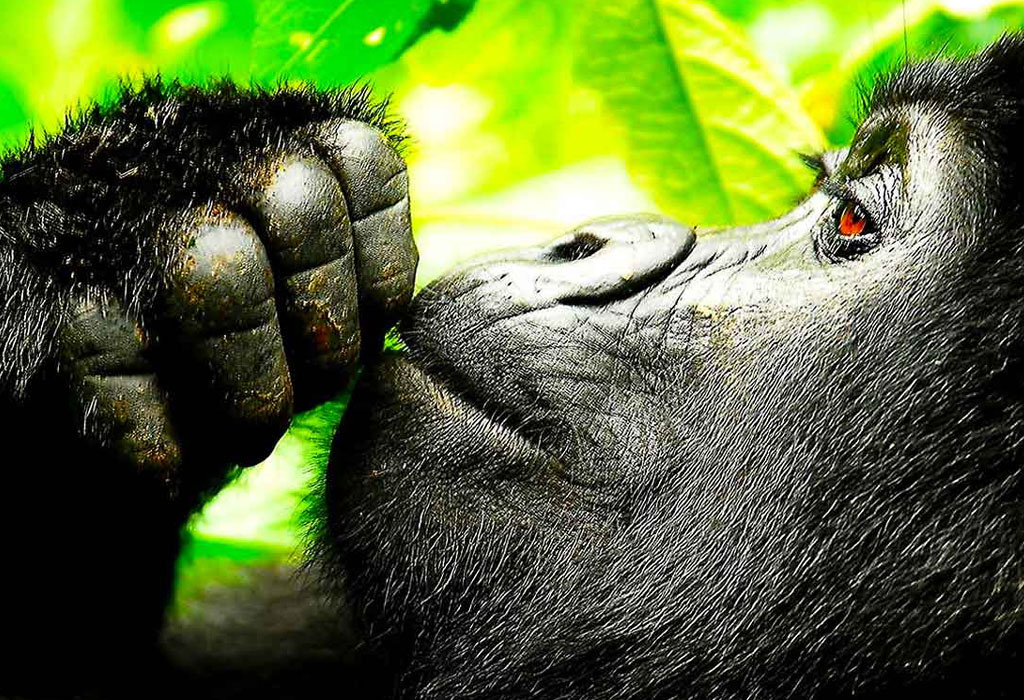
One reason people find gorillas fascinating is their remarkable physical resemblance to humans. When observing a mountain gorilla resting, feeding or interacting with its family, visitors can recognize several familiar characteristics.
Both species belong to the great ape family and share important anatomical features.
Some noticeable similarities include:
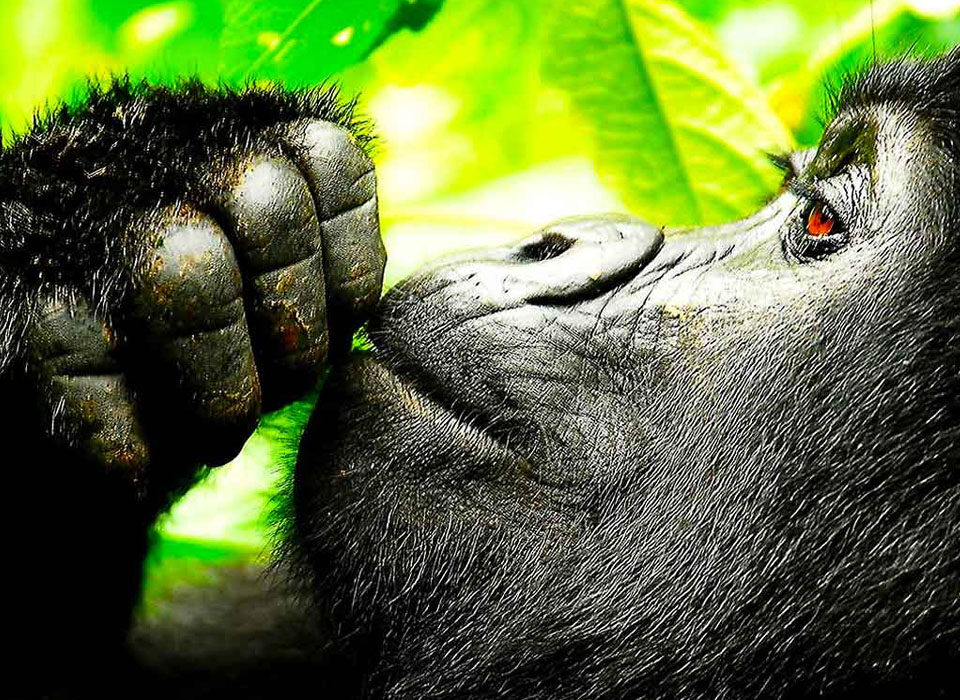
- Hands and fingers: Gorillas have five fingers on each hand, including opposable thumbs that help them grasp objects and vegetation.
- Eyes: Both species have forward-facing eyes that provide binocular vision and help judge distances.
- Facial expressions: Gorillas use facial movements to communicate social intentions and behavioural responses.
- Teeth: Both species have similar basic dental arrangements, although gorillas possess considerably larger canine teeth.
- Muscles and bones: Their skeletal and muscular systems share fundamental anatomical features.
- Nails: Gorillas have fingernails rather than claws, just like humans.
Nevertheless, gorillas have developed powerful bodies adapted to their forest lifestyle. Adult male silverbacks can weigh approximately 200 kilograms and possess enormous physical strength.
5. Do Gorillas Have Human-Like Emotions and Behaviour?
Gorillas are highly social animals that depend on strong family relationships. Their interactions reveal fascinating behaviours that remind us of human family life.
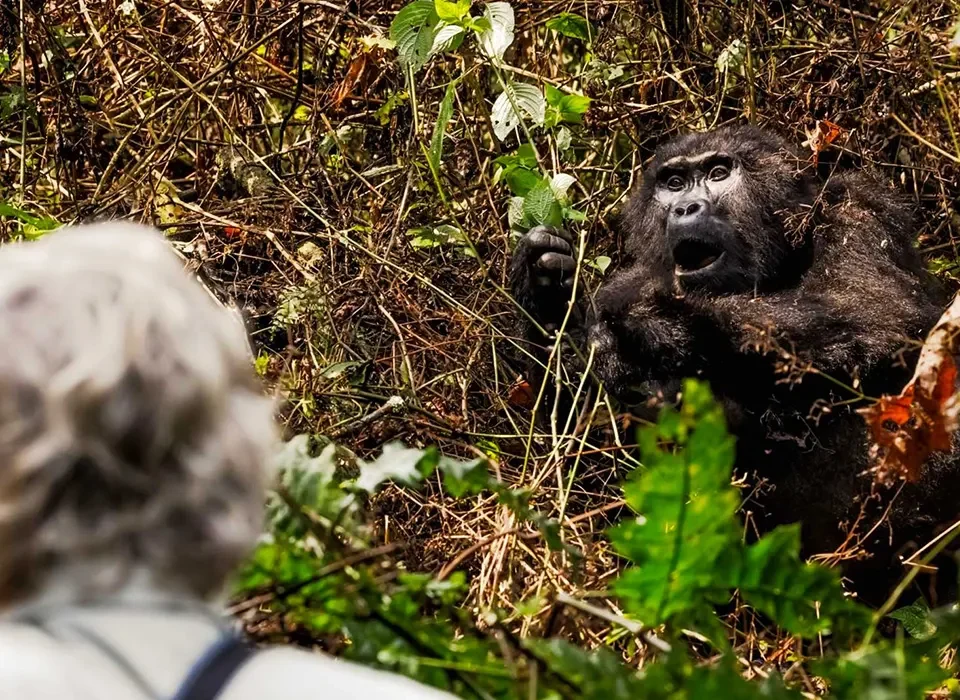
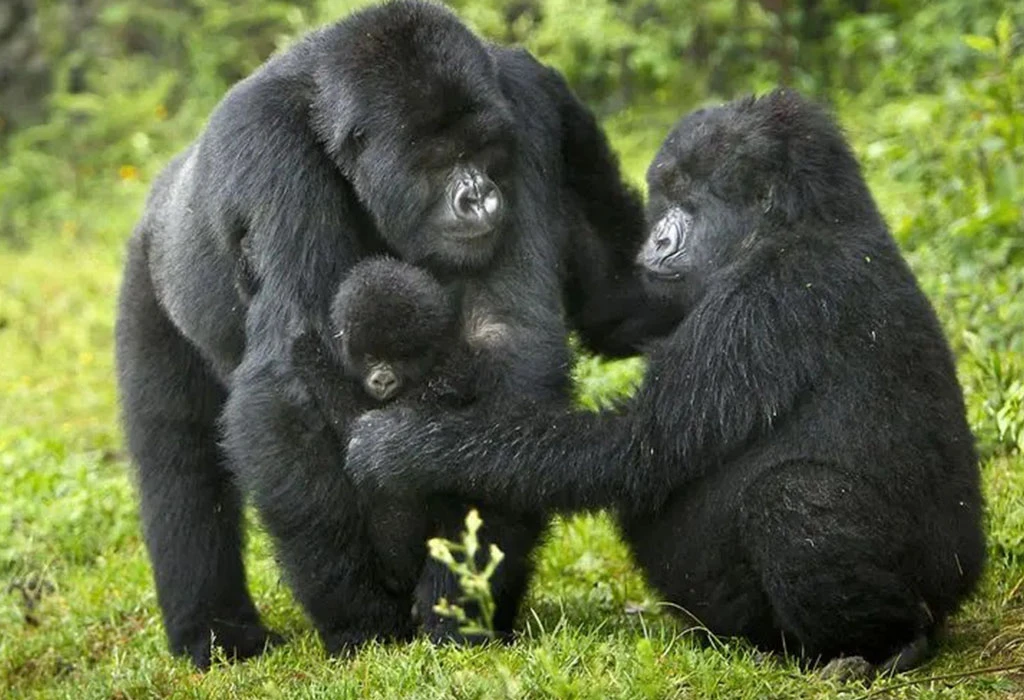
During gorilla trekking in Uganda or Rwanda, visitors may observe mothers carrying infants, young gorillas playing together and adults resting close to one another.
Several behaviours demonstrate their complex social lives.
Playing and socialising: Young gorillas spend considerable time chasing, wrestling and climbing. These activities help develop physical coordination and social skills. Researchers have also documented laughter-like vocalisations during play and tickling.
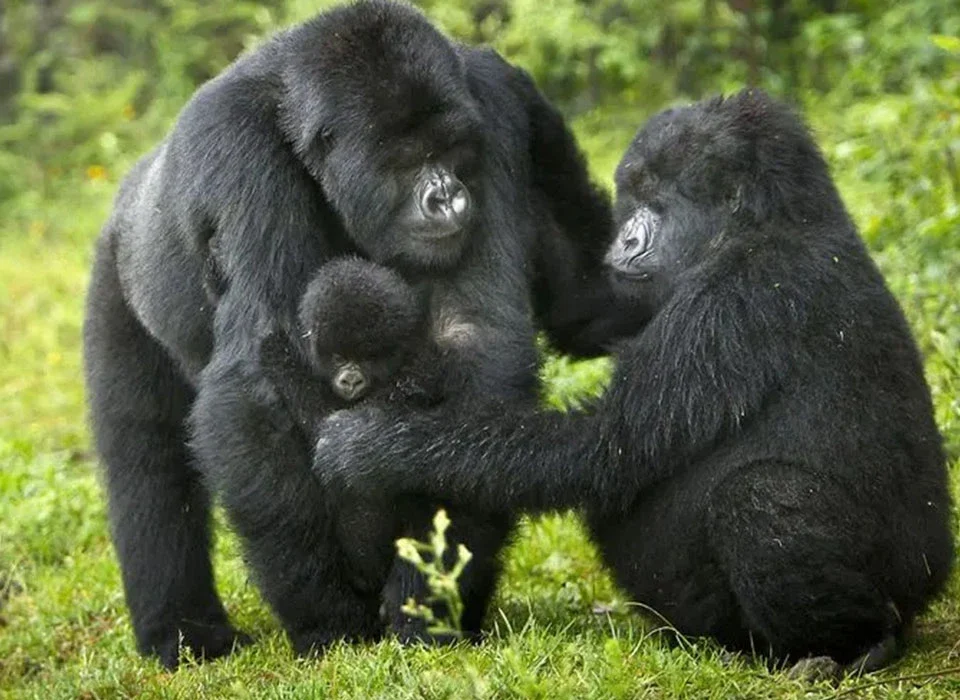
Mother and infant relationships: Mother gorillas maintain close relationships with their babies, providing food, protection and care. Infants depend heavily on their mothers during their early years.
Affection and bonding: Gorillas strengthen relationships through grooming, touching, embracing and resting together. These activities help maintain peaceful relationships within their families.
Emotional responses: Gorillas demonstrate behaviours associated with excitement, fear, frustration, curiosity and distress. Their facial expressions, movements and vocalisations communicate different social responses.
Although these behaviours resemble human interactions, scientists avoid assuming that gorillas experience every emotion in exactly the same way humans do.
6. How Do Gorillas Communicate Like Humans?
Communication is another fascinating connection between humans and gorillas. Although gorillas cannot speak human languages, they use sounds, gestures, facial expressions and body movements to interact.
Their communication helps maintain family relationships, express intentions and respond to potential threats.
Common communication methods include:
- Vocalisations: Gorillas produce grunts, hoots, barks and screams to communicate different messages.
- Chest beating: Silverbacks beat their chests to communicate their size, strength and social position.
- Body posture: Standing upright, displaying their teeth and approaching other gorillas can communicate different intentions.
- Facial expressions: Changes in facial movements provide information about social responses.
- Physical contact: Grooming, touching and embracing help maintain relationships.
During a gorilla trek, visitors may hear gentle grunts as family members feed and interact. Understanding these signals makes the experience more meaningful because it reveals the complexity of gorilla social life.
7. Where Do Gorillas Live in Africa?
Gorillas naturally inhabit tropical forests across Central and parts of West Africa. They are divided into two recognised species: eastern gorillas and western gorillas.
Eastern gorillas include:
- Mountain gorillas.
- Eastern lowland gorillas, also known as Grauer’s gorillas.
Western gorillas include:
- Western lowland gorillas.
- Cross River gorillas.
Mountain gorillas are particularly interesting because they occupy a restricted geographical range in Uganda, Rwanda and the Democratic Republic of Congo.
Their main habitats include:
- Bwindi Impenetrable National Park: Famous for its mountain gorilla population and dense tropical rainforest.
- Mgahinga Gorilla National Park: Located within the Virunga Mountains.
- Volcanoes National Park: One of Africa’s most popular mountain gorilla trekking destinations.
- Virunga National Park: Part of the wider Virunga mountain ecosystem.
These protected areas provide important habitats for mountain gorillas and support conservation programmes aimed at protecting their populations.
8. Why Is Understanding Gorilla Genetics Important for Conservation?
Understanding how closely gorillas are related to humans is important beyond scientific research. Genetic studies help conservationists understand gorilla populations, family relationships and genetic diversity.
Scientists can use genetic information to identify individual gorillas, study their ancestry and monitor population changes. This knowledge supports long-term conservation planning.
However, gorillas face several threats, including:
- Habitat destruction and deforestation.
- Illegal hunting and poaching.
- Infectious diseases.
- Human-wildlife conflict.
- Environmental and climate changes.
Uganda, Rwanda and the Democratic Republic of Congo cooperate with conservation organisations, researchers and local communities to protect mountain gorillas.
Responsible tourism also contributes to conservation through park fees, employment opportunities and community development. Visitors must follow trekking regulations, maintain the required distance and avoid visiting gorillas when sick to minimise disease transmission.
9. Experience the Human-Gorilla Connection Through Gorilla Trekking
Reading about human and gorilla similarities is fascinating, but observing these animals in their natural environment provides an even deeper appreciation of their behaviour.
Gorilla trekking involves hiking through tropical forests with experienced guides and trackers to locate habituated mountain gorilla families.
Once visitors find the gorillas, they can observe them for the permitted viewing period as they feed, rest, play and interact.
Some memorable experiences include:
- Watching a silverback supervise its family.
- Observing mothers caring for their infants.
- Seeing young gorillas playing in the forest.
- Listening to different gorilla vocalisations.
- Observing how family members communicate.
Experiya Tour Company organises gorilla trekking safaris in Uganda and Rwanda, helping visitors explore the natural habitats of mountain gorillas while supporting responsible wildlife tourism.
Whether you visit Bwindi, Mgahinga or Volcanoes National Park, meeting mountain gorillas in their natural environment is an extraordinary wildlife experience.
10. Frequently Asked Questions About Human and Gorilla Relationships
Are gorillas closely related to humans?
Yes. Gorillas are among our closest living relatives, sharing approximately 98% of their DNA with humans.
Are humans more closely related to gorillas or chimpanzees?
Humans are more closely related to chimpanzees and bonobos than gorillas. All three groups share common ancestors.
Do gorillas have human-like intelligence?
Yes. Gorillas demonstrate learning, memory, problem-solving and complex social behaviours, although their cognitive abilities differ from those of humans.
Can gorillas communicate with humans?
Gorillas communicate through sounds, gestures and body language. They can respond to human behaviour, particularly when habituated, but they do not naturally speak human languages.
Where can visitors see mountain gorillas?
Mountain gorillas can be seen in Uganda, Rwanda and the Democratic Republic of Congo through authorised trekking experiences.
Conclusion
So, how closely are gorillas related to humans? Their approximately 98% genetic similarity, shared evolutionary history, physical characteristics and complex social behaviours demonstrate an extraordinary biological connection.
Although chimpanzees and bonobos are our closest living relatives, gorillas remain fascinating members of the great ape family. Their intelligence, family relationships and communication methods offer valuable insights into human evolution.
Protecting these magnificent animals is essential for preserving Africa’s biodiversity and ensuring future generations can appreciate our connection with the natural world.
Plan your next gorilla trekking adventure with Experiya Tour Company and discover the remarkable mountain gorillas of Uganda and Rwanda.