

Things to do and see around Lake Mutanda
October 31, 2026
How Closely Are Gorillas Related to Humans?
October 31, 2026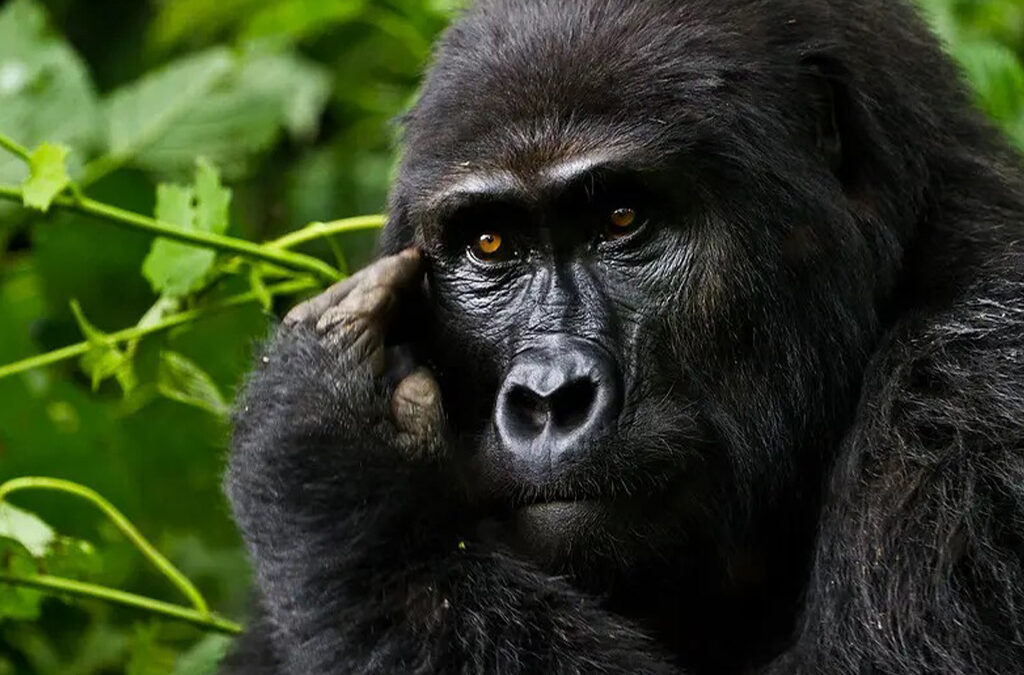
Gorillas are among the most intelligent and fascinating primates in the world. Although they cannot speak like humans, they communicate through an impressive combination of vocal sounds, body movements, facial expressions, physical contact and other social signals. These communication methods help them express emotions, establish relationships, protect their families and maintain harmony within their groups.
Understanding how gorillas communicate makes a gorilla trekking experience even more rewarding. When you encounter a mountain gorilla family in its natural habitat, you may hear soft grunts, observe playful interactions between young gorillas or witness a silverback beating his chest. Each behaviour provides a glimpse into the remarkable social lives of these endangered primates.
Whether you are planning a gorilla trekking safari in Uganda, Rwanda or the Democratic Republic of Congo, learning about gorilla communication helps you appreciate their behaviour beyond simply observing them. With guidance from experienced local guides, visitors can discover how gorillas interact and respond to one another in the forest.
1. Understanding How Gorillas Communicate
Gorillas are highly social animals that live in family groups commonly known as troops or groups. A typical mountain gorilla family consists of a dominant silverback, several adult females, their offspring and sometimes younger males. The silverback generally leads the group, makes important decisions and protects its members from potential threats.
Maintaining strong relationships within the family is essential for survival. Therefore, gorillas have developed different ways of communicating depending on their surroundings, social relationships and immediate needs.
Unlike humans, who depend heavily on spoken language, gorillas combine several communication methods to express themselves. These include:
- Vocalisations: Grunts, hoots, screams, barks and other sounds communicate different messages.
- Body language: Postures, movements and gestures reveal emotions and intentions.
- Facial expressions: Changes in the face can communicate excitement, fear, curiosity or discomfort.
- Physical contact: Grooming, touching and embracing help strengthen social relationships.
- Scent signals: Chemical cues may provide information about individuals and their reproductive condition.
Interestingly, gorillas do not depend on one communication method alone. They often combine sounds with gestures and facial expressions, allowing other members of the group to understand their intentions more effectively.
2. Gorilla Vocalisations: Understanding the Sounds Gorillas Make
One of the most fascinating aspects of gorilla communication is their ability to produce different vocal sounds. Researchers have documented numerous gorilla vocalisations, each serving different purposes depending on the situation.
When spending time near a habituated mountain gorilla family, visitors may hear quiet grunting, gentle humming or louder calls. Although these sounds might initially seem unfamiliar, they play an important role in maintaining relationships and coordinating group activities.
Some common gorilla vocalisations include:
Grunts and Hoots
Gorillas frequently produce low-pitched grunts and hooting sounds during everyday activities. These vocalisations may occur while feeding, moving through the forest or interacting with other family members.
Soft grunts often accompany peaceful social interactions, helping individuals remain aware of one another. In some situations, they also communicate reassurance or acknowledgement.
Chest Beating and Roaring
Chest beating is among the most recognisable gorilla behaviours. A silverback may stand upright, beat his chest with cupped hands and produce loud vocalisations when responding to a perceived threat or displaying his physical strength.
However, chest beating does not always indicate aggression. Gorillas also use it during displays of excitement, play and social communication.
This behaviour can communicate important information about an individual’s size, strength and presence. It may also discourage rival males from approaching without requiring a physical confrontation.
Screams and Wails
Gorillas sometimes produce loud screams, cries or wailing sounds when frightened, injured, distressed or involved in social disputes.
These vocalisations can attract the attention of other group members and may signal that an individual needs assistance or protection.
Belch-Like Vocalisations
One particularly interesting sound is the gorilla’s characteristic belch vocalisation. Gorillas often produce these sounds during peaceful interactions, especially when feeding or communicating with familiar group members.
Researchers associate these vocalisations with positive social interactions and group cohesion. They can also help individuals maintain contact while moving through thick vegetation.
3. Gorilla Body Language and Gestures
Although vocalisations are important, much of gorilla communication happens without sound. Gorillas rely heavily on body language to express their emotions, establish social relationships and respond to situations around them.
Their movements and postures often provide useful clues about their intentions. For example, a relaxed gorilla feeding peacefully behaves differently from one displaying signs of agitation or discomfort.
Some common body language signals include:
- Chest beating: May communicate strength, excitement, social status or a response to a perceived threat.
- Standing upright: Can form part of a dominance display or an attempt to assess the surroundings.
- Crouching: May indicate submission, uncertainty or a relaxed posture, depending on the situation.
- Moving away: Often indicates a desire to avoid confrontation or maintain personal space.
- Playful movements: Young gorillas frequently run, tumble and chase one another to encourage social interaction.
It is important to understand these behaviours in context. A single movement does not always have one fixed meaning. Experienced researchers and gorilla guides consider the animal’s overall behaviour and the surrounding circumstances when interpreting social signals.
4. Gorilla Facial Expressions and Emotional Signals
Gorillas also communicate through facial expressions. Like humans, they can change their facial appearance depending on their emotional state and the type of interaction taking place.
During peaceful encounters, you may notice relaxed facial muscles, attentive eyes and gentle expressions. During stressful situations, however, gorillas may display different facial movements, including changes around the mouth and eyes.
Some facial behaviours include:
- Bared teeth: May occur during fear, submission, excitement or aggressive interactions, depending on the context.
- Open-mouth expressions: Often appear during play, excitement or displays of threat.
- Relaxed facial expressions: Frequently accompany peaceful activities such as feeding and resting.
- Changes in eye and facial movements: Can provide additional information about attention and emotional responses.
Facial expressions become particularly interesting when observing young gorillas. Infants often display playful expressions while interacting with their mothers and other family members.
These subtle signals remind visitors that gorillas are not simply powerful wild animals. They are intelligent social primates with complex relationships and individual personalities.
5. Grooming, Touching and Physical Contact Among Gorillas
Physical contact is another essential part of gorilla communication. Gorillas use grooming, gentle touching and embracing to establish trust, maintain relationships and strengthen social bonds.
Grooming involves carefully removing dirt, loose hair and other particles from another individual’s fur. Although it helps maintain hygiene, its importance extends beyond physical cleanliness.
Social grooming provides opportunities for gorillas to spend time together, reduce tension and reinforce relationships within the family.
Other forms of physical communication include:
- Mothers holding and embracing their infants.
- Young gorillas touching or clinging to adults for reassurance.
- Individuals resting close to one another.
- Gentle physical interactions during play.
- Adults using physical contact to comfort or reassure younger group members.
Mother-infant relationships are particularly important. A newborn gorilla depends heavily on its mother for warmth, protection, feeding and emotional security. Through continuous physical contact, the mother and infant develop a strong relationship that supports the youngster’s development.
6. Do Gorillas Communicate Through Smell?
Besides sounds, gestures and physical contact, gorillas may also use chemical signals as part of their communication system.
Like other mammals, gorillas possess scent-producing glands and can use olfactory information to recognise individuals and gather information about their surroundings.
Body odours may provide clues about an individual’s identity, reproductive condition and general biological state. These signals are less noticeable to human observers than vocalisations or body movements, but they form part of the wider communication system of gorillas.
Gorillas also urinate and defecate in their surroundings as part of normal biological behaviour. However, it is important not to interpret every instance of scent marking as a deliberate territorial message. The purpose of these behaviours can vary depending on the individual and circumstances.
7. How Baby Gorillas Communicate With Their Mothers
Baby gorillas have their own ways of communicating, particularly during their first years of life. Since infants depend on their mothers for almost everything, communication is essential for receiving attention, protection and nourishment.
Young gorillas use a combination of sounds, facial expressions and physical movements to express their needs.
Common infant communication behaviours include:
- Whining and crying when distressed or uncomfortable.
- Reaching towards their mothers when seeking attention.
- Clinging to their mothers while moving through the forest.
- Producing soft sounds during peaceful interactions.
- Playing and making expressive movements when interacting with other young gorillas.
As they grow, young gorillas gradually learn the communication patterns used by other members of their family.
Play is particularly important during this development. Through chasing, wrestling and imitating adults, young gorillas learn social boundaries, develop physical coordination and understand how to interact with other group members.
Watching a young gorilla playfully tumble around its mother is one of the memorable moments visitors may experience during a mountain gorilla trekking safari.
8. The Silverback’s Role in Gorilla Communication
The silverback plays a central role in maintaining communication and social order within a gorilla family. As the dominant adult male, he generally leads the group, protects its members and responds to potential threats.
His communication involves several behaviours that help maintain group cohesion.
For example, a silverback may use vocalisations to communicate with other members while the family feeds or moves through the forest. He may also use body movements and chest beating when responding to unfamiliar sounds, rival males or other disturbances.
Some of his important responsibilities include:
- Leading the family between feeding and resting areas.
- Protecting females and young gorillas from potential threats.
- Responding to conflicts and disturbances.
- Maintaining social stability within the group.
- Using vocalisations and body displays to communicate his presence.
However, gorilla family leadership is not based on intimidation alone. A silverback also maintains relationships with other family members through everyday interactions, tolerance and protection.
Understanding his behaviour is especially interesting during gorilla trekking because visitors often observe him resting, feeding or watching over the family while younger gorillas play nearby.
9. How Gorillas Communicate During Conflict and Play
Gorilla families experience disagreements just like other social groups. Conflicts may develop around feeding opportunities, personal space, social relationships or interactions between individuals.
Fortunately, gorillas have several communication behaviours that can help prevent minor disagreements from escalating into serious physical confrontations.
During tense situations, individuals may use submissive postures, vocalisations or movements to communicate their intentions. A dominant silverback may also intervene when necessary to restore calm within the group.
Play, on the other hand, involves a different range of signals.
Young gorillas frequently chase, wrestle, tumble and engage in mock confrontations. These activities help them develop strength, coordination and social awareness.
Playful interactions may include:
- Gentle pushing and chasing.
- Rolling around on the forest floor.
- Playful wrestling between young gorillas.
- Running towards other family members.
- Mock charges and exaggerated movements.
Although some of these behaviours resemble aggression, their context and accompanying body language help distinguish play from genuine conflict.
10. How Gorilla Communication Compares to Human Communication
Gorillas share many communication characteristics with humans because we belong to the same broader primate evolutionary family.
Both humans and gorillas communicate through sounds, gestures, facial expressions and physical contact. They also develop strong social relationships, care for their young and respond to different emotional situations.
However, gorilla communication differs significantly from human language. Gorillas do not use the complex grammar, vocabulary and symbolic language systems that humans depend on in everyday conversation.
Research has demonstrated that some captive great apes, including gorillas, can learn to associate gestures and symbols with objects, actions or requests. Nevertheless, these abilities should not be confused with naturally developing human language.
What makes gorilla communication remarkable is how effectively these animals combine different signals to navigate their social environment.
11. Why Understanding Gorilla Communication Matters for Conservation and Gorilla Trekking
Understanding how gorillas communicate is important not only for researchers but also for wildlife conservation and responsible tourism.
Mountain gorillas live in closely connected family groups, and disturbances can affect their behaviour and well-being. By understanding their social signals, conservationists and trained guides can make better decisions when monitoring and protecting them.
During gorilla trekking, visitors also benefit from learning how to recognise different behaviours without interfering with the animals.
Responsible gorilla trekking involves following important guidelines, including:
- Maintaining the required distance from mountain gorillas.
- Avoiding sudden movements and unnecessary noise.
- Following instructions from park rangers and guides.
- Never attempting to touch or feed gorillas.
- Avoiding direct eye contact when a gorilla displays threatening behaviour.
- Following health precautions to reduce the risk of transmitting human diseases to gorillas.
These guidelines help protect both visitors and gorillas while allowing families to continue their natural activities.
For travellers, observing gorilla communication firsthand creates a deeper appreciation of the intelligence, social relationships and conservation needs of these endangered primates.
12. Where to Observe Gorilla Communication in the Wild
If you want to understand gorilla communication beyond books and documentaries, visiting their natural habitats provides an unforgettable opportunity.
East and Central Africa offer some of the world’s most important destinations for observing wild gorillas.
Bwindi Impenetrable National Park, Uganda
Bwindi Impenetrable National Park is one of the leading destinations for mountain gorilla trekking. Located in southwestern Uganda, this ancient rainforest protects a significant population of endangered mountain gorillas.
Visitors can trek through the forest with experienced park guides and spend an authorised period observing a habituated gorilla family.
During the encounter, you may witness silverbacks communicating with their families, mothers caring for infants and younger gorillas engaging in playful activities.
Mgahinga Gorilla National Park, Uganda
Mgahinga Gorilla National Park is another excellent destination for mountain gorilla trekking. Located in southwestern Uganda, the park forms part of the Virunga Conservation Area and provides habitat for the Nyakagezi gorilla family.
Its dramatic volcanic landscapes create a beautiful setting for observing mountain gorillas in their natural environment.
Volcanoes National Park, Rwanda
Volcanoes National Park is internationally recognized for mountain gorilla conservation and trekking. Located in northwestern Rwanda, the park protects several habituated gorilla families living among the Virunga Mountains.
Visitors can experience the remarkable social behaviour of gorillas while exploring the park’s montane forests and volcanic landscapes.
Virunga National Park, Democratic Republic of Congo
Virunga National Park is another important mountain gorilla habitat. Located in eastern Democratic Republic of Congo, it protects remarkable biodiversity and supports ongoing conservation initiatives.
However, travel arrangements and trekking availability depend on the prevailing security situation and official park guidance. Travellers should always check current conditions before planning a visit.
13. Fascinating Facts About Gorilla Communication
Gorilla communication becomes even more interesting when you consider some of the behaviours researchers have documented.
Here are a few fascinating facts:
- Gorillas produce a variety of vocalisations, including grunts, hoots, screams and belch-like sounds.
- Chest beating is a form of communication that can convey information about an individual’s size and physical presence.
- Gorillas use social grooming to strengthen relationships and maintain group harmony.
- Young gorillas learn important social behaviours through observation, interaction and play.
- Mother gorillas communicate with their infants through sounds, touch and body movements.
- Silverbacks use vocalisations and physical displays to respond to disturbances and communicate with their families.
- Gorilla communication involves several senses, making it more complex than simply producing sounds.
These behaviours demonstrate how intelligent and socially connected gorillas are. They also explain why spending time observing a gorilla family can be such an educational wildlife experience.
14. Experience Gorilla Communication on a Gorilla Trekking Safari
Seeing mountain gorillas in their natural habitat is one of Africa’s most rewarding wildlife experiences. However, understanding their communication makes the encounter even more meaningful.
Rather than simply watching gorillas feed or move through the forest, visitors can appreciate the relationships behind their behaviour. A silverback’s chest beating, an infant clinging to its mother or two young gorillas playing together all reveal something about how these remarkable animals interact.
With an experienced guide, you can learn to recognise different vocalisations, observe social signals and understand the relationships that keep a gorilla family together.
Experiya Tour Company organises gorilla trekking safaris in Uganda and Rwanda, offering travellers opportunities to explore some of East Africa’s most remarkable mountain gorilla habitats.
Whether you choose Bwindi Impenetrable National Park or Mgahinga Gorilla National Park in Uganda, or Volcanoes National Park in Rwanda, a guided gorilla trekking experience provides an opportunity to appreciate these endangered primates in their natural environment.
You can also combine gorilla trekking with other wildlife and cultural experiences to discover more of East Africa’s natural beauty.
Contact Experiya Tour Company to plan your gorilla trekking safari and experience the fascinating world of mountain gorillas.
Website: https://www.experiyatourcompany.com
Conclusion: Discover the Remarkable Language of Gorillas
Gorillas communicate through a fascinating combination of vocalisations, body language, facial expressions, physical contact and chemical signals. These behaviours allow them to express emotions, maintain family relationships, resolve disagreements and protect their young.
From the powerful chest beating of a silverback to the gentle sounds of a mother interacting with her infant, every encounter provides insight into the social lives of these remarkable primates.
Understanding how gorillas communicate also encourages responsible tourism and greater appreciation for their conservation. When you observe a gorilla family in its natural habitat, you are witnessing more than a wildlife encounter; you are discovering a complex social world built around communication, trust and family bonds.
Plan your next gorilla trekking adventure with Experiya Tour Company and discover the incredible world of mountain gorillas in Uganda and Rwanda.


