What Is the Biggest Threat to Gorillas?
September 21, 2026
12 Interesting Facts About Mount Kilimanjaro
September 21, 2026
Gorillas are among the largest and strongest primates on Earth. Their muscular bodies, powerful arms, and impressive physical strength can make them look like animals that would hunt for food. However, gorillas do not depend on meat. Their diet consists mainly of plants, and their bodies are remarkably well adapted to obtain the nutrients they need from vegetation.
This often raises an interesting question: Why don’t gorillas eat meat?
The answer lies in their anatomy, digestive system, behavior, evolution, and natural environment. Gorillas have developed a feeding strategy that allows them to survive successfully on leaves, stems, shoots, fruits, and other vegetation. Their strength does not come from eating meat but from efficiently processing the large quantities of plant material available in their forest habitats.
Gorillas Are Primarily Herbivorous
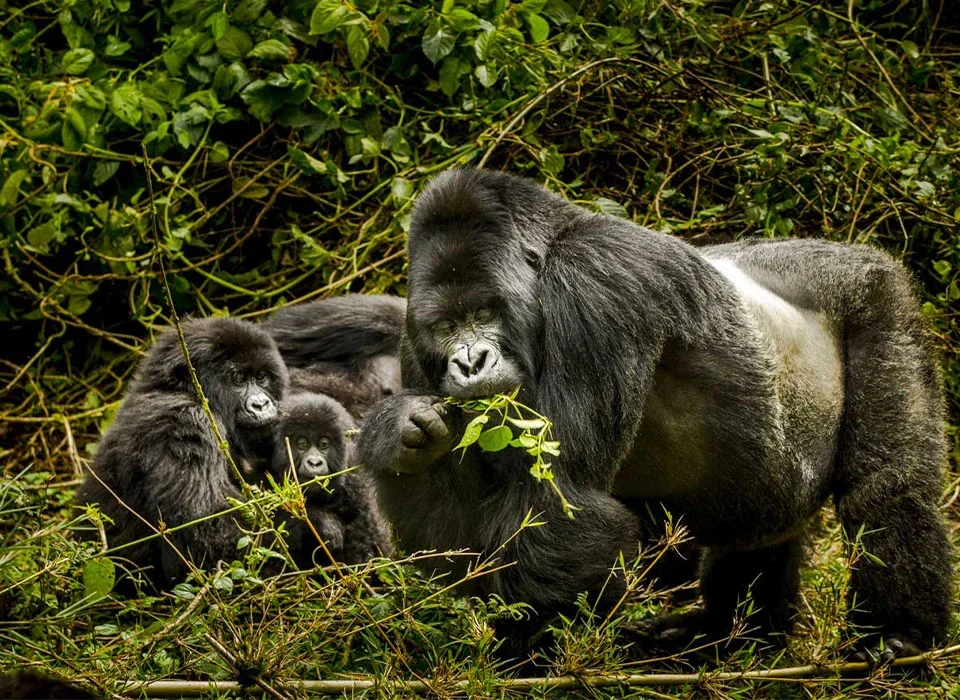
Gorillas are primarily herbivorous, with their diet consisting largely of leaves, stems, shoots, bark, flowers, and fruits. The exact foods they eat vary depending on the species and the habitat.
Mountain gorillas, for example, consume large quantities of leaves, stems, shoots, herbs, and other vegetation found in the montane forests of Uganda, Rwanda, and the Democratic Republic of Congo. Western and eastern lowland gorillas generally have access to a wider variety of fruits, seeds, and other plant foods.
Because vegetation is readily available in their natural habitats, gorillas have little reason to hunt animals for food. Instead, they spend much of their day moving through the forest and feeding on plants.
Their Teeth Are Designed for Plant Foods
One of the clearest signs of a gorilla’s diet can be seen in its teeth.
Gorillas have large molars and premolars with broad surfaces that help them crush and grind tough vegetation. Their powerful jaws are particularly useful when processing fibrous leaves, stems, shoots, and other plant material.
Carnivorous mammals typically have teeth and jaws adapted for gripping, tearing, and cutting flesh. Gorillas, by contrast, have developed the kind of chewing equipment that allows them to break down plant foods efficiently.
Their strong jaw muscles also help them process large amounts of vegetation every day. Therefore, although gorillas possess enormous physical strength, their mouths are primarily adapted for chewing rather than tearing apart prey.
Their Digestive System Handles Tough Vegetation
Gorillas do more than simply chew plants. Their digestive systems are adapted to extracting nutrients from foods that can be difficult to digest.
Much of the vegetation gorillas consume contains cellulose, a structural component of plant cell walls. Mammals cannot break down cellulose efficiently on their own. Instead, microorganisms living in the digestive tract help ferment and break down fibrous plant material.
This relationship allows gorillas to obtain nutrients from vegetation that many other animals would struggle to digest.
Gorillas also have relatively large digestive systems that support the processing of substantial quantities of plant matter. As they feed throughout the day, their bodies gradually extract energy and nutrients from the vegetation they consume.
Plants Provide the Nutrients Gorillas Need
Another reason gorillas do not need meat is that their natural diet can provide the nutrients necessary for survival.
Leaves, shoots, stems, fruits, and other plant foods contain carbohydrates, protein, minerals, vitamins, and other nutrients. Gorillas consume considerable quantities of vegetation, allowing them to obtain enough energy to support their large bodies.
Their impressive muscles therefore do not indicate a dependence on meat. Instead, their strength demonstrates how effectively their bodies have adapted to their natural diet.
Gorillas can obtain protein from plant foods, particularly young leaves, shoots, and other nutrient-rich vegetation. They also obtain important minerals and vitamins from the wide range of plants available in their habitats.
Gorillas Are Not Predators
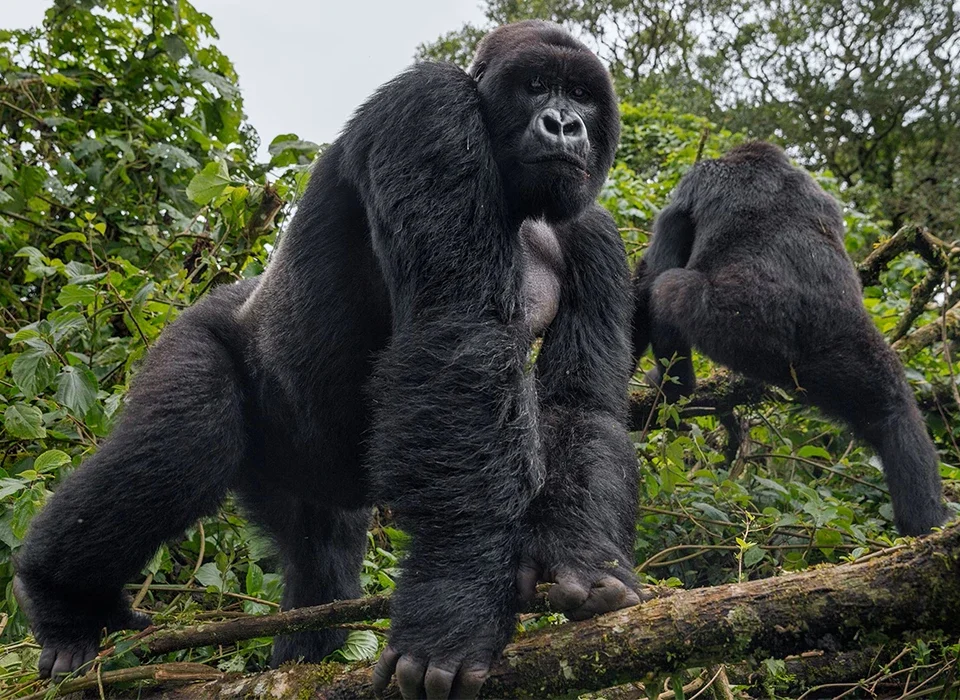
Gorillas are powerful animals, but they are not predators.
Their daily behavior revolves around feeding, travelling, resting, grooming, and maintaining relationships within their family groups. They do not normally stalk, chase, or kill animals to obtain food.
This is an important distinction. Physical strength does not automatically make an animal a carnivore. A gorilla can use its enormous strength to defend itself, protect its family, or establish dominance within its social group without using that strength to hunt prey.
When threatened, gorillas may display aggressive defensive behavior. However, this is very different from predatory behavior.
Their Environment Provides Plenty of Food
Gorillas live in forests where plant material is generally abundant. This gives them access to food without requiring them to hunt.
Mountain gorillas, for instance, inhabit forests rich in herbs, leaves, stems, shoots, and other vegetation. Their feeding habits have developed around the resources available in these environments.
Because food plants are readily accessible, spending energy chasing prey would provide little advantage. Instead, gorillas can simply move through their habitat, select suitable vegetation, and continue feeding.
This relationship between gorillas and their environment has developed over thousands of generations. Their bodies and feeding behavior are closely connected to the forests in which they live.
Evolution Shaped the Gorilla Diet
The gorilla’s plant-based diet is also linked to its evolutionary history.
Gorillas share a common evolutionary ancestry with humans and other great apes. Over time, different primate species adapted to different environments and food sources. Gorillas developed characteristics that allowed them to make effective use of the vegetation available in their forest habitats.
Their large jaws, powerful chewing muscles, specialized teeth, and digestive adaptations all support this lifestyle.
While some primates consume insects, eggs, or other animal foods, gorillas have remained overwhelmingly dependent on plant material. Their evolutionary success demonstrates that a large and muscular body does not require a meat-based diet.
Do Gorillas Ever Eat Animals?
Although gorillas are generally described as herbivores, their feeding behavior can be more flexible than the simple label suggests.
Occasionally, gorillas may accidentally consume small insects or other animal matter while feeding on vegetation. However, this does not make them carnivores or mean that meat forms a meaningful part of their diet.
Their feeding strategy remains overwhelmingly plant-based.
This distinction is important because animal diets are not always completely rigid. Some species classified as herbivores may occasionally consume animal matter, while some animals classified as carnivores may also eat plant material. What matters is the dominant pattern of their diet and the adaptations that support it.
Why Don’t Gorillas Need Meat for Their Strength?
The impressive strength of gorillas sometimes creates the misconception that they must eat large amounts of meat.
However, muscle development depends on more than the source of protein. Gorillas obtain protein and other nutrients from their plant-based diet, while their genetics, body structure, physical activity, and overall metabolism contribute to their remarkable strength.
Gorillas also spend significant portions of their day feeding. Their ability to consume and digest large quantities of vegetation allows them to obtain the energy required to maintain their substantial bodies.
Therefore, a gorilla’s strength should not be used as evidence that it needs a carnivorous diet.
Their Diet Varies Between Gorilla Species
Not all gorillas eat exactly the same foods.
Mountain gorillas tend to consume large quantities of leaves, stems, shoots, herbs, and other vegetation. Because fruit can be less abundant in their high-altitude environment, they rely heavily on available leafy plants.
Lowland gorillas generally have greater access to fruit and may consume a wider variety of plant foods. Their diets can include fruits, leaves, seeds, stems, bark, and other vegetation.
These differences show how adaptable gorillas can be. Rather than depending on a single food source, they make use of the vegetation available within their particular habitats.
A Plant-Based Diet Supports Their Way of Life
Gorillas have developed a lifestyle that works remarkably well with their diet. They live in social groups, move through forest habitats, feed on available vegetation, and spend time resting and interacting with other members of their family group.
Their plant-based diet fits naturally into this way of life.
Instead of spending large amounts of energy hunting, gorillas can use their time and energy for foraging, travelling, social interaction, and caring for their young. Their environment provides the food resources necessary to support this lifestyle.
Protecting the Forests That Feed Gorillas
Understanding what gorillas eat also highlights why protecting their habitats is so important.
Gorillas depend heavily on healthy forests. Habitat destruction, agricultural expansion, illegal activities, disease, and other human-related pressures can reduce the availability and quality of the vegetation they depend on.
Conservation therefore involves more than protecting the animals themselves. It also means protecting the forests, plants, and ecosystems that sustain them.
In Uganda, Rwanda, and the Democratic Republic of Congo, protected areas provide important habitats for mountain gorillas. Conservation programs, scientific research, community involvement, and responsible gorilla tourism all contribute to protecting these ecosystems.
The Real Reason Gorillas Don’t Eat Meat
Gorillas do not need meat because their bodies and lifestyles are adapted to obtain what they need from plants. Their teeth and powerful jaws allow them to process tough vegetation, while their digestive systems help extract nutrients from fibrous foods.
At the same time, their forest habitats provide abundant vegetation, making a meat-based diet unnecessary.
Their enormous strength is therefore not a sign that they should be eating meat. Instead, it is a remarkable example of how an animal can develop tremendous physical power while relying primarily on plants.
Gorillas have evolved to thrive in their natural environments, and their plant-based diet is an important part of that success. Protecting the forests where they feed remains essential to ensuring that these remarkable primates continue to survive in the wild.