Why Don’t Gorillas Eat Meat?
September 21, 2026
Uganda Sport Fishing Adventure Safari
September 21, 2026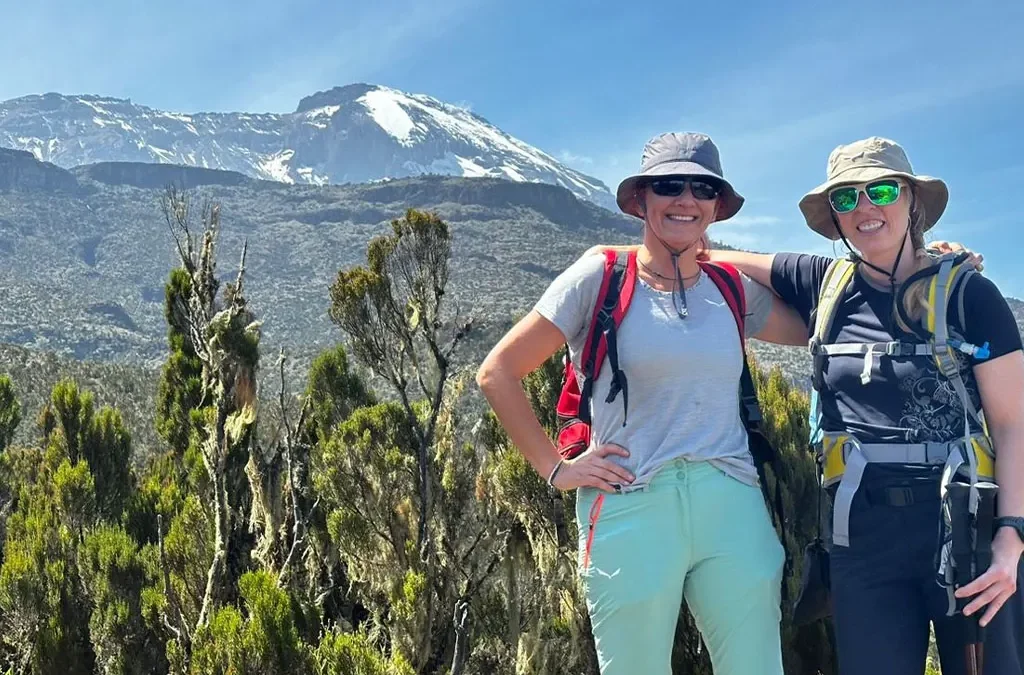
Mount Kilimanjaro is one of Africa’s most remarkable natural landmarks and a dream destination for hikers from around the world. Rising above the plains of northern Tanzania, the mountain attracts experienced trekkers as well as first-time high-altitude hikers.
Known as the Roof of Africa, Kilimanjaro reaches 5,895 metres (19,341 feet) above sea level. However, its height is only part of the story. The mountain has a fascinating volcanic history, distinctive ecological zones, disappearing glaciers, and a long record of remarkable ascents.
Here are 12 interesting facts about Mount Kilimanjaro that make this mountain so special.
1. Kilimanjaro Is One of the Seven Summits
At 5,895 metres, Mount Kilimanjaro is the highest mountain in Africa. As a result, it forms part of the Seven Summits, the highest mountains on each continent.
The Seven Summits are Mount Everest in Asia, Aconcagua in South America, Denali in North America, Kilimanjaro in Africa, Elbrus in Europe, Carstensz Pyramid in Oceania, and Vinson Massif in Antarctica.
Unlike many of the world’s highest mountains, Kilimanjaro does not require technical climbing skills under normal trekking conditions. Most standard routes involve hiking rather than technical mountaineering. Trekkers generally do not need ropes, climbing harnesses, crampons, or ice axes for the normal routes.
Nevertheless, the altitude makes the trek challenging. Proper preparation, gradual acclimatization, experienced guides, and enough time on the mountain remain important.
2. Kilimanjaro Is the World’s Highest Free-Standing Mountain
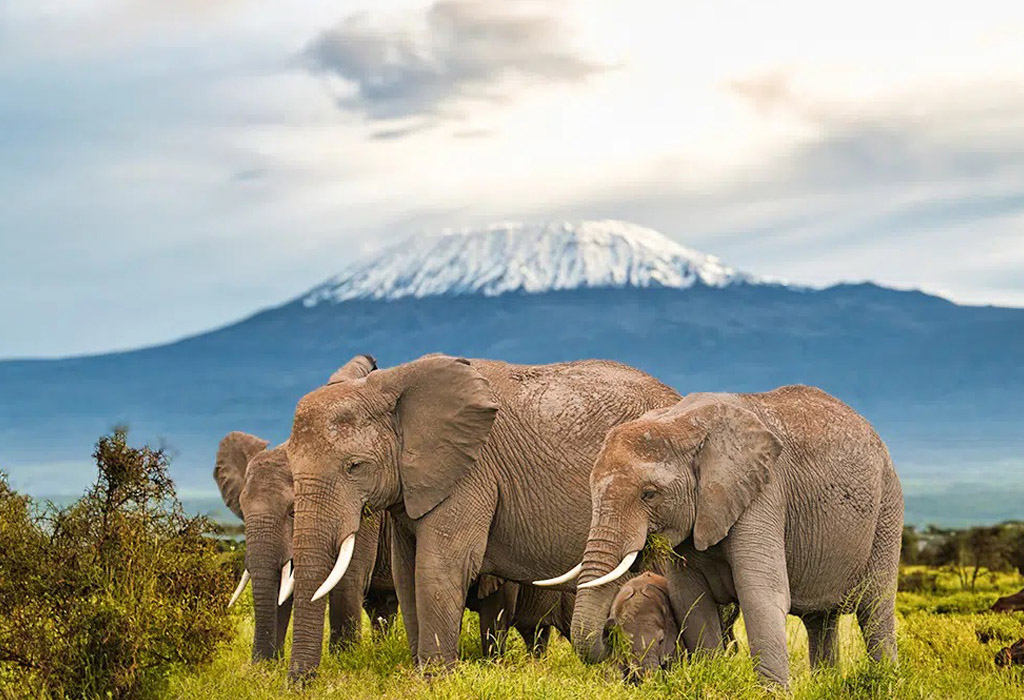
Kilimanjaro stands apart from a major mountain range, which gives it another impressive distinction. It is widely described as the world’s highest free-standing mountain.
Mountains such as Everest form part of larger ranges. Kilimanjaro, on the other hand, rises dramatically from the surrounding plains.
Its great height resulted from volcanic activity rather than the collision of tectonic plates that formed many major mountain ranges. Over millions of years, volcanic eruptions built up layers of lava, ash, and other volcanic material.
Today, the mountain rises thousands of metres above the surrounding landscape, creating the spectacular profile that visitors see from the plains of Tanzania and Kenya.
3. Kilimanjaro Is Surprisingly Close to the Equator
Kilimanjaro sits in northern Tanzania, relatively close to the equator. Its location makes the mountain particularly fascinating because trekkers can experience dramatically different climatic conditions during a single climb.
The lower slopes can feel warm and tropical, while the summit environment becomes extremely cold. This sharp change happens because temperature generally decreases as elevation increases.
Early European explorers struggled to understand reports of snow and ice on a mountain located so close to the equator. Today, however, scientists understand that altitude plays a much greater role than latitude in determining conditions at Kilimanjaro’s summit.
The mountain’s location also contributes to its unique ecosystems and makes a Kilimanjaro trek very different from an ordinary mountain hike.
4. Kilimanjaro Has Three Volcanic Cones
Mount Kilimanjaro developed from three volcanic cones: Kibo, Mawenzi, and Shira.
Kibo is the highest and largest of the three. It rises to 5,895 metres and contains Uhuru Peak, the highest point in Africa. Kibo remains dormant, although scientists continue to monitor its volcanic characteristics.
Mawenzi rises to approximately 5,149 metres and has a rugged, heavily eroded appearance. Its sharp ridges and rocky peaks create some of Kilimanjaro’s most dramatic scenery.
Shira, meanwhile, has undergone significant erosion and collapse. Its remains form the broad Shira Plateau on the western side of the mountain. Several trekking routes, including the Lemosho and Machame routes, pass through or near this area.
Together, these three volcanic structures explain much of Kilimanjaro’s distinctive shape.
5. Kilimanjaro Is a Dormant Volcano
Although Kilimanjaro is often described simply as a mountain, it is actually a massive volcanic formation. Kibo, the highest cone, is considered dormant rather than completely extinct.
Shira and Mawenzi are generally regarded as extinct volcanic cones, while Kibo retains evidence of past volcanic activity.
The summit area contains a large crater and an inner ash pit. Visitors who reach this area can sometimes notice the smell of sulfur, which reflects the volcanic character of the mountain.
Kilimanjaro has not experienced a recent major eruption, so trekkers do not climb an actively erupting volcano. However, its volcanic history remains an important part of what makes the mountain unique.
6. The Exact Meaning of the Name “Kilimanjaro” Remains Uncertain
The origin of the name Kilimanjaro has attracted debate for many years. There is no universally accepted explanation for exactly how the name developed.
One commonly discussed interpretation connects the name with the Swahili word kilima, meaning “mountain,” combined with another word associated with whiteness or brightness. This interpretation may relate to the snow and ice that historically covered the summit.
Other explanations have been proposed by historians, linguists, and early European visitors. Some connect the name with concepts such as greatness, caravans, or the mountain’s appearance from a distance.
Because the historical origins of the name are not completely settled, Kilimanjaro carries an interesting linguistic mystery alongside its natural beauty.
7. The First Recorded Ascent Took Place in 1889
The first recorded successful ascent of Kilimanjaro took place in 1889.
German geographer Hans Meyer and Austrian mountaineer Ludwig Purtscheller reached the summit with assistance from local guides and porters. Local guide Yohani Kinyala Lauwo is also associated with the historic expedition.
Meyer had already attempted to climb Kibo during earlier expeditions but encountered difficult snow and ice conditions. His second attempt was interrupted by the Abushiri Revolt, during which he was captured.
He eventually returned and successfully reached the summit in 1889.
The expedition marked an important moment in the history of Kilimanjaro trekking. Today, modern hikers follow several established routes, each offering a different experience of the mountain.
8. Altitude Is One of the Biggest Challenges on Kilimanjaro
Kilimanjaro does not require technical rock climbing, but that does not mean reaching the summit is easy.
One of the biggest challenges is altitude. As trekkers climb higher, the amount of available oxygen decreases. Some people therefore experience altitude-related symptoms such as headaches, nausea, tiredness, dizziness, or difficulty sleeping.
For this reason, spending more days on the mountain can help the body adjust gradually to the increasing elevation. Routes with longer itineraries generally provide more opportunities for acclimatization than very short itineraries.
Fitness also matters, but preparation involves more than physical training. Trekkers should use suitable clothing and equipment, stay hydrated, follow their guides’ advice, and allow enough time for acclimatization.
If you are planning a Kilimanjaro trek with Experiya Tour Company, choosing an appropriate route and itinerary should be part of the preparation process.
9. Elite Athletes Have Reached the Summit at Extraordinary Speeds
Kilimanjaro has also attracted highly experienced mountain runners who have attempted exceptionally fast ascents and descents.
Swiss athlete Karl Egloff completed a famously fast ascent and descent in 2014, recording a time of 6 hours and 42 minutes. Other elite athletes have also completed remarkable speed ascents.
These achievements should not be confused with the normal trekking experience. Speed records require exceptional physical conditioning, extensive mountain experience, careful planning, and prior acclimatization.
For ordinary visitors, a Kilimanjaro trek is not a race. Taking several days to reach the summit allows trekkers to adjust to the altitude while enjoying the changing landscapes along the way.
10. People of Different Ages Have Reached Kilimanjaro’s Summit
Kilimanjaro has attracted trekkers from a wide range of age groups.
Records have included very young climbers as well as people in their eighties. However, age alone does not determine whether someone can safely participate in a high-altitude trek.
Physical condition, previous trekking experience, medical considerations, preparation, and the itinerary all matter.
Tanzania’s park authorities also have rules concerning the minimum age for climbing Kilimanjaro, with limited exceptions under specific circumstances. Families planning a trek should therefore confirm the current regulations before booking.
The achievements of older trekkers demonstrate that age does not automatically prevent someone from enjoying a mountain adventure, although every trekker should assess the demands of high altitude carefully.
11. Climbing Kilimanjaro Takes You Through Several Ecological Zones
One of the most remarkable aspects of Kilimanjaro is how dramatically the landscape changes as you climb.
A trek typically passes through several broad ecological zones, beginning with cultivated and bushland areas at lower elevations. Higher up, trekkers enter the montane rainforest, where vegetation becomes dense and moisture levels are higher.
The landscape then changes into the heath and moorland zone. Trees become less common, and giant plants and open vegetation dominate the scenery.
Further upward, the environment becomes increasingly dry and rocky as trekkers enter the alpine desert. Finally, the landscape around the summit becomes extremely cold and sparse, with rock, ice, and snow dominating the environment where conditions allow.
In a single journey, therefore, trekkers can experience landscapes that resemble several different climatic regions.
12. Kilimanjaro’s Glaciers Have Dramatically Declined
Kilimanjaro’s glaciers are among the mountain’s most recognizable features, but they have declined substantially over the past century.
Historical observations show a major reduction in the mountain’s ice cover. Scientists have studied the retreat of Kilimanjaro’s glaciers for decades and have linked the changes to shifts in temperature, precipitation, atmospheric conditions, and regional climate patterns.
The exact causes of glacier loss are complex. Reduced snowfall and changes in moisture can affect the glaciers, while sublimation, in which ice changes directly into water vapor, can also contribute to ice loss.
The decline of Kilimanjaro’s glaciers has made the mountain an important subject in discussions about climate and environmental change.
Why Kilimanjaro Continues to Attract Travelers
Mount Kilimanjaro is much more than the highest mountain in Africa. Its volcanic history, diverse landscapes, proximity to the equator, remarkable climbing records, and changing glaciers all contribute to its appeal.
Perhaps most importantly, the mountain offers ordinary travelers the opportunity to experience an extraordinary high-altitude environment without requiring the technical climbing skills needed for many of the world’s highest peaks.
However, a successful trek still requires careful preparation. Choosing a suitable route, allowing enough days for acclimatization, using appropriate equipment, and trekking with experienced guides can make a major difference.
For travelers considering an East African adventure, a Kilimanjaro trek can also be combined with wildlife safaris and other experiences in Tanzania and the wider region. With proper planning and realistic expectations, the journey to Uhuru Peak can become one of the most memorable mountain experiences in Africa.