Why Is Kidepo Valley National Park Unique?
October 1, 2026
7 Days Uganda Safari Tour: A Complete Uganda Safari Itinerary
October 1, 2026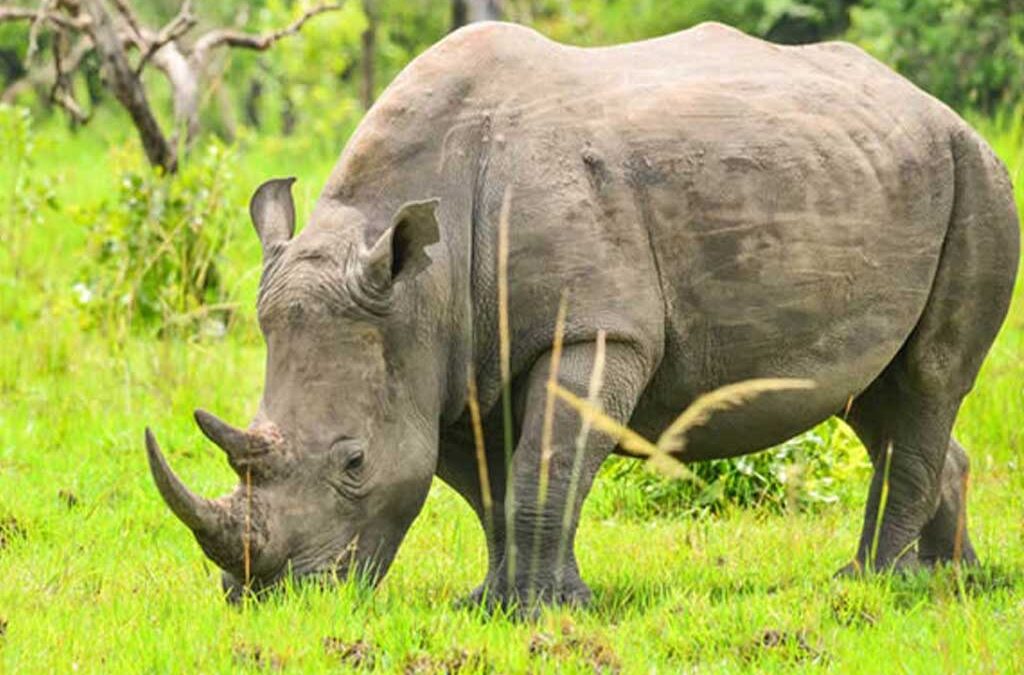
Rhinos in Akagera National Park are among the most exciting wildlife attractions to see on a Rwanda safari. Their return has also restored an important part of Akagera’s wildlife heritage and strengthened Rwanda’s reputation as a destination where visitors can experience the African Big Five.
Akagera National Park is home to the Big Five: lion, elephant, buffalo, leopard, and rhinoceros. However, this was not always the case. For many years, rhinos disappeared from the park because of intense poaching and other pressures on wildlife. Their reintroduction marked an important step in restoring the park’s original wildlife diversity.
Today, a safari in Akagera offers visitors the opportunity to explore open savannahs, wetlands, lakes, woodland, and rolling landscapes while looking for some of Africa’s most iconic animals. If you are planning a Rwanda wildlife safari, seeing a black rhino in Akagera can be one of the most memorable moments of the journey.
The Return of Rhinos to Akagera National Park
The story of black rhinos in Akagera National Park is closely connected to Rwanda’s wider conservation journey. Black rhinos once moved across the park’s savannah landscapes, but heavy poaching eventually removed them from the area.
For decades, visitors could no longer expect to see rhinos during an Akagera game drive. Their absence represented a significant loss because rhinos are an important part of Africa’s natural ecosystems.
The situation began to change as conservation organizations and the Rwanda Development Board strengthened wildlife protection and park management. In 2017, 18 eastern black rhinos were translocated from South Africa to Rwanda, marking their return to Akagera after a long absence.
The animals arrived at Kigali International Airport before being transported to Akagera National Park. Their arrival attracted considerable attention because it restored the fifth member of the Big Five to Rwanda.
For visitors, however, the significance goes beyond simply adding another animal to a safari checklist. The return of rhinos demonstrates how long-term conservation can gradually restore wildlife populations that once disappeared from a protected area.
Why Were Rhinos Extinct in Akagera?
Historically, black rhinos were part of the wildlife of Akagera. Unfortunately, poaching placed enormous pressure on their population.
During the 1970s and subsequent decades, rhinos became increasingly vulnerable because of the illegal demand for rhino horn. As poaching intensified, their numbers declined dramatically.
Eventually, rhinos disappeared from Akagera. The loss was not simply about one species. It also changed the ecological character of the park and reduced the range of wildlife that visitors could encounter.
Conservation efforts later focused on restoring the species while simultaneously improving security and wildlife management.
Today, protecting rhinos requires continuous work because black rhinos remain critically endangered. Their conservation therefore depends on effective law enforcement, habitat protection, monitoring, community involvement, and responsible tourism.
The 2017 Black Rhino Reintroduction
The reintroduction of 18 eastern black rhinos to Akagera National Park in 2017 represented a major milestone for conservation in Rwanda.
The rhinos were transported from South Africa and carefully introduced into their new environment. Before and after the translocation, conservation teams had to consider animal health, security, habitat suitability, and the ability of the park to support the population.
The reintroduction also required extensive preparation. Rhinos are large, powerful animals, but that does not make them immune to threats. They still require close monitoring and strong protection against poaching.
Some of the conservation measures supporting rhino protection in Akagera include:
-
Specialized rhino monitoring teams.
-
Anti-poaching patrols.
-
Canine units trained to support wildlife security.
-
Aerial surveillance.
-
Close monitoring of individual rhinos.
-
Improved cooperation between conservation authorities and local communities.
These measures help create a safer environment for rhinos and other wildlife species.
Five More Eastern Black Rhinos Arrived in 2019
The conservation story continued in June 2019, when five additional eastern black rhinos were introduced to Akagera.
The group consisted of two males and three females. Conservationists released the animals into bomas as part of a carefully planned introduction designed to strengthen the park’s rhino population and increase genetic diversity.
Genetic diversity matters because healthy wildlife populations need sufficient variation to remain resilient over generations. Therefore, introducing carefully selected animals can support the long-term conservation of a species.
The 2019 introduction demonstrated that rhino conservation in Akagera was not a one-time project. Instead, it formed part of a continuing effort to establish a sustainable population.
Where Can You See Rhinos in Akagera National Park?
Visitors often ask where they can find rhinos in Akagera National Park. Unlike some animals that regularly gather around particular water sources, rhinos can move across large areas of suitable habitat.
Consequently, there is no single location where a safari guide can guarantee a rhino sighting.
Experienced guides, however, understand animal behavior and use recent sightings, tracks, vegetation, water availability, and other signs to determine where to search.
A typical rhino search can therefore become an exciting part of the game drive. Instead of simply driving to a fixed location, you may spend time exploring different sections of the park while your guide watches carefully for movement in the grassland and woodland.
This is one reason why having an experienced guide can make a considerable difference during an Akagera safari.
What Do Black Rhinos Look Like?
Black rhinos are among the largest land mammals in Africa. Despite their name, their skin is generally grey rather than black.
They have two horns on their snout, with the front horn usually being longer than the second. Their hooked upper lip is another distinctive feature and helps them feed on leaves, twigs, and other vegetation.
Black rhinos are generally browsers, meaning they often feed on woody plants, shrubs, leaves, and branches rather than relying mainly on short grass.
When you encounter one during a game drive, its size can be impressive. However, visitors should never underestimate these animals. Rhinos are wild creatures and need plenty of space.
For that reason, safari guides maintain appropriate distances and carefully monitor animal behavior.
Black Rhinos and the Big Five in Akagera
The return of the rhinoceros completed Akagera’s Big Five wildlife experience.
Today, visitors exploring the park can potentially encounter:
-
African elephant
-
African buffalo
-
Lion
-
Leopard
-
Eastern black rhinoceros
However, seeing all five species during one safari is never guaranteed. Wildlife moves freely, and each animal has its own habitat preferences and daily behavior.
For instance, lions may be easier to locate in some areas because they live in prides and often rest in open areas. Leopards, on the other hand, are generally more elusive and can be difficult to spot.
Rhinos add another exciting possibility to the experience. Their conservation story also gives a game drive in Akagera a deeper meaning because visitors are not simply observing wildlife; they are witnessing the results of years of conservation work.
Akagera National Park Conservation and Rhino Protection
Akagera National Park has been managed in partnership with African Parks since 2010, working alongside the Rwanda Development Board. This partnership has supported major conservation and tourism developments within the park.
Wildlife protection requires much more than putting boundaries around a national park. Rangers need to patrol large areas, monitor animals, respond to threats, and work with surrounding communities.
Akagera has consequently invested in stronger conservation systems, including wildlife monitoring, anti-poaching operations, canine teams, and aerial surveillance.
These efforts are particularly important for rhinos because their horns make them targets for illegal wildlife trafficking.
At the same time, tourism contributes to the wider conservation model. Visitors pay park fees and contribute to the tourism economy, while employment and community programs can help create incentives for protecting wildlife.
Therefore, a well-managed safari can contribute to the long-term protection of species such as the eastern black rhinoceros.
Why Rhino Conservation Matters to Rwanda
The conservation of rhinos in Akagera National Park has significance beyond the park itself.
Rwanda has developed a strong wildlife tourism sector based around several different ecosystems. Akagera provides the country’s savannah safari experience, while Volcanoes National Park is internationally recognized for mountain gorilla trekking and Nyungwe offers opportunities to explore one of Rwanda’s important forest ecosystems.
The return of rhinos has therefore added another dimension to Rwanda’s tourism offering.
A traveler can combine several experiences during one Rwanda safari, such as:
-
Big Five game drives in Akagera.
-
Boat trips on Lake Ihema.
-
Mountain gorilla trekking in Volcanoes National Park.
-
Chimpanzee tracking in Nyungwe.
-
Cultural experiences with local communities.
-
Scenic journeys through Rwanda’s mountainous countryside.
Experiya Tour Company can help travelers organize a Rwanda itinerary that combines these experiences according to their available time, interests, and budget.
Best Time to See Rhinos in Akagera National Park
You can visit Akagera National Park throughout the year, although wildlife-viewing conditions can change with the seasons.
During drier periods, vegetation may become less dense and animals often concentrate closer to available water sources. These conditions can make wildlife easier to observe in some areas.
The wetter months bring greener scenery and can make parts of the park more challenging to navigate. Nevertheless, the landscape becomes especially attractive, and the rainy season can provide excellent opportunities for photography.
Therefore, the best time for rhino tracking in Akagera National Park depends partly on what else you want to experience during your safari.
Rather than focusing exclusively on one species, it is useful to consider the entire wildlife experience, including elephants, lions, buffaloes, leopards, hippos, giraffes, zebras, antelopes, birds, and the park’s beautiful landscapes.
What to Expect During a Rhino Safari in Akagera
A rhino encounter is not like visiting an enclosure where an animal is guaranteed to appear at a particular time.
Instead, you enter the park with an experienced guide and search for wildlife in its natural habitat. Your guide may stop to examine tracks, scan open grasslands, or check information about recent animal movements.
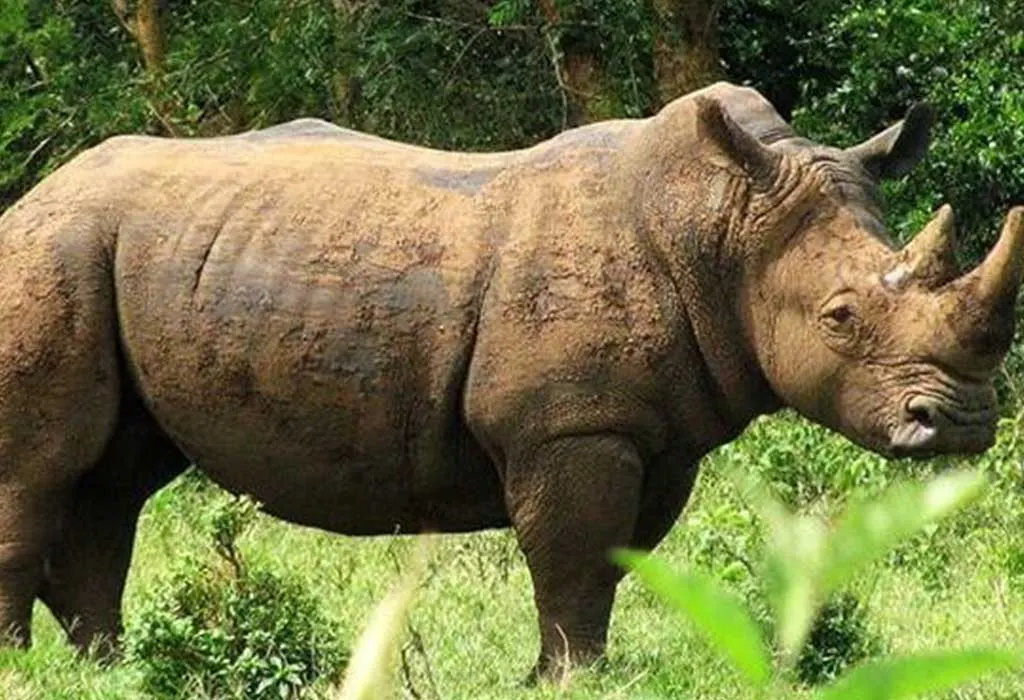
When a rhino is located, the vehicle approaches carefully while maintaining a respectful distance.
The experience can feel particularly special because the animals are living freely within the park. You may see a rhino feeding, walking through vegetation, resting, or moving across the savannah.
Remember that wildlife sightings are unpredictable. Even if you visit specifically hoping to see a rhino, there is no guarantee that one will appear during your game drive.
How Tourism Supports Rhino Conservation
Responsible tourism has an important role in supporting wildlife conservation. When travelers visit Akagera, they contribute to the broader tourism economy through park fees, accommodation, transportation, guiding services, and other activities.
This creates economic value around protecting the park and its wildlife.
Moreover, local communities surrounding protected areas are an important part of long-term conservation. Conservation becomes more sustainable when communities can benefit from tourism and participate in protecting natural resources.
As a result, visiting Akagera is not only about taking photographs and enjoying a game drive. It can also contribute to a larger conservation system that protects wildlife for future generations.
Frequently Asked Questions About Rhinos in Akagera National Park
Are there rhinos in Akagera National Park?
Yes. Akagera National Park is home to eastern black rhinos. The species was reintroduced to the park in 2017 after being absent for many years.
How many rhinos were introduced to Akagera?
An initial group of 18 eastern black rhinos was introduced to Akagera in 2017. Five additional rhinos, consisting of two males and three females, arrived in 2019 to support the population and genetic diversity.
Are rhinos part of the Big Five in Akagera?
Yes. Rhinos are one of the African Big Five found in Akagera National Park, together with lions, elephants, buffaloes, and leopards.
Can I see rhinos on an Akagera safari?
Yes, rhino sightings are possible during game drives in Akagera. However, wildlife moves freely, so sightings cannot be guaranteed.
Are Akagera’s rhinos black or white rhinos?
Akagera is known for its eastern black rhinoceroses. They are a critically endangered subspecies and form an important part of the park’s conservation program.
Why were rhinos removed from Akagera?
Poaching was a major factor in the disappearance of rhinos from Akagera. Their return followed years of conservation, improved wildlife protection, and habitat management.
What other animals can I see in Akagera?
Besides rhinos, visitors can encounter lions, elephants, buffaloes, leopards, giraffes, zebras, hippos, antelopes, crocodiles, and many bird species.
Can I combine Akagera with gorilla trekking?
Yes. Travelers can combine an Akagera wildlife safari with gorilla trekking in Volcanoes National Park. The two destinations provide very different wildlife experiences and can be included in a broader Rwanda itinerary.
Plan Your Akagera Rhino Safari with Experiya Tour Company
Seeing rhinos in Akagera National Park offers much more than a chance to photograph one of Africa’s most iconic animals. It provides an opportunity to witness an important conservation success story in Rwanda.
From their historical disappearance to their carefully managed return, the story of Akagera’s black rhinos demonstrates the value of long-term wildlife protection. Today, the park gives visitors the opportunity to explore a recovering ecosystem where rhinos share the landscape with elephants, lions, buffaloes, leopards, giraffes, zebras, and numerous other species.
If you are planning a Rwanda safari, Experiya Tour Company can help organize an itinerary that combines Akagera’s savannah wildlife with other major attractions, including Volcanoes National Park and Nyungwe. With the right planning, your journey can combine wildlife viewing, conservation experiences, primate encounters, scenic landscapes, and cultural activities into one memorable Rwanda adventure.