Amazing Facts About the Virunga Mountains
November 25, 2026
What is a Boat Cruise to Murchison Falls Like?
November 25, 2026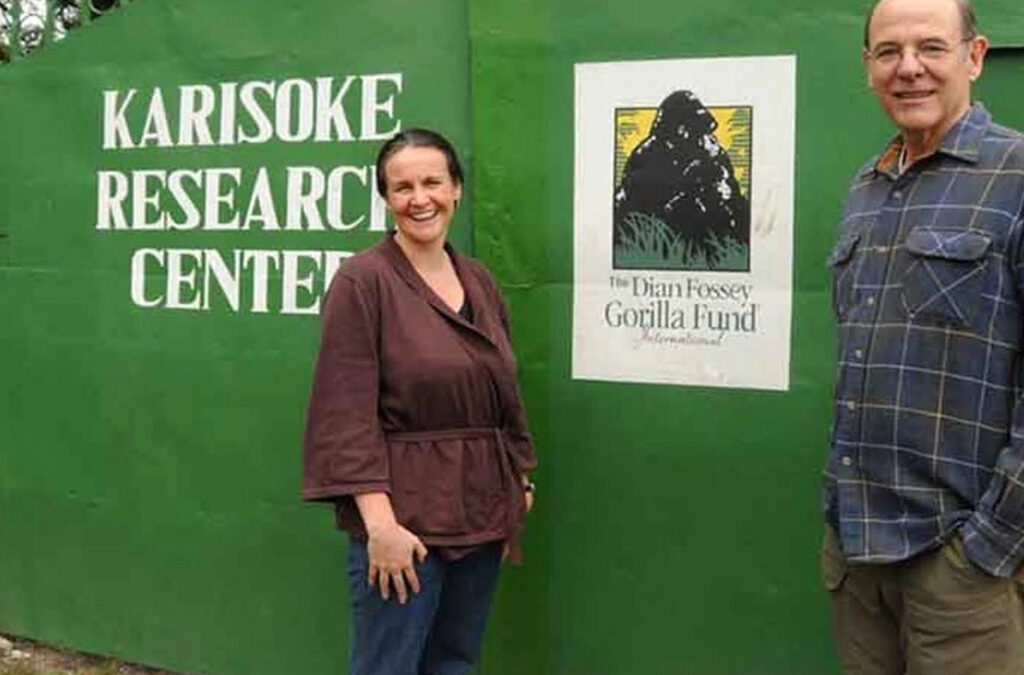
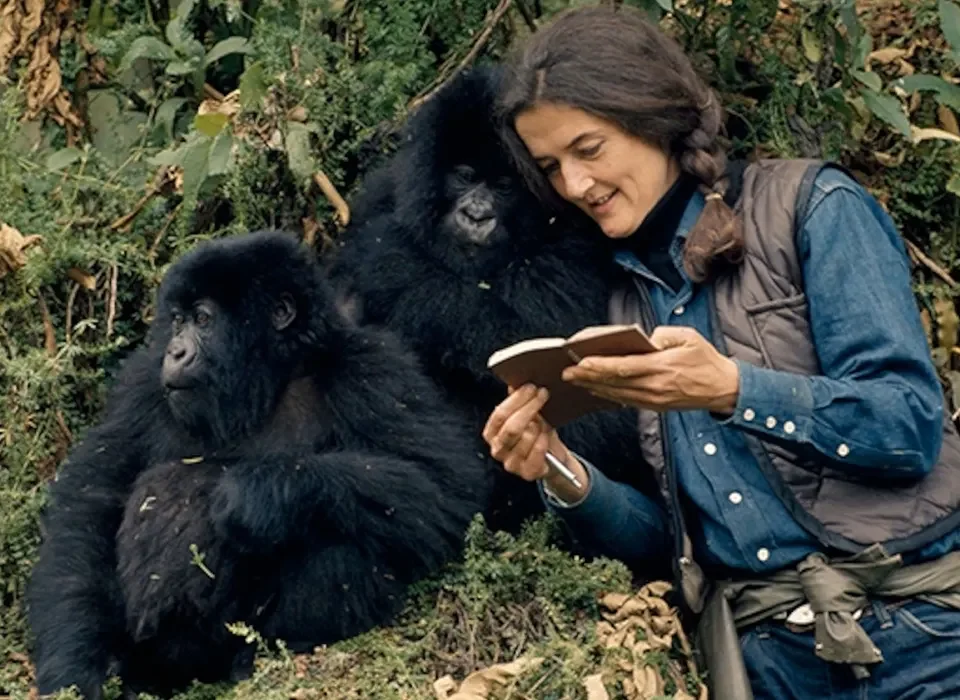
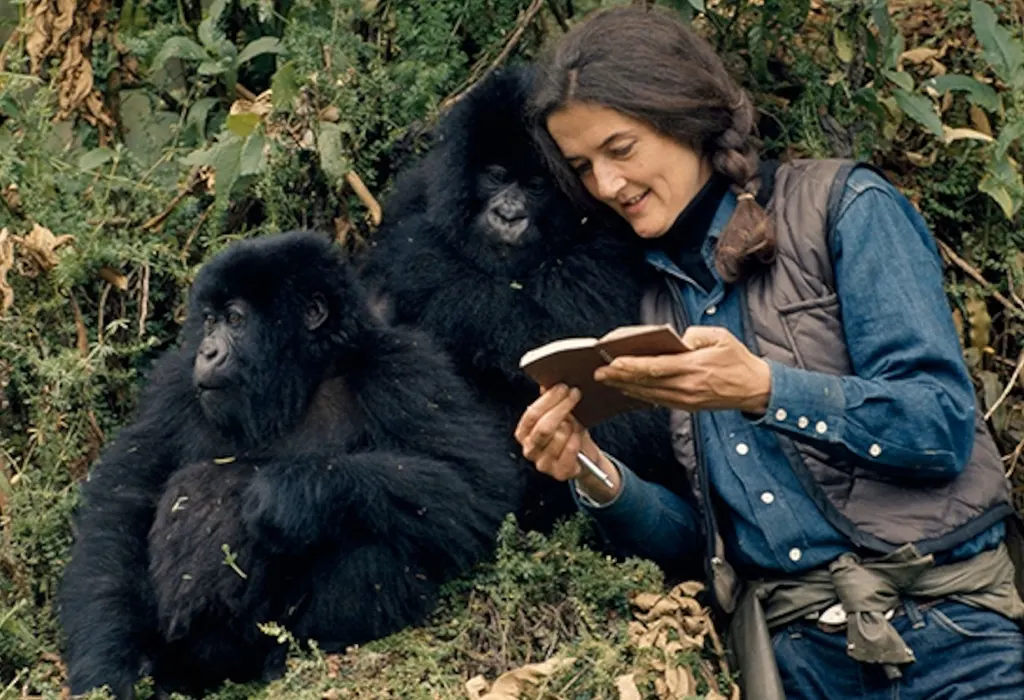
The Karisoke Research Center is one of the most important mountain gorilla conservation and research institutions in Africa. Located in Rwanda’s northern region, its history is closely connected to the work of the renowned American primatologist Dian Fossey, who dedicated much of her life to studying and protecting endangered mountain gorillas. Established in 1967, Karisoke became a foundation for scientific research, gorilla monitoring and wildlife conservation in the Virunga Mountains.
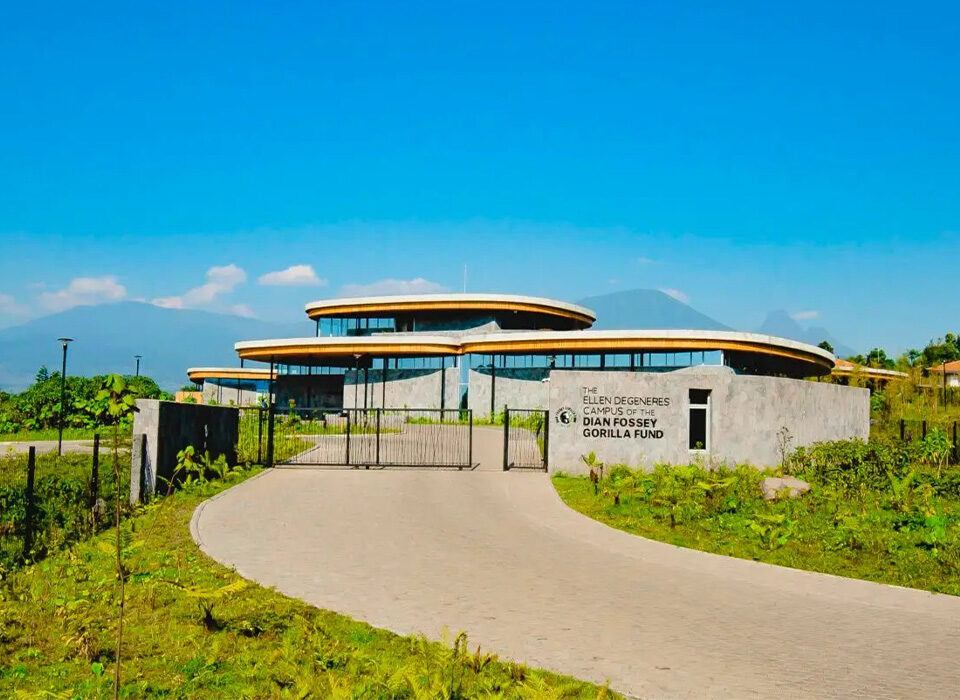
Today, the legacy of the Karisoke Research Center continues through the Dian Fossey Gorilla Fund, which supports scientific research, community development and daily protection of mountain gorillas. For visitors planning Rwanda gorilla safaris, understanding Karisoke’s history provides a deeper appreciation of the conservation efforts behind gorilla trekking in Volcanoes National Park.
With Experiya Tour Company, travellers can explore Rwanda’s remarkable wildlife destinations, experience mountain gorilla trekking and discover the conservation history that makes this country one of Africa’s leading primate destinations.
1. History of the Karisoke Research Center in Rwanda
The story of the Karisoke Research Center began on September 24, 1967, when Dian Fossey established a small research camp in the Virunga Mountains of Rwanda. Her camp stood between two magnificent volcanoes, Mount Karisimbi and Mount Bisoke. She created the name Karisoke by combining parts of the names of these two mountains.
Dian Fossey had developed a strong interest in mountain gorillas after travelling to Africa and meeting renowned wildlife researchers. Inspired by her passion for primate conservation, she returned to Rwanda to undertake long-term studies of mountain gorilla behaviour, family relationships and natural habitats.
At the time, mountain gorillas faced serious threats from poaching, habitat destruction and human activities. Consequently, Fossey recognised the urgent need to understand these animals and protect them from extinction. She established a permanent research presence in the forest and began observing gorilla families in their natural environment.
Her research gradually transformed scientific understanding of mountain gorillas. She documented their social relationships, feeding habits, communication, movements and family structures. Furthermore, she developed methods that allowed researchers to monitor individual gorillas over extended periods.
Fossey later shared her experiences in her famous book, Gorillas in the Mist, published in 1983. The book introduced millions of readers to mountain gorillas and the challenges involved in protecting them. It also inspired greater international interest in Rwanda’s wildlife conservation.
Unfortunately, Dian Fossey was murdered at her research camp in December 1985. Although her death was a tragic loss to conservation, the work she established continued through the organisation that eventually became the Dian Fossey Gorilla Fund.
2. The Role of Karisoke Research Center in Mountain Gorilla Conservation
The Karisoke Research Center has played a significant role in protecting endangered mountain gorillas in Rwanda. Its conservation activities focus on understanding gorilla behaviour, monitoring their health, protecting their habitats and supporting the people who live near protected forests.
Unlike ordinary wildlife observation projects, Karisoke maintains long-term records of individual gorillas and their family relationships. Researchers use this information to understand how gorilla populations develop, how groups interact and how environmental changes affect their survival.
Today, the Dian Fossey Gorilla Fund continues this important work through scientists, trackers and conservation teams operating in Rwanda.
Its main conservation activities include:
- Daily gorilla monitoring: Trackers observe mountain gorilla families and record their movements, health and social behaviour.
- Scientific research: Researchers study gorilla feeding patterns, reproduction, communication and relationships.
- Anti-poaching protection: Conservation teams work with relevant authorities to identify threats and protect wildlife habitats.
- Forest biodiversity research: Scientists investigate other wildlife and plant species that share the gorillas’ natural environment.
- Conservation education: The organisation supports training opportunities for students and aspiring Rwandan conservationists.
Through these activities, Karisoke has become an internationally recognised centre for mountain gorilla research and conservation.
3. Where Is the Karisoke Research Center Located?
Historically, the Karisoke Research Center operated between Mount Karisimbi and Mount Bisoke in the Virunga Mountains, within the landscape of present-day Volcanoes National Park.
However, visitors should understand that the original research camp and the modern research headquarters are different locations. The Dian Fossey Gorilla Fund now operates its research and conservation programmes from its regional facilities in Musanze, Rwanda.
Musanze, formerly known as Ruhengeri, is the main gateway to Volcanoes National Park and Rwanda’s famous mountain gorilla trekking experiences.
The area is surrounded by beautiful volcanic landscapes, green hills, agricultural communities and montane forests. It also provides access to several important tourism attractions, including Dian Fossey’s former research site and burial place.
Visitors interested in the history of gorilla conservation can arrange suitable excursions around the region while enjoying the wider attractions of northern Rwanda.
4. Dian Fossey’s Legacy and the Dian Fossey Gorilla Fund
Dian Fossey’s contribution to mountain gorilla conservation remains one of the most remarkable stories in African wildlife protection. Her determination brought international attention to the threats facing mountain gorillas and helped establish a foundation for long-term conservation.
Following her death, the organisation continued developing her research programmes and expanding its conservation activities.
Today, the Dian Fossey Gorilla Fund works with the Rwandan government, conservation organisations, researchers and surrounding communities to protect mountain gorillas and their forest habitats.
Its work extends beyond gorillas because the forests of the Virunga Mountains support numerous other wildlife species and valuable plant communities.
The organisation also recognises that successful conservation depends on the well-being of neighbouring communities. Therefore, it supports programmes involving education, food security, water access and sustainable livelihoods.
These initiatives help reduce pressure on natural forests while encouraging local people to participate in protecting wildlife.
Furthermore, the organisation provides training and learning opportunities for university students, researchers and young conservation professionals. This helps develop Rwanda’s next generation of scientists and wildlife conservation specialists.
5. The Work of Gorilla Trackers and Researchers at Karisoke
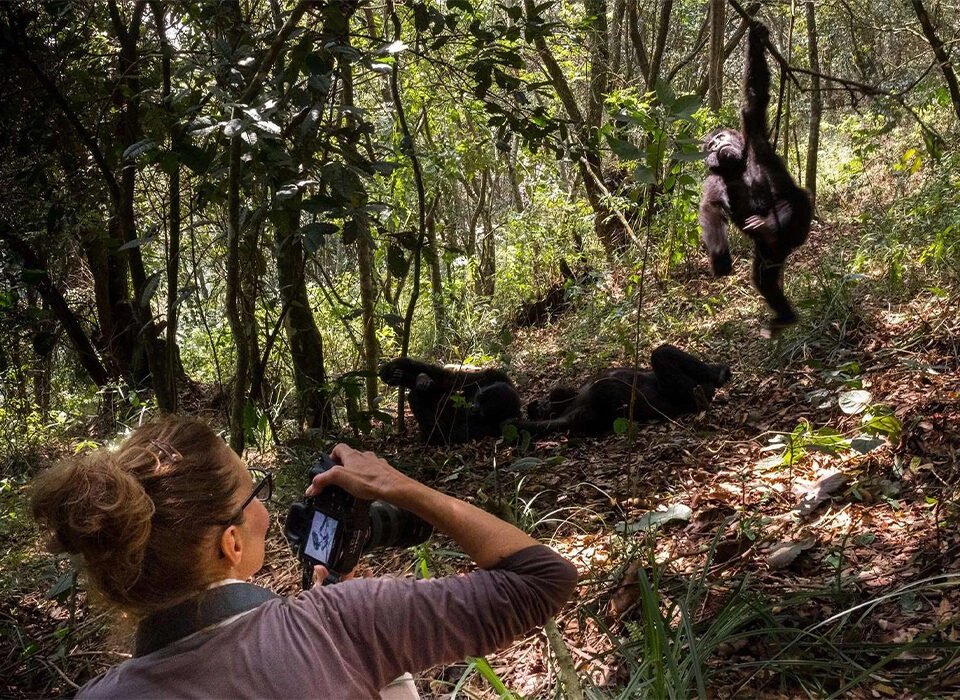
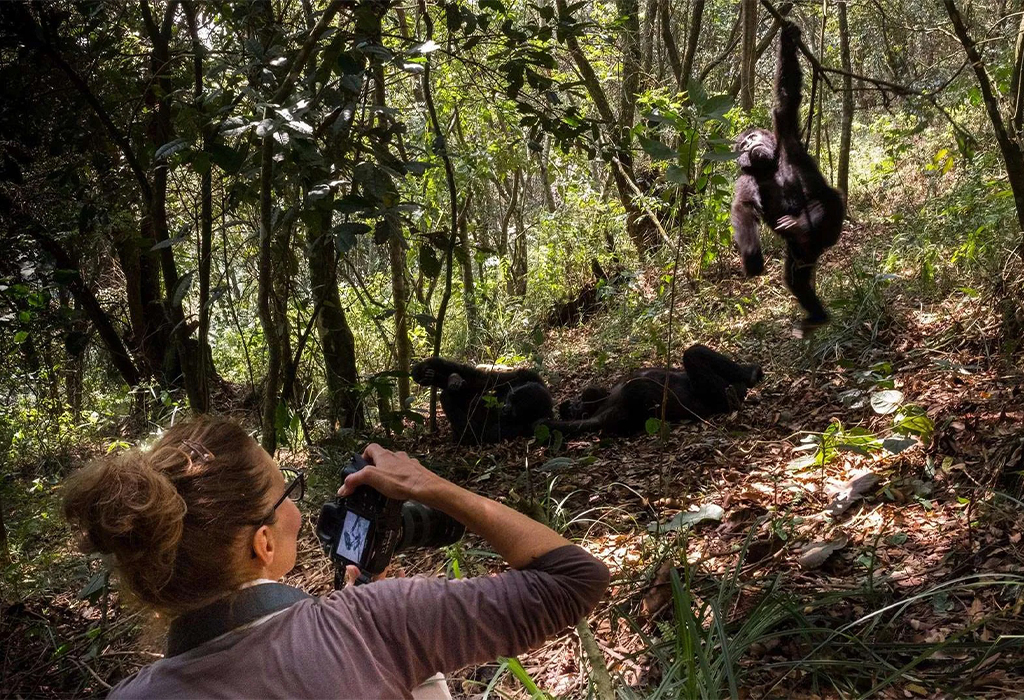
One of the most important activities associated with the Karisoke Research Center is daily gorilla monitoring. Trackers and researchers enter the forest to locate, observe and document mountain gorilla families.
Their work requires patience, experience and a detailed understanding of gorilla behaviour. They follow established trails, examine signs of gorilla activity and record information about individual animals.
For instance, researchers monitor:
- New births and the development of young gorillas.
- Changes in family membership and social relationships.
- Gorilla feeding habits and preferred vegetation.
- Injuries, illnesses and general physical conditions.
- Movements between different sections of the forest.
- Interactions between silverbacks, females and younger gorillas.
This information helps scientists understand population changes and identify potential conservation challenges.
Trackers also contribute to the wider gorilla tourism experience by helping locate habituated families before visitors begin their trekking activities. However, tourism trackers and scientific research teams have distinct responsibilities, even though their work contributes to the same conservation objectives.
Consequently, Rwanda’s mountain gorilla conservation programme benefits from the combined efforts of researchers, trackers, park rangers and local communities.
6. Mountain Gorilla Trekking in Volcanoes National Park, Rwanda
Volcanoes National Park is Rwanda’s most famous destination for mountain gorilla trekking. Located in the country’s northwestern region, the park forms part of the larger Virunga Conservation Area, which extends across Rwanda, Uganda and the Democratic Republic of Congo.
Covering approximately 160 square kilometres, the park protects a remarkable montane ecosystem consisting of bamboo forests, evergreen vegetation, grasslands, swamps and volcanic slopes.
Its most famous residents are the endangered mountain gorillas, although visitors can also encounter golden monkeys, forest birds and other wildlife.
Volcanoes National Park has several habituated gorilla families available for tourism. These families have gradually become accustomed to carefully managed human observation, allowing visitors to experience them in their natural habitat.
Some of the well-known gorilla families include:
- Sabyinyo Gorilla Family
- Amahoro Gorilla Family
- Agashya Gorilla Family
- Susa and Karisimbi Gorilla Families
- Umubano Gorilla Family
- Kwitonda Gorilla Family
- Bwenge Gorilla Family
- Ugenda Gorilla Family
- Hirwa Gorilla Family
The availability and location of individual families can change. Therefore, park authorities allocate trekking groups according to daily arrangements and the condition of the gorilla families.
For many travellers, encountering a mountain gorilla family in the forest is the highlight of a Rwanda safari.
7. What to Expect During a Rwanda Gorilla Trekking Experience
A typical gorilla trekking adventure begins early in the morning. After breakfast, your safari driver-guide collects you from your hotel and transfers you to the Volcanoes National Park headquarters at Kinigi.
Visitors normally report at 7:00 a.m. for registration, briefing and allocation to gorilla families.
During the briefing, park rangers explain the trekking regulations, safety precautions and appropriate behaviour around mountain gorillas. Visitors are then assigned to small groups and accompanied by experienced guides into the forest.
The actual trekking duration varies depending on the location and movements of the assigned gorilla family. Some visitors find their gorillas relatively quickly, while others spend several hours walking through thick vegetation and challenging mountain terrain.
Once the trackers locate the family, visitors receive a maximum of one hour to observe these fascinating primates.
During this special encounter, you may see:
- Young gorillas playing and climbing through vegetation.
- Adult females feeding and caring for their infants.
- Silverbacks protecting and leading their families.
- Juveniles interacting and developing social relationships.
- Gorillas feeding on leaves, shoots and other forest vegetation.
Photography is permitted without flash. Visitors must also follow their ranger’s instructions and maintain the required distance from the gorillas.
The experience offers an extraordinary opportunity to understand the behaviour of one of humanity’s closest living relatives.
8. How Much Does a Rwanda Gorilla Trekking Permit Cost?
A Rwanda gorilla trekking permit costs US$1,500 per foreign visitor under the standard international visitor category. The permit allows one person to participate in a single gorilla trekking experience in Volcanoes National Park.
The Rwanda Development Board manages gorilla trekking permits and provides the official booking platform.
Permits are limited because the authorities regulate the number of visitors allowed to see each gorilla family. Generally, a maximum of eight visitors can visit one habituated family during a session, with a maximum viewing period of one hour.
The minimum age for gorilla trekking in Rwanda is 15 years.
Visitors should arrange their permits well in advance, particularly during popular travel periods. Although availability varies, early reservations help secure preferred travel dates.
Experiya Tour Company can assist travellers with:
- Checking gorilla permit availability.
- Arranging permit reservations.
- Organising private safari transportation.
- Selecting accommodation around Volcanoes National Park.
- Planning Kigali and Musanze excursions.
- Combining gorilla trekking with other Rwanda safari experiences.
Always confirm the applicable permit price and eligibility conditions with the Rwanda Development Board when booking, as special rates and promotional arrangements may change.
9. Other Attractions to Explore Around Volcanoes National Park
Although mountain gorillas attract most visitors, the surrounding region offers several additional attractions that make Rwanda gorilla safaris even more rewarding.
Travellers can combine their gorilla trekking experience with other outdoor adventures and cultural activities.
Mount Bisoke: This impressive volcano is popular among hikers who want to explore its scenic slopes and beautiful crater lake. The hike provides rewarding views of the Virunga landscape.
Mount Karisimbi: Standing at approximately 4,507 metres, Karisimbi is the highest volcano in the Virunga range. Its challenging two-day hiking experience attracts adventurous travellers.
Dian Fossey’s Grave: Visitors can undertake a guided hike to the historic Karisoke research site and Dian Fossey’s burial place. The excursion provides an opportunity to appreciate her remarkable conservation legacy.
Golden Monkey Tracking: Volcanoes National Park also protects endangered golden monkeys. Visitors can join guided tracking experiences to observe these colourful primates in their natural bamboo forest habitat.
Iby’Iwacu Cultural Village: This community tourism attraction offers opportunities to learn about Rwandan traditions, traditional music, dance and local cultural practices.
Twin Lakes of Burera and Ruhondo: These beautiful lakes offer scenic landscapes, photography opportunities and relaxing excursions around the Musanze region.
10. How to Get to Karisoke Research Center and Volcanoes National Park
Volcanoes National Park lies approximately two to three hours by road from Kigali, depending on traffic and the exact destination.
Most travellers begin their Rwanda gorilla safari in Kigali before transferring to Musanze. From there, they continue to Kinigi, where the park’s tourism headquarters are located.
Visitors can travel using private safari vehicles or public transportation, although a private 4×4 safari vehicle offers greater flexibility and comfort.
If you wish to visit the historic Karisoke research site, arrange the appropriate guided excursion in advance. The original camp is reached through a mountain forest hike rather than an ordinary road transfer.
A visit to the region can be organised as part of a longer Rwanda safari or combined with gorilla trekking in Volcanoes National Park.
11. What to Pack for Rwanda Gorilla Trekking
Gorilla trekking takes place in a mountainous rainforest where weather conditions can change quickly. Even during relatively dry periods, visitors may encounter muddy trails, rain and cool temperatures.
Therefore, packing appropriate clothing and equipment makes the experience more comfortable.
We recommend bringing:
- Waterproof hiking boots with good ankle support.
- Long-sleeved shirts and comfortable hiking trousers.
- Gardening or trekking gloves for handling vegetation.
- A waterproof rain jacket.
- A small backpack for personal belongings.
- Drinking water and energy-giving snacks.
- A hat and sunglasses.
- Sunscreen and insect repellent.
- A camera with flash photography disabled.
- Warm clothing for cool mornings and higher elevations.
You can also hire a local porter at the trekking starting point to assist with your backpack and provide additional support along difficult trails. Hiring a porter is a valuable way to support people living around the national park.
12. Book Rwanda Gorilla Safaris with Experiya Tour Company
A visit to the Karisoke Research Center offers more than an opportunity to learn about Dian Fossey. It introduces travellers to the remarkable conservation history behind Rwanda’s mountain gorillas and the continuing efforts to protect these endangered primates.
From the historic research grounds between Mount Karisimbi and Mount Bisoke to the unforgettable gorilla encounters in Volcanoes National Park, northern Rwanda provides an exceptional combination of wildlife, adventure, culture and conservation.
Whether you are planning a one-day gorilla trekking excursion from Kigali or a longer Rwanda wildlife holiday, Experiya Tour Company can help organise a memorable safari experience.
Our Rwanda gorilla safari arrangements can include gorilla trekking permits, accommodation, professional driver-guides, private transportation, cultural excursions and guided visits to selected attractions around Musanze.
Discover the remarkable legacy of Dian Fossey, explore the beautiful Virunga Mountains and encounter endangered mountain gorillas in their natural habitat.
Contact Experiya Tour Company to plan your Rwanda gorilla safari and experience the conservation story behind one of Africa’s most extraordinary wildlife encounters.