
What Is the Best Time to See Lions in Uganda?
July 27, 2026
Interesting Facts About the African Buffalo
July 28, 2026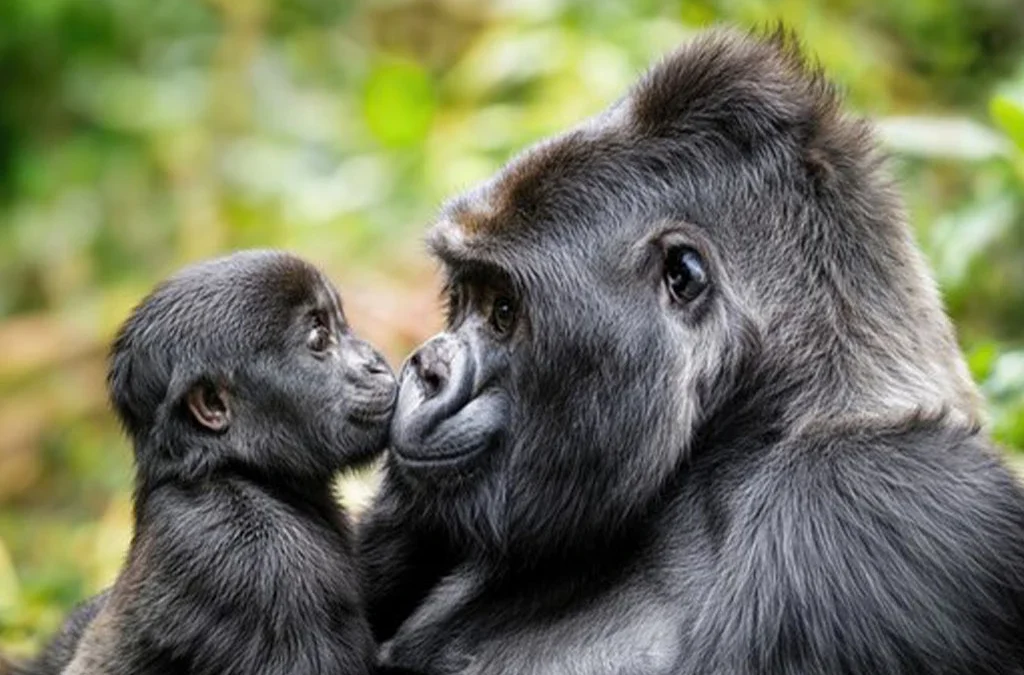
Silverback gorillas are among the most remarkable animals on Earth. As the largest living primates, they inspire awe with their immense strength, gentle nature, and extraordinary intelligence. Found in the mist-covered forests of Uganda, Rwanda, and the Democratic Republic of the Congo, these magnificent creatures play a vital role in maintaining the health of their forest ecosystems.
The term “silverback” refers to a mature male mountain gorilla that develops a distinctive patch of silver-gray hair across its back, usually after reaching about 12 years of age. This striking feature symbolizes maturity, leadership, and responsibility within the gorilla family.
Although silverback gorillas are powerful enough to defend their families against serious threats, they are naturally peaceful animals that prefer harmony over conflict. Unfortunately, habitat destruction, disease, and poaching continue to threaten their survival despite encouraging conservation progress.
At Experiya Tour Company, we believe that learning about these incredible primates deepens every gorilla trekking experience. Here are twelve fascinating facts that reveal why silverback gorillas remain one of Africa’s greatest wildlife treasures.
The Silverback is the Leader of the Gorilla Family
Every gorilla family is led by a dominant adult male known as the silverback. His role extends far beyond displaying strength. He makes important decisions for the entire troop, including where they travel, where they feed, and where they build their nests for the night.
More importantly, the silverback protects every member of the family. If danger approaches, he immediately positions himself between the threat and the rest of the group. His courage and experience ensure the survival of his troop.
In addition to being a fearless protector, a silverback forms strong emotional bonds with his family. He often plays with young gorillas, comforts distressed members, and patiently watches over infants while their mothers feed nearby. His leadership combines strength with remarkable compassion.
Silverback Gorillas Are Gentle but Fearless Defenders
Despite their enormous size, silverback gorillas are naturally calm and peaceful. They spend most of their day feeding, resting, grooming, and interacting with family members rather than fighting.
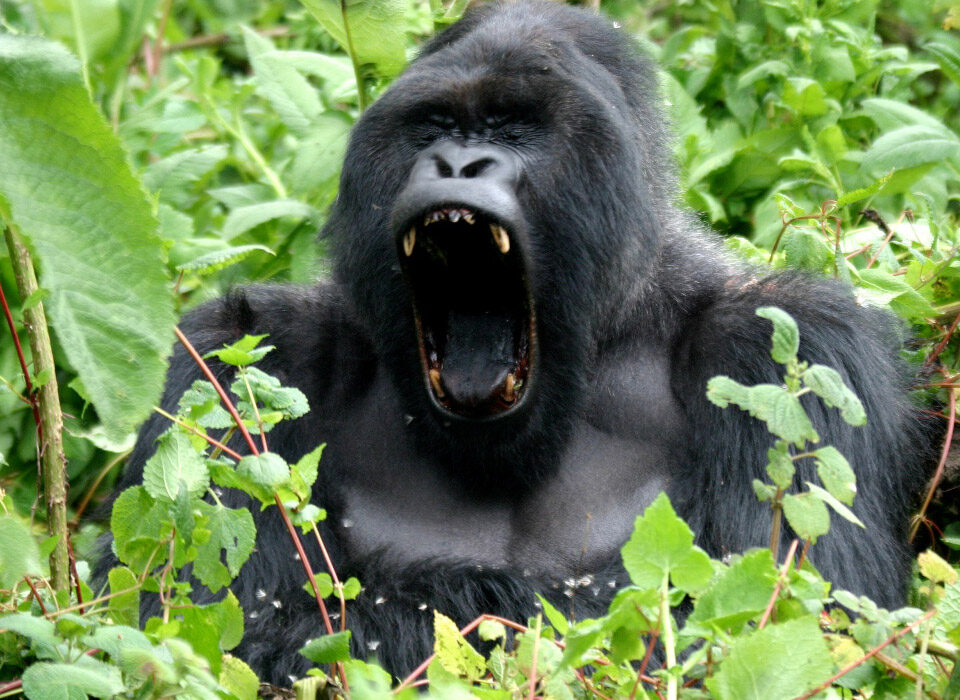
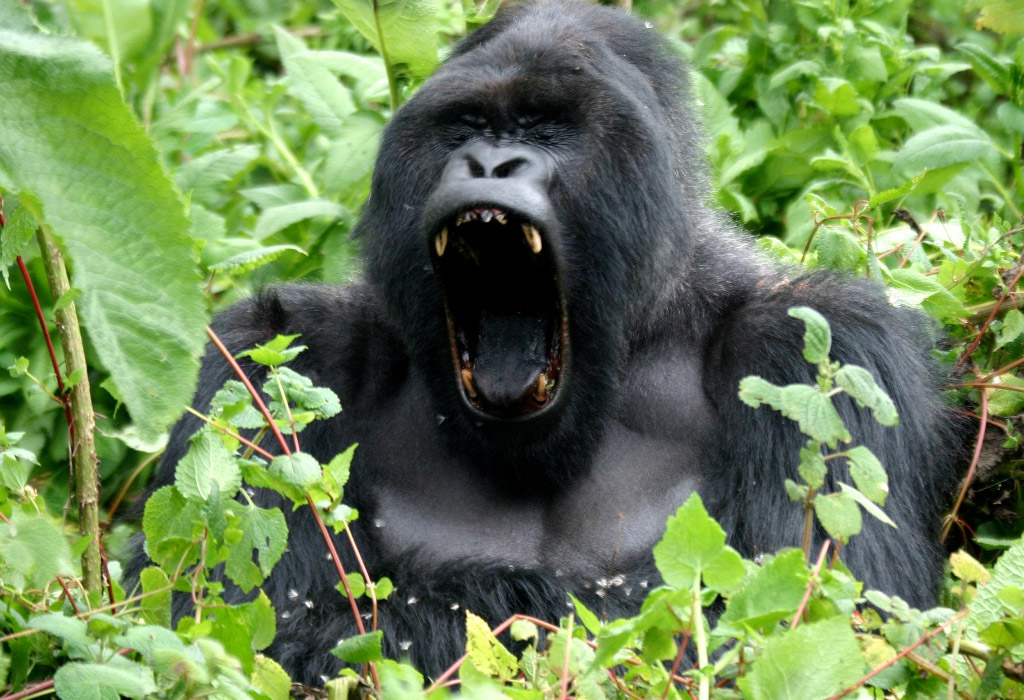
However, when danger threatens the troop, their behavior changes instantly. A silverback may stand upright, roar loudly, charge forward, beat his chest, or display his impressive canine teeth to intimidate predators or rival males. These displays usually prevent physical fights because they clearly communicate the silverback’s strength.
Fortunately, actual fights are uncommon. Silverbacks prefer to avoid unnecessary conflict whenever possible, choosing intimidation instead of violence.
Family Comes First
Mountain gorillas live in stable family groups called troops. A typical troop consists of one dominant silverback, several adult females, juveniles, and playful infants.
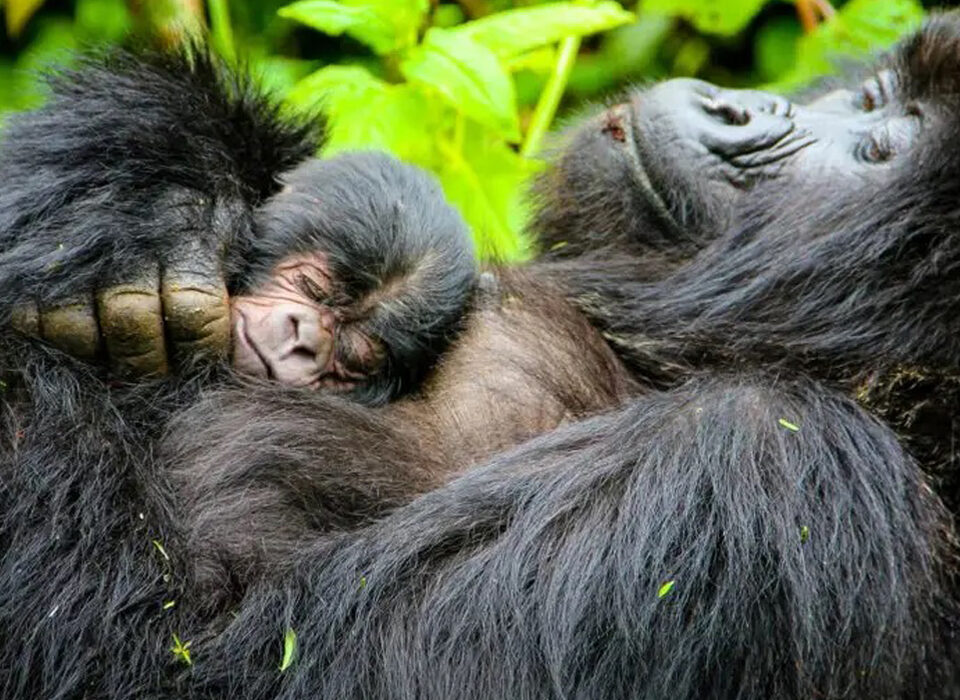
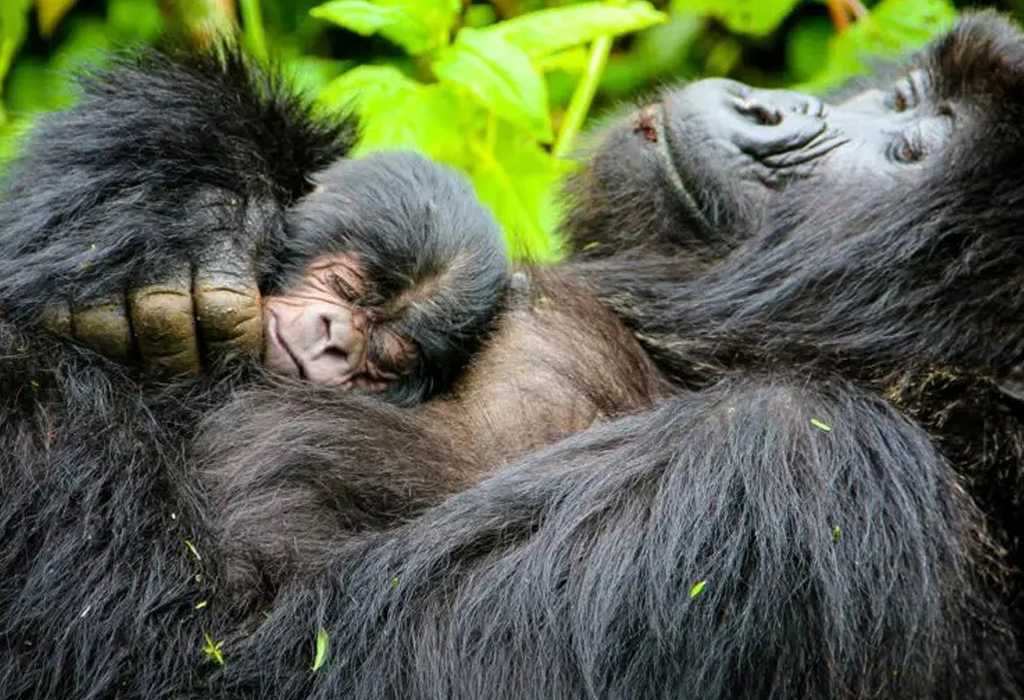
Family members spend much of their time together, grooming each other, resting close together, and caring for young gorillas. Mothers raise their babies with constant attention, while older siblings often help supervise younger ones.
This close social structure strengthens relationships throughout the group. Young gorillas also learn important survival skills through observation, play, and interaction with experienced adults. Their family bonds closely resemble those seen in human families.
Every Gorilla Has a Unique Nose Print
Just as every human has unique fingerprints, every mountain gorilla has a distinctive pattern of wrinkles around its nose.
Researchers discovered this many decades ago while studying wild gorillas. Since then, scientists have used nose prints to identify individual animals without disturbing them.
Today, conservationists continue photographing these unique nose patterns to monitor gorilla populations, study family relationships, and understand their behavior over many years. This simple identification method has greatly improved gorilla conservation research.
Silverback Gorillas Are Strict Herbivores
Many people assume that powerful animals must eat meat, but silverback gorillas prove otherwise.
Their diet consists mainly of leaves, stems, shoots, bark, bamboo, roots, wild celery, and seasonal fruits. An adult silverback may consume over 18 kilograms (40 pounds) of vegetation every day to meet his nutritional needs.
Interestingly, gorillas rarely overexploit one feeding area. Instead, they move regularly through the forest, allowing vegetation to regenerate naturally. This feeding behavior helps maintain healthy forest ecosystems and demonstrates nature’s remarkable balance.
They Rarely Need to Drink Water
Unlike many large mammals, silverback gorillas seldom drink water directly from rivers or streams.
Instead, they obtain most of the moisture they need from the succulent plants, fruits, and leaves they eat every day. Early in the morning, they may also lick dew from vegetation.
Because their diet contains such high water content, they remain well hydrated without frequently seeking drinking water. This adaptation allows them to thrive in their rainforest habitat.
Silverbacks Are Incredibly Strong
Silverback gorillas are the largest and strongest living primates.
Adult males typically stand between 5.5 and 6 feet tall when upright and weigh between 300 and 500 pounds (136 to 227 kilograms). Females generally weigh about half as much.
Their physical strength is extraordinary. Scientists estimate that a fully grown silverback can lift or move weights many times greater than the average human. They can effortlessly bend thick branches, break apart vegetation, and climb steep mountain terrain despite their massive size.
Even with such incredible strength, they move with surprising agility through dense forests.
Chest Beating Is a Form of Communication
One of the most recognizable behaviors of silverback gorillas is chest beating.
Contrary to popular belief, chest beating does not always signal aggression. Instead, it serves several communication purposes. A silverback may beat his chest to announce his presence, demonstrate confidence, attract females, or warn rival males to stay away.
The sound can travel over long distances through the forest, allowing other gorillas to recognize the individual before seeing him.
Recent research also suggests that larger silverbacks produce deeper chest-beating sounds, helping other gorillas judge their size and strength without physical confrontation.
Silverback Gorillas Are Highly Intelligent
Silverback gorillas possess impressive cognitive abilities that continue to fascinate scientists.
They solve problems, remember complex social relationships, and learn through observation. Researchers have also documented gorillas using sticks to test water depth, support themselves while crossing wetlands, or access difficult food sources.
Their communication skills are equally remarkable. Mountain gorillas use facial expressions, body language, vocalizations, and gestures to communicate with one another. Scientists have identified more than 25 different vocal sounds, each carrying specific meanings such as warning, reassurance, playfulness, or distress.
These sophisticated behaviors demonstrate that gorillas possess advanced intelligence and emotional awareness.
Silverback Gorillas Can Live for Decades
In the wild, silverback gorillas generally live between 35 and 40 years. Under professional care in zoological institutions, some individuals have lived well beyond 50 years due to consistent nutrition and veterinary care.
Adult silverbacks face few natural predators because of their tremendous size and strength. Leopards occasionally target young or vulnerable gorillas, but human activities pose the greatest threat to their survival.
Poaching, disease transmission, and habitat destruction continue to shorten the lifespan of many wild gorillas despite ongoing conservation efforts.
Silverback Gorillas Remain an Endangered Species
Although mountain gorilla populations have shown encouraging recovery, they remain classified as Endangered by the International Union for Conservation of Nature (IUCN).
Their forest habitat continues to shrink because of agricultural expansion, illegal logging, and increasing human settlement. Additionally, gorillas remain vulnerable to diseases carried by humans because they share a large percentage of our DNA.
Conservation organizations, park authorities, local communities, and responsible tourism operators work together to protect gorillas through anti-poaching patrols, habitat restoration, veterinary care, and community education.
Thanks to decades of conservation work, mountain gorilla numbers have gradually increased, proving that dedicated protection efforts can make a real difference.
You Can See Silverback Gorillas in the Wild
One of Africa’s most unforgettable wildlife experiences is meeting a silverback gorilla in its natural habitat.
Visitors can enjoy guided gorilla trekking adventures in Uganda’s Bwindi Impenetrable National Park and Mgahinga Gorilla National Park, Rwanda’s Volcanoes National Park, or the Democratic Republic of the Congo’s Virunga National Park.
Professional park rangers lead small groups through dense forests until they locate a habituated gorilla family. Once found, visitors spend one unforgettable hour quietly observing these magnificent primates as they feed, groom, play, and interact naturally.
This extraordinary encounter creates lasting memories while directly supporting gorilla conservation through permit fees and responsible tourism.
Experience Gorilla Trekking with Experiya Tour Company
Meeting a silverback gorilla face-to-face is an experience unlike any other. Watching these gentle giants care for their families, communicate with one another, and move gracefully through the forest offers a deeper appreciation for one of Earth’s most intelligent animals.
Experiya Tour Company specializes in unforgettable gorilla trekking safaris across Uganda and Rwanda. From securing trekking permits to arranging comfortable accommodation, professional guides, and seamless transportation, we ensure every detail of your adventure is carefully planned.
Whether you dream of exploring the ancient forests of Bwindi Impenetrable National Park or witnessing the breathtaking scenery surrounding mountain gorillas, Experiya Tour Company is ready to help you experience one of Africa’s greatest wildlife encounters while supporting the ongoing conservation of these extraordinary primates.