Is December a Good Time to Visit Uganda?
September 7, 2026
Things to Do in Uganda During Christmas Holiday
September 8, 2026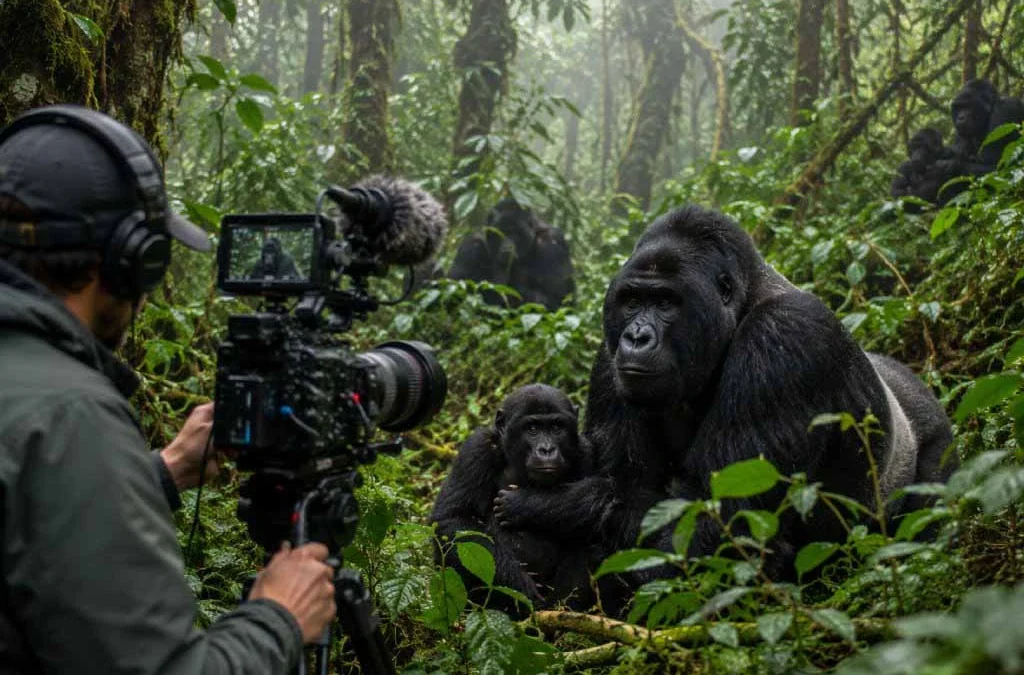
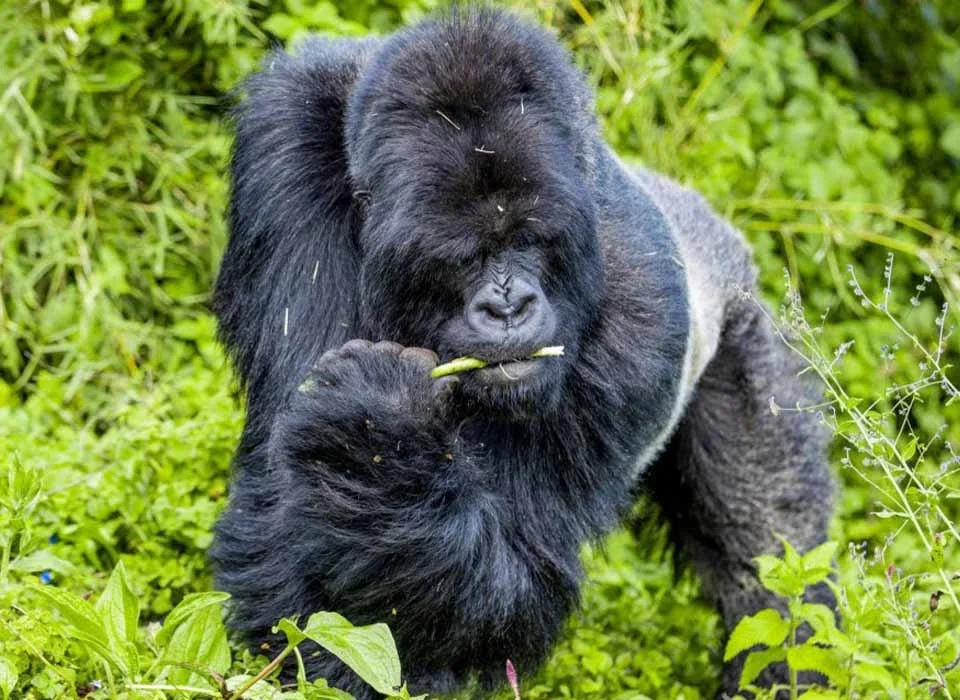
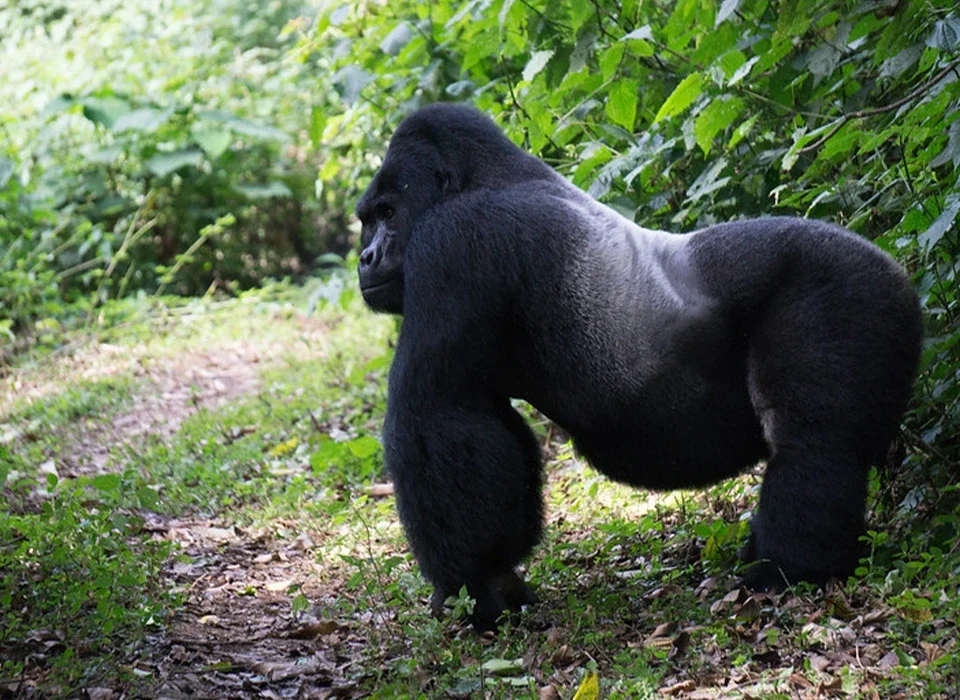
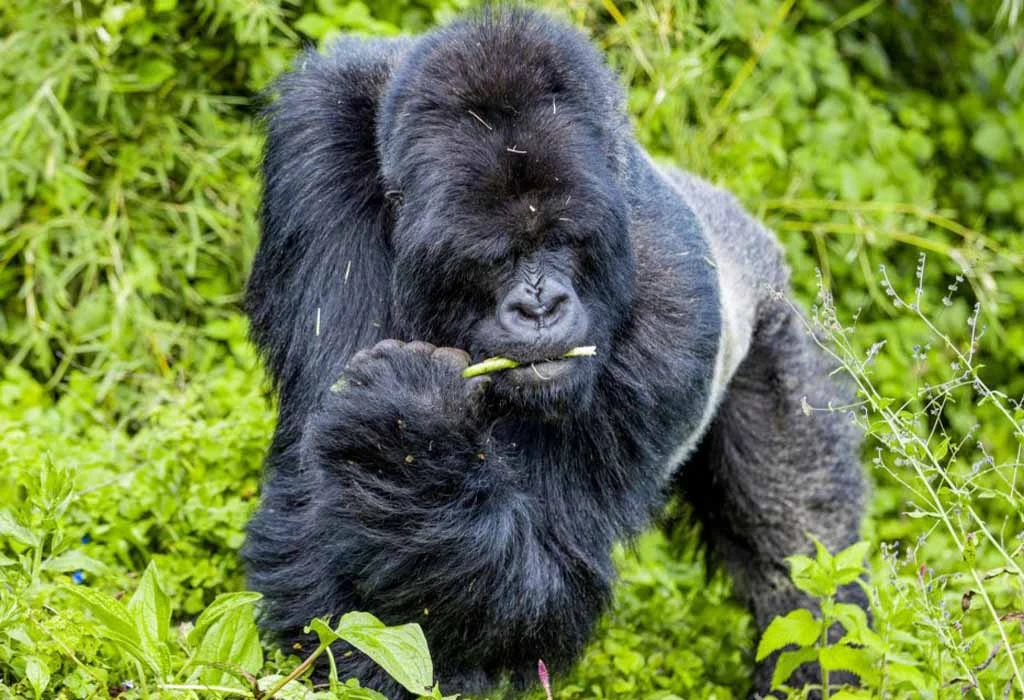
Few wildlife experiences can match the thrill of filming a mountain gorilla in its natural habitat. In Uganda’s Bwindi Impenetrable National Park, filmmakers can capture intimate scenes of gorillas feeding, playing, grooming, climbing, and interacting with one another while surrounded by ancient rainforest.
Bwindi, located in southwestern Uganda, protects one of the most important populations of mountain gorillas in the world. Its thick montane forest, dramatic hills, misty valleys, and rich biodiversity also provide a spectacular setting for documentaries, conservation films, television productions, photography projects, and other professional productions.
For production teams planning to film gorillas in Uganda, Experiya Tour Company can assist with safari planning, park logistics, accommodation, transportation, permit coordination, and local arrangements.
Why Film Mountain Gorillas in Bwindi?
Bwindi offers filmmakers much more than close-up wildlife footage. The park combines remarkable animal behaviour with an extraordinary natural environment, creating opportunities to tell powerful conservation and human-interest stories.
Several gorilla families have undergone habituation, allowing them to tolerate the presence of people under carefully controlled conditions. As a result, filmmakers can observe natural behaviours without relying on captive animals or artificial settings.
The forest itself also adds visual depth to a production. Towering trees, tangled vegetation, streams, steep slopes, mist, and changing light create a constantly evolving backdrop. Consequently, a gorilla documentary can communicate both the beauty of the species and the importance of protecting its habitat.
Bwindi’s Gorilla Filming Sectors
Bwindi has four main tourism sectors: Buhoma, Ruhija, Rushaga, and Nkuringo. Each offers a different filming environment, so choosing the right sector depends on your production objectives.
Buhoma
Buhoma is Bwindi’s oldest and one of its most established tourism sectors. It has good accommodation options and relatively developed tourism infrastructure. The sector can suit crews that value accessibility and convenient access to park facilities.
Ruhija
Ruhija sits in the eastern part of Bwindi and offers a beautiful highland environment. Its rolling terrain, forested ridges, and cool atmosphere create excellent opportunities for environmental and landscape footage alongside gorilla scenes.
Rushaga
Rushaga, in southern Bwindi, is particularly important for gorilla tourism and habituation activities. Filming teams interested in longer gorilla viewing opportunities may consider this sector, subject to the relevant permits and UWA arrangements.
Nkuringo
Nkuringo provides some of Bwindi’s most dramatic scenery. Steep slopes and expansive views create a strong sense of wilderness. However, the rugged terrain can make filming physically demanding, especially when crews carry large camera systems.
Gorilla Behaviour to Capture on Camera
Mountain gorillas offer filmmakers an impressive range of natural behaviours. With patience and guidance from experienced trackers, crews may capture scenes that give audiences a deeper understanding of gorilla family life.
Silverback behaviour often provides some of the most powerful footage. A dominant male may monitor his family, feed, interact with other gorillas, or display his strength through chest beating.
Family interactions are equally fascinating. Gorillas groom one another, communicate through different vocalisations, share space, and maintain complex social relationships. These quiet moments can become some of the most meaningful scenes in a documentary.
Young gorillas also bring energy to the forest. Infants cling to their mothers, while juveniles climb, wrestle, chase one another, and explore their surroundings. Their unpredictable movements can produce lively footage.
Feeding is another important filming opportunity. Gorillas spend much of their day searching for and consuming vegetation. This behaviour allows crews to observe them for extended periods while also showing the relationship between the animals and their forest habitat.
Gorilla Filming Permits and Regulations
Professional filming inside Bwindi requires appropriate authorization from the Uganda Wildlife Authority (UWA). Production teams should therefore begin the permit process well before travelling to Uganda.
The requirements can vary according to the nature and scale of the production. Filmmakers may need to provide information about the project, crew members, equipment, filming locations, and intended use of the footage. Additional approvals may apply to larger or specialized productions.
Experiya Tour Company can help production teams understand the applicable requirements and coordinate the necessary arrangements.
During filming, crews must follow UWA rules designed to protect both people and gorillas. The recommended minimum viewing distance is generally seven metres, although gorillas may occasionally approach visitors on their own. When this happens, crews should follow ranger instructions and avoid deliberately moving closer.
Filmmakers should also avoid loud conversations, sudden movements, and anything that could disturb the animals. Flash photography is not appropriate during gorilla encounters, and drone use within the park is subject to strict restrictions and should never be attempted without explicit authorization.
Because mountain gorillas are vulnerable to human illnesses, crew members who feel unwell should not participate in gorilla encounters. Following health and hygiene guidance is an essential part of responsible filming.
Best Time for Gorilla Filming
Bwindi can be visited throughout the year, but different seasons offer different advantages.
June to September is generally popular because relatively drier conditions can make trekking easier. The period can work well for crews carrying substantial equipment, although demand may be higher.
December to February also offers favourable conditions for many travellers and filmmakers. The forest remains green, while periods of clearer weather can create attractive natural lighting.
The wetter months, particularly March to May and October to November, can make trails slippery and increase the challenge of protecting equipment. Nevertheless, rain, mist, clouds, and intense greenery can produce beautiful atmospheric footage.
Rather than focusing only on weather, filmmakers should choose their travel period according to the story, available permits, production schedule, and desired visual style.
Equipment for a Bwindi Film Expedition
The right equipment can make filming in Bwindi considerably easier. A professional crew may use cinema cameras or high-quality mirrorless systems, depending on the production budget and distribution requirements.
A versatile zoom lens can capture group scenes and environmental footage, while a medium telephoto lens works well for behavioural sequences. Longer lenses can help with distant subjects, particularly when gorillas move through vegetation.
Crews should also carry sturdy but lightweight tripods or monopods, spare batteries, memory cards, rain covers, protective equipment cases, and reliable audio equipment. Since Bwindi is a wet rainforest environment, waterproof protection should be treated as essential rather than optional.
Porters can also make a major difference. Carrying heavy camera equipment across steep and muddy trails can quickly become exhausting, so using authorized local porters helps crews move safely and efficiently.
Accommodation and Transport
Production teams should select accommodation close to their chosen filming sector. Staying nearby reduces early-morning travel time and makes it easier to reach the park entrance on schedule.
Experiya Tour Company can arrange accommodation ranging from comfortable budget lodges to high-end properties, depending on the production’s requirements.
For transportation, a reliable 4×4 safari vehicle is particularly useful. The vehicle should provide sufficient space for crew members, camera cases, luggage, and other production equipment. Teams travelling with extensive equipment should discuss their requirements in advance so that suitable transport can be arranged.
A Sample Gorilla Filming Schedule
A practical filming expedition can begin with arrival in Uganda and an overnight stay near Entebbe or Kampala. The following day, the crew can travel to Bwindi and settle into accommodation near the selected sector.
The next morning should begin early with a briefing before entering the forest. Rangers and trackers then guide the crew toward the gorilla family. Once the group is located, filmmakers can concentrate on their planned shots while respecting all park regulations.
A second filming day can target behaviours that the crew missed during the first encounter. Additional time can then be dedicated to forest landscapes, birds, vegetation, community stories, and conservation interviews.
Depending on the project, the expedition can also be combined with chimpanzee filming in Kibale National Park or wildlife production in Queen Elizabeth National Park.
Plan Your Gorilla Filming Safari with Experiya Tour Company
Gorilla filming in Bwindi is an opportunity to create powerful wildlife and conservation stories in one of Africa’s most remarkable forests. However, successful production requires careful planning, appropriate permits, reliable transportation, suitable accommodation, experienced local support, and strict respect for gorilla welfare.
Experiya Tour Company can help organize the practical elements of your filming expedition, from transportation and accommodation to park arrangements and local coordination.
Whether you are producing a documentary, conservation project, educational film, or professional photography assignment, Bwindi provides an extraordinary setting for capturing mountain gorillas and the fragile ecosystem they call home.
Start planning your Uganda gorilla filming expedition early to give your production team the best opportunity to secure the necessary arrangements and create memorable footage responsibly.