
How Intelligent Are Gorillas?
July 27, 2026
The mountain gorilla is one of the world’s most fascinating primates, perfectly adapted to life in the dense forests of East and Central Africa. Found in Uganda, Rwanda, and the Democratic Republic of the Congo, these gentle giants have evolved remarkable physical, behavioral, and social characteristics that allow them to survive in challenging environments. Their habitats feature steep mountain slopes, thick vegetation, cool temperatures, and abundant rainfall, creating conditions that require specialized adaptations.
Experiya Tour Company invites you to discover the extraordinary ways gorillas have adapted to their natural environment. Understanding these adaptations not only enhances your appreciation of these magnificent animals but also makes every gorilla trekking experience more meaningful. Every movement, vocalization, and social interaction reflects millions of years of evolution that have enabled gorillas to thrive in some of Africa’s most beautiful forests.
Living in the Rainforest
Mountain gorillas inhabit tropical and montane forests at elevations ranging from approximately 2,200 to over 4,000 meters (7,200–13,100 feet). These forests remain cool, damp, and often covered in mist throughout the year. Despite these demanding conditions, gorillas flourish because they have evolved traits that help them cope with changing weather, rugged landscapes, and dense vegetation.
Unlike many wildlife species that migrate long distances, gorillas spend their lives within well-defined home ranges. They continuously explore different sections of these forests in search of fresh vegetation while allowing previously visited areas to regenerate naturally. As a result, they maintain a healthy balance with their environment without exhausting available food resources.
Powerful Bodies Built for Survival
One of the most noticeable adaptations of gorillas is their impressive physique. Adult males, commonly known as silverbacks, possess enormous strength, broad chests, and muscular shoulders. Their powerful bodies allow them to travel through thick vegetation, climb steep hillsides, and defend their families whenever danger arises.
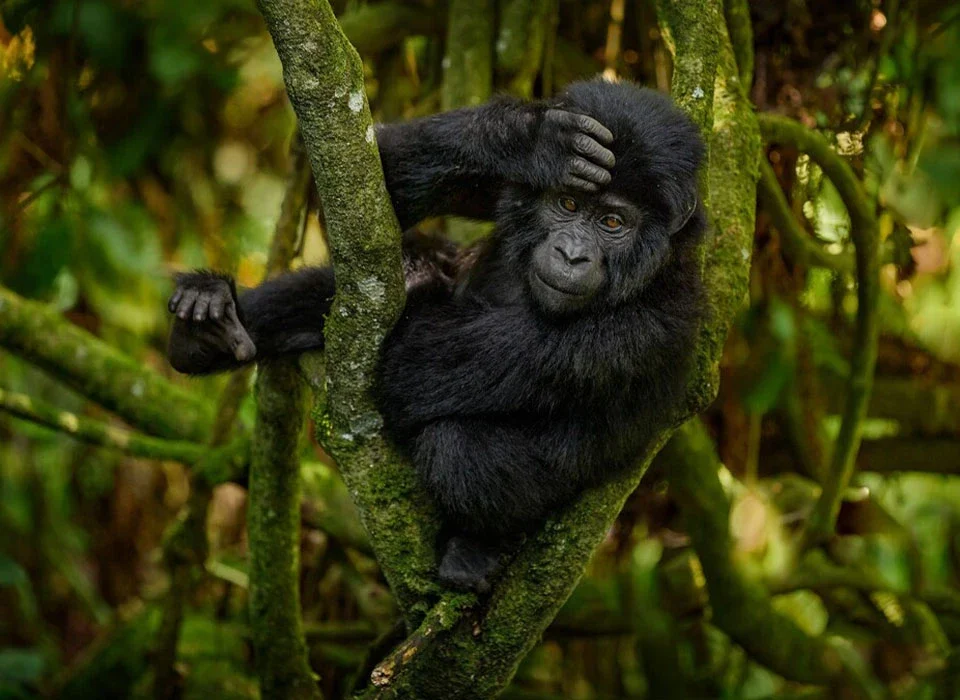
Although gorillas spend most of their time on the ground, they remain excellent climbers. Young gorillas frequently climb trees to play or feed, while adults occasionally climb sturdy branches when necessary. Their exceptional upper-body strength allows them to move confidently through their forest habitat while conserving energy.
This combination of strength and agility enables gorillas to survive in environments where both climbing and ground travel are essential for finding food and protecting family members.
Hands and Feet Designed for Forest Life
Gorillas possess remarkably specialized hands and feet that support their daily activities. Their hands feature opposable thumbs, allowing them to grasp branches, pick leaves, peel bark, and manipulate a wide variety of food sources with impressive precision.
Their feet also contribute significantly to their mobility. Flexible toes help maintain balance while climbing, whereas sturdy soles provide stability on uneven forest floors. These adaptations enable gorillas to move safely across muddy trails, rocky slopes, and dense undergrowth.
In addition, gorillas primarily use knuckle-walking as their preferred method of movement. By supporting their weight on their knuckles rather than their palms, they protect their fingers while traveling efficiently across rough terrain. However, they occasionally stand or walk upright for short distances when carrying food, surveying their surroundings, or reaching vegetation.
Specialized Teeth for a Plant-Based Diet
The gorilla’s diet consists mainly of leaves, shoots, stems, bark, roots, wild celery, bamboo, and seasonal fruits. To process these tough plant materials effectively, gorillas have evolved large molars and powerful jaw muscles that grind fibrous vegetation into digestible pieces.
A prominent ridge at the top of the skull, known as the sagittal crest, provides attachment points for these strong jaw muscles, particularly in adult males. This adaptation generates the force needed to chew coarse vegetation for extended periods each day.
Their digestive system also works efficiently to extract nutrients from fibrous plants, allowing gorillas to thrive on a diet that many other animals could not digest effectively.
Thick Fur Provides Protection
Unlike lowland gorillas, mountain gorillas live in cooler environments where temperatures can become surprisingly low. Consequently, they have developed long, dense fur that provides excellent insulation against cold weather, mist, and frequent rainfall.
This thick coat helps maintain a stable body temperature throughout the year. Instead of relying on migration to escape colder conditions, mountain gorillas remain active within their forests because their fur provides the necessary protection against changing weather.
Living Together as a Family
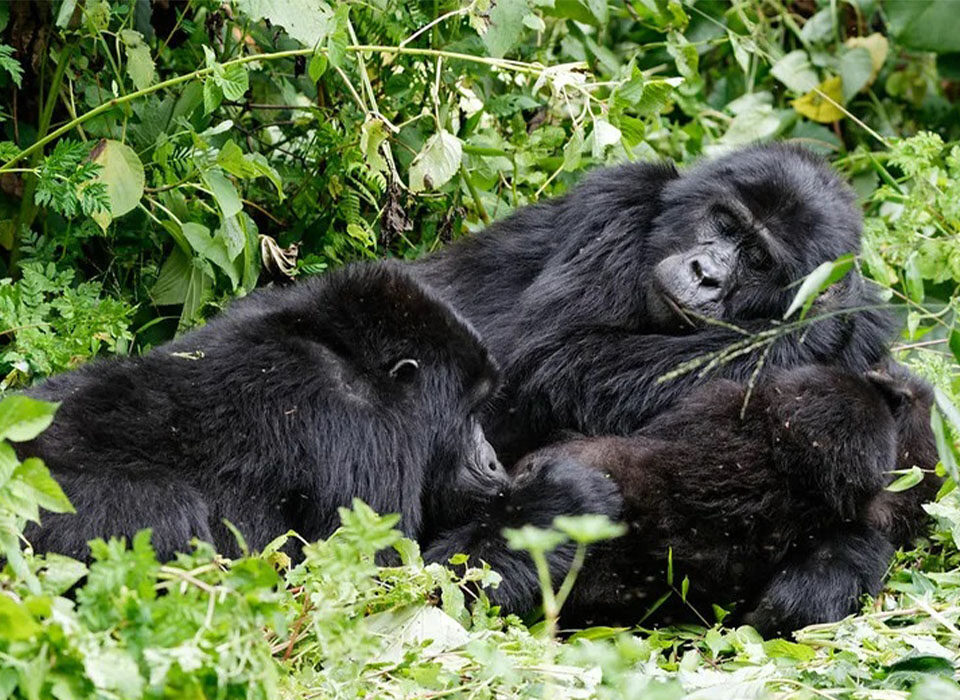
Perhaps one of the greatest adaptations of gorillas is their highly organized social structure. Most gorillas live in family groups led by a dominant silverback, who serves as both protector and decision-maker. Females, juveniles, and infants depend on the silverback for security, leadership, and stability.
The silverback determines when the group feeds, rests, travels, and settles for the night. He also protects the family from predators and rival males while maintaining harmony within the group.
Living in close-knit families offers many advantages. Young gorillas learn survival skills by observing older members, mothers receive support while raising infants, and group members cooperate to detect potential threats. These strong social bonds significantly increase the survival chances of every individual.
Communication Strengthens Social Bonds
Gorillas rely on sophisticated communication to maintain peaceful relationships within their groups. They use a wide range of vocalizations, facial expressions, body language, and gestures to express emotions and coordinate activities.
Soft grunts often indicate contentment during feeding, while louder vocalizations alert the group to possible danger. Infants communicate with playful sounds, and mothers respond with reassuring gestures. Silverbacks may produce impressive chest beats, vocal displays, or postures to warn rivals without resorting to physical conflict.
Interestingly, chest beating does not always signal aggression. Researchers have found that it frequently communicates identity, size, and confidence while helping avoid unnecessary fights. This form of communication reduces injuries and conserves valuable energy.
Building Nests Every Evening
At the end of each day, gorillas build fresh nests using branches, vines, and leaves. Young gorillas and many females often construct nests in trees, while larger adults typically build theirs on the ground because of their greater body weight.
These nests provide warmth, comfort, and protection during the night. Since gorillas create a new nest every evening, they help prevent parasites from accumulating in a single sleeping location. Nest building also demonstrates remarkable problem-solving abilities, as each gorilla carefully selects suitable materials and assembles them into a comfortable resting place.
Adapting Through Daily Movement
Rather than remaining in one location, gorillas travel within their home ranges to locate fresh vegetation. They carefully adjust their daily routes according to seasonal changes and food availability, ensuring they always have access to nutritious plants.
This flexible movement pattern allows forests to regenerate naturally after feeding, benefiting both gorillas and the surrounding ecosystem. As they travel, gorillas also disperse seeds through their waste, supporting forest regeneration and promoting plant diversity.
Because of this ecological role, gorillas are often referred to as “gardeners of the forest.” Their daily activities contribute directly to maintaining healthy rainforest ecosystems.
Emotional Intelligence and Learning
Gorillas display remarkable emotional intelligence that strengthens family relationships and improves survival. Mothers care for their infants with exceptional patience, while juveniles learn important life skills through observation, imitation, and play.
Researchers have documented behaviors that suggest empathy, curiosity, cooperation, and even mourning after the loss of family members. These emotional connections encourage cooperation within the group and reduce conflict.
Play also serves an important purpose beyond entertainment. Young gorillas develop strength, coordination, communication skills, and social awareness through playful interactions that prepare them for adulthood.
Conservation Ensures Their Future
Although gorillas have adapted successfully to their environment over thousands of years, modern challenges threaten their survival. Habitat loss, illegal hunting, disease, and human encroachment continue to place pressure on wild populations.
Fortunately, conservation initiatives across Uganda, Rwanda, and the Democratic Republic of the Congo have helped mountain gorilla numbers recover. Carefully managed tourism also contributes significantly to conservation by generating revenue for protected areas, supporting local communities, and funding anti-poaching efforts.
Visitors who participate in responsible gorilla trekking directly contribute to protecting these endangered primates while experiencing one of Africa’s most unforgettable wildlife encounters.
Conclusion
Gorillas represent one of nature’s finest examples of adaptation. From their muscular bodies and specialized hands to their thick fur, complex communication, strong family bonds, and intelligent behaviors, every characteristic has evolved to help them survive in challenging rainforest environments. Their adaptations not only ensure their own survival but also contribute to the health of the forests they inhabit.
Experiya Tour Company proudly offers unforgettable gorilla trekking experiences that bring travelers closer to these extraordinary primates while supporting responsible conservation. Witnessing mountain gorillas in their natural habitat provides a rare opportunity to appreciate the remarkable adaptations that have allowed them to flourish for generations. Every trek offers a deeper understanding of their resilience, intelligence, and vital role in preserving Africa’s spectacular rainforest ecosystems.