Are Gorillas Aggressive? Understanding Gorilla Behavior in the Wild
September 1, 2026
Unique Features of Kibale National Park
September 1, 2026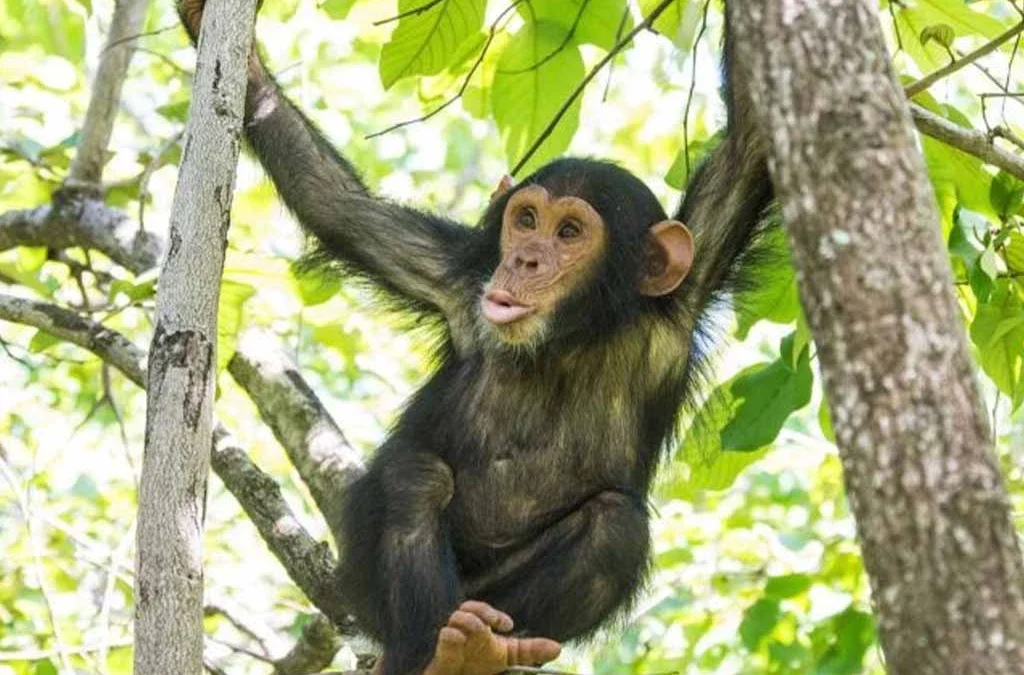
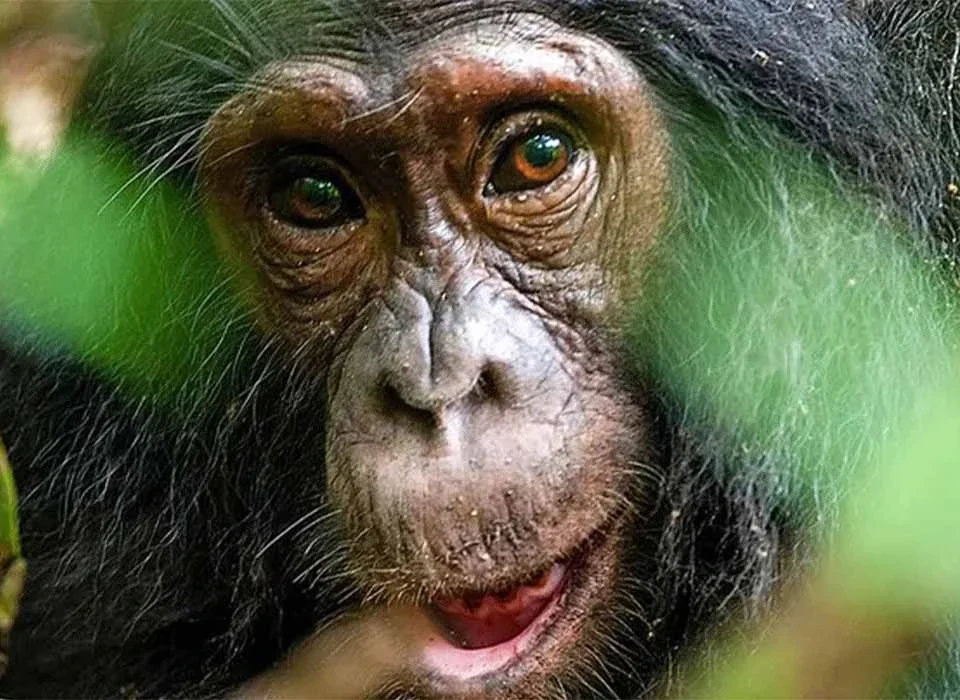
Chimpanzees are among the most fascinating animals in Africa. Intelligent, social, expressive, and surprisingly adaptable, these great apes share many characteristics with humans. In fact, chimpanzees are our closest living relatives, sharing roughly 98% of their DNA with humans.
Found naturally across parts of West and Central Africa, chimpanzees spend much of their time in forests, although some populations also live in woodland and forest–savanna mosaics. Sadly, these remarkable animals face increasing pressure from habitat loss, hunting, disease, and human activity.
For travelers visiting Uganda, chimpanzee trekking offers an opportunity to observe these intelligent primates in their natural environment. At Experiya Tour Company, chimpanzee experiences can be combined with other wildlife and cultural adventures to create a memorable Uganda safari.
Chimpanzees Are Great Apes
Chimpanzees belong to the great ape family, Hominidae, which also includes humans, gorillas, orangutans, and bonobos. Their scientific name is Pan troglodytes, while bonobos belong to Pan paniscus.
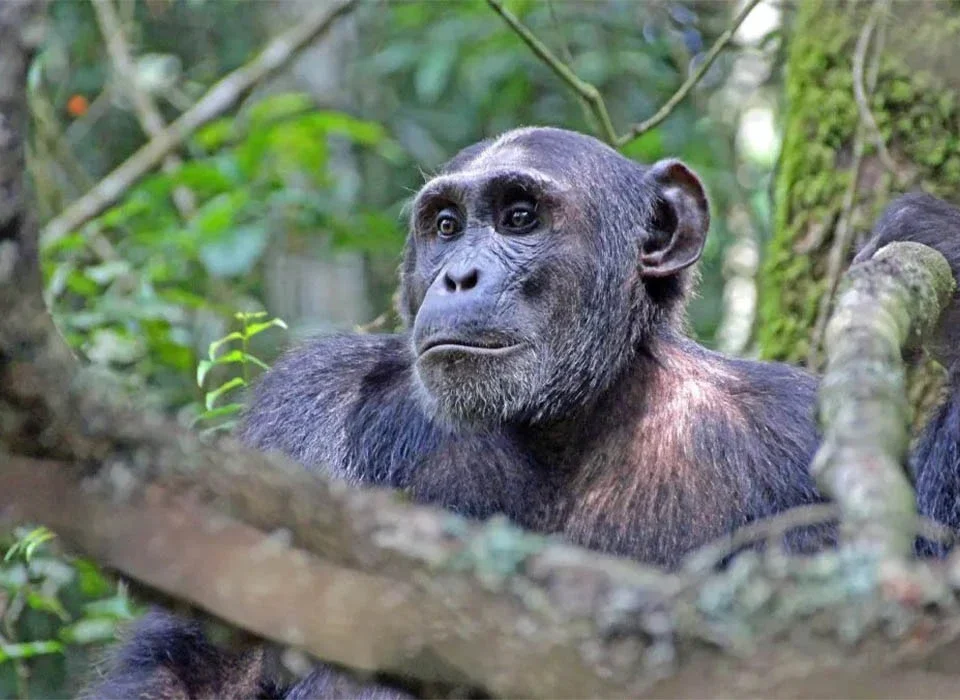
Unlike monkeys, chimpanzees do not have tails. They have long arms, opposable thumbs, flexible shoulders, and strong hands that help them climb trees and manipulate objects. Their bodies are covered with coarse black hair, while their faces, ears, palms, and soles are mostly hairless.
Adult chimpanzees vary considerably in size. Males are generally larger and heavier than females, although body size differs between populations.
Chimpanzees are also excellent climbers. They spend considerable time in trees feeding, resting, socializing, and building sleeping nests. On the ground, they usually move on all four limbs, although they can also walk upright for short distances.
Where Do Chimpanzees Live?
Chimpanzees naturally occur across a wide belt of equatorial Africa. Their range once covered a much larger area, but human development and habitat destruction have significantly reduced their distribution.
They inhabit tropical forests, woodland, and forest-savanna environments. Uganda is particularly important for chimpanzee conservation because it still supports several significant populations.
Some of the best places to encounter chimpanzees in Uganda include Kibale National Park, Budongo Forest, Kalinzu Forest, and Kyambura Gorge in Queen Elizabeth National Park.
Kibale National Park is especially famous for chimpanzee tracking. Visitors walk through the forest with trained guides while searching for chimpanzee communities. Hearing their calls echo through the trees before finally seeing them can be one of the most exciting moments of a Uganda safari.
Chimpanzees Are Highly Social Animals
Chimpanzees live in complex societies called communities. These groups can contain dozens or even more than 100 individuals, although they often split into smaller parties during the day.
Their social lives are remarkably sophisticated. Chimpanzees form friendships, compete for status, cooperate with one another, care for young ones, and sometimes support relatives and allies during conflicts.
Communication is central to their lives. They use vocalizations, facial expressions, body movements, and physical contact to communicate different messages.
For example, a chimpanzee may use gestures to request food, initiate play, seek reassurance, or warn others about danger. Researchers have documented dozens of meaningful gestures among wild chimpanzees.
Interestingly, some chimpanzee gestures resemble actions that humans naturally understand, suggesting that certain forms of communication may have very deep evolutionary roots.
Chimpanzees Can Use Tools
One of the best-known chimpanzee characteristics is their ability to use tools.
Chimpanzees have been observed using sticks to extract termites from their nests, stones to crack nuts, leaves as sponges to collect water, and other objects to obtain food.
Different chimpanzee communities may develop different ways of using tools. These behaviors can be learned socially and passed from one generation to another.
This means chimpanzee communities can develop their own behavioral traditions. In a sense, different groups may have their own customs, learned through observation and imitation.
They Learn by Watching Others
Chimpanzees are excellent learners. Young chimpanzees spend years observing their mothers and other members of their communities.
They learn where to find food, how to use tools, how to travel through the forest, and how to interact with other members of the group.
This learning process demonstrates how important social relationships are to chimpanzee survival. A young chimp does not simply depend on instinct. It also develops important skills by watching and copying experienced individuals.
Researchers have even documented unusual behaviors spreading through chimpanzee communities after one individual begins performing them.
Chimpanzees Build New Nests Every Night
Another fascinating fact about chimpanzees is their sleeping habits.
Rather than returning to the same bed every night, chimpanzees usually construct fresh nests for sleeping. They build these nests in trees using branches and leaves, carefully arranging the materials into a comfortable platform.
Nest building is an important part of their daily routine. Researchers can also study these nests to learn where chimpanzees have been traveling and resting.
Because nests are regularly rebuilt, they provide valuable clues for conservationists conducting surveys of wild chimpanzee populations.
They Are Omnivores
Chimpanzees have a varied diet. Although fruit makes up a significant part of their food intake, they also eat leaves, flowers, seeds, bark, insects, honey, and other plant materials.
They occasionally hunt and eat small animals, including monkeys. In some forests, chimpanzees cooperate during hunts, particularly when pursuing certain monkey species.
Their flexible diet helps them survive in changing forest environments. When one food source becomes scarce, they can switch to other available foods.
Chimpanzees Can Cooperate and Show Empathy
Chimpanzees are not simply competitive animals. They can also cooperate and show behaviors that resemble empathy and consolation.
Individuals may groom one another, support companions during conflicts, and comfort distressed members of their community. Grooming is particularly important because it helps strengthen social bonds.
They also cooperate when defending their territory or confronting rival groups.
However, chimpanzee societies can also be aggressive. Males may fight over social status, access to females, food, or territory. In some cases, neighboring communities engage in serious territorial conflicts.
This combination of cooperation and competition makes chimpanzee societies remarkably complex.
They Warn Each Other About Danger
Chimpanzees live in environments where predators, rival groups, and other dangers can pose serious threats. Consequently, communication can make the difference between safety and danger.
When chimpanzees detect a threat, they may produce loud vocalizations, display specific body movements, or direct their attention toward the source of danger.
Researchers have found that chimpanzees can adjust their behavior depending on what other members of the group appear to know. They may become more persistent when they notice that another individual has not detected the threat.
This level of awareness demonstrates just how sophisticated their communication can be.
Chimpanzees Can Catch Human Diseases
Chimpanzees and humans are genetically similar, and this close relationship has an important downside. Some diseases can pass between humans and chimpanzees.
This is known as zoonotic disease transmission. Because of this risk, conservation authorities and researchers follow strict health and hygiene measures when working around wild chimpanzees.
Tourists visiting chimpanzee habitats must therefore follow the instructions provided by guides and park authorities. Visitors should never approach animals too closely, attempt to touch them, feed them, or visit the forest while sick.
Responsible tourism protects both people and chimpanzees.
Chimpanzees Are Threatened With Extinction
Despite their intelligence and adaptability, chimpanzees face serious conservation challenges. The species is classified as Endangered on the IUCN Red List.
Habitat destruction remains one of the biggest threats. Forests are cleared for agriculture, settlements, roads, timber, and other human activities. As forests disappear, chimpanzees lose food sources, nesting sites, and safe areas where communities can live.
Illegal hunting and the wildlife trade also threaten wild populations. Disease transmission adds another concern, particularly where humans and chimpanzees come into frequent contact.
Fortunately, protected areas, forest restoration, law enforcement, scientific research, and responsible tourism are helping conservationists protect remaining populations.
Chimpanzee Trekking in Uganda
Chimpanzee trekking provides more than an exciting wildlife encounter. It also helps visitors understand why forest conservation matters.
Uganda offers several opportunities to see chimpanzees in protected habitats. Kibale National Park is one of the country’s most popular destinations, while Budongo Forest, Kalinzu Forest, and Kyambura Gorge provide additional opportunities.
During a trekking experience, visitors are accompanied by trained guides who explain chimpanzee behavior, forest ecology, and conservation. Trekkers must maintain the recommended distance from the animals and follow all park regulations.
With Experiya Tour Company, travelers can include chimpanzee trekking in a wider Uganda safari itinerary alongside gorilla trekking, wildlife viewing, cultural encounters, and scenic adventures.
Why Chimpanzees Matter
Chimpanzees are much more than fascinating wildlife. They play an important role in forest ecosystems by helping disperse seeds as they move through their habitats and feed on different fruits.
Protecting chimpanzees therefore contributes to the wider health of African forests.
Their close relationship with humans also gives scientists valuable opportunities to better understand our own evolutionary history, intelligence, communication, social behavior, and development.
Ultimately, chimpanzees remind us how closely connected humans are to the natural world. Protecting their forests today means preserving not only an extraordinary species but also the ecosystems that support countless other plants and animals.
For anyone planning a Uganda wildlife adventure, encountering chimpanzees in their natural habitat is an experience worth adding to the journey. With responsible tourism and stronger conservation efforts, future generations will have the opportunity to hear chimpanzees calling through Uganda’s forests and watch these remarkable great apes living freely in the wild.