10-Day Uganda, Rwanda, and Kenya Safari
June 4, 2026
Uganda Chimpanzee Trekking Permits Costs and Prices
June 5, 2026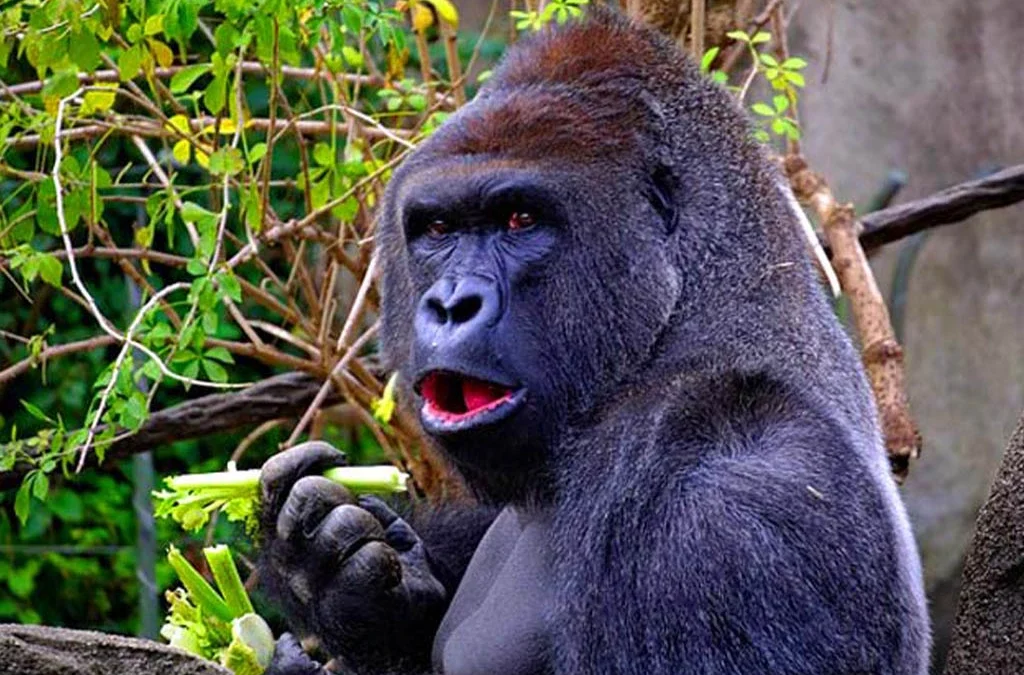
One of the most common questions asked by travelers preparing for Gorilla Safaris in East Africa is: Do silverback gorillas eat meat? Many visitors planning Rwanda Safaris and Uganda Safaris are fascinated by the behavior, diet, and lifestyle of these remarkable primates. Because silverbacks are large, muscular, and incredibly powerful, some people assume they may occasionally hunt or consume meat. However, the reality is quite different.
Silverback gorillas are the dominant males and leaders of gorilla families. They are known for their strength, intelligence, protective instincts, and surprisingly gentle behavior. While they can weigh more than 180 kilograms and command immense respect within their groups, their diet consists almost entirely of plant-based foods. Understanding what silverback gorillas eat helps visitors appreciate their role within the forest ecosystem and enhances the overall gorilla trekking experience.
For travelers joining Gorilla Safaris in Rwanda and Uganda, learning about gorilla feeding habits offers valuable insight into how these endangered animals survive, thrive, and contribute to the health of their rainforest habitats. Their relationship with the forest is a remarkable example of nature’s balance, and observing their feeding behavior in the wild remains one of the highlights of any gorilla trekking adventure.
Do Silverback Gorillas Eat Meat in the Wild?
The simple answer is no, silverback gorillas do not actively eat meat. Scientists who have studied mountain gorillas for decades have consistently found that they are primarily herbivorous animals. Their diet consists mainly of leaves, stems, shoots, roots, bark, wild celery, bamboo, vines, and seasonal fruits.
Unlike carnivorous animals that hunt for prey, gorillas spend much of their day searching for nutritious vegetation. Their powerful jaws and specialized digestive systems allow them to process large quantities of fibrous plant material that many other animals cannot digest efficiently.
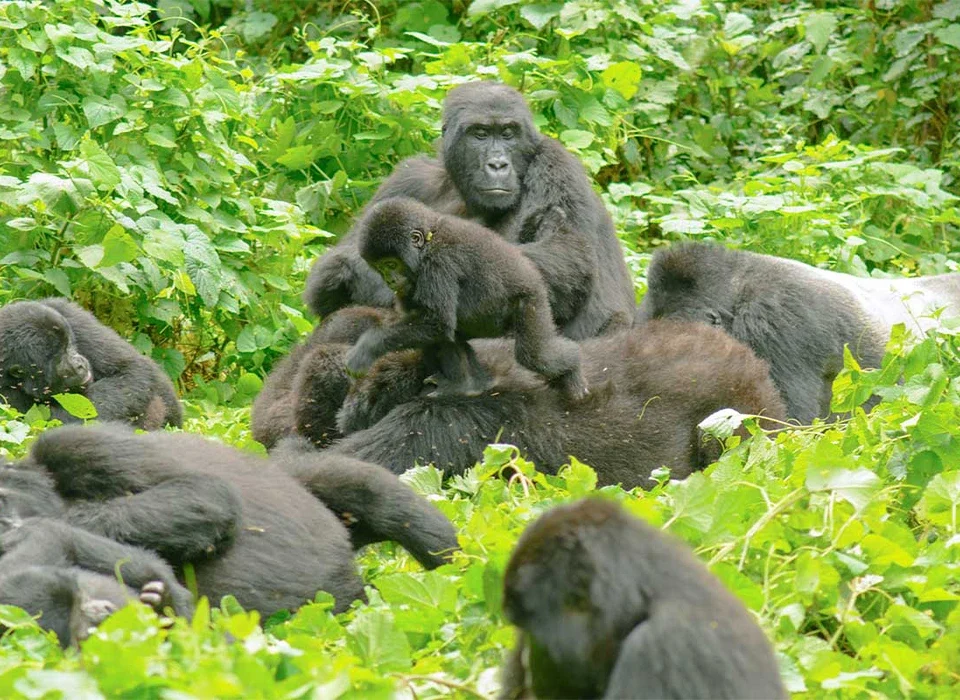
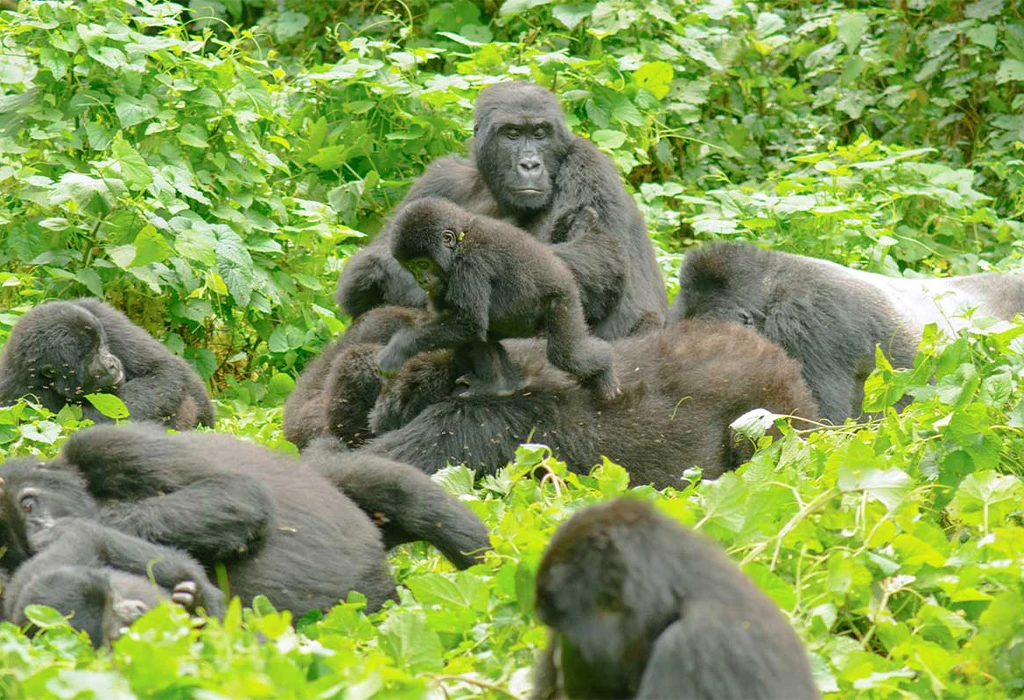
During Gorilla Safaris in Rwanda and Uganda, visitors often observe gorillas calmly feeding on surrounding vegetation. A silverback may spend hours selecting leaves and stems while simultaneously watching over his family group. These feeding sessions reveal just how dependent gorillas are on the rich plant life found within their forest habitats.
Although researchers have occasionally documented gorillas consuming insects such as ants or termites, these instances are extremely rare and represent only a tiny fraction of their overall diet. In most cases, gorillas accidentally ingest insects while feeding on vegetation rather than deliberately seeking them out as a food source.
Therefore, when people ask, “Do silverback gorillas eat meat?”, scientific research clearly shows that mountain gorillas rely almost entirely on plants and do not engage in hunting behavior.
Why Are Gorillas Herbivores?
Many travelers wonder how such large and powerful animals can survive without eating meat. The answer lies in millions of years of evolution.
Mountain gorillas have adapted perfectly to life in dense tropical forests where vegetation is abundant throughout the year. Their digestive systems contain specialized bacteria that help break down tough plant fibers and extract nutrients efficiently. As a result, they obtain the energy they need from leaves, shoots, roots, and other plant materials.
A mature silverback consumes large quantities of vegetation daily. This constant feeding provides enough calories to support his impressive size and strength. Rather than relying on animal protein, gorillas derive most of their nutritional requirements from a diverse range of forest plants.
Furthermore, gorillas conserve energy by avoiding unnecessary movement. Unlike predators that must chase prey, gorillas simply move through the forest, feeding on readily available vegetation. This strategy allows them to thrive in environments where plant resources are plentiful.
What Foods Do Silverback Gorillas Eat?
The diet of a silverback gorilla varies depending on habitat, season, and food availability. However, several plant species consistently form the foundation of their nutrition.
In the mountain forests of Rwanda and Uganda, gorillas frequently feed on leaves, bamboo shoots, wild celery, thistles, vines, bark, roots, and herbaceous vegetation. During certain seasons, they also consume fruits when they become available.
Silverbacks lead their families to feeding sites where food is abundant. As they move through the forest, they carefully select nutritious plants and teach younger gorillas where to find suitable food sources. This leadership role plays a crucial part in the survival of the entire group.
While trekking with gorillas, visitors often witness family members feeding together peacefully. Young gorillas imitate adults by sampling different plants, while the silverback remains alert to potential threats and maintains order within the group.
These feeding behaviors demonstrate the strong social bonds that exist within gorilla families and highlight the importance of healthy forest ecosystems.
Where Can You Observe Silverback Gorillas Feeding Naturally?
The best places to observe silverback gorillas feeding in their natural environment are the protected forests of Rwanda and Uganda. These destinations offer some of Africa’s most rewarding wildlife experiences and provide visitors with a rare opportunity to watch gorillas behaving naturally in the wild.
Gorilla Feeding Behavior in Rwanda
Rwanda Safaris offer exceptional opportunities to encounter mountain gorillas in Volcanoes National Park. This renowned conservation area protects several habituated gorilla families that visitors can track with experienced ranger guides.
During a trek, travelers often observe silverbacks calmly feeding on bamboo shoots, leaves, and stems while interacting with members of their family groups. Watching these gentle giants forage among the forest vegetation provides a clear answer to the question of whether gorillas eat meat.
Volcanoes National Park also offers excellent opportunities to learn about gorilla conservation, ecology, and behavior. Knowledgeable guides explain how gorillas use different plant species throughout the year and how their feeding habits support the broader forest ecosystem.
Gorilla Feeding Behavior in Uganda
Uganda Safaris provide equally remarkable encounters with mountain gorillas, particularly in Bwindi Impenetrable National Park and Mgahinga Gorilla National Park.
Bwindi is home to nearly half of the world’s remaining mountain gorilla population, making it one of the most important gorilla conservation areas on Earth. Here, visitors frequently witness silverbacks leading their families through dense vegetation while feeding on leaves, vines, roots, and seasonal fruits.
The opportunity to spend time observing these natural behaviors gives travelers a deeper understanding of gorilla ecology and reinforces the fact that mountain gorillas are overwhelmingly herbivorous animals.
In addition, Uganda’s diverse landscapes allow visitors to combine gorilla trekking with game drives, birdwatching, cultural encounters, and other unforgettable safari experiences.
Why Does Gorilla Diet Matter for Conservation?
Understanding what gorillas eat is essential for effective conservation planning. Because mountain gorillas depend heavily on forest vegetation, protecting their habitat is critical to their survival.
Healthy forests provide the diverse plant species that gorillas need throughout the year. When forests are cleared for agriculture, logging, or settlement, gorillas lose access to important food sources. Habitat loss remains one of the greatest threats facing wildlife across many parts of Africa.
Fortunately, conservation initiatives in Rwanda and Uganda have helped protect key gorilla habitats. Revenue generated through Gorilla Safaris contributes directly to national parks, conservation programs, ranger patrols, research projects, and community development initiatives.
As a result, tourism has become one of the most effective tools for gorilla conservation. Every trekking permit purchased helps fund efforts that protect both gorillas and their forest ecosystems.
Moreover, researchers continuously monitor gorilla feeding patterns to assess forest health and identify emerging conservation challenges. By understanding dietary habits, scientists can make informed decisions that support long-term species survival.
When Is the Best Time to Observe Gorillas Feeding?
Gorilla trekking takes place throughout the year, making it possible to observe feeding behavior in every season. However, many travelers prefer the drier months from June to September and December to February because trails are generally easier to navigate.
During these periods, trekking conditions tend to be more comfortable, and photography opportunities are often better. Nevertheless, mountain gorillas remain active year-round, and feeding behavior can be observed regardless of season.
In fact, the rainy seasons bring lush vegetation growth, creating beautiful forest scenery and providing abundant food resources for gorilla families. Therefore, both wet and dry seasons offer rewarding trekking experiences.
Why Choose Experiya Tour Company for Gorilla Safaris?
Experiya Tour Company specializes in professionally guided Gorilla Safaris, Rwanda Safaris, and Uganda Safaris that combine unforgettable wildlife encounters with responsible tourism practices.
Our experienced safari specialists understand gorilla behavior, conservation regulations, and trekking logistics. We carefully design each itinerary to ensure travelers enjoy safe, comfortable, and enriching experiences in some of Africa’s most spectacular natural environments.
Through strong partnerships with conservation authorities, expert local guides, and carefully selected lodges, Experiya Tour Company delivers seamless safari experiences that prioritize both visitor satisfaction and environmental responsibility.
In addition, we remain committed to supporting conservation initiatives and local communities that play a vital role in protecting mountain gorillas and their habitats. By traveling with Experiya Tour Company, guests contribute directly to sustainable tourism efforts that help safeguard these endangered primates for future generations.
Conclusion
So, do silverback gorillas eat meat? The answer is clear. Silverback gorillas are primarily herbivorous animals that rely on a wide variety of vegetation for their nutritional needs. Leaves, stems, shoots, roots, bark, vines, and seasonal fruits form the foundation of their diet, while deliberate meat consumption is virtually nonexistent.
Observing gorillas feeding in the forests of Rwanda and Uganda offers an extraordinary opportunity to understand their behavior, ecology, and role within the ecosystem. Beyond answering questions about diet, these encounters create a deeper appreciation for the conservation efforts that continue to protect one of the world’s most iconic and endangered species.
With expertly guided Gorilla Safaris from Experiya Tour Company, travelers can witness these magnificent animals in their natural habitat while supporting the ongoing preservation of Africa’s priceless natural heritage.