Is gorilla trekking physically demanding?
November 13, 2025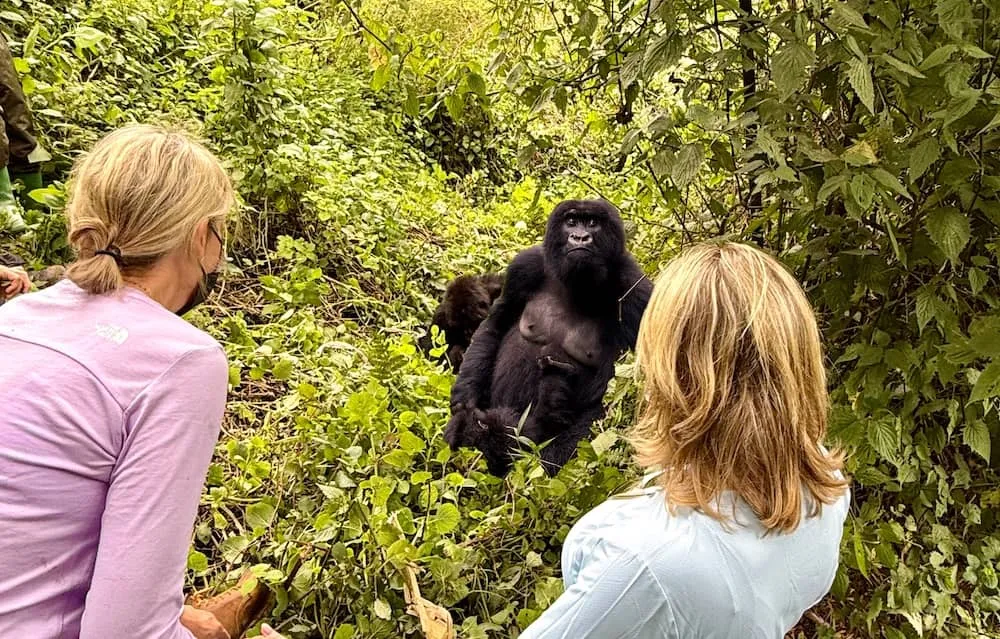
How close can I get to mountain gorillas?
November 13, 2025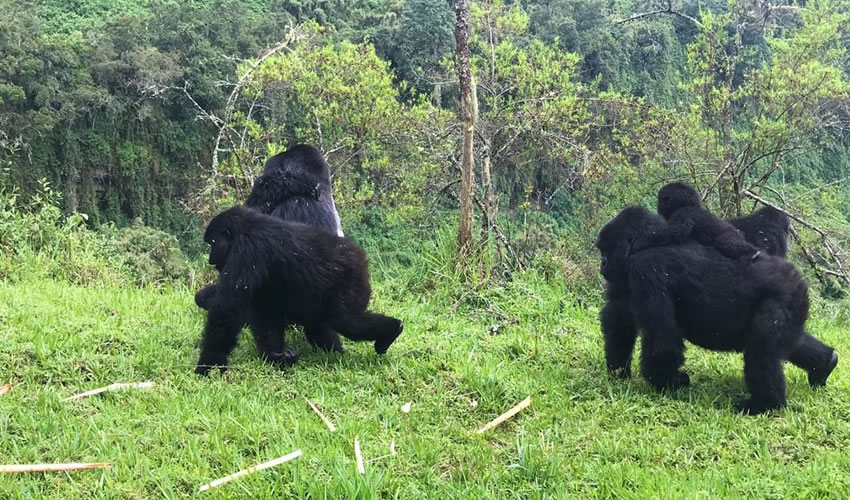
Can I Combine Gorilla Trekking With Chimp Tracking in Rwanda?
Rwanda is one of Africa’s most remarkable primate destinations, offering travellers the extraordinary opportunity to observe endangered mountain gorillas and energetic chimpanzees within the same country. For visitors seeking a deep, immersive wildlife experience, one of the most common questions is: Can I combine gorilla trekking with chimp tracking in Rwanda? The answer is yes—absolutely. Rwanda is one of the few places in the world where you can seamlessly combine both experiences in a single itinerary. With well-connected national parks, excellent road networks, and efficient tourism systems, pairing gorilla trekking in Volcanoes National Park with chimpanzee tracking in Nyungwe National Park offers a uniquely rich encounter with two of humanity’s closest relatives.
This detailed blog explores how the combination works, what to expect, how to plan your trip, and why the dual experience is one of the most meaningful safari adventures in East Africa.
Rwanda: A Premier Primate Destination
Rwanda is often referred to as the Land of a Thousand Hills, but it is also a land of exceptional primate diversity. The country’s dense forests, high-altitude mountains, and protected ecosystems provide safe havens for several primate species, ranging from mountain gorillas to golden monkeys, chimpanzees, black-and-white colobus monkeys, and more.
Gorilla trekking and chimp tracking are two of Rwanda’s top wildlife experiences, each offering a unique window into primate life. Since the parks that host these species are well-developed and fairly accessible, travellers can combine both activities within a few days.
Where Gorilla Trekking Takes Place: Volcanoes National Park
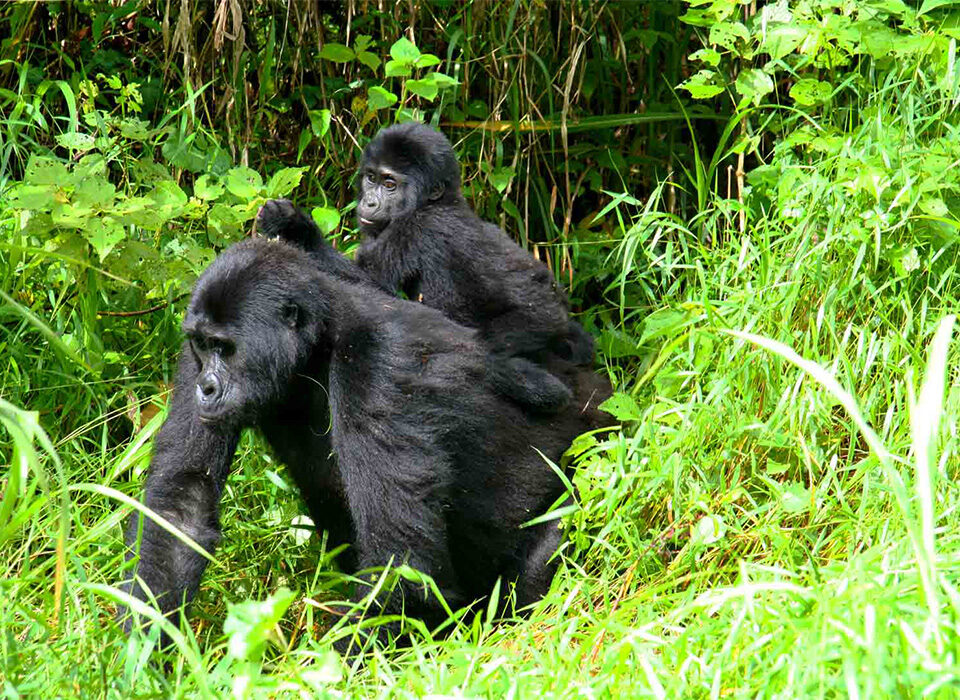
Gorilla trekking in Rwanda happens in Volcanoes National Park, located in the Musanze district in the far north. This park is part of the Virunga Massif, a transboundary region shared by Rwanda, Uganda, and the Democratic Republic of Congo. The area is home to several habituated families of mountain gorillas.
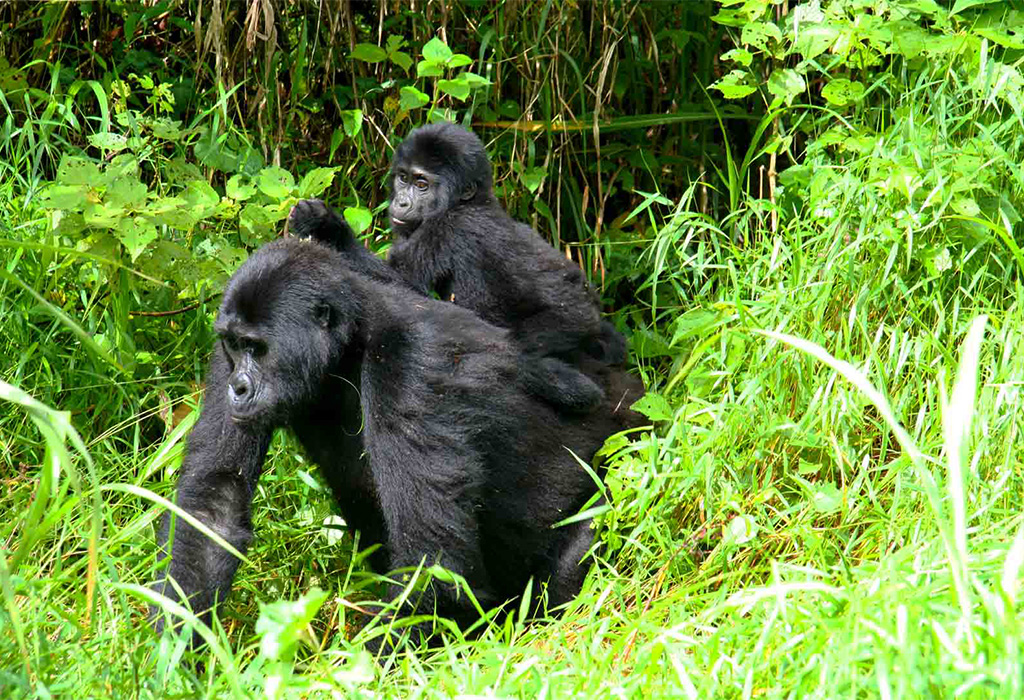
Volcanoes National Park is characterized by dramatic volcanic peaks, bamboo forests, moss-covered landscapes, and winding trails that lead trekkers to these magnificent primates. Gorilla trekking is a deeply emotional experience, offering an intimate one-hour encounter with a gorilla family in their natural habitat.
Where Chimpanzee Tracking Takes Place: Nyungwe National Park
Chimpanzee tracking occurs in Nyungwe National Park, a sprawling rainforest in Rwanda’s southwestern region. Nyungwe is one of Africa’s oldest and most biodiverse mountain forests, home to over 13 primate species, including a large and healthy population of chimpanzees.
Chimp tracking in Nyungwe is exhilarating. The experience typically begins early in the morning, as visitors follow expert guides and experienced trackers into the dense forest. Unlike gorillas, which tend to stay in cohesive groups, chimpanzees move quickly and call loudly, making the experience more dynamic and fast-paced.
The behaviours you witness—chimps calling, swinging through trees, grooming each other, or feeding—offer an entirely different perspective from the quieter, more relaxed experience of observing gorillas.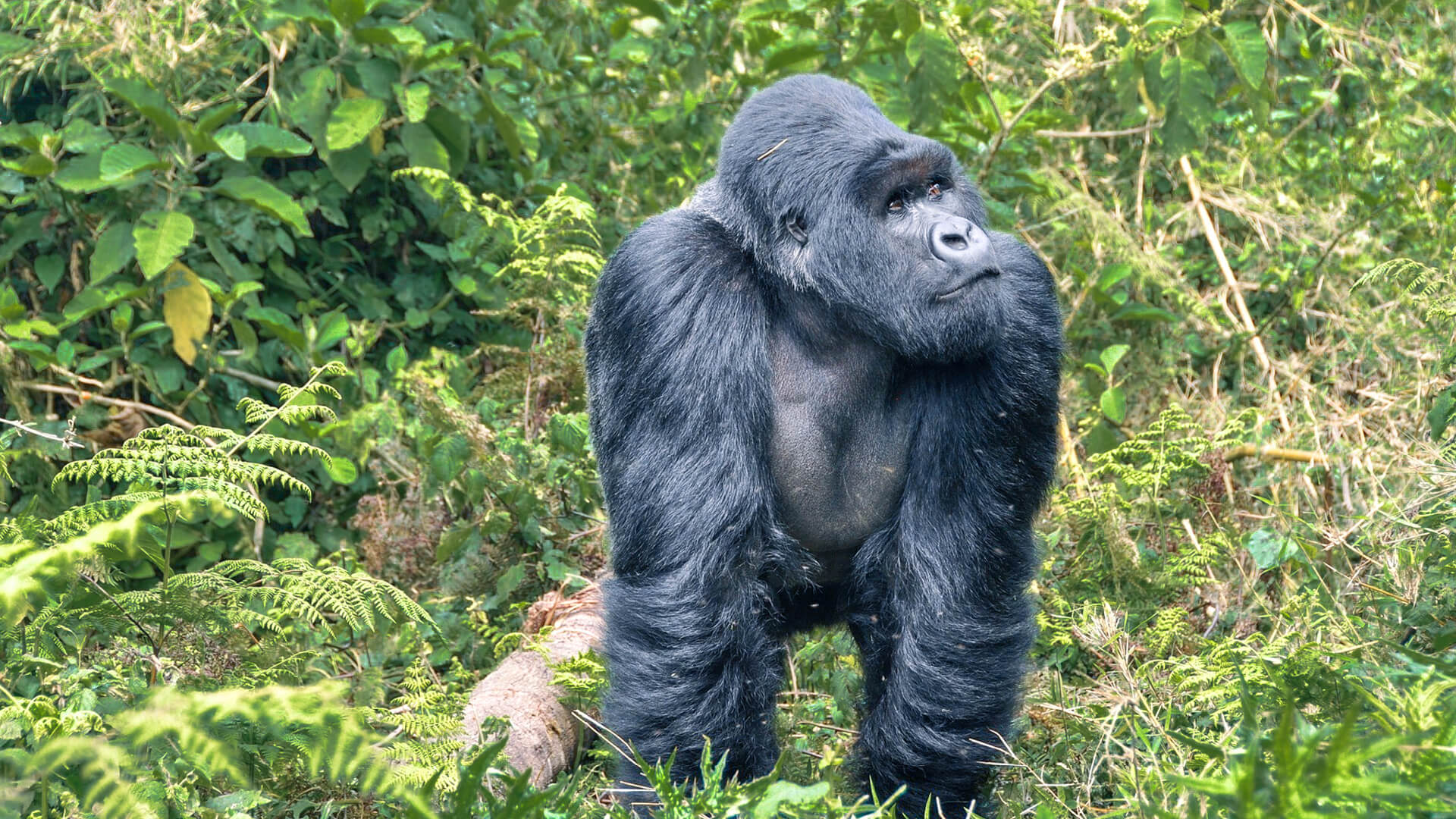
Why Combining Both Experiences Is Highly Rewarding
Gorilla trekking and chimp tracking complement each other perfectly. While both species share striking similarities with humans, the experiences of observing them are vastly different.
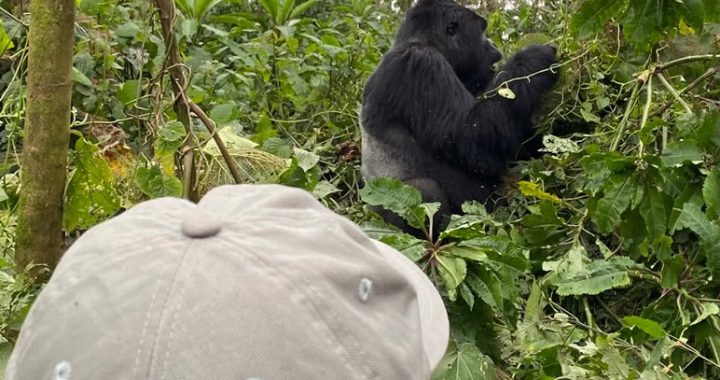
Gorilla trekking immerses you in the slow, peaceful rhythm of gorilla families. Gorillas often stay in one spot for long periods, allowing for quiet, uninterrupted observation.
Chimp tracking, on the other hand, is more active and fast-paced. Chimps are highly vocal, displaying social behaviours regularly and often on the move.
Combining both experiences gives travellers a holistic understanding of primate behaviour, emotion, intelligence, and family dynamics.
The combination also enriches your itinerary visually and physically. Volcanoes National Park offers volcanic scenery and open bamboo forests, while Nyungwe is characterized by lush montane rainforest, canopy walks, and deep valleys. Both treks challenge you in different ways and reveal the diversity of Rwanda’s natural beauty.
How Much Time Do You Need to Combine Both Experiences?
You can combine gorilla trekking and chimp tracking in as little as 3 to 5 days, depending on your travel pace and interests.
A typical combination itinerary might look like this:
Day 1: Arrival in Kigali and transfer to Volcanoes National Park
Day 2: Gorilla trekking in Volcanoes National Park
Day 3: Transfer to Nyungwe Forest National Park
Day 4: Chimpanzee tracking in Nyungwe
Day 5: Canopy walk, colobus monkey tracking, or return to Kigali
For travellers who want a slower pace, additional days can be included to explore Lake Kivu, the Kigali Genocide Memorial, or the cultural experiences around the parks. Rwanda’s road network is excellent, making travel between parks efficient and scenic.
Travel Distance Between Volcanoes and Nyungwe National Parks
The distance between Volcanoes National Park and Nyungwe National Park is approximately 320–350 km, depending on the route. The journey takes around 6 to 7 hours by road and offers some of the most scenic views in Rwanda.
Travelling by private safari vehicle is the most convenient option. Along the way, you will pass through Gisenyi, Kibuye, or Karongi on the shores of Lake Kivu—another beautiful stop for an overnight stay if you prefer breaking up the journey.
The roads are well-paved and safe, making the journey comfortable despite the long distance.
Permit Requirements for Both Trekking Experiences
Both gorilla trekking and chimp tracking require special permits issued by the Rwanda Development Board.
The gorilla trekking permit costs USD 1,500 per person, while the chimpanzee tracking permit is more affordable at USD 90 per person.
Permits must be booked in advance because availability is limited, especially during high season. Tour companies such as Experiya Tour Company usually handle permit procurement on behalf of travellers, ensuring secure reservations and smooth logistics.
Comparing the Physical Demands of Gorilla and Chimp Treks
Both experiences require physical effort, but in different ways.
Gorilla trekking can involve long, steady hikes on steep terrain. The trails may be muddy, and the altitude can make the trek more challenging. However, once you reach the gorillas, the experience is calm and unhurried.
Chimpanzee trekking, on the other hand, requires quick movement. Chimps travel faster and often move through higher forest canopy levels, making the trek more dynamic. Visitors often walk at a quicker pace to keep up with them.
Travellers should be reasonably fit for both experiences. Hiring porters, wearing proper hiking boots, and bringing trekking poles can make the experience much easier.
Other Primates You Can See When Combining Both Experiences
Rwanda is not only home to gorillas and chimps—your combined itinerary may allow you to see several other primate species:
In Volcanoes National Park, you may encounter golden monkeys, black-and-white colobus monkeys, and various smaller forest primates. Golden monkey trekking is an excellent add-on experience after gorilla trekking.
In Nyungwe, you may see L’Hoest’s monkeys, grey-cheeked mangabeys, owl-faced monkeys, dent’s monkeys, blue monkeys, and the spectacular colobus monkeys. Nyungwe is famous for hosting one of the largest troops of colobus monkeys in East Africa.
Combining gorilla trekking with chimp tracking opens the door to seeing an impressive diversity of primate life.
Best Time to Combine Gorilla Trekking and Chimp Tracking
Rwanda’s national parks are open year-round, but some seasons offer more favorable trekking conditions.
The dry seasons, from June to September and December to February, offer the best conditions. Trails are less muddy, visibility is better, and trekking is easier.
The rainy seasons, from March to May and October to November, offer richer vegetation, better photography conditions, and fewer tourists, but trails can be more slippery.
Travellers can combine both activities any time of the year with proper preparation.
What to Pack for a Combined Primate Experience
Packing right ensures comfort and safety. Essential items include waterproof hiking boots, long trousers, long-sleeved shirts, a rain jacket, garden gloves, a waterproof backpack, binoculars, insect repellent, and a camera with no flash.
Because both experiences involve early starts, it helps to pack snacks, energy bars, and plenty of drinking water. Hiring a porter is highly recommended for both treks.
Combining Both Experiences Is One of Rwanda’s Greatest Adventures
Yes—you can absolutely combine gorilla trekking with chimp tracking in Rwanda, and doing so creates one of the most rewarding wildlife journeys anywhere in Africa. The two experiences complement each other beautifully, offering insight into both the gentle world of mountain gorillas and the energetic behaviour of chimpanzees. With efficient transportation, year-round accessibility, and well-organized trekking systems, Rwanda provides an ideal setting for a dual primate adventure.
If you are ready to plan this unforgettable experience and want expert assistance with permits, transport, accommodation, and trekking arrangements, consider booking your safari with Experiya Tour Company. Their professional service, deep local knowledge, and carefully curated itineraries ensure that your combined primate safari is seamless, inspiring, and truly life-changing.