
What Are 5 Facts About Gorillas?
September 19, 2026
Why Don’t Gorillas Eat Meat?
September 21, 2026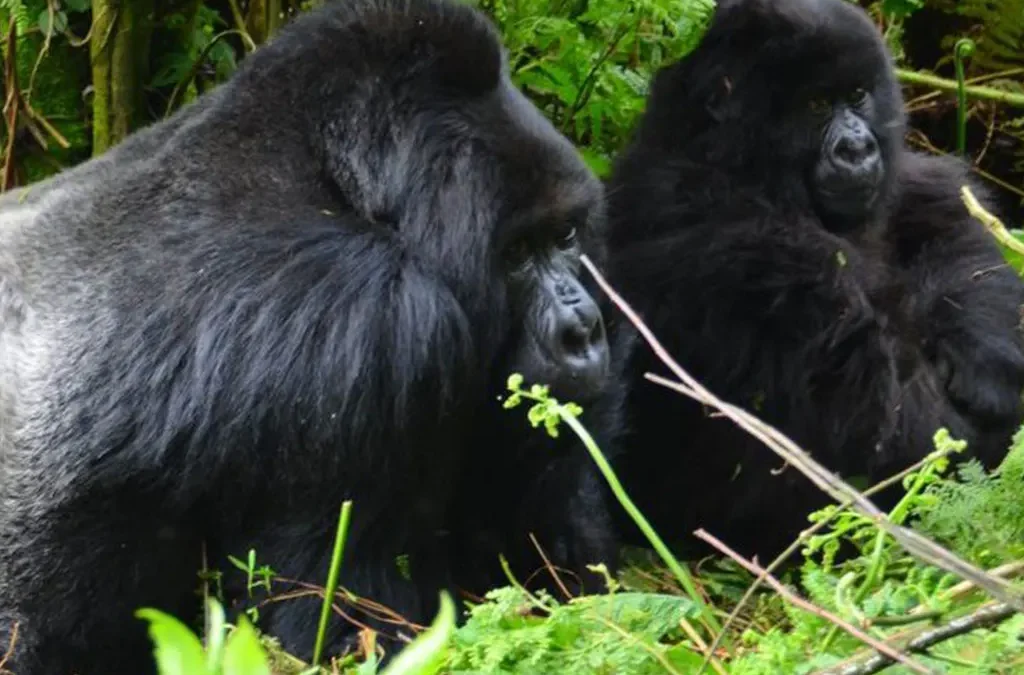
Gorillas are among the most remarkable animals in Africa. They are intelligent, social, and highly protective of their family groups. Despite their impressive strength, however, gorillas face serious threats in the wild. Human activities remain at the center of many of these challenges, from the destruction of forests to illegal hunting and the spread of diseases.
So, what is the biggest threat to gorillas? Habitat loss and fragmentation stand out as some of the most serious long-term threats because gorillas depend heavily on healthy forest ecosystems for food, shelter, movement, and reproduction. However, habitat destruction rarely occurs alone. Poaching, disease, human-wildlife conflict, and climate-related changes can make the situation even more difficult.
Understanding these threats is important for anyone interested in gorilla conservation or planning a gorilla trekking experience with Experiya Tour Company.
Understanding the Different Gorilla Species
Gorillas belong to two main species: the eastern gorilla and the western gorilla. Each species has two recognized subspecies with different geographical ranges and conservation challenges.
The eastern gorilla includes the mountain gorilla and the eastern lowland gorilla, also known as Grauer’s gorilla. Mountain gorillas live in the Virunga Mountains, which stretch across Uganda, Rwanda, and the Democratic Republic of Congo. They also live in Uganda’s Bwindi Impenetrable National Park. Grauer’s gorillas occur mainly in the forests of eastern Democratic Republic of Congo.
The western gorilla includes the western lowland gorilla and the Cross River gorilla. Western lowland gorillas inhabit forests across parts of Central Africa, particularly Cameroon, Gabon, the Republic of Congo, and surrounding areas. Cross River gorillas have a much smaller range along the border between Cameroon and Nigeria.
Although these gorillas live in different environments, they face many related conservation challenges.
Habitat Loss and Fragmentation
Habitat loss is one of the greatest threats facing gorillas today. Gorillas depend on forests for almost every aspect of their lives, so when forests disappear, their chances of survival decline.
Human activities such as agriculture, logging, mining, road construction, settlement expansion, and other forms of development can destroy or divide forest habitats. When a continuous forest becomes divided into smaller patches, gorilla groups may find it harder to move between suitable areas and access the resources they need.
For mountain gorillas, the problem is particularly important because they occupy a relatively limited geographical range. Forests around Bwindi and the Virunga region support populations that have nowhere else to move when surrounding human communities expand.
Habitat fragmentation can also bring gorillas closer to people. As natural feeding areas become smaller, gorillas may enter farmland in search of food. This creates opportunities for conflict and exposes them to additional risks.
Furthermore, isolated populations may have fewer opportunities for natural movement and interaction between groups. Over the long term, this can create additional conservation concerns, particularly where populations become very small or geographically separated.
Poaching and Illegal Wildlife Trade
Illegal hunting has also contributed to the decline of gorilla populations, particularly in parts of Central and West Africa. Although gorillas receive legal protection across their range, enforcement remains difficult in remote forest areas.
Some gorillas are hunted for bushmeat. In other cases, poachers target young gorillas for illegal trade. Capturing an infant can have devastating consequences because hunters may kill adult gorillas while attempting to take the young animal.
The loss of one adult can affect an entire social group. Gorillas live in closely connected family units, and each individual plays a role in the group’s social structure. The death or removal of adults can therefore leave young gorillas vulnerable and disrupt established relationships.
Illegal hunting can also become more difficult to control when roads, logging activities, or other developments provide easier access to previously remote forests.
Diseases and the Risk of Human Transmission
Disease represents another major concern for gorilla conservation. Gorillas share many biological similarities with humans, which means that some human pathogens can infect them.
Respiratory infections are particularly important for gorillas that come into close contact with people. A disease that causes relatively mild symptoms in humans can potentially become much more serious in gorillas.
Ebola has also caused severe population losses among western lowland gorillas in parts of Central Africa. Outbreaks have killed large numbers of gorillas and other great apes, demonstrating how quickly disease can affect wildlife populations.
Because of this risk, responsible gorilla tourism follows strict health and visitor guidelines. Travelers are generally expected to avoid visiting gorillas when they are sick and to maintain an appropriate distance from the animals. These precautions help reduce the possibility of transmitting infections from humans to gorillas.
Disease protection therefore forms an important part of modern gorilla conservation.
Climate Change and Changing Forest Conditions
Climate change presents another long-term challenge. Changes in rainfall, temperature, vegetation growth, and the frequency of extreme weather events can affect the forests on which gorillas depend.
Mountain gorillas already live within a relatively restricted high-altitude environment. Changes in temperature and rainfall could alter the availability and distribution of vegetation within their habitat.
For forest-dependent gorillas, changes in plant growth and fruit production could also influence feeding patterns. If particular food plants become less productive or their distribution changes, gorillas may need to travel farther to find adequate food.
Climate change can also interact with existing conservation problems. A forest already under pressure from agriculture, logging, or other human activities may have less capacity to absorb additional environmental changes.
Scientists continue to study how climate change may affect individual gorilla populations, so the exact long-term effects will vary between regions.
Human-Wildlife Conflict
Human-wildlife conflict becomes more likely when people and gorillas share increasingly limited space.
In communities bordering gorilla habitats, agricultural land can sometimes extend close to forest boundaries. Gorillas may occasionally move into cultivated areas to feed on crops, particularly where natural food resources have been disturbed.
For farmers who depend on agriculture for their livelihoods, crop damage can create significant financial difficulties. In turn, frustration can increase the risk of retaliation against wildlife.
This is why conservation programs often work closely with communities living around protected areas. Supporting local livelihoods, improving relationships between communities and conservation authorities, and reducing crop damage can help address the underlying causes of conflict.
The Role of Gorilla Tourism in Conservation
Although tourism can create pressure if it is poorly managed, responsible gorilla tourism can contribute to conservation when authorities regulate it carefully.
Gorilla trekking generates revenue through permits, accommodation, transportation, guiding services, and other tourism activities. These economic benefits can support protected-area management while also creating employment and business opportunities for people living around gorilla habitats.
Tourism also gives visitors an opportunity to understand the importance of protecting gorillas and their forests. When visitors learn about gorilla behavior, conservation challenges, and the role of local communities, they can become more aware of the need to protect these animals.
For travelers planning gorilla trekking in Uganda, Experiya Tour Company can help organize experiences that follow established conservation and visitor guidelines.
Why Protecting Gorilla Habitats Matters
Gorilla conservation goes beyond protecting one animal species. Forests that support gorillas also provide habitat for many other animals and plants. They contribute to biodiversity, protect watersheds, store carbon, and support communities living around protected areas.
Consequently, protecting gorilla habitats can produce benefits that extend far beyond the gorillas themselves.
Conservation organizations, governments, researchers, local communities, park authorities, and responsible tourism operators all have important roles to play. Their efforts can include habitat protection, law enforcement, disease monitoring, community development, scientific research, and carefully managed tourism.
How Can Gorillas Be Protected?
Protecting gorillas requires a long-term approach because no single solution can address every threat. Governments and conservation organizations need to protect remaining forests while working with communities to reduce pressure on protected areas.
Strong wildlife laws and effective enforcement can help reduce illegal hunting and wildlife trafficking. At the same time, disease monitoring can help conservation teams identify and respond to outbreaks before they spread widely.
Community involvement is equally important. People living near gorilla habitats need practical benefits from conservation and opportunities to improve their livelihoods without relying heavily on forest resources.
Responsible tourism can complement these efforts by generating revenue and raising awareness while maintaining strict rules around interactions between visitors and gorillas.
Conclusion
Gorillas face several serious threats, but habitat loss and fragmentation remain among the most important long-term concerns because these animals depend almost entirely on healthy forest ecosystems. Poaching, disease, human-wildlife conflict, and climate change add further pressure and can make already vulnerable populations even more difficult to protect.
Fortunately, conservation efforts have produced important progress in some gorilla populations. Continued protection of forests, cooperation with local communities, responsible tourism, scientific research, and strong enforcement of wildlife laws will remain essential.
For anyone planning a gorilla trekking adventure in Uganda, understanding these challenges adds greater meaning to the experience. Seeing gorillas in their natural habitat is not simply a tourism activity; it also provides an opportunity to appreciate why protecting their forests and supporting conservation efforts matters.


