

Helicopter Transfers from Kigali to Akagera National Park
January 9, 2026
What to Expect While Hiking Mount Bisoke Crater
January 9, 2026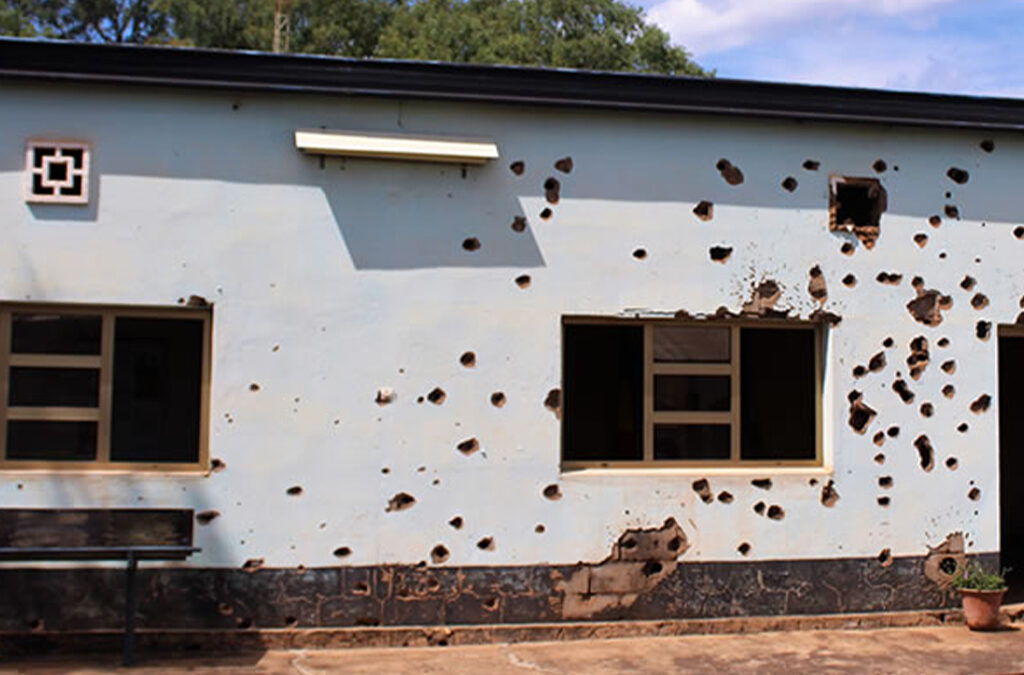
Camp Kigali Belgian Memorial is located in Rwanda’s capital, Kigali. It commemorates ten Belgian UN peacekeepers who were brutally murdered on 7 April 1994 an event that became a turning point in the early hours of the Rwandan Genocide. Visiting this site offers deep insight into how calculated political violence, international hesitation, and human cost converged to shape one of the darkest chapters in modern history.
Historical Background: UNAMIR and Belgium’s Role
In 1993, the United Nations established the United Nations Assistance Mission for Rwanda (UNAMIR) to oversee the implementation of the Arusha Peace Accords. At the time, Belgium was the only Western nation willing to deploy professionally equipped troops. This decision was controversial, as Belgium had been Rwanda’s former colonial power until independence in 1962.
Ordinarily, the UN avoids deploying troops from former colonial nations to prevent political sensitivities. However, widespread reluctance from other developed countries left little choice. As a result, the mission consisted mainly of Belgian troops alongside peacekeepers from Ghana, Tunisia, Bangladesh, and other nations.
While Belgium’s presence strengthened UNAMIR militarily, it also made its troops potential targets, given Rwanda’s volatile political climate.
A Calculated Assassination, Not Mob Violence
When the genocide began on 7 April 1994, the killing of the ten Belgian soldiers was not spontaneous mob violence. Instead, it was a carefully planned operation by Hutu extremists with a clear strategic goal: to force Belgium to withdraw from UNAMIR and, by extension, weaken or collapse the entire UN mission.
An informant known by the UN code name “Jean Pierre” had already warned UN officials of a plan to assassinate Belgian soldiers to destabilize international involvement. The extremists calculated correctly that Belgium would pull out its troops if casualties occurred, just as the United States had withdrawn from Somalia after soldiers were killed in 1993.
As UNAMIR commander General Roméo Dallaire later observed, the planners “knew us better than we knew ourselves.”
The Aftermath: Withdrawal and Abandonment
The plan worked exactly as intended. Following the murders, Belgium withdrew its remaining troops. Soon after, Western nations evacuated their citizens, and much of the UN mission scaled back or left entirely.
In effect, Rwanda was abandoned. With international forces gone or severely reduced, the genocidaires faced little resistance. Over the next 100 days, nearly one million Rwandans were systematically murdered.
While it is morally impossible and deeply troubling to weigh ten lives against hundreds of thousands, the deaths of these soldiers undeniably triggered a chain of decisions that left Rwanda exposed at its most vulnerable moment.
The Brutality of the Killings
The Belgian peacekeepers were first detained at a Rwandan army camp. They were mocked, beaten, and intimidated before being executed. Some were killed immediately, while others barricaded themselves inside a building and resisted for nearly three hours.
Eventually, attackers overpowered them using grenades and machine-gun fire. Their bodies were mutilated and later dumped in a nearby hospital morgue. When UN officials finally recovered them, the scene deeply shocked the remaining mission leadership.
Whether these deaths could have been prevented remains debated. General Dallaire maintained that intervening militarily inside a Rwandan army base would have turned UNAMIR into a combatant force, likely escalating violence and ending the peacekeeping mission altogether.
A Memorial of Two Tragedies
Established on 7 April 2000, Camp Kigali Belgian Memorial serves as more than a tribute to ten fallen soldiers. It also stands as a symbol of international failure the moment when the world chose withdrawal over responsibility.
The site occupies part of a former military camp. Visitors enter through a simple gate, beyond which stand low, single-storey buildings and a quiet memorial garden.
What You Will See at the Memorial
The Granite Columns
At the heart of the memorial stand ten dark grey granite pillars one for each soldier. Notches carved into each column represent the age of the soldier at the time of death, most of whom were in their twenties. Their initials appear at the base and correspond to plaques listing their full names.
Bullet-Scarred Walls
One building retains its original walls, still pockmarked with bullet and shell holes. Inside, plaques bearing names sit beside Belgian and Rwandan flags. In one corner, darker wall patches mark where some soldiers were killed, preserving the site’s raw authenticity.
Exhibition Rooms
Two additional rooms display trilingual panels (English, French, and Dutch) that provide context about the Rwandan Genocide and other mass atrocities in world history. These panels offer essential background, though they remain deliberately minimal.
The Blackboard of Dissent
One of the most unsettling elements is a preserved blackboard covered with hostile messages criticizing the UN and General Roméo Dallaire. Protected under glass, these writings challenge the widely held view of Dallaire as a moral figure during the crisis.
Without explanatory text, this section leaves visitors to reflect on conflicting narratives, unresolved anger, and the complexity of assigning blame in moments of catastrophic failure.
Why Camp Kigali Belgian Memorial Matters
Unlike larger genocide memorials that confront visitors with vast numbers of human remains, Camp Kigali Belgian Memorial is small and restrained. Yet its emotional impact is powerful. It tells a story of just ten deaths but also of the moment the world turned away.
For travelers interested in history, human rights, peacekeeping, or dark tourism, this memorial offers an essential and sobering experience.
Visiting as Part of a Kigali City or Walking Tour
Camp Kigali Belgian Memorial fits naturally into a Kigali city tour or walking tour. Its central location and compact size make it easy to visit, while its historical significance makes it unforgettable.
If you want to understand not only what happened in Rwanda, but also how global decisions shaped the tragedy, this memorial is a must-see site in Kigali.
