Can I Take Photos During Gorilla Trekking? | Photography Tips & Rules by Experiya Tour Company
October 22, 2025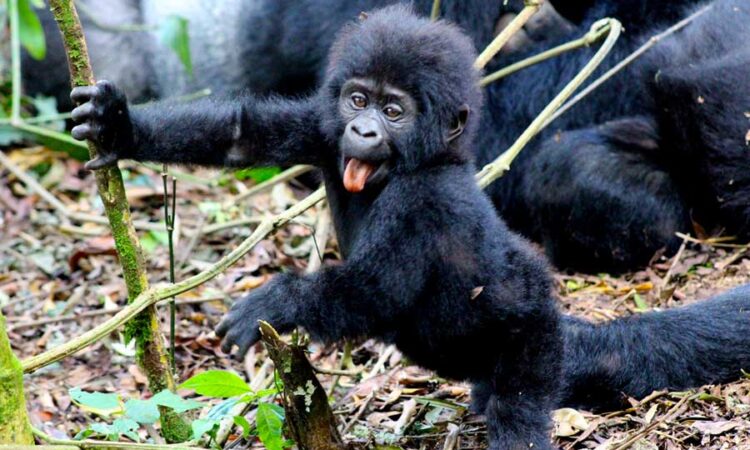
How Early Should I Book My Gorilla Permit? | Uganda Gorilla Trekking Guide by Experiya Tour Company
October 23, 2025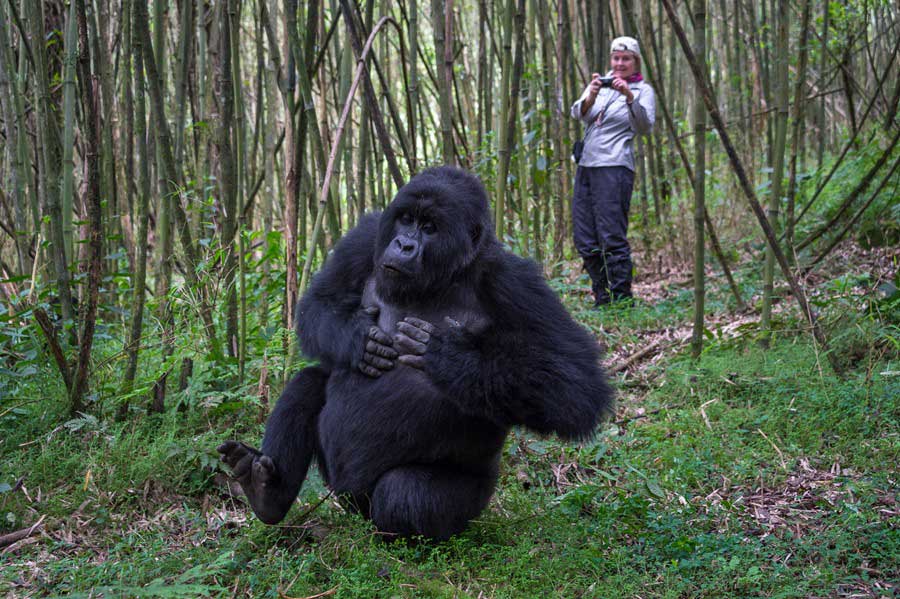
What’s the Best Camera Lens for Gorilla Trekking?
Gorilla trekking is one of the most intimate and awe-inspiring wildlife experiences in Africa. Deep within Uganda’s Bwindi Impenetrable National Park or Mgahinga Gorilla National Park, travelers embark on treks through misty forests and rugged terrain to meet mountain gorillas — a rare encounter with creatures that share nearly 98% of our DNA. For photographers, both professional and amateur, this is a dream come true. But one question always arises before the trek begins: what’s the best camera lens for gorilla trekking?
Choosing the right lens can make the difference between average photos and breathtaking images that capture the true essence of these gentle giants. Since gorilla trekking offers limited time — just one hour of observation — and often challenging lighting conditions, you need a lens that’s versatile, fast, and reliable. In this guide, we’ll explore everything you need to know about picking the perfect lens for gorilla trekking, plus tips on how to get those once-in-a-lifetime shots while respecting the gorillas and their environment.
Understanding the Gorilla Trekking Photography Environment
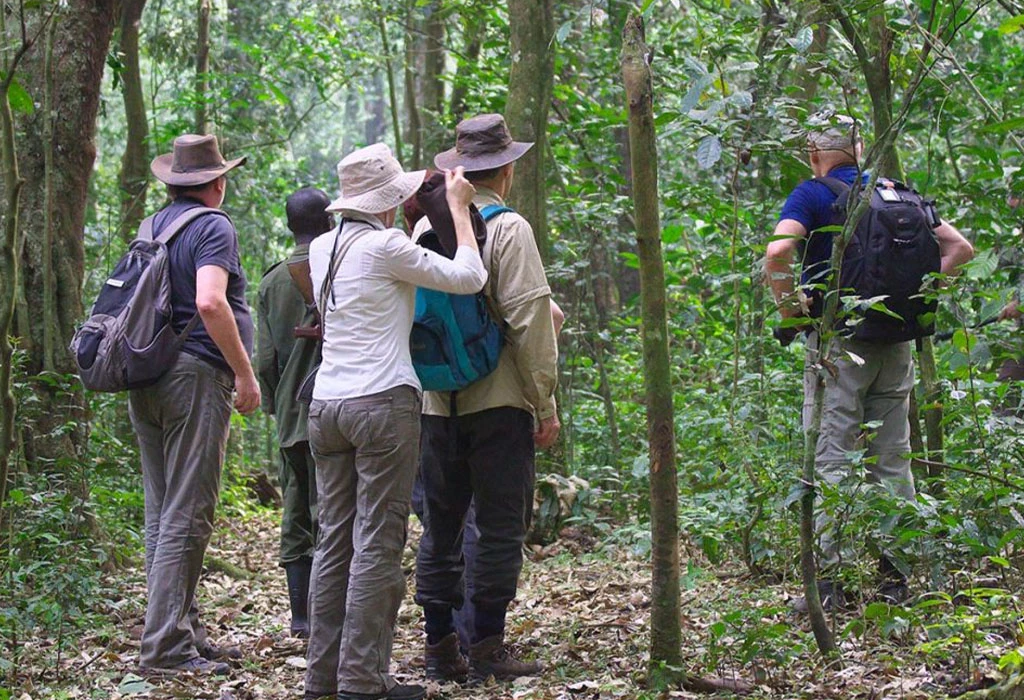
Before diving into lenses, it’s essential to understand the conditions you’ll be shooting in. Gorilla trekking doesn’t happen in open savannas like traditional safaris — it takes place in dense, humid, and sometimes dark rainforests. The experience is raw and unpredictable.
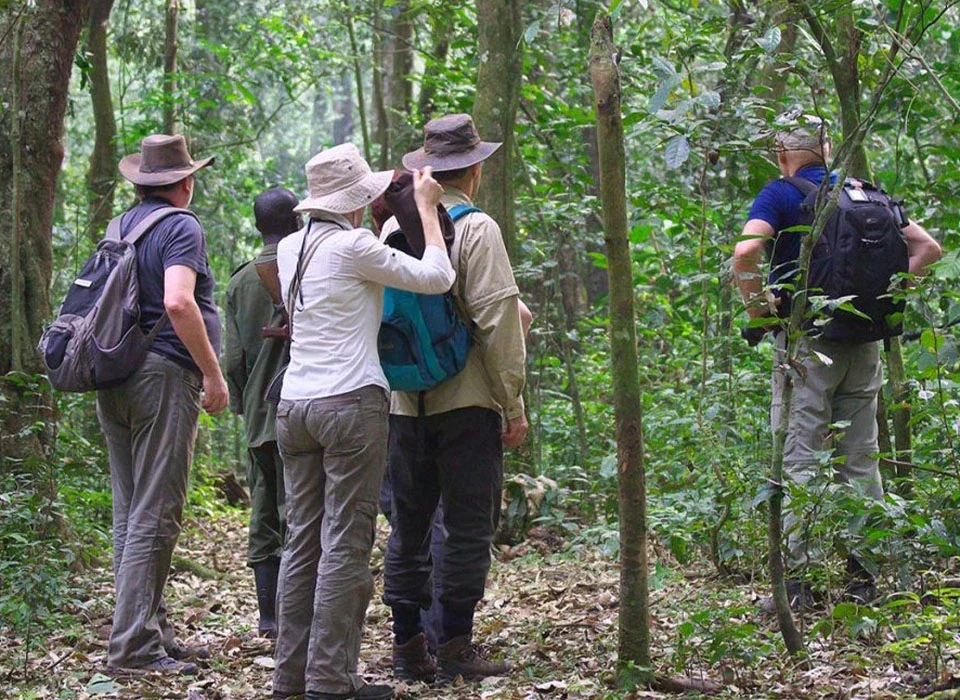
You’ll be hiking through steep trails, muddy slopes, and thick undergrowth. The forest canopy filters sunlight, creating a soft but dim light environment. The gorillas themselves might be lounging under trees, moving through foliage, or sitting in shaded clearings. You’ll rarely find wide-open, well-lit spaces.
This means your camera gear needs to handle low light, tight spaces, and quick movement — all while being light enough to carry for hours. A heavy setup might slow you down, while the wrong focal length could mean missing that perfect shot.
The Ideal Lens Characteristics for Gorilla Trekking
When choosing a lens for gorilla trekking, there are four major features to consider: focal length, aperture, image stabilization, and weight.
1. Focal Length (Zoom Range)
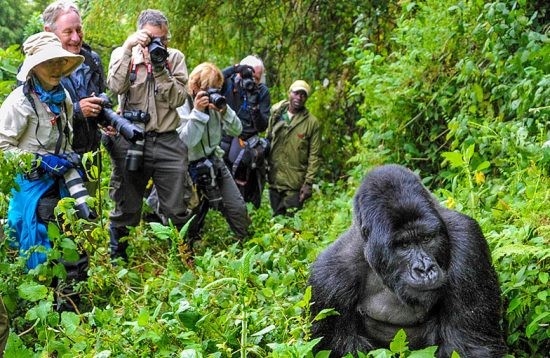
Because you must stay at least 7 meters (about 21 feet) away from the gorillas, you’ll want a lens that allows you to zoom in comfortably without physically moving closer. However, gorillas are curious creatures and sometimes move toward trekkers on their own. A lens that’s too zoomed-in can limit your framing options in close encounters.
That’s why a zoom lens with a flexible range is ideal — it lets you capture both close-ups and wider environmental shots without switching lenses (something you shouldn’t do in humid forests).
The best all-around range for gorilla trekking is 70–200mm. This covers portraits, medium shots, and even small group compositions. For photographers using crop-sensor (APS-C) cameras, this lens effectively becomes around 105–300mm, giving you extra reach.
If you prefer more versatility, a 24–105mm or 24–120mm lens works beautifully for wider shots that include the forest background, although you might lose some zoom for distant subjects.
For professional wildlife photographers seeking extra distance, a 100–400mm zoom lens offers incredible reach, though it’s heavier to carry on long hikes.
2. Aperture (Light-Gathering Ability)
Rainforest lighting can be dim, especially under thick canopies or during overcast days. A lens with a wide aperture (low f-stop number) helps let in more light and allows for faster shutter speeds — crucial for sharp images of moving subjects.
Look for lenses with apertures of f/2.8 or f/4.
- f/2.8 lenses are excellent in low light and provide beautiful background blur (bokeh), isolating the gorilla from the forest background.
- f/4 lenses are slightly lighter and more affordable, still performing well in dim light.
For example, the Canon RF 70–200mm f/2.8L IS USM, Nikon Z 70–200mm f/2.8 S, or Sony FE 70–200mm f/2.8 GM OSS are top-tier options for mirrorless systems. For those using DSLR cameras, their equivalents in Canon EF, Nikon F, or Sony A-mount lines are still excellent choices.
3. Image Stabilization
Because you’ll often be handholding your camera (tripods are impractical during trekking), optical image stabilization (IS or VR) is essential. It reduces blur from camera shake, especially when shooting at slower shutter speeds in low light.
Combine this with your camera’s in-body stabilization (if available), and you’ll have much sharper results even without a tripod.
4. Weight and Portability
Remember, gorilla trekking involves hiking through challenging terrain. You’ll need to carry your camera, lens, water, rain gear, and possibly a packed lunch. Heavy gear becomes exhausting after several hours.
Try to limit your main lens setup to under 2 kg (4.4 lbs). A lightweight, weather-sealed lens is your best companion. If you own multiple lenses, resist the temptation to carry all of them — one versatile zoom lens is enough.
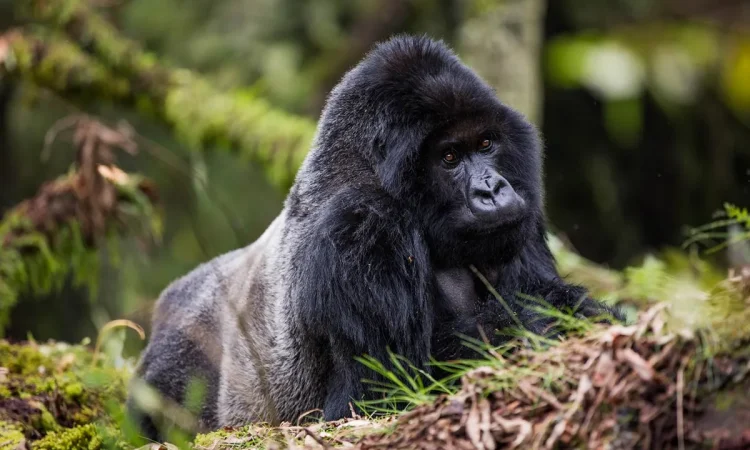
Recommended Camera Lenses for Gorilla Trekking
1. Canon Users
- Best Option: Canon RF 70–200mm f/2.8L IS USM (for mirrorless R series)
- Alternative: Canon EF 70–200mm f/4L IS II USM (for DSLRs)
- Wide Option: Canon RF 24–105mm f/4L IS USM for wider contextual shots
The Canon 70–200mm lenses are industry favorites for gorilla trekking — bright, sharp, and fast. Pairing them with a Canon R5 or 5D Mark IV gives you beautiful color tones even in low light.
2. Nikon Users
- Best Option: Nikon Z 70–200mm f/2.8 VR S (for mirrorless Z system)
- Alternative: Nikon AF-S 70–200mm f/4G ED VR (for DSLRs)
- Wider Choice: Nikon Z 24–120mm f/4 S
Nikon’s image stabilization and color rendition work beautifully in forest environments, especially for portraits and wildlife shots with soft backgrounds.
3. Sony Users
- Best Option: Sony FE 70–200mm f/2.8 GM OSS II
- Alternative: Sony FE 70–300mm f/4.5–5.6 G OSS (for lighter setup)
- Wider Lens: Sony FE 24–105mm f/4 G OSS
Sony mirrorless cameras excel in autofocus performance, which is ideal for unpredictable gorilla movements.
4. Fujifilm Users (APS-C)
- Best Option: Fujifilm XF 50–140mm f/2.8 R LM OIS WR (equivalent to 76–213mm)
- Alternative: Fujifilm XF 70–300mm f/4–5.6 R LM OIS WR
These lenses are compact yet powerful, perfect for travelers who want professional results without heavy gear.
5. Panasonic / Olympus (Micro Four Thirds)
- Best Option: Panasonic Leica 50–200mm f/2.8–4.0
- Alternative: Olympus 40–150mm f/2.8 PRO
Their smaller sensor systems effectively double the focal length (so a 200mm lens becomes 400mm equivalent), giving you excellent reach in a lightweight package.
Should You Bring Multiple Lenses?
It’s tempting to carry both a zoom and a wide-angle lens for variety, but it’s often impractical in the field. The humid rainforest air, constant movement, and lack of stable ground make changing lenses risky. Moisture or dust can easily enter your camera body.
If you must bring two lenses, carry a second camera body instead — one with a telephoto zoom and another with a wide-angle (like 24–70mm). Otherwise, stick to one good all-rounder.
Gorilla Photography Tips for the Field
1. Master Your Camera Settings Beforehand
Gorillas move unpredictably, and you’ll have limited time to adjust. Use the following settings as a starting point:
- Mode: Aperture Priority (f/2.8–f/5.6)
- ISO: 800–1600 for low light
- Shutter Speed: 1/250–1/500 sec to freeze movement
- Focus Mode: Continuous autofocus (AF-C or AI Servo)
2. Turn Off the Flash
Flash is strictly prohibited. It can startle the gorillas or provoke defensive reactions, especially from silverbacks.
3. Use Silent Shutter Mode
Many modern cameras offer electronic or “silent” shutter options. This helps avoid loud clicking sounds that might disturb the gorillas.
4. Anticipate Behavior
Watch the gorillas carefully — their movements are slow and deliberate. Anticipate expressions, gestures, or interactions between family members. The best shots often happen in quiet moments.
5. Protect Your Gear
Bring waterproof covers or plastic bags to shield your camera from rain and humidity. Also carry a microfiber cloth to wipe off mist or condensation.
6. Stay Still and Respect Distance
You must remain at least 7 meters away, even if your lens can zoom in further. Never try to move closer for a better shot. If gorillas approach, stay calm and lower your camera.
7. Focus on Emotion
Some of the most powerful gorilla photos aren’t just about detail — they’re about emotion. Capture eye contact, family interactions, or peaceful expressions that reflect their intelligence and calm nature.
What About Video?
If you plan to record video, use a lens with built-in stabilization and a camera capable of smooth autofocus tracking. Shoot at 1080p or 4K, and keep movements slow and steady. A monopod can help if you want extra stability without the bulk of a tripod.
Remember, filming gorillas is still subject to the same rules — no flash, no sudden movements, and one hour maximum viewing time.
What If You Only Have a Smartphone?
Don’t worry — smartphones can still capture amazing moments. Modern phones like the iPhone 15 Pro or Samsung Galaxy S24 Ultra have excellent cameras with telephoto capabilities.
Tips for phone users:
- Use the telephoto lens for close-ups (not digital zoom).
- Keep your flash off and your sound muted.
- Hold your phone steady or brace it against a solid surface.
- Focus on composition — natural framing through leaves or light beams adds atmosphere.
While you won’t get professional-level depth, the images can still be striking and authentic.
Final Thoughts: The Lens Is Only Half the Story
While the right lens is crucial, the most powerful images come from patience, respect, and awareness. Gorilla trekking photography is not about chasing perfection — it’s about capturing emotion and storytelling through your lens. Each trek is unpredictable, each gorilla family unique. The moment you lock eyes with a silverback or witness a baby cling to its mother, you’ll realize that no camera in the world can fully capture the magnitude of that connection.
Plan Your Gorilla Trekking Adventure with Experiya Tour Company
To get the best photography experience, you need more than great gear — you need a great team. Experiya Tour Company is one of Uganda’s most trusted safari operators, specializing in gorilla trekking, wildlife safaris, and photography tours across East Africa.
Experiya’s expert guides know the gorilla families intimately and understand how to position photographers safely for the best angles and light. They’ll help you secure your gorilla permits, choose the right trekking sector, and plan your trip around the best conditions for photography.
Whether you’re a professional wildlife photographer or a passionate traveler with a camera, Experiya ensures your gorilla trekking experience is smooth, ethical, and unforgettable. With their deep knowledge, personalized service, and commitment to conservation, your adventure will be more than a photo opportunity — it will be a story of connection with nature.
Book your gorilla trekking safari with Experiya Tour Company and capture the soul of Uganda through your lens — one moment, one heartbeat, one breathtaking encounter at a time.