How Do I Get to Lake Bunyonyi from Kampala or Entebbe?
September 15, 2026
Uganda is widely celebrated for its mountain gorillas, but its primate story extends far beyond the famous gorilla trekking experience. From the ancient forests of Kibale to the volcanic slopes of Mgahinga and the woodland habitats of western Uganda, the country shelters an impressive range of primates.
Chimpanzees, golden monkeys, red-tailed monkeys, black-and-white colobus monkeys, red colobus monkeys, and mangabeys all contribute to Uganda’s remarkable wildlife diversity. Each species has its own social behavior, feeding habits, communication patterns, and preferred habitat, making every forest visit different.
For travelers interested in nature, photography, and wildlife, these encounters offer an excellent reason to explore Uganda beyond the usual safari circuit. Moreover, primate experiences can easily complement gorilla trekking or form the main focus of a specialized Uganda wildlife safari.
At Experiya Tour Company, we create safari experiences that connect travelers with Uganda’s wildlife, landscapes, and communities while encouraging responsible tourism and conservation.
Chimpanzee Trekking in Kibale Forest
Chimpanzees are among Uganda’s most sought-after primates, and Kibale National Park is the country’s leading destination for seeing them in their natural habitat. Often described as one of Africa’s finest primate destinations, Kibale protects an extensive tropical forest that supports numerous primate species.
Chimpanzee trekking normally begins with a briefing before visitors enter the forest with trained guides and trackers. Once inside, the search becomes part of the adventure. Chimpanzees may move through the canopy, feed in fruiting trees, groom one another, or communicate through loud calls that echo across the forest.
Unlike a conventional game drive, chimpanzee trekking requires patience and attention. The animals do not follow a fixed route, so every encounter develops differently. Sometimes a group remains high in the trees, while at other times the chimpanzees descend closer to the ground.
Kibale also offers opportunities to see other monkeys during forest walks. Therefore, a single visit can become a broader introduction to Uganda’s primate diversity rather than a search for one species alone.
Golden Monkeys in Mgahinga Gorilla National Park
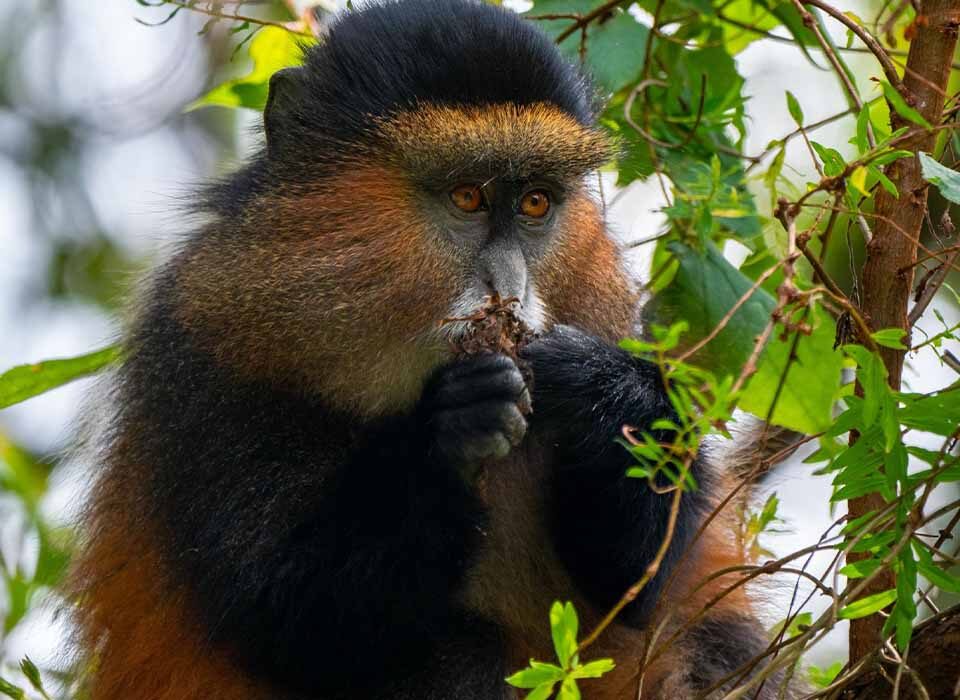
Golden monkeys provide one of Uganda’s most distinctive primate encounters. These attractive monkeys are endemic to the Albertine Rift and are protected in Mgahinga Gorilla National Park in southwestern Uganda.
Their bright golden-orange coats contrast beautifully with the green bamboo and montane vegetation of the Virunga landscape. Golden monkeys are also active and agile, often moving quickly through vegetation as they search for food.
Golden monkey tracking differs from chimpanzee trekking because the landscape is mountainous and the animals frequently move through bamboo-covered slopes. As a result, visitors enjoy both a wildlife experience and a rewarding mountain adventure.
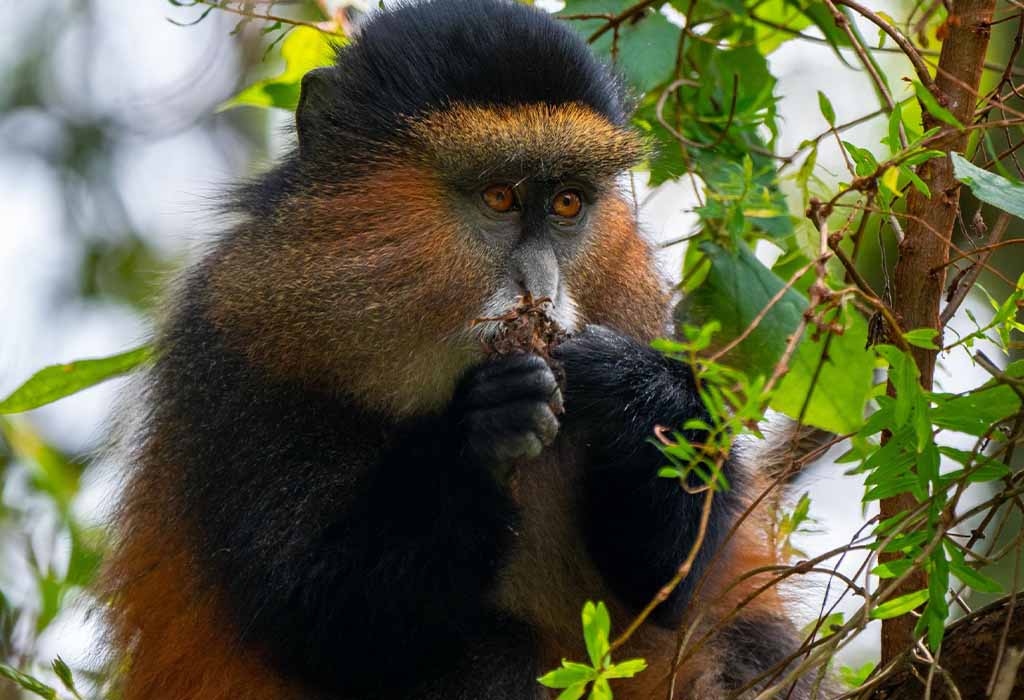
Mgahinga forms part of the larger Virunga conservation landscape shared by Uganda, Rwanda, and the Democratic Republic of Congo. The region contains remarkable ecological diversity, and the dramatic volcanic scenery adds another dimension to the experience.
Travelers can combine golden monkey tracking with gorilla trekking, making southwestern Uganda an excellent destination for a primate-focused safari.
Red Colobus Monkeys of Kibale
Kibale’s forests contain much more than chimpanzees. Red colobus monkeys are among the fascinating species that visitors may encounter while exploring this rich ecosystem.
Their reddish-brown coloring and expressive faces make them appealing subjects for wildlife photography. They usually live in groups and spend much of their time moving through the forest canopy in search of leaves, fruits, and other plant foods.
Because the forest contains dense vegetation, spotting them sometimes requires patience. A knowledgeable guide can make a major difference by identifying calls, movement, and feeding activity that visitors might otherwise overlook.
In addition, the forest environment supports numerous birds, butterflies, reptiles, and plant species. Consequently, a primate walk through Kibale becomes an opportunity to discover an entire ecosystem rather than simply observe individual animals.
Black-and-White Colobus Monkeys
Black-and-white colobus monkeys are among Uganda’s most recognizable forest primates. Their contrasting coats, long tails, and graceful movements make them particularly impressive when they travel between branches.
Unlike many other monkeys, colobus monkeys have very small thumbs, an adaptation associated with their highly arboreal lifestyle. They spend much of their time in trees, where they feed on leaves, fruits, and other vegetation.
Visitors can encounter black-and-white colobus monkeys in several forest environments, including Kibale and Budongo Forest near Murchison Falls National Park.
Watching a troop move through the canopy can be surprisingly captivating. One animal may leap between branches while others follow closely behind. Therefore, travelers should keep their cameras ready while also taking time to simply observe their natural behavior.
Red-Tailed Monkeys and Their Lively Social Groups
Red-tailed monkeys bring plenty of energy to Uganda’s forest experiences. Their distinctive facial markings help visitors recognize them, while their quick movements can make them an exciting challenge for photographers.
These monkeys inhabit a variety of forest environments and occur in areas such as Kibale. They feed on fruits, seeds, leaves, insects, and other available foods.
Their social lives are equally fascinating. Members of a group maintain relationships through grooming, vocal communication, and coordinated movement. When the forest becomes active in the morning, their calls can form part of the natural soundtrack surrounding visitors.
Although red-tailed monkeys can appear playful, visitors should observe them respectfully. Keeping a safe distance and avoiding attempts to attract their attention allows the animals to behave naturally.
Grey-Cheeked Mangabeys: Uganda’s Lesser-Known Primates
For travelers who enjoy discovering less-famous wildlife, mangabeys provide an especially rewarding encounter. Grey-cheeked mangabeys occur in Uganda’s forest ecosystems and can be found in destinations including Kibale.
These monkeys can spend time in dense vegetation and may prove more difficult to spot than larger or more familiar primates. However, their distinctive calls can help experienced guides locate groups within the forest.
Seeing mangabeys often feels like discovering a hidden part of Uganda’s wildlife heritage. They may not receive the same attention as gorillas or chimpanzees, yet their presence demonstrates just how diverse the country’s forests are.
For this reason, travelers should approach primate safaris with an open mind. The most memorable moment may come from an unexpected species rather than the animal originally at the top of the itinerary.
Primate Experiences Beyond Kibale
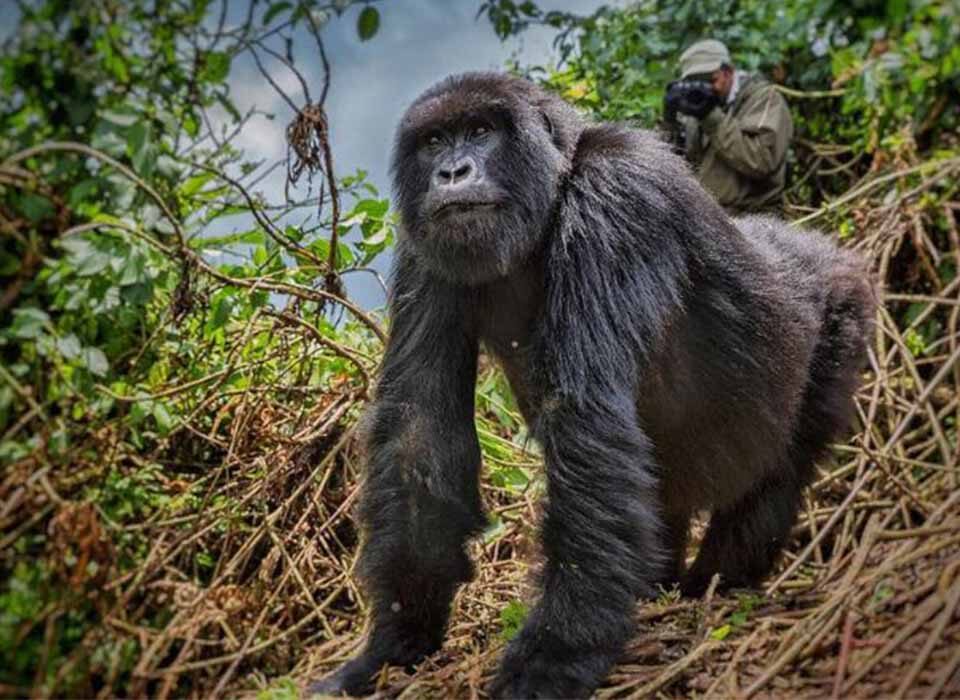
Although Kibale remains central to Uganda’s primate tourism, travelers should not limit their exploration to one forest. Bwindi Impenetrable National Park and Mgahinga Gorilla National Park provide exceptional opportunities to explore the biodiversity of the Albertine Rift.
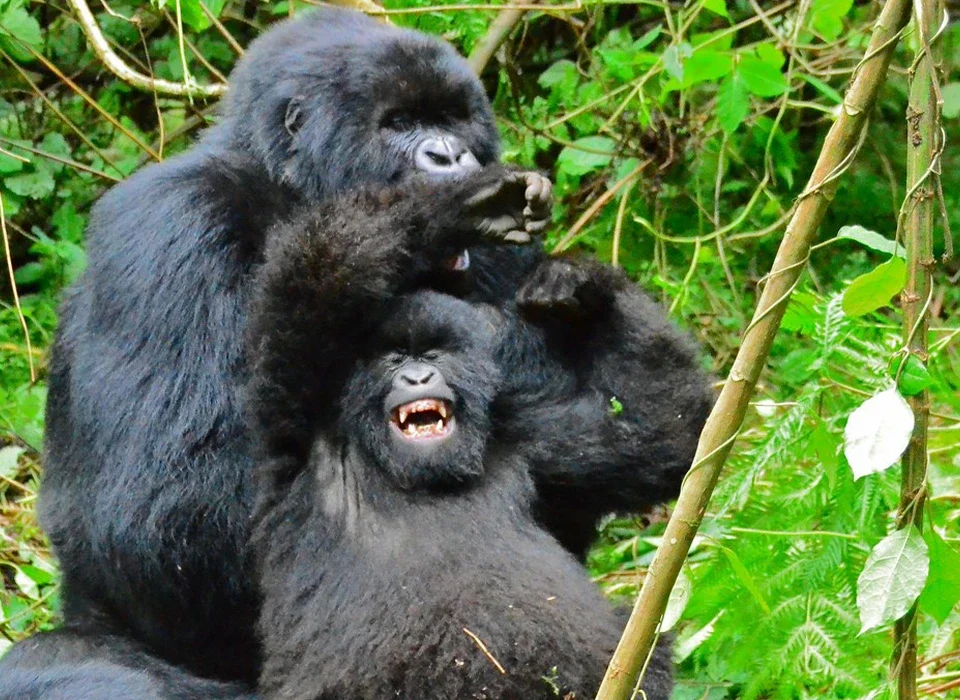
Bwindi is internationally recognized for mountain gorillas, but its forest also supports other primates and numerous bird species. Mgahinga, meanwhile, combines golden monkey experiences with volcanic scenery and montane forests.
Budongo Forest offers another opportunity to explore Uganda’s forest biodiversity, particularly for travelers visiting the Murchison Falls region. Queen Elizabeth National Park can also contribute to a broader wildlife itinerary, where primate experiences complement savannah game viewing and the famous Kazinga Channel boat cruise.
This variety makes Uganda particularly attractive for travelers who want to combine different ecosystems within one journey.
Combine Wildlife With Local Culture
A primate safari becomes even more meaningful when travelers take time to meet the people who live around these protected areas. Communities surrounding Uganda’s forests have developed strong connections with their environments, and cultural experiences provide insight into everyday life.
Around Kibale, visitors can combine forest activities with community walks, traditional food experiences, craft demonstrations, and cultural performances. These encounters provide an opportunity to learn about local livelihoods while supporting community-based tourism.
In southwestern Uganda, cultural experiences can introduce travelers to Batwa heritage through storytelling, music, dance, and traditional knowledge. Such experiences should be approached respectfully, recognizing the history and cultural significance behind them.
Therefore, a well-designed safari does more than move travelers between attractions. It creates opportunities to understand the people, traditions, landscapes, and wildlife that make each destination unique.
Choosing Accommodation for a Primate Safari
Where you stay can significantly influence the overall safari experience. Choosing accommodation close to the planned activity reduces unnecessary travel and allows visitors to begin early-morning excursions more conveniently.
Kibale has accommodation ranging from comfortable budget properties to upscale forest lodges. In Bwindi, travelers should select accommodation according to their chosen trekking sector because the park covers a large and challenging landscape.
Mgahinga offers a different atmosphere, with accommodation surrounded by mountain scenery and easy access to activities in the national park.
At Experiya Tour Company, we consider location, budget, comfort, activities, and travel time when planning accommodation. This approach helps create a smoother itinerary while keeping travelers close to the experiences they came to enjoy.
When Is the Best Time for a Primate Safari?
Uganda supports primate experiences throughout the year. Nevertheless, weather conditions can influence trekking conditions, photography, and general comfort.
The drier months often provide easier conditions for walking, although tropical forests can still receive rain at any time. During wetter periods, vegetation becomes particularly lush, streams and waterfalls are more active, and the forests take on a vibrant appearance.

Rather than choosing a travel season based on one factor alone, travelers should consider their priorities. Those focused on easier trekking may prefer generally drier conditions, while photographers and nature enthusiasts may appreciate the dramatic greenery associated with wetter periods.
Responsible Primate Tourism Matters
Every primate encounter comes with a responsibility to protect the animals and their habitat. Visitors should follow the instructions provided by park authorities, guides, and trackers throughout their experience.
Travelers should never feed wild primates or attempt to attract them for photographs. They should also maintain the required viewing distance and avoid unnecessary noise or sudden movements.
These practices help minimize stress and reduce the risk of transmitting illnesses between people and primates. Furthermore, supporting legitimate tourism operators and community initiatives helps ensure that local people benefit from conservation.
Protecting Uganda’s forests requires cooperation between communities, conservation organizations, government authorities, tourism operators, and visitors. Responsible travel therefore contributes to the long-term survival of the species that make these destinations special.
Creating the Ultimate Uganda Primate Safari
Uganda offers enough diversity to build an itinerary around several primate experiences. Kibale can form the foundation with chimpanzee trekking and opportunities to encounter several monkey species. From there, travelers can continue to Mgahinga for golden monkey tracking before exploring Bwindi’s forests and mountain gorilla habitat.
For a broader safari, Queen Elizabeth National Park can add lions, elephants, buffaloes, hippos, and the spectacular Kazinga Channel. A journey toward Murchison Falls can introduce travelers to another landscape, with savannah wildlife, the Nile, forest habitats, and the powerful Murchison Falls itself.
Most importantly, travelers should allow enough time to appreciate each destination. Uganda’s forests, mountains, lakes, communities, and savannahs deserve more than a rushed visit.
Uganda’s primate heritage reaches far beyond its famous mountain gorillas. From intelligent chimpanzees and striking golden monkeys to colobus monkeys, red-tailed monkeys, and elusive mangabeys, the country offers an extraordinary range of wildlife encounters.
With careful planning, responsible tourism, and expert guidance from Experiya Tour Company, travelers can explore this remarkable diversity while gaining a deeper appreciation for Uganda’s forests, communities, and conservation efforts.