Factors to Consider When Choosing a Gorilla Family in Bwindi Impenetrable National Park
May 14, 2026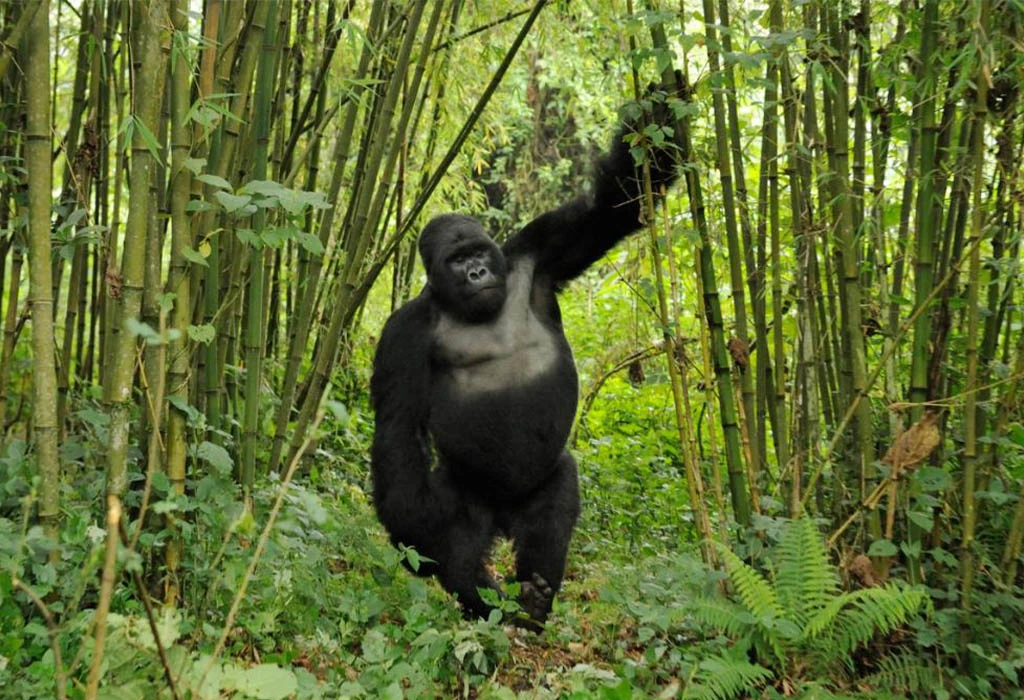
Does Gorilla Trekking Take Place Every Day in Bwindi Impenetrable National Park?
May 15, 2026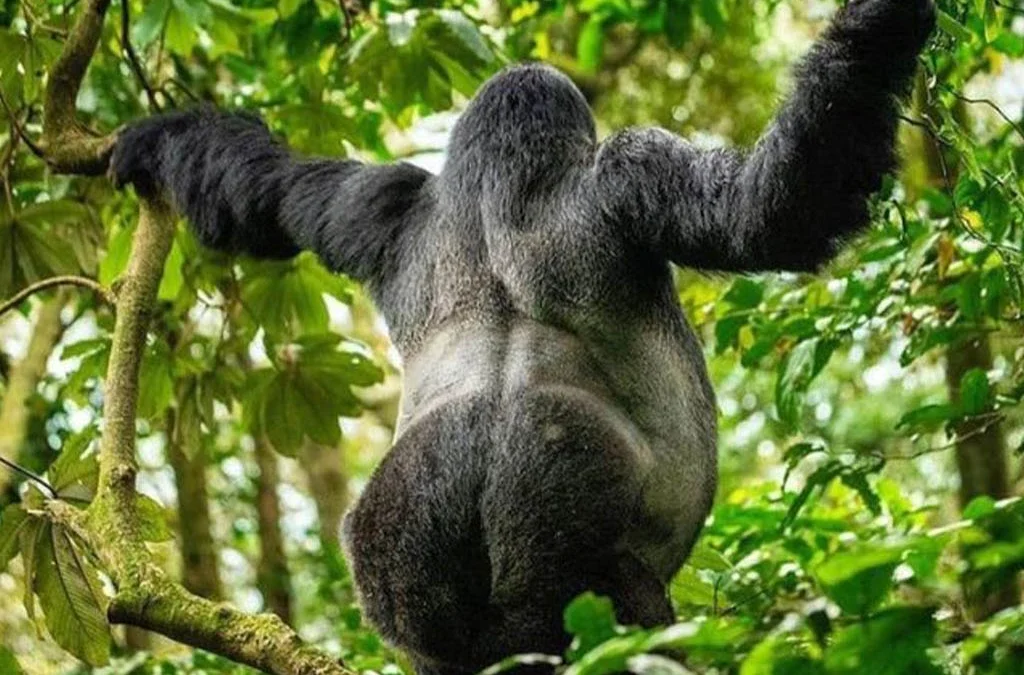
One of the most common questions travelers ask before booking a gorilla safari is whether mountain gorillas hibernate or migrate during certain times of the year. Since many African wildlife species move seasonally in search of food and water, people often assume gorillas behave the same way. Others imagine that gorillas disappear deep into the forest during rainy or colder months.
In reality, mountain gorillas do neither.
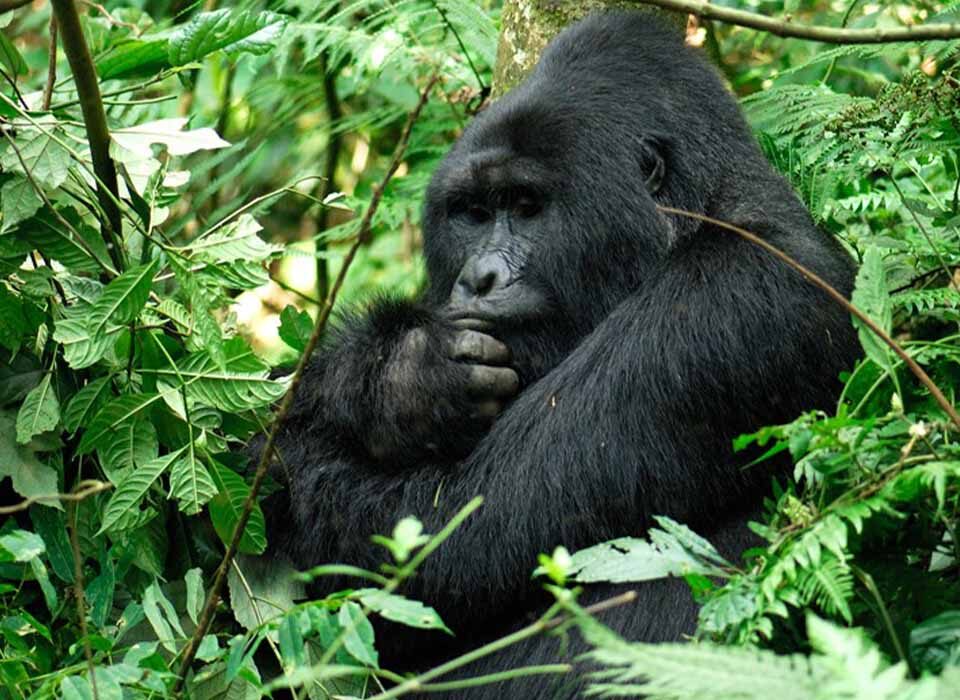
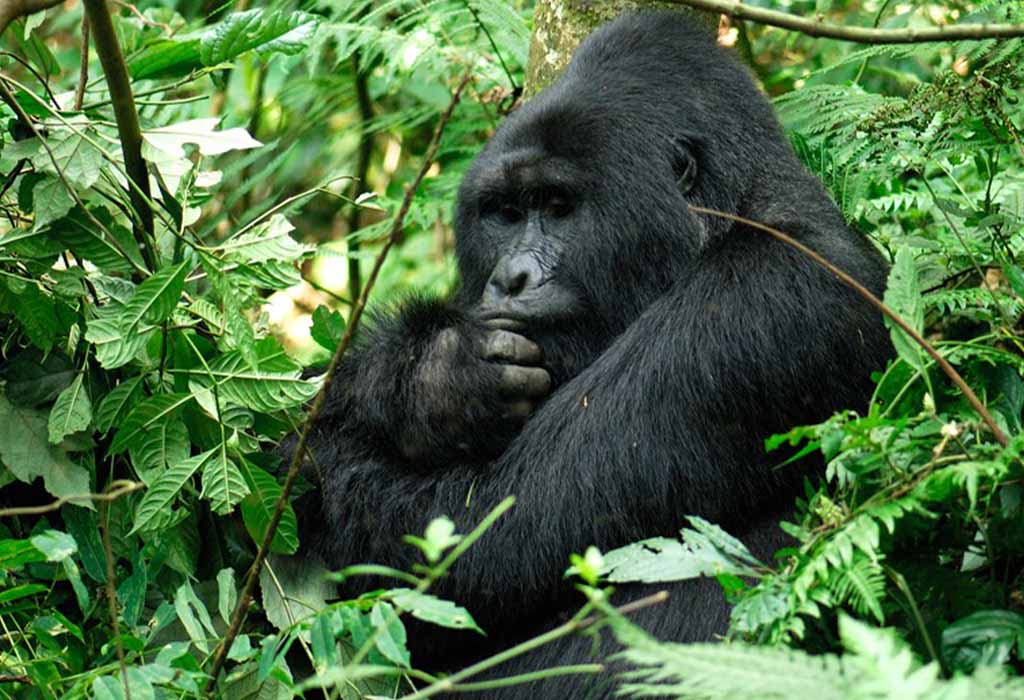
Mountain gorillas do not hibernate, and they do not migrate across long distances like wildebeests or zebras. Instead, they live within relatively stable forest territories throughout the year. They move daily while searching for food, building nests, and caring for their families, but they remain inside familiar rainforest habitats.
This behavior explains why gorilla trekking remains possible all year round in Uganda and Rwanda. Whether you visit during the dry season or the rainy months, the gorillas stay active within the forest ecosystem.
Understanding how mountain gorillas live and move through their environment makes the trekking experience even more meaningful for travelers visiting Bwindi Impenetrable National Park, Mgahinga Gorilla National Park, or Volcanoes National Park.
Understanding the Mountain Gorilla Habitat
To understand why mountain gorillas neither hibernate nor migrate, it helps to first look at the environment where they live.
Mountain gorillas inhabit high-altitude tropical rainforests in Uganda, Rwanda, and the Democratic Republic of Congo. Their main habitats include Bwindi Impenetrable National Park and Mgahinga Gorilla National Park in Uganda, Volcanoes National Park in Rwanda, and Virunga National Park in Congo.
Unlike open savannah ecosystems that experience dramatic seasonal changes, these forests remain green and biologically productive throughout the year. Rain falls regularly, vegetation grows continuously, and water remains available in all seasons.
As a result, gorillas do not face the harsh winter conditions or severe food shortages that force some animals to hibernate or migrate. Instead, they simply move within their home ranges while feeding on leaves, shoots, roots, bark, stems, and seasonal fruits.
The rainforest provides everything they need for survival year-round.
Do Mountain Gorillas Hibernate?
The simple answer is no. Mountain gorillas never hibernate.
Hibernation occurs when animals enter a prolonged period of reduced activity to survive extreme cold or lack of food. During hibernation, animals lower their body temperature, slow their metabolism, and conserve energy for weeks or even months.
Mountain gorillas do not experience conditions that require such a survival strategy.
Although their habitats sit at high elevations where temperatures can become cool, especially at night, the climate remains relatively stable throughout the year. Temperatures in gorilla habitats usually range between 7°C and 20°C, creating cool but manageable conditions.
Additionally, food remains available throughout the year in tropical montane forests. Gorillas continue feeding, grooming, socializing, nesting, and caring for their young every single day.
Their daily routines remain active regardless of the season.
Why Mountain Gorillas Do Not Need Hibernation
Several factors explain why mountain gorillas never hibernate.
First, their diet supports year-round survival. Unlike animals that depend on highly seasonal food sources, mountain gorillas eat a wide variety of vegetation that grows continuously in the rainforest. Their diet includes bamboo shoots, leaves, herbs, roots, stems, wild celery, flowers, and tree bark.
Because the forest constantly regenerates, gorillas rarely experience major food shortages.
Secondly, mountain gorillas possess thick fur and large body sizes that help them stay warm in cool mountain environments. These physical adaptations protect them from cold temperatures without requiring dormancy.
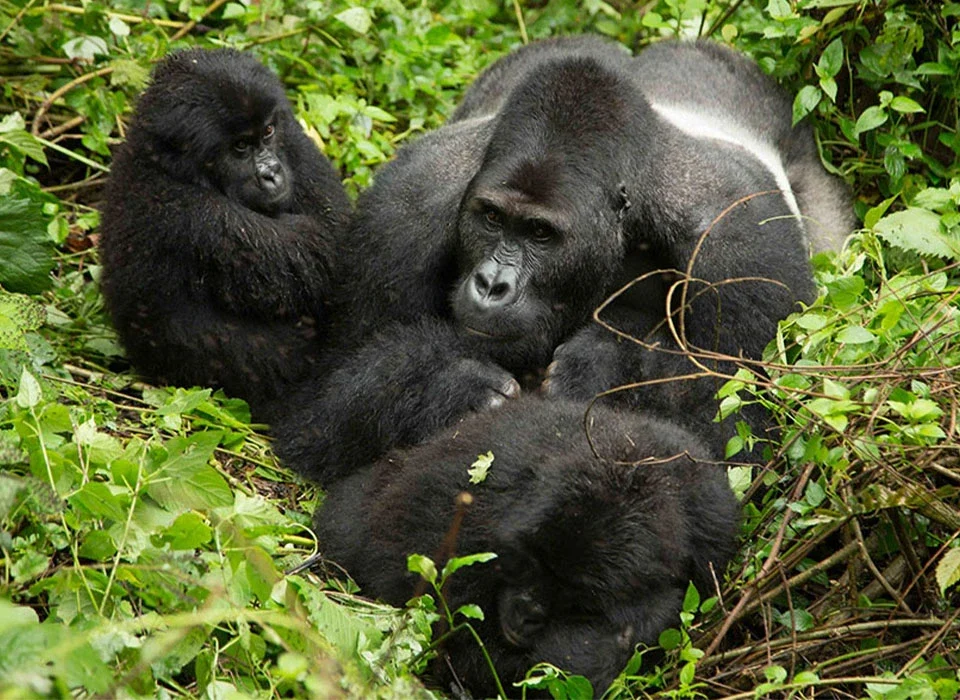
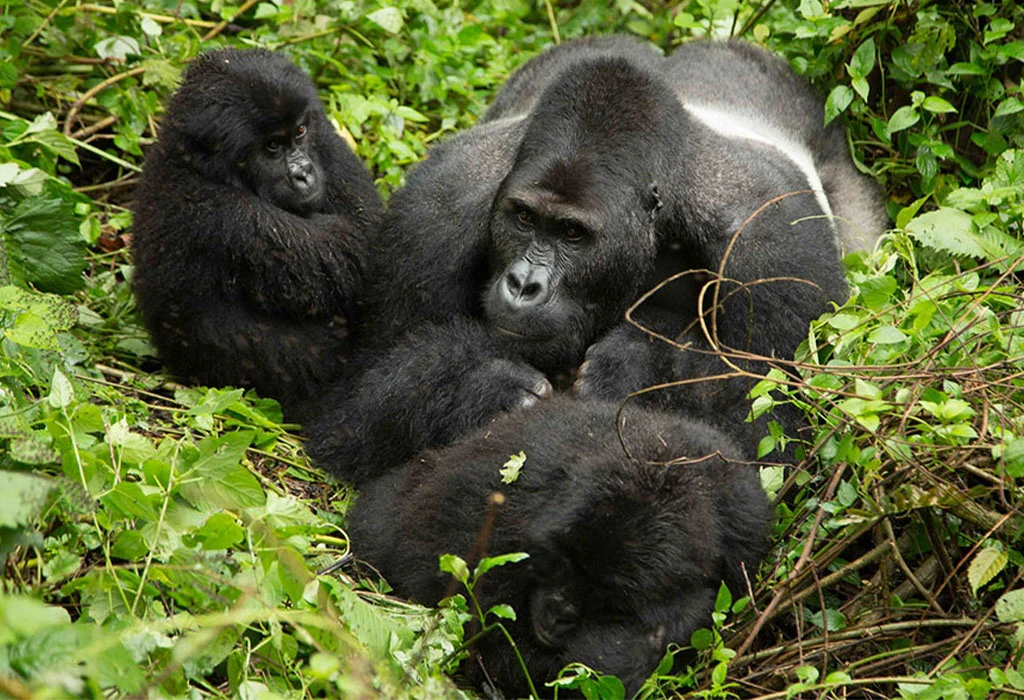
Their social structure also contributes to survival. Mountain gorillas live in stable family groups led by dominant silverbacks. These groups provide security, cooperation, and social stability throughout the year.
Rather than hibernating, gorillas simply adjust their feeding routes depending on vegetation availability within the forest.
Do Mountain Gorillas Migrate?
Although mountain gorillas move frequently, they do not migrate in the traditional sense.
Migration involves large-scale seasonal movement across long distances, usually in search of food, water, or breeding grounds. Species such as wildebeests travel hundreds of kilometers during migration cycles.
Mountain gorillas behave very differently.
Each gorilla family occupies a defined home range within the forest. Inside this territory, the group moves daily while searching for food and suitable nesting areas. However, these movements remain localized and predictable.
A gorilla family may travel through valleys, climb forested slopes, enter bamboo zones, or move toward feeding areas, but they usually stay within familiar territory.
Their movement patterns depend on factors such as food availability, forest density, weather conditions, and group size.
Therefore, while gorillas move regularly, their behavior does not qualify as migration.
Daily Movement Patterns of Mountain Gorillas
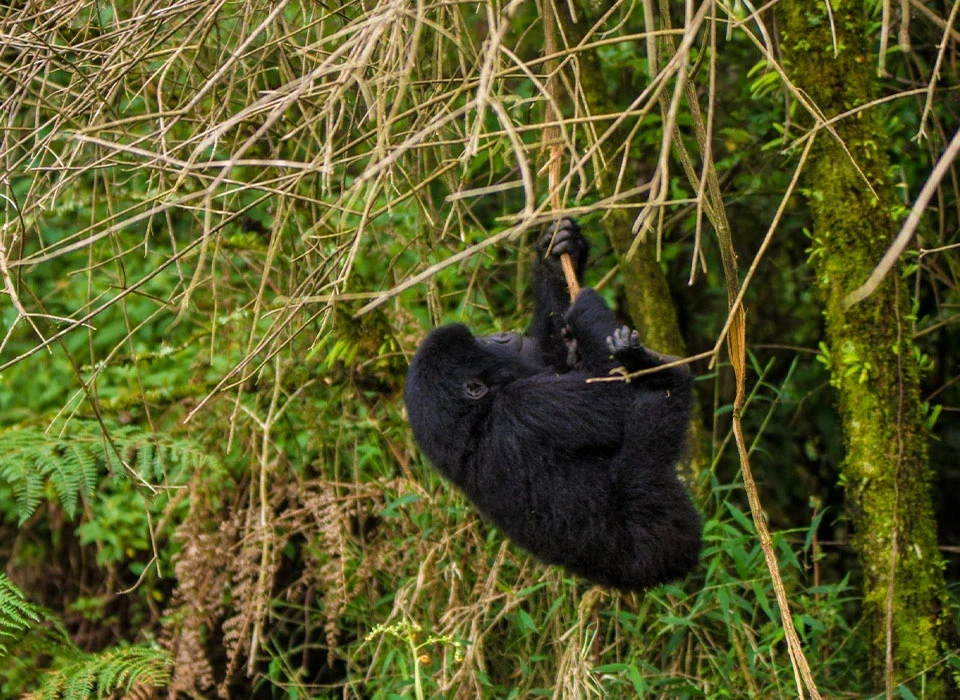
Despite their large size, mountain gorillas remain surprisingly active.
Most gorilla groups travel between a few hundred meters and several kilometers each day while feeding and searching for nesting locations. The distance varies depending on terrain, weather, and food availability.
When vegetation becomes abundant in one area, gorillas may travel shorter distances. However, if food becomes scarce, they move farther within their home range.
This constant movement explains why gorilla trekking routes change every day.
Each morning, trackers locate gorilla families based on where they built their nests the previous evening. Experienced ranger teams monitor movement patterns closely, making it easier to find habituated groups for tourism activities.
Seasonal Changes in Gorilla Movement
Although mountain gorillas do not migrate, seasonal weather can slightly influence where they spend time within the forest.
During rainy months, gorillas often remain at lower elevations where food becomes more accessible, and vegetation grows rapidly. Trails may become muddier, and the forest appears denser and greener.
In drier months, some gorilla groups move toward higher elevations or bamboo-rich areas where feeding conditions improve.
However, these changes remain minor compared to true migration patterns seen in savannah wildlife.
Importantly, gorillas remain accessible throughout the year, making Uganda and Rwanda excellent destinations for year-round trekking safaris.
Gorilla Nesting Behavior
One fascinating aspect of mountain gorilla life involves their nesting routine.
Every evening, gorillas build fresh nests where they sleep overnight. Depending on age and preference, they may construct nests on the ground, within dense vegetation, or occasionally in trees.
The following morning, the family leaves the nesting site and continues feeding through the forest.
This daily nesting behavior helps trackers locate gorilla groups efficiently. Nest sites also help researchers understand movement patterns, feeding habits, habitat use, and social behavior.
The constant rebuilding of nests clearly demonstrates that gorillas remain active throughout the year rather than entering any form of dormancy.
Why Gorilla Trekking Remains Possible All Year
Because mountain gorillas neither hibernate nor migrate, gorilla trekking remains available in every season.
Dry seasons often provide easier hiking conditions, clearer photography opportunities, and less mud on forest trails. Meanwhile, rainy seasons offer lush scenery, dramatic mist-covered forests, fewer tourists, and vibrant birdlife activity.
Regardless of the season, the gorillas remain active within their natural habitat.
This consistency allows travelers to enjoy authentic wildlife encounters at any time of year.
Experience Mountain Gorillas with Experiya Tour Company
Encountering mountain gorillas in their permanent rainforest home creates one of Africa’s most unforgettable wildlife experiences. Watching these gentle giants feed, groom, communicate, and care for their young inside ancient forests feels deeply personal and incredibly moving.
Experiya Tour Company organizes carefully designed gorilla trekking safaris in Uganda and Rwanda, offering travelers the opportunity to experience these extraordinary primates responsibly and sustainably.
Whether you choose Bwindi Impenetrable National Park, Mgahinga Gorilla National Park, or Volcanoes National Park, you will discover that mountain gorillas remain active, social, and present throughout the year within the forests they have called home for generations.