
Rwanda’s Top Locations for Mountain Gorilla Viewing
November 12, 2026
Tanzania’s 5 Most Unique Plants
November 12, 2026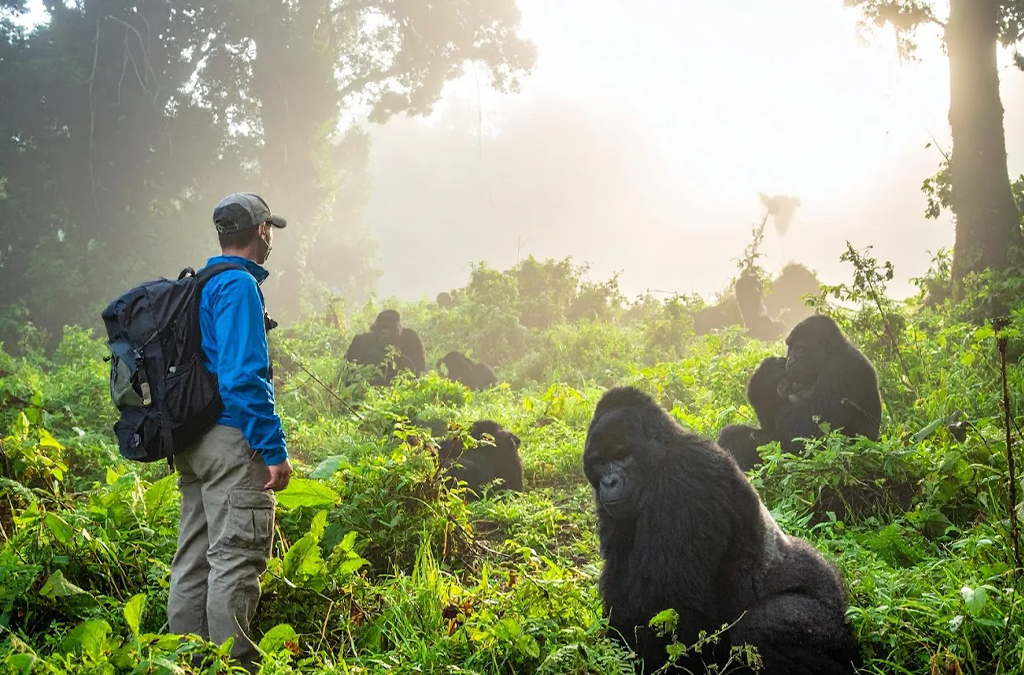
Uganda is one of the best destinations in Africa for encountering endangered mountain gorillas in their natural habitat. Hidden within the mist-covered forests of southwestern Uganda, these magnificent primates live among thick vegetation, towering trees and beautiful mountainous landscapes. For many visitors, seeing a mountain gorilla for the first time is one of the most memorable experiences of an African safari.
Uganda protects a significant proportion of the world’s remaining mountain gorillas, with populations living in Bwindi Impenetrable National Park and Mgahinga Gorilla National Park. The remaining mountain gorillas inhabit the Virunga Conservation Area, which extends across Uganda, Rwanda and the Democratic Republic of Congo (DRC). These forests provide essential food, shelter and protection for the endangered species.
Unlike some other wildlife species, mountain gorillas cannot survive successfully in ordinary captive environments. They depend on healthy natural forests, suitable vegetation and protected habitats. Consequently, conserving Uganda’s mountain gorilla forests is essential for their long-term survival. It also supports biodiversity, local communities and responsible tourism.
Through guided gorilla trekking experiences, visitors can enter designated forest areas, follow experienced ranger guides and spend a precious hour observing a habituated gorilla family. At Experiya Tour Company, we consider this encounter one of the most rewarding wildlife experiences available in Uganda.
1. Where Are Mountain Gorillas Found in Uganda?
Mountain gorillas in Uganda inhabit two protected national parks in the southwestern part of the country: Bwindi Impenetrable National Park and Mgahinga Gorilla National Park. Although both parks protect mountain gorillas, their landscapes, forest environments and trekking experiences differ.
Bwindi Impenetrable National Park
Bwindi Impenetrable National Park is Uganda’s most prominent mountain gorilla destination. Located in southwestern Uganda, the park protects an ancient montane forest characterised by steep hills, deep valleys, thick vegetation and winding forest trails.
Bwindi is home to a substantial population of mountain gorillas and several habituated families available for tourism. Visitors can track these families from four main trekking sectors:
-
Buhoma: Located in the northern part of Bwindi, with several established gorilla trekking families.
-
Ruhija: Situated in the eastern sector, known for its beautiful forest scenery and mountainous terrain.
-
Rushaga: Found in the southern part of the park, with several habituated gorilla families.
-
Nkuringo: Located in the southwestern sector, offering challenging forest hikes and spectacular highland views.
Each sector offers a different trekking experience. The location of your gorilla permit determines where you report for the briefing and begin your trek. Therefore, visitors should arrange accommodation near their assigned trekking sector to avoid unnecessary early-morning travel.
Besides gorilla trekking, Bwindi offers excellent opportunities for birdwatching, guided nature walks and cultural encounters with surrounding communities. Visitors can also learn about the Batwa people’s traditional forest heritage through organised cultural experiences.
Mgahinga Gorilla National Park
Mgahinga Gorilla National Park is Uganda’s other mountain gorilla destination. Located in the far southwestern corner of the country, the park forms part of the greater Virunga Conservation Area, shared with Rwanda and the Democratic Republic of Congo.
The park protects the Nyakagezi gorilla family, which is habituated for tourism. Compared with Bwindi, Mgahinga has a smaller habituated gorilla population, but it offers a distinctive trekking experience through bamboo forests, montane vegetation and volcanic landscapes.
The surrounding Virunga volcanoes create a beautiful backdrop for wildlife experiences. Visitors can also enjoy golden monkey tracking, guided volcano hikes, birdwatching and cultural visits.
For travellers interested in combining different primate experiences, Mgahinga provides an excellent opportunity to encounter both mountain gorillas and golden monkeys during the same Uganda safari.
2. Mountain Gorilla Population and Distribution
Mountain gorillas are among the world’s most endangered great apes. However, years of conservation work, habitat protection, veterinary intervention and responsible tourism have helped their population recover.
The latest widely recognised international census established a combined population of more than 1,000 mountain gorillas in the two populations found in the Virunga Massif and Bwindi-Sarambwe landscape. Uganda protects gorillas in both areas through Bwindi and Mgahinga National Parks.
Mountain gorillas naturally occur in only two geographically separate populations:
-
Bwindi-Sarambwe population: Found in Bwindi Impenetrable National Park in Uganda and the adjoining Sarambwe Nature Reserve in the DRC.
-
Virunga Massif population: Distributed across Mgahinga Gorilla National Park in Uganda, Volcanoes National Park in Rwanda and Virunga National Park in the DRC.
These populations represent an important conservation achievement because mountain gorillas have faced habitat loss, disease, poaching and other human-related pressures.
Although their numbers have improved, mountain gorillas remain endangered. Continued protection, responsible visitor behaviour and community participation are necessary to maintain this progress.
3. Physical Characteristics of Mountain Gorillas
Mountain gorillas are the largest living primates and belong to the great ape family, which also includes humans, chimpanzees, bonobos and orangutans. They share a close evolutionary relationship with humans, displaying fascinating physical, social and behavioural similarities.
An adult male mountain gorilla develops a distinctive patch of silver-grey hair across its back when it reaches maturity. This characteristic gives the dominant adult male the name silverback. Adult males are considerably larger and stronger than females, and some can weigh more than 180 kilograms.
Mountain gorillas have several physical features that help them survive in their natural environment:
-
Thick fur: Their long, dense hair protects them from the cold temperatures of high-altitude forests.
-
Strong arms: Their powerful upper bodies help them climb, move through vegetation and support their weight.
-
Broad chests: Their muscular bodies support their strength and physical endurance.
-
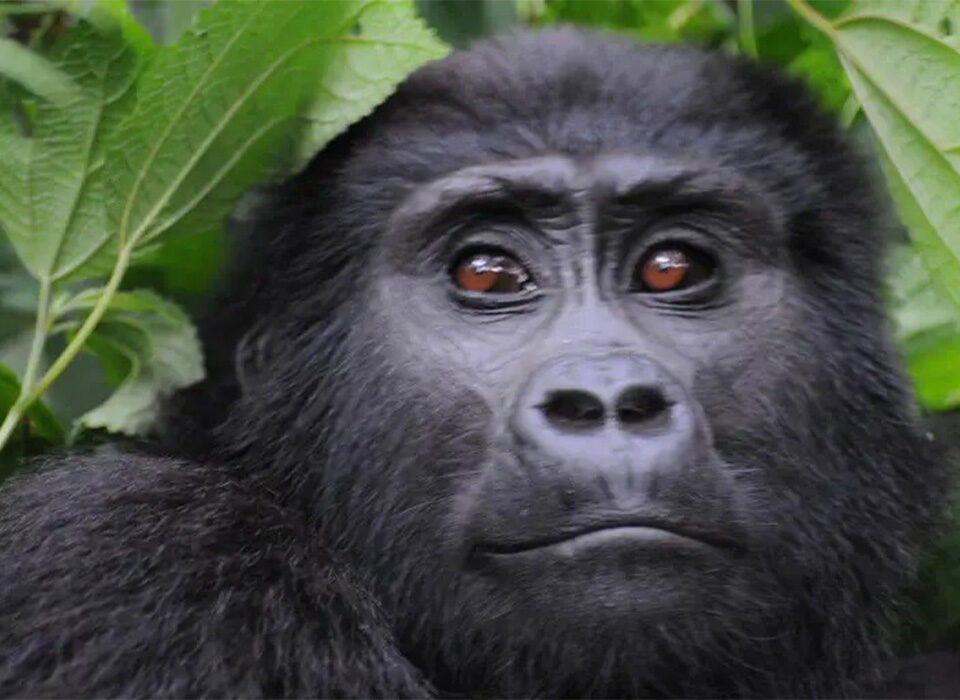
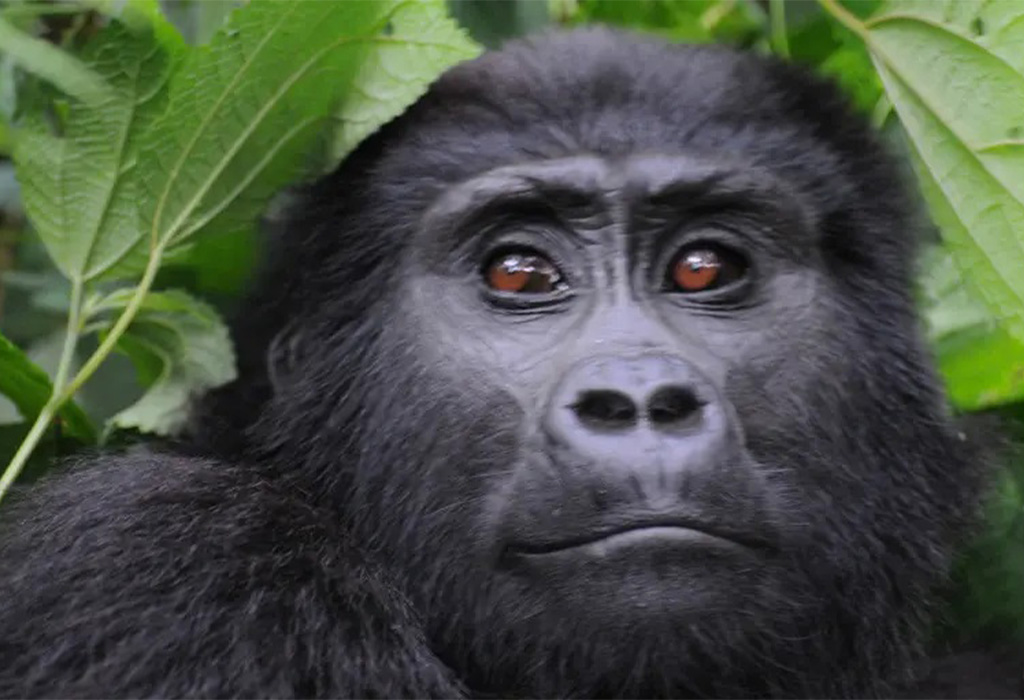
Dark faces: Their expressive faces and distinctive noses help researchers identify individual gorillas.
-
Large hands and feet: Their hands and feet help them grip vegetation, move around the forest and manipulate food.
One particularly interesting feature is the nose print. Every mountain gorilla has a unique nose pattern, which researchers and trackers use to identify individuals.
Although their physical appearance can seem intimidating, mountain gorillas generally display peaceful behaviour when undisturbed. Their strength mainly helps them protect their families, establish social relationships and survive in the forest.
4. Mountain Gorilla Family Structure and Social Behaviour
Mountain gorillas live in close-knit family groups that usually consist of a dominant silverback, adult females, juveniles and infants. The silverback plays an important leadership role, guiding the family as it moves through the forest in search of food and suitable resting places.
During a typical day, a gorilla family may spend several hours feeding, moving between feeding areas, resting and interacting with one another. The dominant silverback helps maintain group stability and makes important decisions about movement and protection.
The Role of the Silverback
The silverback is usually the most influential member of the family. He provides leadership, protects group members and helps maintain order within the family.
When another gorilla group approaches or a potential threat appears, the silverback may demonstrate his strength through chest beating, vocalisations, ground charging and other displays. These behaviours often communicate dominance or warn potential threats to keep their distance.
However, silverbacks do not spend every moment displaying aggression. Much of their time involves feeding, resting, grooming and interacting with other family members.
Mothers and Young Gorillas
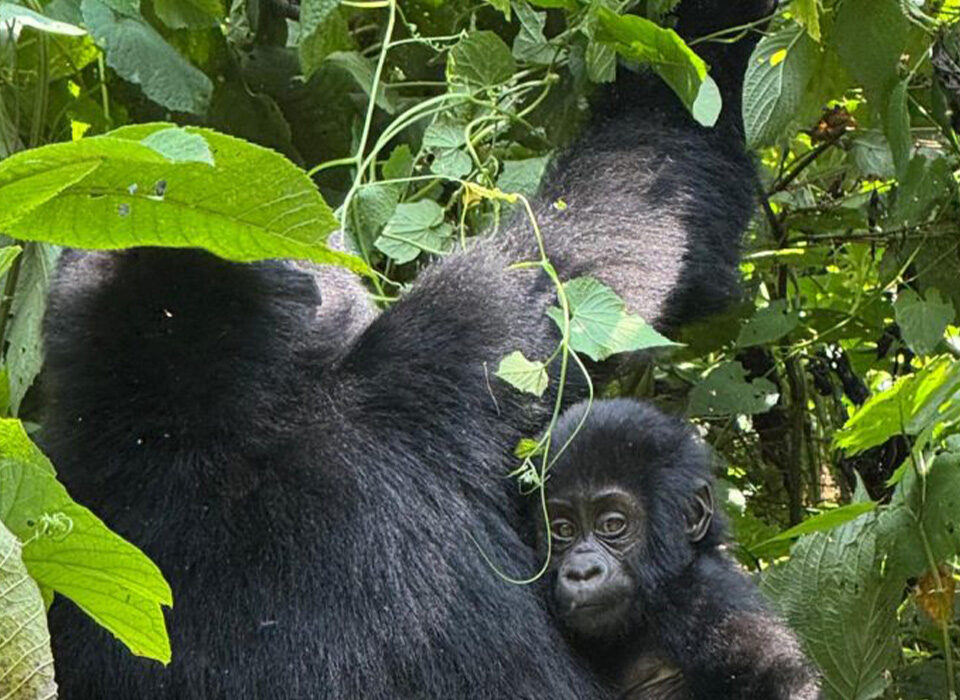
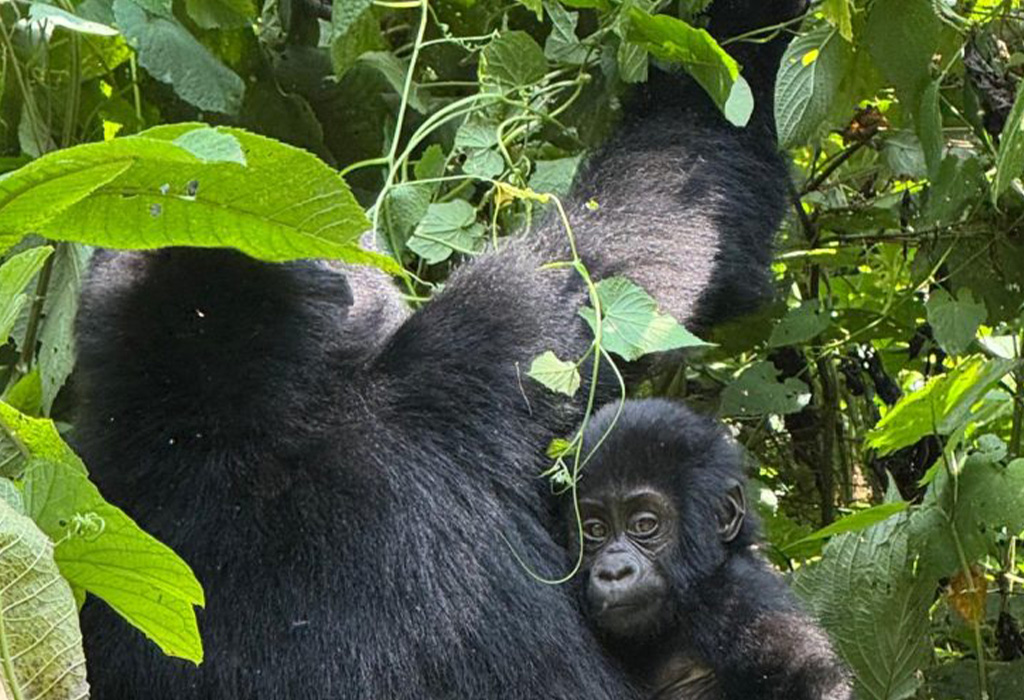
Mother gorillas develop strong relationships with their infants. A newborn mountain gorilla depends entirely on its mother for nourishment, warmth, transportation and protection.
As the infant grows, it gradually becomes more independent. Young gorillas spend considerable time playing, climbing, exploring and interacting with other family members. These activities help them develop physical coordination and social skills.
Visitors tracking gorillas in Bwindi or Mgahinga may encounter mothers carrying their babies, juveniles playing in the vegetation or older gorillas resting peacefully. Such moments make the experience particularly special.
Communication Among Mountain Gorillas
Mountain gorillas communicate using different vocalisations, body movements, facial expressions and physical interactions. They produce sounds such as grunts, hoots, barks and other calls to express different emotions or communicate with family members.
They also use body language to establish relationships, communicate discomfort and demonstrate dominance. Chest beating is among their most recognisable behaviours, although it does not always indicate aggression.
These complex interactions make watching a gorilla family in its natural habitat fascinating. Rather than simply observing individual animals, visitors gain an opportunity to appreciate the relationships that hold the entire family together.
5. What Do Mountain Gorillas Eat?
Mountain gorillas are primarily herbivores. Their diet consists mainly of vegetation found within their forest habitats, although the exact food varies depending on the season, altitude and availability of different plants.
During a typical feeding period, mountain gorillas may consume:
-
Leaves and young shoots.
-
Wild fruits and berries.
-
Roots and stems.
-
Bamboo shoots.
-
Tree bark and pith.
-
Flowers and other edible vegetation.
Their strong jaws and teeth help them process fibrous plant material. They spend a significant part of the day feeding because their large bodies require substantial amounts of food.
Mountain gorillas usually move through the forest while feeding, selecting fresh vegetation from different locations. Their feeding activities also contribute to the forest ecosystem through seed dispersal and vegetation management.
For visitors on a Uganda gorilla trekking safari, watching these animals feed is an interesting experience. You may see a large silverback pulling vegetation towards itself, a mother feeding beside her infant or young gorillas experimenting with different plants.
6. Mountain Gorilla Trekking in Uganda
Mountain gorilla trekking is the main tourist activity associated with mountain gorillas in Uganda. It involves hiking through protected forest areas with trained Uganda Wildlife Authority (UWA) ranger guides to locate a habituated gorilla family.
The experience begins early in the morning at the designated park headquarters. Visitors attend a briefing where rangers explain the trekking procedures, safety precautions and appropriate behaviour around gorillas.
After the briefing, visitors are allocated to trekking groups and assigned a gorilla family. Experienced guides and trackers then lead the groups into the forest, following trails and monitoring signs such as feeding remains, footprints and nests.
The duration of a trek depends on the location and movement of the gorillas. Some families may be found after a relatively short walk, while others require several hours of hiking through steep and densely vegetated terrain.
Once the gorillas are located, visitors normally receive one hour to observe them. During this time, you may witness feeding, grooming, resting, playing and interactions between family members.
What Makes Gorilla Trekking Special?
Unlike traditional game drives, where visitors observe wildlife from a safari vehicle, gorilla trekking brings you into the gorillas’ natural forest environment on foot.
The experience offers opportunities to:
-
Observe mountain gorillas at close range under ranger supervision.
-
Watch silverbacks interact with their families.
-
Photograph gorillas in their natural surroundings, following park photography rules.
-
Learn about gorilla behaviour from experienced guides.
-
Understand the importance of forest conservation.
Although the trek can be physically demanding, the opportunity to spend time with these endangered primates makes the effort worthwhile.
7. Mountain Gorilla Conservation in Uganda
Mountain gorilla conservation remains one of Uganda’s most important wildlife protection achievements. For many years, these animals faced serious threats from habitat destruction, poaching, human encroachment, disease and other environmental pressures.
Today, several conservation organisations, government agencies, researchers, park rangers and local communities work together to protect mountain gorillas and their habitats.
Uganda Wildlife Authority plays a central role in managing Bwindi and Mgahinga National Parks. Its responsibilities include monitoring wildlife, protecting forest habitats, regulating tourism and supporting conservation activities.
The 2018 Bwindi-Sarambwe census recorded 459 mountain gorillas. A new census began in 2025, and the updated genetic analysis was still being processed according to the information available in the referenced reporting. Therefore, the 459 figure should be understood as the last published Bwindi-Sarambwe census result, not a confirmed current population.
How Gorilla Trekking Supports Conservation
Responsible gorilla tourism generates revenue that helps finance wildlife protection and park management. It also creates employment opportunities for local people, including guides, trackers, porters, drivers and accommodation providers.
Visitors contribute to conservation through the purchase of gorilla permits and other tourism services. The involvement of surrounding communities also encourages local participation in protecting the forests.
However, tourism must follow strict regulations to minimise disturbance and reduce the risk of transmitting diseases between humans and gorillas.
Visitors should always:
-
Maintain the distance instructed by the ranger guides.
-
Avoid touching gorillas.
-
Never feed wild gorillas.
-
Keep their voices low and avoid sudden movements.
-
Follow photography instructions and avoid flash.
-
Avoid trekking when sick.
-
Never leave rubbish in the forest.
These simple measures help protect the gorillas while ensuring that future generations can enjoy the same extraordinary wildlife experience.
8. The Batwa People and Their Connection to Mountain Gorillas
The Batwa people have a long history of living in the forests of southwestern Uganda. Traditionally, they depended on the forest for food, medicine, shelter and other necessities. They also developed extensive knowledge of forest plants, wildlife and natural resources.
When Bwindi and Mgahinga became protected national parks, the Batwa were relocated from their traditional forest homes. Today, cultural experiences organised around the parks allow visitors to learn about their history, traditions and relationship with the forest.
A Batwa cultural visit may include traditional dancing, storytelling, demonstrations of hunting techniques and explanations of how their ancestors used forest resources.
Combining gorilla trekking with a Batwa cultural experience gives visitors a broader understanding of Uganda’s natural and cultural heritage. It also creates opportunities for community tourism and local economic participation.
9. Best Time to See Mountain Gorillas in Uganda
Mountain gorilla trekking is available throughout the year in Bwindi and Mgahinga. However, weather conditions can influence the difficulty of hiking through the forest.
Uganda generally experiences two relatively drier periods:
-
June to September: Often preferred for gorilla trekking because forest trails are generally less muddy.
-
December to February: Another popular period, with comparatively favourable trekking conditions.
The wetter periods generally occur around March to May and October to November. During these months, trails can become slippery, and rainfall may make hiking more challenging.
Nevertheless, gorillas remain in the forest throughout the year, and visitors can enjoy successful trekking experiences during both wet and dry seasons.
For travellers planning their safari, we recommend booking gorilla permits early, particularly during popular holiday periods.
10. Planning a Mountain Gorilla Safari with Experiya Tour Company
Experiya Tour Company organises Uganda gorilla trekking safaris to Bwindi Impenetrable National Park and Mgahinga Gorilla National Park. We help visitors arrange gorilla permits, transportation, accommodation and guided wildlife experiences.
Depending on your travel plans, you can combine gorilla trekking with other exciting activities, including:
-
Wildlife game drives in Queen Elizabeth National Park.
-
Chimpanzee tracking in Kibale Forest National Park.
-
Boat cruises along the Kazinga Channel.
-
Golden monkey tracking in Mgahinga.
-
Cultural visits around Bwindi.
-
Relaxation at Lake Bunyonyi or Lake Mutanda.
Whether you are planning a short gorilla trekking trip or an extended Uganda wildlife safari, we can help organise an itinerary that matches your available time, accommodation preferences and travel budget.
Our aim is to make your journey comfortable while supporting responsible tourism and the conservation of Uganda’s extraordinary wildlife.
Conclusion: Experience Mountain Gorillas in Uganda
Mountain gorillas are among Africa’s most remarkable wildlife treasures. Their close family relationships, fascinating behaviour and dependence on protected mountain forests make them particularly special to observe.
Uganda offers exceptional opportunities to encounter these endangered primates in Bwindi Impenetrable National Park and Mgahinga Gorilla National Park. Beyond the trekking experience, visitors discover beautiful forests, remarkable biodiversity and the cultural heritage of surrounding communities.
With proper planning and responsible travel, a mountain gorilla safari becomes more than a wildlife holiday. It provides an opportunity to appreciate nature and contribute to the protection of one of the world’s most extraordinary primates.
Plan your mountain gorilla trekking safari in Uganda with Experiya Tour Company and experience these magnificent primates in their natural forest home.