Discover the Nkuringo Batwa Cultural Experience in Uganda
December 17, 2025
What’s Included in Uganda Gorilla Trekking Tour Price?
December 17, 2025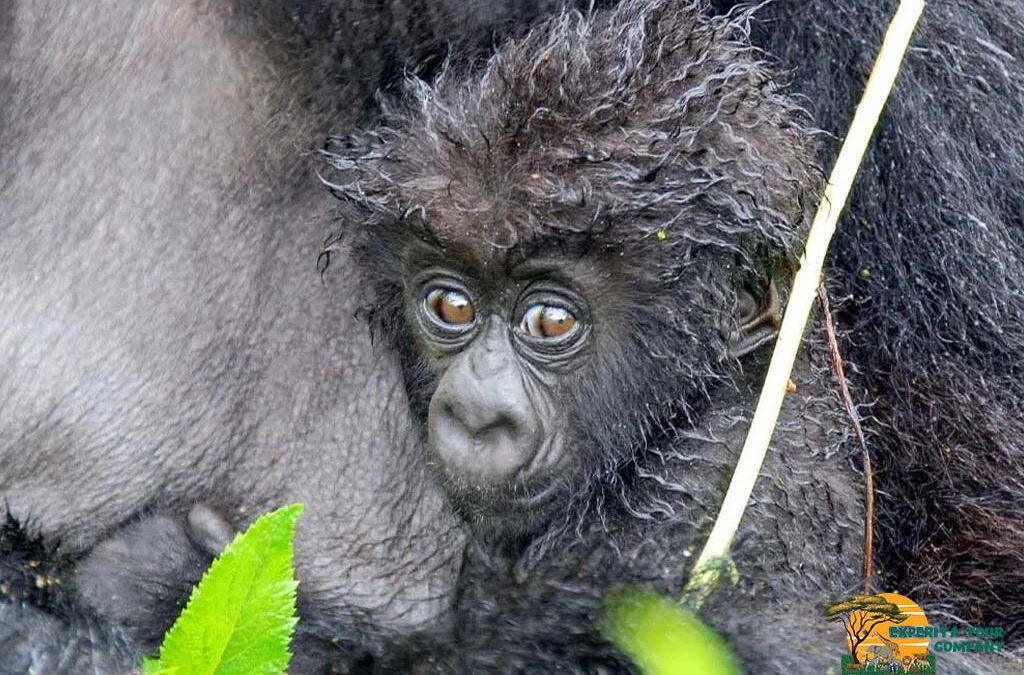
Imagine a creature taller than the tallest human, with enormously powerful arms and an imposing body, yet eyes that feel gentle, thoughtful, and almost human. This is the gorilla one of Africa’s most magnificent animals. So, are gorillas primates?
Yes, they absolutely are.
Gorillas belong to the primate order, a group of mammals defined by forward-facing eyes, grasping hands and feet, and high intelligence. In fact, gorillas are the largest primates on Earth. They fall within the ape family rather than the monkey family, sharing close evolutionary ties with chimpanzees, bonobos, orangutans, and even humans.
This article explores the fascinating world of primates, explains where gorillas fit in that family tree, and highlights their remarkable habitats and conservation story.
What Are Primates?
Primates make up a diverse and intelligent group of mammals, and gorillas are just one extraordinary member. Scientists classify an animal as a primate based on several shared characteristics.
Primates are mammals, meaning they have hair or fur, give birth to live young, and nurse their offspring. They also have hands and feet designed for grasping. Flexible fingers and opposable thumbs or, in some species, opposable big toes allow primates to hold branches, gather food, and even use tools.
In addition, primates have forward-facing eyes rather than eyes on the sides of the head. This feature improves depth perception, which is essential for moving through trees and judging distances accurately. Perhaps most importantly, primates possess relatively large and complex brains. These advanced brains support problem-solving skills, strong social bonds, communication, and learning
The Primate Family Tree
Gorillas are part of a much larger primate family that spans continents and habitats.
Monkeys form one branch of this family. Found across Africa, Asia, and the Americas, monkeys usually have long tails and agile bodies. Like all primates, they share forward-facing eyes, grasping limbs, and strong social behaviors.
Great apes sit even closer to humans on the evolutionary tree. This group includes gorillas, chimpanzees, bonobos, and orangutans. Great apes lack tails, have large brains, and display complex social structures, emotional depth, and tool use.
Humans also belong to the primate order. Our grasping hands, stereoscopic vision, and highly developed brains firmly place us within this group, making gorillas some of our closest living relatives.
Where Do Gorillas Live?
Gorillas inhabit the lush tropical forests of equatorial Africa. Their range stretches across both Central and East Africa, depending on the species
In Central Africa, western gorillas live in the dense rainforests of countries such as Gabon, Cameroon, and the Republic of Congo. These lowland forests provide abundant vegetation, which supports their primarily plant-based diet.
Eastern gorillas occupy a different region altogether. They live in the montane and lowland forests that span Uganda, Rwanda, and the Democratic Republic of the Congo. Among these eastern gorillas, one subspecies stands out for both its rarity and global importance.
Mountain Gorillas of East Africa
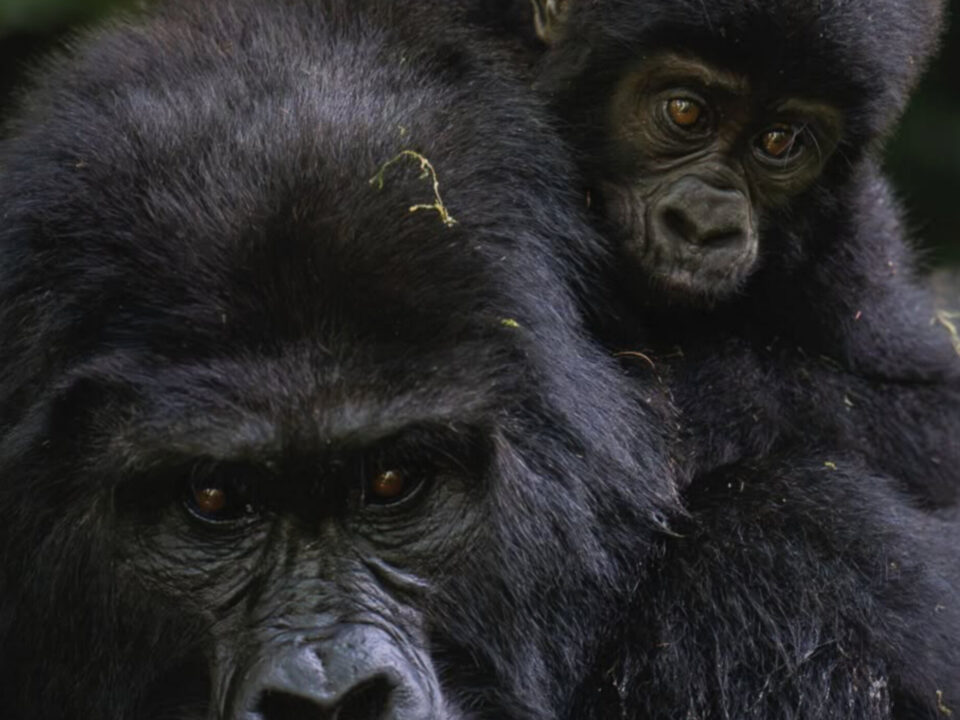
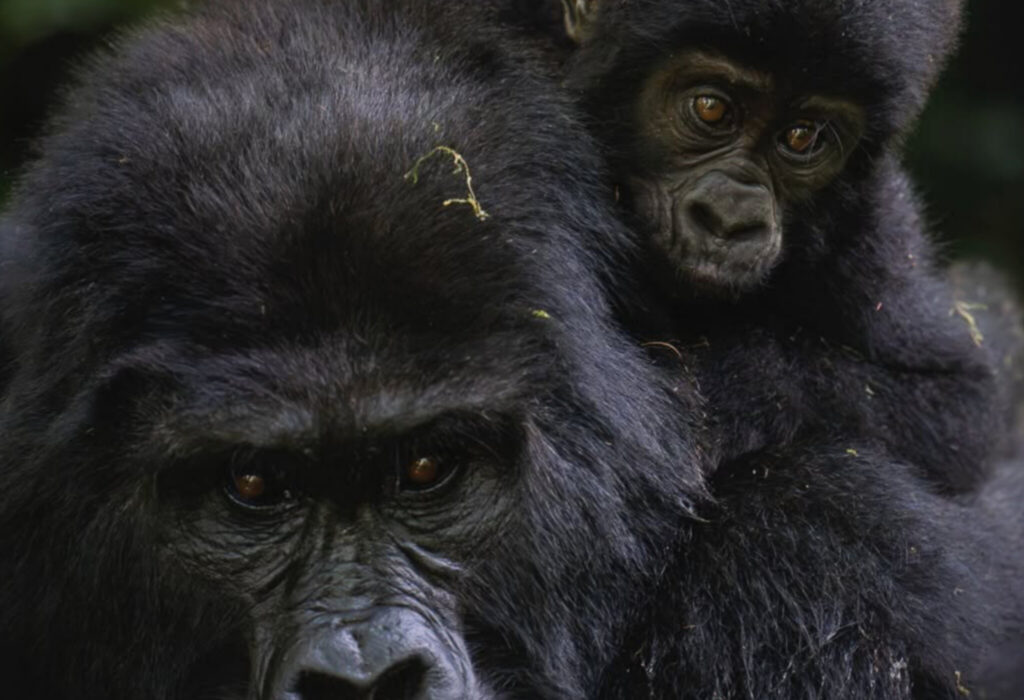
Mountain gorillas are a critically endangered subspecies of eastern gorillas, and they live only in a small part of East Africa. Their habitat lies high in the mountains, where misty forests and cool temperatures shape their daily lives.
These gorillas inhabit the Virunga Mountains, a volcanic range shared by Uganda, Rwanda, and the Democratic Republic of the Congo, as well as Uganda’s Bwindi Impenetrable National Park. They thrive at elevations between 8,000 and 13,000 feet above sea level. To cope with the cold, mountain gorillas have evolved thicker and longer fur than other gorilla subspecies, which helps them stay warm in the high-altitude climate.
Mountain gorillas live in close-knit social groups, often called troops, typically made up of ten to twenty individuals. A dominant silverback leads each group. You can easily recognize him by the silver-gray hair across his back. Within the group, females, younger males, and infants form strong social bonds that revolve around protection, learning, and cooperation.
Despite their strength, mountain gorillas face serious threats. Habitat loss, poaching, and regional conflict have pushed them to the brink of extinction. As a result, conservation efforts play a vital role in ensuring their survival.
Protecting Gorillas Through Responsible Tourism
Seeing a mountain gorilla in the wild is a deeply moving experience. Standing quietly in a mist-covered forest as a gorilla family goes about its day creates a powerful connection between humans and nature. Importantly, this experience also supports conservation when managed responsibly.
Carefully regulated gorilla trekking has transformed the future of these animals. Revenue from permits and guided treks directly funds habitat protection, scientific research, and anti-poaching patrols. This financial support helps keep gorilla populations safe and monitored.
At the same time, responsible tourism increases global awareness. When visitors witness gorillas in their natural environment, they often develop a lifelong respect for wildlife conservation. This growing understanding builds international support for protecting endangered species.
Local communities also benefit. Conservation-focused tourism creates jobs and provides income tied directly to preserving gorillas and their forests. When communities see clear benefits from conservation, they become strong partners in protecting these animals for future generations.
A Shared Responsibility
Gorillas are not just primates they are intelligent, social, and deeply connected to the forests they inhabit. As some of our closest relatives in the animal kingdom, their survival reflects our own relationship with the natural world.
By choosing responsible travel, supporting conservation initiatives, and spreading awareness, humans can move from being a threat to becoming guardians of these gentle giants. In doing so, we help ensure that gorillas continue to thrive in Africa’s forests, where they belong.