Which Month Offers the Best Game Viewing in Rwanda?
January 22, 2026
Where to See Rhinos on a Kenya Safari
January 22, 2026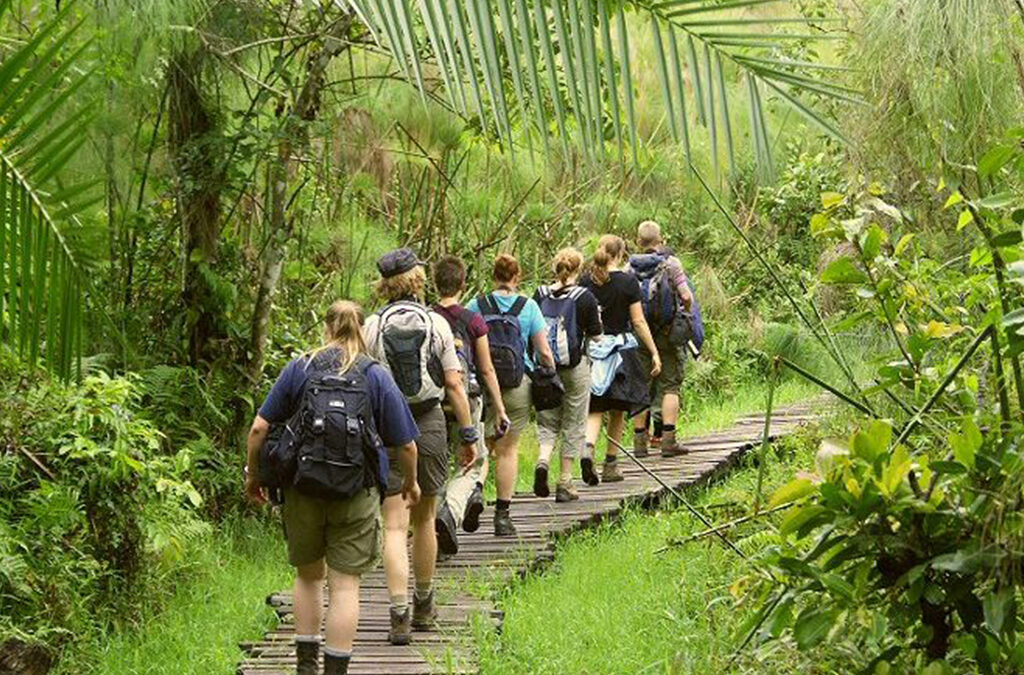
Visiting Bigodi Wetlands Sanctuary is a must-do experience while on a Uganda safari to Kibale Forest National Park. Located just outside the park, Bigodi Swamp offers a richer and more rewarding wildlife experience than the dense forest itself. Unlike Kibale Forest, where thick vegetation often hides wildlife, Bigodi’s open wetland ecosystem allows clearer and more frequent sightings of primates, birds, butterflies, and other small wildlife.
Beyond wildlife encounters, a visit to Bigodi Swamp directly supports the local community. The sanctuary is community-managed, and proceeds from tourism help local people earn a living while protecting the ecosystem for future generations. Experiya Tour Company highly recommends Bigodi Swamp as a perfect complementary activity after chimpanzee trekking in Kibale Forest National Park.
Overview of Bigodi Wetlands Sanctuary
Most visits to Bigodi Swamp are arranged in the afternoon, usually after a morning chimpanzee trekking experience in Kibale Forest. All activities start at the Bigodi Wetlands Visitor’s Center, where visitors receive a briefing before heading out on guided walks.
A typical visit lasts about three hours and covers approximately 4–5 kilometers. The trail passes through raised boardwalks across the swamp, forest paths, and surrounding village areas. This combination makes Bigodi Swamp ideal for travelers seeking both nature and cultural immersion while appreciating Uganda’s remarkable biodiversity.
Nature Walks in Bigodi Swamp
Nature walks are the main highlight of Bigodi Wetlands Sanctuary. These guided walks are led by well-trained local guides who possess deep knowledge of the area’s flora and fauna. As you walk through the wetland and forest edges, the guides actively identify animal species, bird calls, and plant life while explaining their breeding habits, feeding patterns, and ecological importance.
Along the way, you will encounter lush vegetation, wild plants, medicinal herbs, and colorful flowers. The guides also explain how the local community actively participates in conserving the wetland and how tourism has improved livelihoods through employment, education, and healthcare support.
For a panoramic view of the forest and wetland, visitors can request to climb a tall tree house strategically positioned within the sanctuary. From this viewpoint, the vastness of Bigodi Swamp and the surrounding landscape becomes truly breathtaking.
Nature Walk Schedules and Costs
Bigodi Swamp features a well-established network of raised boardwalks that allow visitors to explore the best sections of the wetland safely. Nature walks operate both in the morning and afternoon and last approximately three hours.
- Morning session: Starts at 7:30 a.m.
- Afternoon session: Starts at 3:00 p.m.
- Cost: USD 30 per international visitor per session
Both sessions offer excellent wildlife sightings, although mornings are particularly rewarding for birdwatching.
Birdwatching in Bigodi Wetland
Birdwatching in Bigodi Wetlands Sanctuary impresses even the most experienced birders. The sanctuary hosts an incredible density and diversity of bird species, thanks to its rich wetland habitat, abundant food supply, and relatively low predator presence.
The swamp provides ideal breeding and feeding grounds, attracting insects, frogs, and small reptiles that sustain numerous bird species. To date, more than 135 bird species have been recorded in Bigodi Wetland.
Notable bird species commonly spotted include:
- Great Blue Turaco (a favorite among birders)
- African Pitta
- Green-breasted Pitta
- Abyssinian Ground Thrush
- Black Bee-eater
- Blue-breasted Kingfisher
- Crowned Eagle
- Purple-breasted Sunbird
- Yellow-rumped Tinkerbird
- Dusky Crimsonwing
Before heading out, Experiya Tour Company always ensures visitors are accompanied by experienced birding guides who know the best viewing spots and can identify birds by sound and movement.
Cultural and Village Walks
Bigodi Village offers an authentic glimpse into everyday rural life in Uganda. The village reflects typical countryside scenery, with mud and brick houses, small gardens, domestic animals, and children playing freely. Cultural and village walks provide visitors with meaningful interactions and deeper cultural understanding.
During these walks, visitors can:
- Sample local Ugandan food
- Learn how coffee is grown, harvested, and processed
- Visit local schools and interact with students
- Observe traditional farming practices
Guides also explain how the Bigodi Wetlands project has transformed the community. Tourism revenue has helped lower school fees, create employment opportunities, build medical centers, and improve access to clean water.
Visiting the Bigodi Women’s Group
One of the most inspiring stops during community walks is the Bigodi Women’s Group. This group consists of over 40 local women who create beautiful handmade African crafts. Using recycled paper and natural materials collected from the swamp, they produce beads, necklaces, baskets, and other souvenirs.
Their products are sold locally and exported internationally, generating sustainable income and empowering women within the community. Purchasing crafts from this group directly supports families and conservation efforts.
Community Walks and Traditional Experiences
Community walks extend beyond project sites and craft groups. Guides can take visitors to local businesses, traditional banana beer brewing points, or homesteads where elders share stories about village history, clans, and ancient marriage and birth ceremonies.
For adventurous travelers, visits to a traditional medicine man can also be arranged. Historically, these healers treated ailments using herbal remedies and spiritual practices. Although modern religions dominate today, many locals still quietly consult these healers for guidance and healing. Visitors who prefer cultural storytelling can instead spend time with elders to learn about traditions and customs passed down through generations.
Visit the New Bigodi Snake Park
Bigodi Wetland is home to both venomous and non-venomous snake species. However, spotting snakes in the wild is rare unless visitors spend extended time in the area. To address this, the community introduced a small Snake Park.
The Snake Park showcases various snake species found within the wetland. Visitors who book nature or village walks can visit the Snake Park at no additional cost. Alternatively, guests may choose to visit the Snake Park as a standalone activity.
What You Need to Know Before Visiting Bigodi Swamp
- Bigodi Wetlands Sanctuary is one of the best examples of successful community-based conservation in Uganda.
- The drive from Kampala to Bigodi Swamp takes approximately six hours, passing through scenic countryside and tea plantations.
- The Great Blue Turaco is one of the most iconic birds frequently seen flying around the swamp and nearby forests.
- Always request a knowledgeable and experienced guide for the best wildlife and birding experience.
- Accommodation options are available in and around Kibale National Park, using the same lodges and hotels as chimpanzee trekking visitors.
Why Visit Bigodi Swamp with Experiya Tour Company
Bigodi Wetlands Sanctuary offers an enriching blend of wildlife, culture, and conservation. Whether you are interested in birdwatching, nature walks, cultural encounters, or community projects, Bigodi Swamp delivers an unforgettable experience. With Experiya Tour Company, every visit supports sustainable tourism while creating meaningful connections with nature and local communities.
Bigodi Swamp is not just a destination it is a story of conservation, culture, and coexistence.