Uganda Gorilla Trekking Safari from Kigali, Rwanda
November 19, 2026
Facts About Mountain Gorilla Diet
November 19, 2026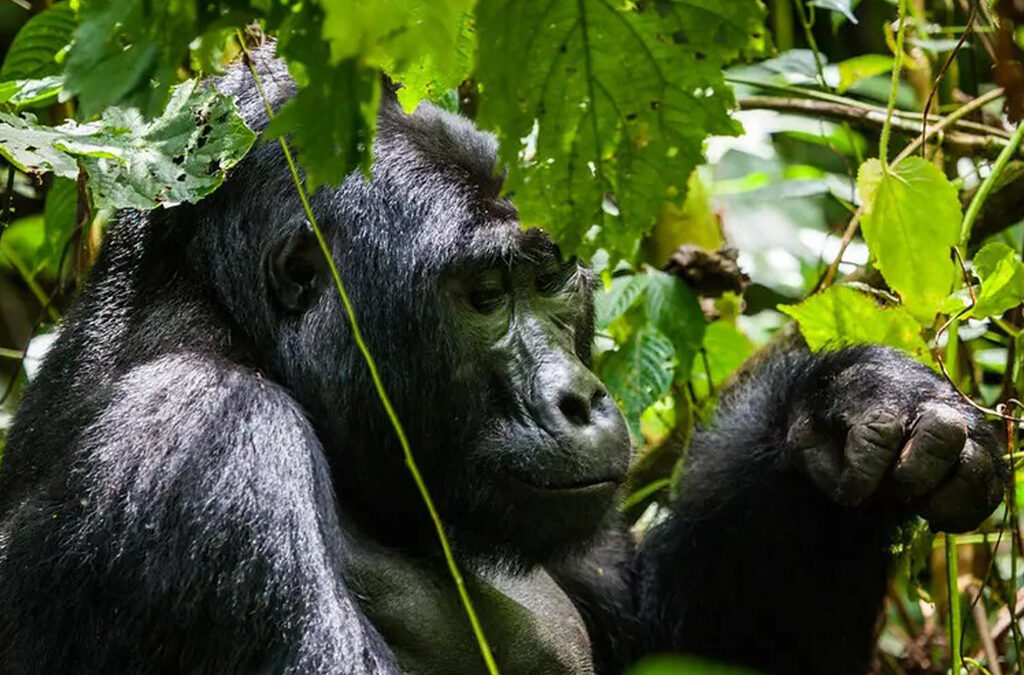
Uganda and Rwanda are among the world’s most remarkable destinations for encountering mountain gorillas in their natural habitat. Hidden within the mist-covered forests of the Albertine Rift, these endangered primates live in close-knit family groups, display fascinating social behaviours and share approximately 98% of their DNA with humans. Meeting them in the wild is therefore much more than an ordinary wildlife experience. It is an unforgettable encounter that creates a deeper appreciation for nature and the importance of conservation.
At Experiya Tour Company, we organise memorable gorilla trekking safaris in Uganda and Rwanda, helping travellers discover these magnificent animals while exploring some of East Africa’s most beautiful landscapes. Whether you prefer a short three-day gorilla adventure or an extended safari combining gorillas, chimpanzees, golden monkeys, wildlife encounters and cultural experiences, there are several exciting ways to explore these two destinations.
Before planning your journey, discover these 15 fascinating facts about mountain gorillas and what makes gorilla trekking in Uganda and Rwanda such a special experience.
1. Uganda and Rwanda Are Home to Mountain Gorillas
Mountain gorillas are a subspecies of eastern gorillas and are among the rarest great apes in the world. Unlike many other primates, they survive naturally in only two isolated regions: the Virunga Massif and Uganda’s Bwindi Impenetrable Forest.
In Uganda, visitors can track mountain gorillas in two protected areas: Bwindi Impenetrable National Park and Mgahinga Gorilla National Park. Rwanda, on the other hand, offers gorilla trekking exclusively in Volcanoes National Park.
Each destination provides a different forest experience. Bwindi features ancient rainforest, steep valleys and thick vegetation, while Volcanoes National Park offers spectacular volcanic scenery and bamboo-covered slopes.
2. Mountain Gorillas Cannot Be Found in Zoos
One interesting fact about mountain gorillas is that they are not kept in zoos. These endangered primates depend on the natural conditions of their high-altitude forest habitats, including suitable vegetation, climate and access to food.
Consequently, the only responsible way to observe them is in their natural environment under the supervision of trained park rangers and trackers.
This makes a gorilla trekking safari particularly special. Instead of watching animals behind barriers, visitors walk through their forest habitat and observe wild gorilla families going about their daily activities.
3. Gorillas Share Approximately 98% of Their DNA with Humans
Mountain gorillas are among our closest living relatives, sharing approximately 98% of their DNA with humans. Their social behaviour makes this relationship especially fascinating.
During a gorilla trekking experience, visitors may observe mothers caring for their young, juveniles playing together and adult gorillas communicating through gestures, facial expressions and different vocalisations.
Furthermore, gorillas experience many emotions and maintain strong family relationships. However, their genetic similarities also make them vulnerable to certain human diseases. This explains why visitors must follow strict health precautions during every trekking encounter.
4. Every Gorilla Family Has a Dominant Silverback
The silverback is usually the most recognisable member of a mountain gorilla family. An adult male develops distinctive silver-grey hair across his back as he matures, giving him the name silverback.
Typically, the dominant silverback leads the family, determines its movements, helps maintain social order and protects other members from potential threats.
Although these males possess tremendous physical strength, mountain gorillas are generally peaceful animals. They may beat their chests, roar or throw vegetation when communicating or displaying dominance. These behaviours do not necessarily indicate aggression.
Watching a silverback interact with his family is often one of the most memorable moments of gorilla trekking in Uganda and Rwanda.
5. Gorilla Families Have Complex Social Relationships
Mountain gorillas live in family groups consisting of a dominant silverback, adult females, younger males, juveniles and infants. However, group sizes and family structures vary.
Every habituated gorilla family has its own personality. Some groups are particularly playful, with young gorillas climbing, chasing one another and exploring their surroundings. Others spend much of their time feeding, resting and grooming.
During a trek, visitors may observe several activities, including:
- Mothers carrying and nursing their infants.
- Young gorillas playing among the vegetation.
- Adults feeding on leaves, stems and shoots.
- Family members resting close together.
- Silverbacks monitoring their surroundings.
These natural interactions make every gorilla encounter unique.
6. Gorilla Habituation Can Take Several Years
Before tourists can visit a gorilla family, conservationists and researchers must gradually introduce the animals to the presence of humans. This process is known as habituation.
Experienced trackers and researchers spend years observing a wild family and carefully developing familiarity without domesticating the animals. Even after habituation, gorillas remain completely wild and continue moving freely through the forest.
Uganda also offers a special gorilla habituation experience in Bwindi Impenetrable National Park. Unlike standard trekking, this activity allows visitors to spend more time in the forest with researchers and trackers, subject to permit availability and park regulations.
7. Visitors Normally Spend One Hour with the Gorillas
One of the most exciting aspects of gorilla trekking is finally locating the assigned family after walking through the forest.
During a standard gorilla trekking experience, visitors are normally allowed up to one hour with the gorillas once the trackers locate them. This precious time provides opportunities to observe their feeding habits, social interactions and family relationships.
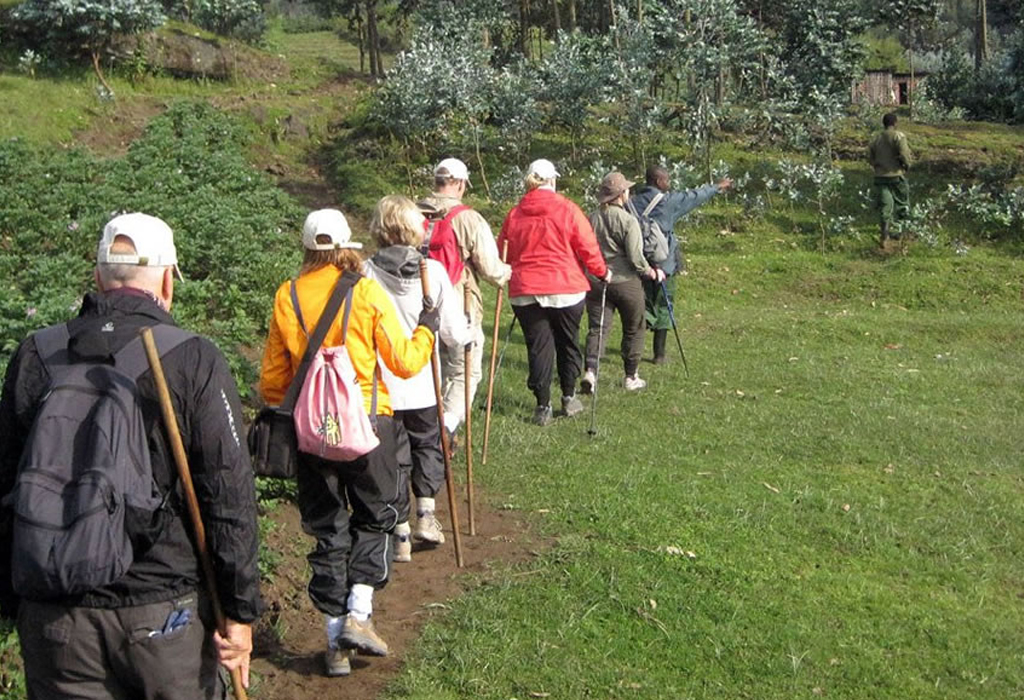
However, reaching the gorillas can take different amounts of time. Some treks involve relatively short walks, while others require several hours of hiking through steep, muddy and densely vegetated terrain.
The journey itself is equally rewarding because Bwindi and Volcanoes National Park support numerous bird species, butterflies, monkeys and other fascinating forest creatures.
8. Gorillas Build New Sleeping Nests Almost Every Night
Mountain gorillas construct sleeping nests using leaves, branches and other available vegetation. Most adult gorillas build their nests on the ground, although younger and lighter individuals may occasionally sleep in trees.
Interestingly, they usually construct new nests every evening rather than returning to the previous night’s sleeping place.
These nests provide valuable information to researchers and trackers. By examining fresh nests, feeding remains and other signs, experienced trackers can estimate where a gorilla family has travelled.
9. Mountain Gorillas Mainly Feed on Vegetation
Despite their enormous size, mountain gorillas feed primarily on plant material. Their diet includes leaves, stems, shoots, roots, bark and seasonal fruits. They may also consume small insects.
Because their food sources are distributed throughout the forest, gorillas spend much of their day feeding and moving between different vegetation areas.
Their large bodies and digestive systems are well adapted to processing substantial quantities of fibrous plant material.
For visitors, watching gorillas feed peacefully in their natural surroundings offers an interesting opportunity to understand their daily routines.
10. Every Gorilla Has a Unique Nose Print
Just as humans have individual fingerprints, mountain gorillas have distinctive nose prints.
The wrinkles and patterns around their nostrils are unique to each individual. Researchers and trackers use these features, alongside facial characteristics, body shape and other markings, to identify and monitor individual gorillas.
This identification system helps conservation teams follow family movements, monitor individual health and maintain accurate population records.
11. Gorillas Communicate Through Sounds and Body Language
Mountain gorillas have a fascinating communication system. They use different vocalisations, facial expressions, gestures and body movements to interact with family members.
For example, they may grunt softly while feeding, make gentle sounds during social interactions or scream when frightened. Chest beating is another familiar behaviour, particularly during displays of strength or communication.
Interestingly, younger gorillas also practise chest beating during play.
During a trekking encounter, visitors should remain quiet and follow their ranger’s instructions. If a ranger demonstrates a particular response, travellers should follow that guidance rather than attempting to imitate gorilla behaviour independently.
12. Baby Gorillas Depend on Their Mothers for Several Years
Mountain gorilla mothers demonstrate remarkable care and attention towards their young. After a pregnancy lasting approximately eight and a half months, a female normally gives birth to one infant.
Newborn gorillas are highly dependent on their mothers for warmth, protection, feeding and transportation. As they grow, they become more adventurous and begin playing with other young members of the family.
However, they continue depending on their mothers for several years.
Twin births are uncommon, making them particularly interesting to conservationists and researchers. During gorilla trekking, seeing an infant resting close to its mother is often one of the most heartwarming moments of the experience.
13. Uganda Offers Two Excellent Gorilla Trekking Destinations
Uganda provides two protected areas where travellers can encounter mountain gorillas.
Bwindi Impenetrable National Park
Bwindi is Uganda’s principal gorilla trekking destination and protects a significant population of mountain gorillas. Its four trekking sectors are Buhoma, Ruhija, Rushaga and Nkuringo.
Each sector offers a distinctive trekking experience, with steep slopes, dense vegetation and beautiful forest scenery. Bwindi is also an excellent destination for birdwatching and guided nature walks.
Mgahinga Gorilla National Park
Located in southwestern Uganda, Mgahinga forms part of the Virunga Conservation Area. Its volcanic landscape, bamboo forests and mountain scenery create a beautiful setting for gorilla trekking.
Travellers can also combine gorilla trekking with golden monkey tracking and guided hikes on the Virunga volcanoes.
14. Rwanda Offers Convenient Gorilla Trekking in Volcanoes National Park
Rwanda’s mountain gorilla trekking takes place in Volcanoes National Park, situated in the northwestern part of the country.
The park features beautiful volcanic landscapes, bamboo forests and lush mountain vegetation. Its proximity to Kigali makes it particularly convenient for travellers planning shorter gorilla trekking holidays.
From Kigali, visitors can travel by road to the park headquarters at Kinigi, where they receive their trekking briefing before entering the forest.
Rwanda also has an important connection to mountain gorilla conservation through the pioneering research of primatologist Dian Fossey, whose work helped bring international attention to the protection of these endangered primates.
15. Gorilla Trekking Supports Conservation and Local Communities
Gorilla tourism plays an important role in protecting mountain gorillas and their natural habitats. Revenue generated through trekking permits contributes to conservation activities, including ranger patrols, habitat protection, veterinary interventions and population monitoring.
Furthermore, tourism creates employment opportunities for local communities. Guides, trackers, porters, drivers, lodge employees, craftspeople and farmers all benefit from the tourism industry.
Travellers can also make a positive contribution by hiring local porters, purchasing locally produced crafts and supporting accommodation providers that engage with neighbouring communities.
Therefore, responsible gorilla trekking provides more than an unforgettable wildlife experience. It also supports conservation and sustainable livelihoods.
Gorilla Trekking in Uganda and Rwanda: Which Destination Should You Choose?
Both countries offer exceptional mountain gorilla encounters, but the best destination depends on your travel schedule, interests and preferred safari experience.
Uganda is particularly suitable for travellers interested in longer wildlife holidays. Gorilla trekking in Bwindi or Mgahinga can be combined with chimpanzee tracking in Kibale Forest, wildlife viewing in Queen Elizabeth National Park, boat cruises along the Kazinga Channel and relaxation at Lake Bunyonyi.
Rwanda is ideal for visitors seeking a shorter and convenient gorilla trekking holiday. Volcanoes National Park can easily be combined with Kigali city tours, golden monkey tracking, Akagera National Park and Nyungwe Forest National Park.
Travellers with more time can also combine both countries in one itinerary, starting in Entebbe and ending in Kigali, or travelling in the opposite direction.
Essential Rules for Responsible Gorilla Trekking
Before entering the forest, park rangers provide visitors with an important briefing about gorilla behaviour and conservation regulations.
To protect both visitors and gorillas, you should:
- Follow your ranger’s instructions throughout the trek.
- Maintain the officially required distance from the gorillas.
- Avoid trekking when suffering from a contagious illness.
- Keep your voice low and avoid sudden movements.
- Never use flash photography.
- Avoid eating, drinking or smoking near the gorillas.
- Cover your mouth and turn away when coughing or sneezing.
- Never leave rubbish in the forest.
- Respect the official minimum age requirement for trekking.
Following these guidelines helps maintain a safe and respectful encounter while protecting the gorillas from unnecessary disturbance.
What to Pack for a Gorilla Trekking Safari
Preparing properly makes a significant difference to your comfort during a gorilla trekking adventure. Uganda’s and Rwanda’s mountain forests can be wet, muddy and challenging, even during relatively dry months.
We recommend packing the following essentials:
- Strong waterproof hiking boots with good grip.
- Long trousers and long-sleeved shirts.
- A lightweight waterproof jacket.
- Gardening gloves for holding vegetation.
- Insect repellent and sunscreen.
- Drinking water and energy snacks.
- A small waterproof daypack.
- Gaiters to protect your lower legs from mud and vegetation.
- A camera with adequate batteries and memory space.
Additionally, consider hiring a local porter. Apart from helping carry your backpack, porters provide support on difficult forest trails and earn valuable income from tourism.
Plan Your Gorilla Trekking Safari with Experiya Tour Company
A mountain gorilla encounter is an experience worth planning carefully. At Experiya Tour Company, we organise private and tailor-made gorilla trekking safaris in Uganda and Rwanda, helping travellers enjoy comfortable journeys, well-planned itineraries and memorable wildlife experiences.
Our safari arrangements can include gorilla trekking permits, comfortable accommodation, private 4×4 transportation, professional English-speaking driver-guides, airport transfers and cross-border travel arrangements.
Depending on your interests, we can also combine gorilla trekking with:
- Chimpanzee tracking in Kibale Forest National Park.
- Golden monkey tracking in Mgahinga or Volcanoes National Park.
- Wildlife game drives in Queen Elizabeth National Park.
- Boat cruises along the Kazinga Channel.
- Relaxation and scenic excursions at Lake Bunyonyi.
- Cultural experiences and Kigali city tours.
Whether you are planning a short gorilla trekking holiday, a luxury wildlife safari or an extended Uganda and Rwanda adventure, our team can help you create an itinerary that matches your interests and travel budget.
Gorilla permits are limited, and availability can change depending on travel dates. We therefore recommend booking early, particularly for travel during June to September and December to February.
Contact Experiya Tour Company today to plan your mountain gorilla trekking safari in Uganda, Rwanda or both destinations. Discover the beauty of East Africa’s rainforests, encounter endangered mountain gorillas and support the conservation of one of the world’s most extraordinary wildlife species.