
How to Avoid Scammers When Planning Your Rwanda Safari Online
November 17, 2026
How Long Does Gorilla Habituation Last? A Complete Guide to Uganda’s Gorilla Habituation Experience
November 17, 2026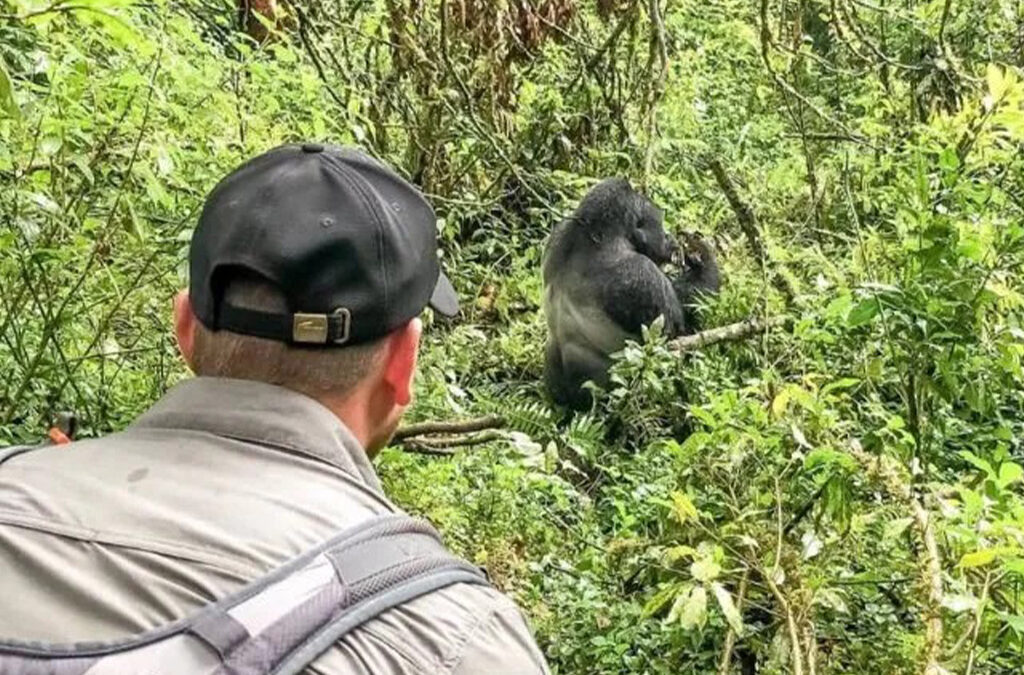
Introduction to Gorilla Sign Language and Intelligence
Can gorillas learn sign language? This fascinating question has attracted the attention of scientists, animal behaviour researchers, conservationists and wildlife enthusiasts for decades. Gorillas are among the most intelligent primates on Earth. Their ability to communicate, solve problems, recognise individuals and develop strong social relationships has encouraged researchers to investigate how closely their communication abilities resemble those of humans.
Over the years, studies involving captive gorillas have demonstrated that these great apes can learn and use selected human gestures and symbols to communicate basic needs, preferences and emotions. One of the most famous examples is Koko, a western lowland gorilla whose reported ability to use modified American Sign Language (ASL) attracted international attention.
However, gorilla communication extends far beyond human-taught signs. In their natural habitats, gorillas rely on an impressive combination of gestures, facial expressions, body movements and vocalisations to interact with one another. These abilities became even more interesting following scientific research conducted among wild mountain gorillas in Uganda’s Bwindi Impenetrable National Park.
For travellers interested in primate behaviour and wildlife conservation, observing mountain gorillas in their natural environment offers an extraordinary opportunity to appreciate their intelligence. Through carefully organised gorilla trekking safaris in Uganda and Rwanda, Experiya Tour Company introduces visitors to these remarkable animals while supporting responsible wildlife tourism.
Understanding Gorilla Intelligence
Before answering whether gorillas can learn sign language, it is important to understand their intelligence and natural communication abilities.
Gorillas belong to the great ape family, alongside chimpanzees, bonobos, orangutans and humans. They possess advanced cognitive abilities that allow them to recognise individuals, remember familiar experiences, solve problems and maintain complex social relationships.
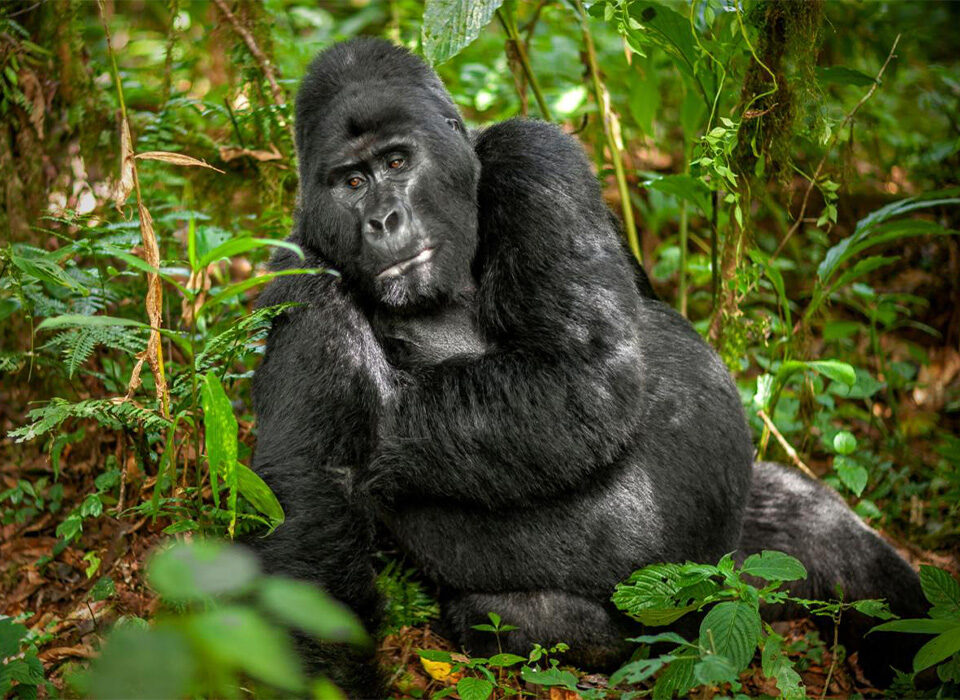
Gorillas also live in organised family groups, usually led by a dominant silverback. Within these groups, individuals communicate regularly to maintain relationships, establish boundaries and coordinate everyday activities.
Their intelligence becomes particularly noticeable through behaviours such as:
- Recognising familiar individuals within their family groups.
- Learning through observation and experience.
- Communicating intentions through gestures and facial expressions.
- Developing strong relationships between mothers and infants.
- Using different signals during social interactions.
- Demonstrating curiosity, playfulness and problem-solving abilities.
Although gorillas cannot communicate through spoken language in the same way humans do, their ability to use their hands and bodies makes gestures an important part of their communication system.
Koko the Gorilla: The Famous Sign Language Experiment
When discussing whether gorillas can learn sign language, Koko is one of the most important examples.
Koko was a female western lowland gorilla born in 1971 at San Francisco Zoo in the United States. Researcher Francine Patterson began working with her during infancy and introduced her to a modified form of American Sign Language.
Through years of interaction and training, Koko reportedly learned hundreds of signs. Her research team claimed that she could understand more than 2,000 spoken English words and use signs to communicate different needs, preferences and emotions.
Koko became particularly famous because researchers reported that she could communicate about everyday experiences, request familiar objects and express affection towards people and animals.
Some reported examples of her communication involved:
- Requesting food, drinks and toys.
- Expressing affection towards familiar caregivers.
- Communicating preferences during play.
- Responding to questions using learned signs.
- Expressing emotions such as happiness and frustration.
Her relationship with a pet kitten also attracted considerable public interest, with researchers describing behaviours associated with affection and attachment.
Nevertheless, it is important to distinguish between the claims made by Koko’s research team and what independent scientific research has established. Her reported vocabulary and language abilities have remained subjects of academic debate. Consequently, scientists do not consider her achievements definitive proof that gorillas can master human language.
Even so, Koko’s story played an important role in encouraging wider discussions about animal intelligence, communication and emotional awareness.
How Do Gorillas Learn Sign Language?
Gorillas participating in sign-language research learned through repeated interaction with human trainers. Researchers introduced gestures and associated them with familiar objects, activities or experiences.
For instance, a trainer might make a particular hand movement while presenting food or offering water. Through repetition and association, the gorilla could learn to connect that gesture with the experience.
Over time, trainers encouraged gorillas to reproduce selected gestures when requesting something or responding to familiar situations.
The learning process generally involved:
- Observation: The gorilla watches a human demonstrate a particular gesture.
- Association: The trainer connects the gesture with an object, activity or experience.
- Repetition: The gorilla encounters the same gesture repeatedly in familiar situations.
- Practice: The animal begins reproducing the gesture during interactions.
- Reinforcement: Trainers encourage appropriate responses through positive interaction.
However, learning individual signs does not automatically mean that a gorilla understands a complete human language. American Sign Language, for example, has its own grammar, structure and linguistic rules.
Researchers therefore distinguish between learning symbolic gestures and mastering a natural human language.
Do Gorillas Truly Understand Human Language?
One of the biggest questions surrounding gorilla sign language research is whether gorillas genuinely understand the meaning of their signs or simply learn to associate particular movements with rewards and situations.
Supporters of ape-language research argue that some gorillas demonstrated intentional communication, memory, flexibility and the ability to use learned gestures in different circumstances.
Critics, however, have questioned whether certain reported performances resulted from unconscious cues from trainers, repeated conditioning or selective interpretation of animal behaviour.
These concerns are particularly important when researchers attempt to distinguish genuine communication from imitation.
The most balanced scientific understanding is that gorillas possess impressive cognitive and communicative abilities, but there is insufficient evidence that they understand human language with the same grammatical complexity as people.
Nevertheless, their ability to recognise signals, communicate intentions and respond to social situations demonstrates that communication is not exclusive to humans.
How Do Gorillas Communicate in the Wild?
Although researchers have taught some captive gorillas human-associated signs, wild gorillas already possess sophisticated communication systems.
They combine vocalisations, gestures, facial expressions and physical contact to communicate with other members of their families.
Some common forms of natural gorilla communication include:
- Vocalisations: Gorillas produce grunts, hoots, barks and other sounds during social interactions.
- Chest beating: Silverbacks and other gorillas use chest beating during displays, particularly in situations involving excitement, dominance or social tension.
- Facial expressions: Changes in facial movements help communicate emotional states and social intentions.
- Body posture: Standing, moving, approaching or withdrawing can communicate different messages.
- Gestures: Gorillas use hand and body movements to initiate interactions and influence the behaviour of others.
- Physical contact: Grooming, touching and embracing help maintain social relationships.
For example, mothers regularly use touch and close physical contact to comfort their infants. Meanwhile, silverbacks use vocalisations, body movements and displays to manage interactions within their family groups.
These natural behaviours reveal how gorillas communicate effectively without relying on human language.
New Scientific Research on Mountain Gorilla Gestures in Bwindi
An important development in understanding gorilla communication emerged from research published in 2025.
Scientists studied 49 habituated wild mountain gorillas belonging to four social groups in Bwindi Impenetrable National Park, Uganda. Over 157 observation days, researchers recorded 3,220 instances of intentional gestures.
The study identified 63 distinct gesture actions, with additional variations in how individual gorillas performed them.
This research provided valuable evidence that mountain gorillas use a diverse range of gestures during everyday social interactions.
It also demonstrated why observing gorillas in their natural environment is important for understanding their intelligence and communication abilities.
Unlike experiments involving captive animals, studying wild mountain gorillas allows researchers to examine how gestures function within natural family relationships and everyday activities.
For Uganda, this discovery also highlights Bwindi’s importance beyond gorilla trekking. The forest is not only a sanctuary for endangered mountain gorillas but also an important destination for scientific research into primate behaviour.
Emotional Intelligence and Social Behaviour in Gorillas
Gorillas are fascinating not only because of their intelligence but also because of their emotional and social relationships.
Within family groups, individuals develop strong bonds through grooming, playing, feeding and physical contact. Mothers dedicate considerable time to caring for their infants, while juveniles learn social behaviour through interactions with older family members.
Gorillas also demonstrate behaviours associated with affection, curiosity, excitement, frustration and social attachment.
These characteristics have encouraged researchers to investigate the relationship between intelligence, emotions and communication among great apes.
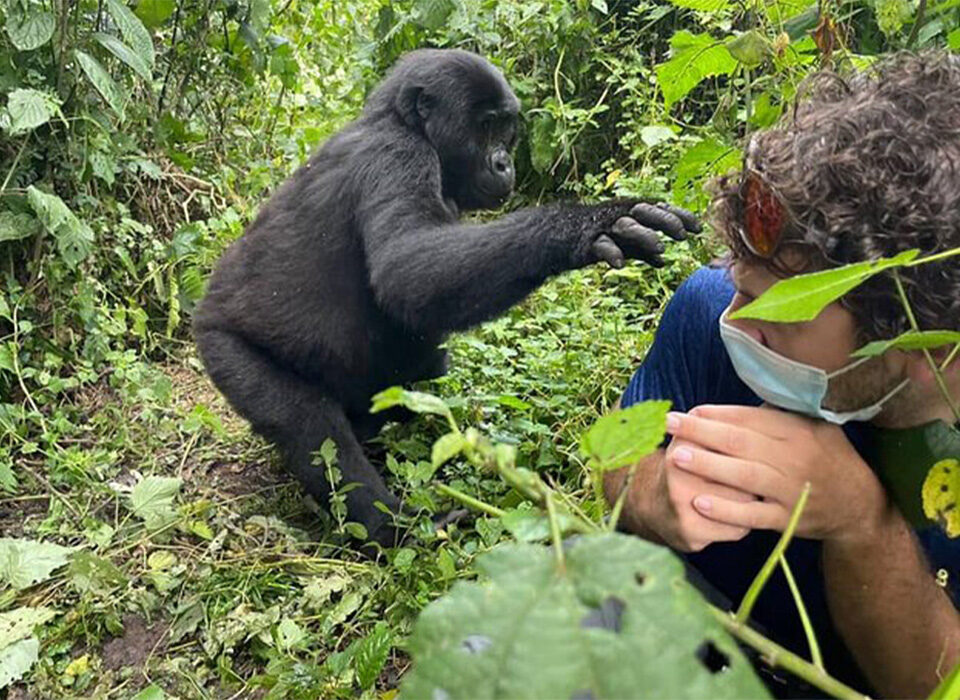
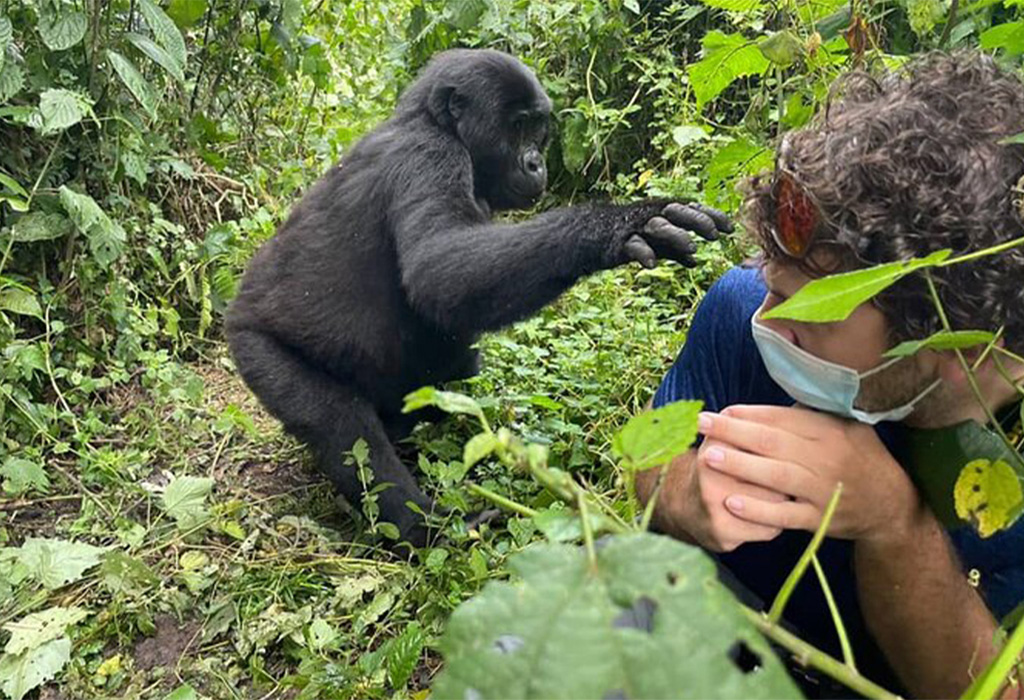
During gorilla trekking, visitors may observe several interesting behaviours, including:
- Young gorillas playing and chasing one another through the forest.
- Mothers carrying and nurturing their infants.
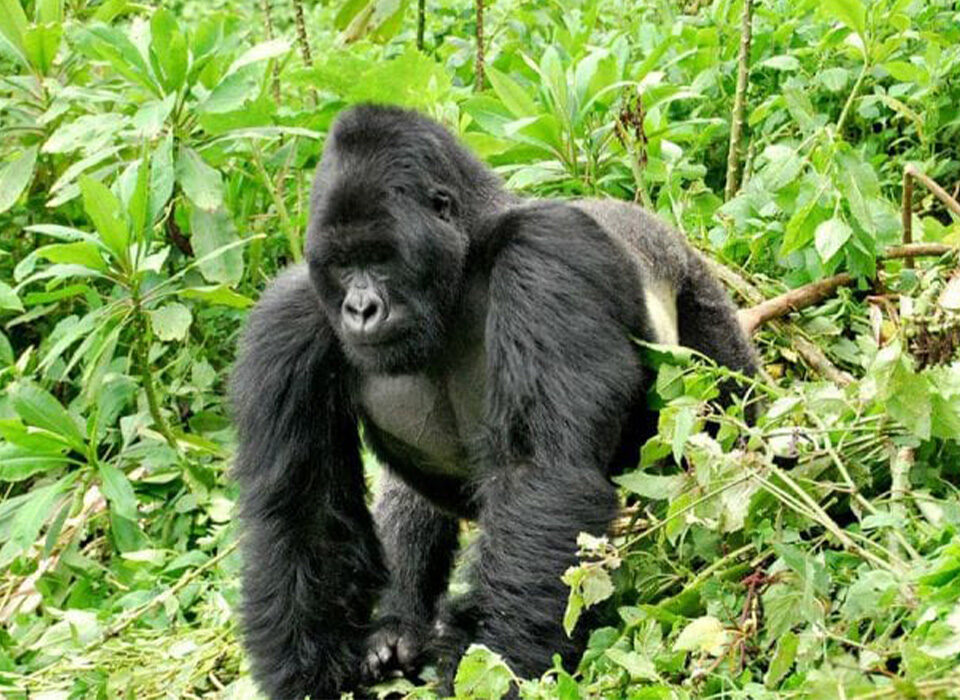
- Silverbacks monitoring the movements of their families.
- Juveniles exploring their surroundings and learning through observation.
- Family members communicating through gestures and vocalisations.
Although these behaviours should not automatically be interpreted as identical to human emotions, they demonstrate the remarkable social complexity of gorillas.
Gorilla Species Involved in Sign Language Research
Most famous sign-language experiments involving gorillas focused on western lowland gorillas rather than mountain gorillas.
Western lowland gorillas are native to the forests of Central Africa and have historically featured more frequently in captive research programmes.
Mountain gorillas, on the other hand, live in protected forest habitats across Uganda, Rwanda and the Democratic Republic of Congo. They are best known for their conservation importance and carefully regulated wildlife tourism experiences.
Both species belong to the same broader gorilla family and display impressive social and communication abilities.
However, researchers should not assume that findings from one species automatically apply to every gorilla population. Studying each species in its natural environment helps scientists understand their similarities and differences.
What Gorilla Sign Language Research Has Taught Scientists
Research into gorilla intelligence has contributed significantly to scientific understanding of animal communication.
Although gorillas have not demonstrated mastery of human language, studies have revealed important abilities involving learning, memory, symbolic associations and intentional gestures.
These discoveries have helped scientists investigate several important questions:
- How do animals communicate their intentions?
- Can non-human primates learn symbols associated with objects?
- How do gestures develop within social groups?
- What role does observation play in animal learning?
- How did communication evolve among humans and other great apes?
Furthermore, research into gorilla communication has encouraged people to reconsider how they understand animal intelligence and the importance of protecting great apes.
Gorilla Conservation and the Importance of Responsible Tourism
Understanding gorilla intelligence also strengthens the case for protecting these endangered animals.
Mountain gorillas face conservation challenges associated with habitat loss, human population pressure, disease transmission and other environmental threats.
Fortunately, conservation programmes in Uganda and Rwanda have helped protect important gorilla habitats through wildlife monitoring, veterinary interventions, anti-poaching patrols and community engagement.
Gorilla trekking tourism also contributes to conservation by generating revenue for protected areas and supporting communities living around national parks.
When travellers purchase gorilla trekking permits and visit these destinations responsibly, tourism helps create economic incentives for protecting gorillas and their forest habitats.
Visitors must follow established trekking regulations, including maintaining the required distance, avoiding direct contact and following ranger instructions. These measures help reduce disturbance and protect gorillas from human-transmitted diseases.
Best Places to See Mountain Gorillas in the Wild
Travellers interested in gorilla intelligence and natural communication can visit several protected destinations in East Africa.
1. Bwindi Impenetrable National Park, Uganda
Bwindi is one of the world’s most important mountain gorilla conservation areas. Its dense tropical rainforest supports numerous habituated gorilla families, making it a leading destination for gorilla trekking and scientific research.
2. Mgahinga Gorilla National Park, Uganda
Located in southwestern Uganda, Mgahinga protects mountain gorillas within the Virunga conservation landscape. Visitors can combine gorilla trekking with golden monkey tracking and scenic volcanic mountain experiences.
3. Volcanoes National Park, Rwanda
Volcanoes National Park is internationally recognised for mountain gorilla conservation. Its bamboo forests and volcanic landscapes provide a remarkable setting for gorilla trekking.
4. Virunga National Park, Democratic Republic of Congo
Virunga is another important mountain gorilla habitat, although visitors should carefully check current park access, security conditions and travel advisories before making arrangements.
Each destination offers a different experience, but all provide valuable opportunities to appreciate the importance of protecting mountain gorillas.
Experience Gorilla Intelligence During a Gorilla Trekking Safari
Reading about gorilla intelligence is fascinating, but observing these animals in their natural habitat creates a much deeper appreciation of their behaviour.
During a guided gorilla trekking experience, visitors walk through protected forests alongside experienced trackers and park rangers in search of habituated gorilla families.
Once the gorillas are located, visitors can spend the permitted observation time watching their everyday activities. Depending on the family’s behaviour, travellers may see infants playing, mothers caring for their young, juveniles exploring and silverbacks monitoring the group.
These encounters provide a valuable opportunity to observe the natural gestures, vocalisations and social relationships that make gorillas such remarkable primates.
Experiya Tour Company organises customised gorilla trekking safaris in Uganda and Rwanda, helping travellers arrange permits, accommodation, transportation and professional guiding services.
Whether you are planning a short gorilla trekking adventure in Bwindi or a longer East African safari combining gorillas, chimpanzees and wildlife viewing, a well-planned itinerary makes the experience more rewarding.
Why Choose Experiya Tour Company for Gorilla Trekking?
Planning a gorilla trekking safari requires careful coordination, particularly when travelling between Uganda and Rwanda.
Experiya Tour Company helps travellers organise personalised safari experiences based on their travel dates, preferred accommodation, budget and interests.
Our services include:
- Arranging gorilla trekking permits.
- Organising private safari transportation.
- Selecting suitable accommodation near trekking locations.
- Providing experienced driver-guides.
- Planning Uganda and Rwanda cross-border safari itineraries.
- Combining gorilla trekking with chimpanzee tracking and wildlife safaris.
With proper preparation and local destination knowledge, travellers can enjoy a well-organised experience while appreciating the importance of responsible gorilla tourism.
Can Gorillas Learn Sign Language? Final Thoughts
So, can gorillas learn sign language? Research suggests that some gorillas can learn and use selected human-taught signs to communicate basic needs, preferences and associations. However, scientists have not established that gorillas can master human language with the same grammatical complexity as people.
Koko’s remarkable story introduced millions of people to the possibilities of great ape communication, while subsequent research has continued to reveal the sophistication of natural gorilla gestures and social behaviour.
More recently, scientific observations in Bwindi have provided valuable evidence of the diverse gestures used by wild mountain gorillas, strengthening our understanding of how these animals interact within their family groups.
Ultimately, gorillas do not need to speak or use human sign language to demonstrate their intelligence. Their natural communication, social relationships and remarkable adaptability already make them some of the most fascinating animals in the world.
For travellers, experiencing these extraordinary primates in Uganda or Rwanda is an opportunity to appreciate their intelligence firsthand while contributing to the conservation of their natural habitats. With Experiya Tour Company, your gorilla trekking adventure can become both an unforgettable wildlife experience and a meaningful journey into the world of great apes.