Packing Tips for Uganda Travel
August 26, 2026
Gorilla Safari in Uganda During the Rainy Season
August 27, 2026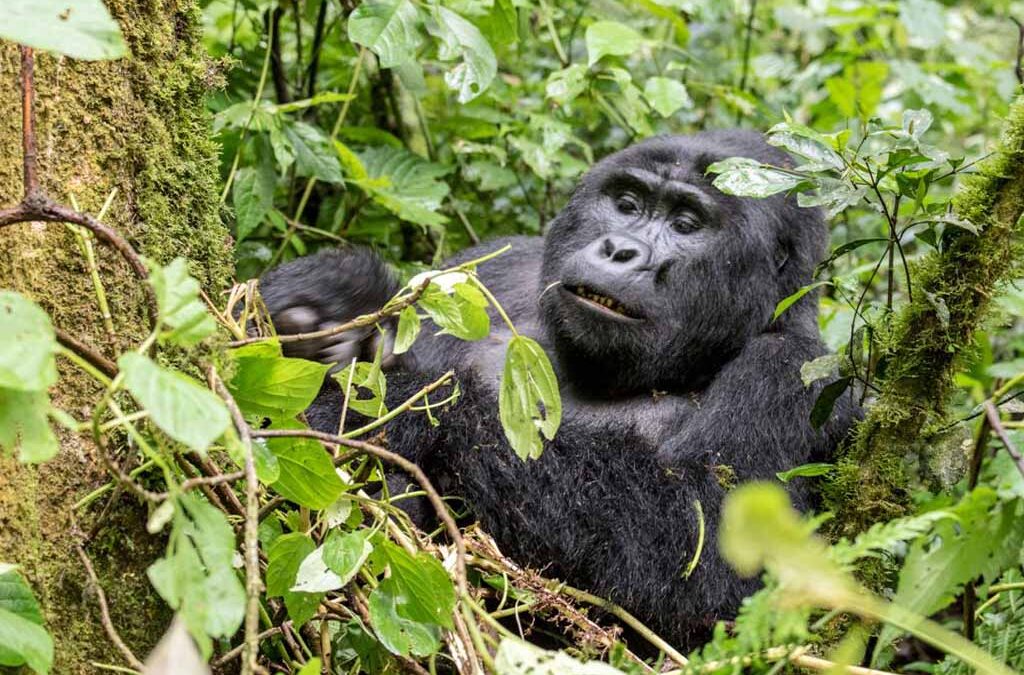
A Rwanda-Uganda Gorilla Safari gives travelers the rare opportunity to experience mountain gorillas in two remarkable East African destinations. Although Rwanda and Uganda share the same mountain-gorilla ecosystem, each country offers a different atmosphere, landscape, and style of adventure.
Rather than choosing between the two, combining them creates a more diverse journey. You can experience Kigali and Rwanda’s beautiful volcanic landscapes before crossing into Uganda for the ancient forests of Bwindi, Lake Bunyonyi, wildlife, and cultural encounters.
For travelers who want more than a single gorilla trek, this cross-border adventure offers an exciting way to explore the region while experiencing two different sides of mountain-gorilla tourism.
Rwanda and Uganda Offer Two Distinct Gorilla Experiences
Mountain gorillas do not recognize international borders. However, the experience you have as a visitor can vary considerably between Rwanda and Uganda.
Rwanda’s Volcanoes National Park sits in the Virunga Mountains and offers relatively easy access from Kigali. The drive from Kigali to the park commonly takes around two to three hours, making Rwanda a convenient option for travelers with limited time.
The park also offers more than gorilla trekking. Its volcanic scenery, golden monkeys, forest trails, and surrounding communities add variety to a safari. Moreover, travelers can combine their trek with a Kigali city tour, creating a balanced experience between wildlife and culture.
Uganda, meanwhile, provides a broader range of gorilla trekking settings. Bwindi Impenetrable National Park contains four main trekking sectors: Buhoma, Ruhija, Rushaga, and Nkuringo. Each sector has its own landscape, accommodation choices, and trekking conditions. Uganda also protects gorillas in Mgahinga Gorilla National Park, located within the Virunga landscape.
Therefore, Uganda can appeal to travelers who want a longer and more varied safari experience.
Gorilla Trekking in Rwanda
Volcanoes National Park provides one of Africa’s most memorable wildlife experiences. As you approach the park, the dramatic volcanoes dominate the landscape, while cultivated hills and rural communities create a striking contrast.
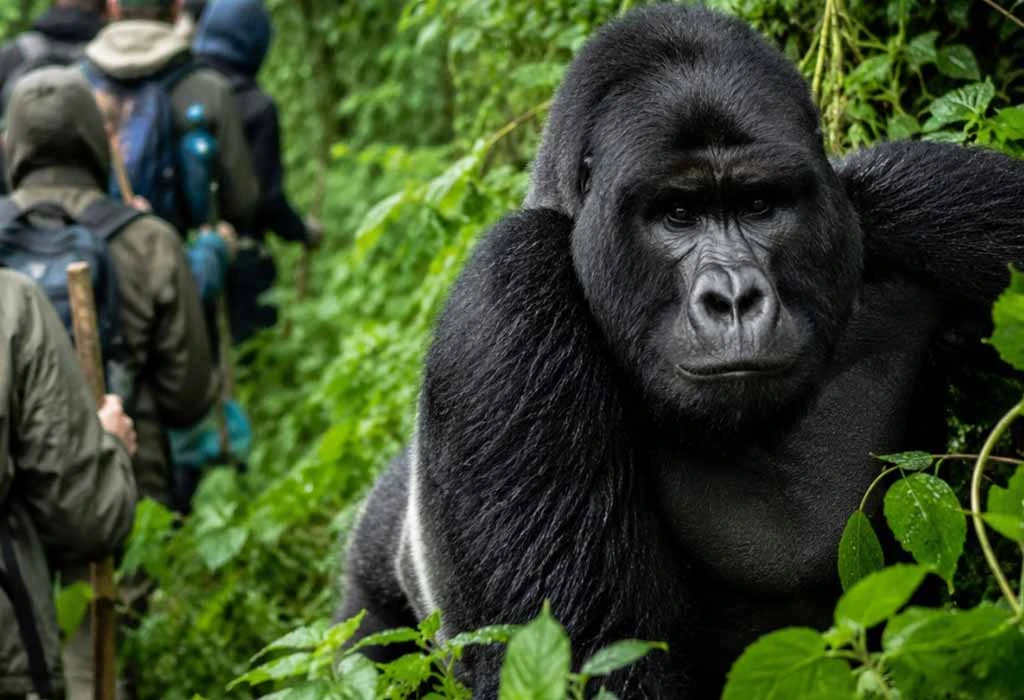
Your adventure normally begins early in the morning with a briefing. Afterward, guides and trackers lead you into the forest in search of a habituated gorilla family.
The trek may involve bamboo forests, steep slopes, muddy trails, and dense vegetation. However, the challenge becomes worthwhile when you finally encounter the gorillas.
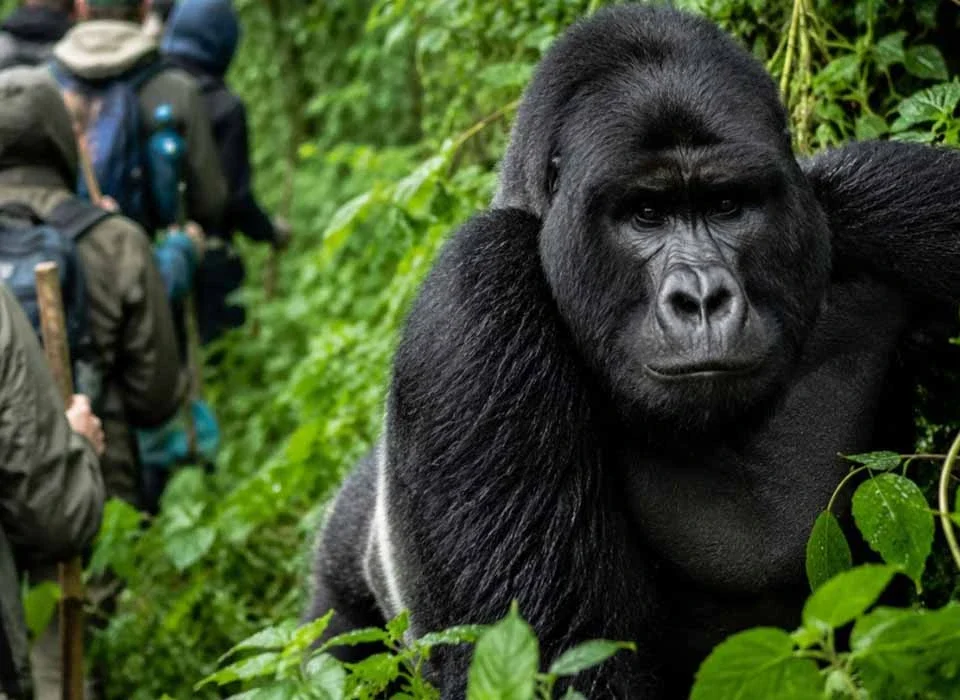
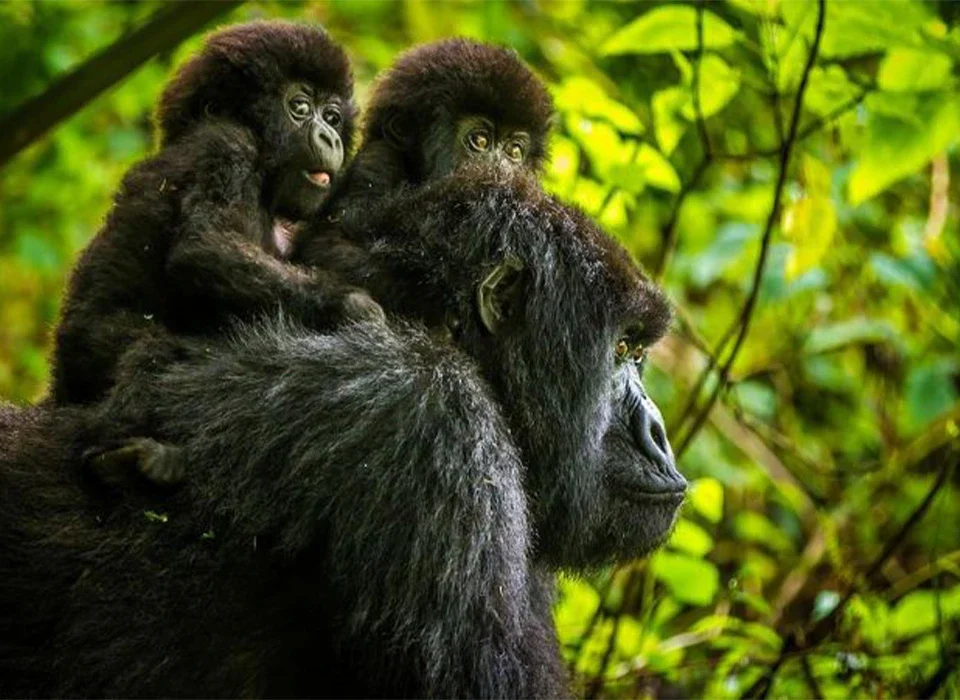
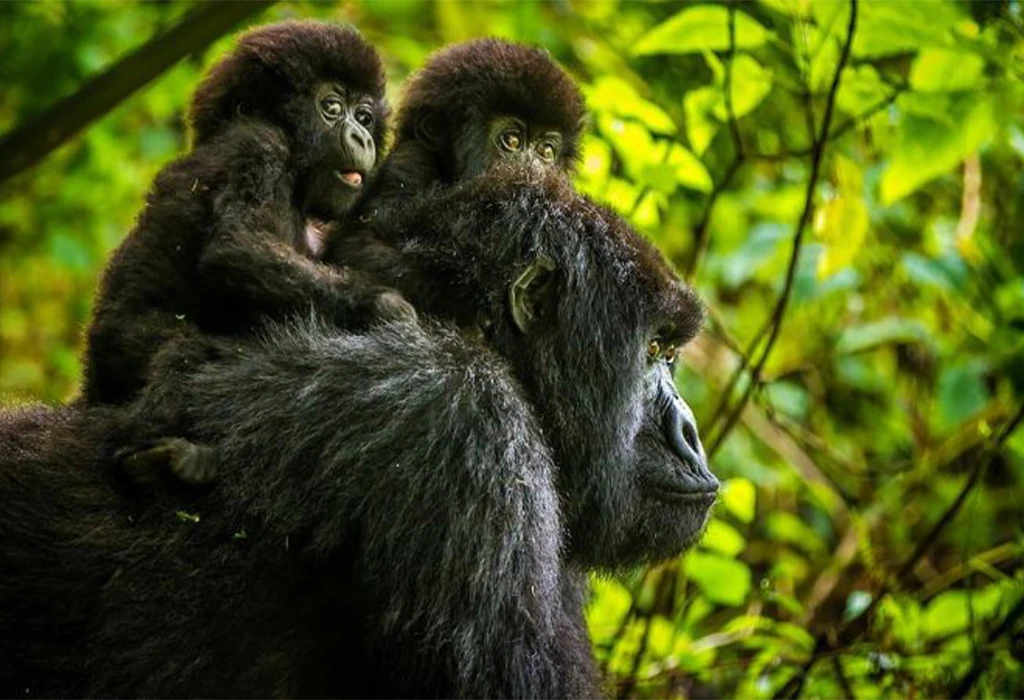
Imagine walking quietly through the forest and suddenly noticing movement among the trees. A young gorilla may be playing nearby, while a mother carefully watches over her infant. Nearby, a silverback may rest peacefully as the rest of the family feeds.
At that moment, the forest feels completely different.
You are no longer simply looking for wildlife. Instead, you are observing a complex family living naturally in its own environment.
Rwanda also makes a convenient starting point for travelers arriving through Kigali International Airport. You can explore the capital before continuing to Musanze and Volcanoes National Park.
Gorilla Trekking in Uganda
Uganda offers an equally remarkable but distinctly different experience.
Bwindi Impenetrable National Park protects an ancient rainforest filled with steep hills, valleys, thick vegetation, and winding trails. Because of the forest’s terrain, gorilla trekking can become physically demanding.
Depending on the location of the gorilla family, the trek may take several hours. Once you find the family, however, you receive a regulated period to observe the gorillas while following the instructions of your ranger and trackers.
The forest often creates an intimate atmosphere. You may climb a steep trail, push carefully through vegetation, and follow fresh signs left by the gorillas. Then, without warning, your trackers may stop and signal that the family is close.
You slow your movements.
You lower your voice.
Then you see your first gorilla.
Perhaps a curious youngster approaches. Perhaps a mother sits peacefully with her baby. Or perhaps a powerful silverback watches from a nearby clearing.
These moments create memories that photographs alone cannot capture.
Why Combine Rwanda and Uganda?
Combining both countries allows you to experience different landscapes and activities during one journey.
You can begin in Kigali, explore Rwanda’s culture and history, trek gorillas in Volcanoes National Park, and then cross into Uganda. From there, you can continue to Bwindi and enjoy another gorilla experience in a completely different forest environment.
You can also add Lake Bunyonyi, one of southwestern Uganda’s most scenic destinations. Its calm waters and surrounding hills provide an excellent place to relax after trekking.
Furthermore, travelers with additional time can extend their Uganda safari to destinations such as Queen Elizabeth National Park, where they can enjoy game drives and a boat cruise along the Kazinga Channel.
Consequently, a Rwanda-Uganda safari does not have to focus exclusively on gorillas. Instead, you can combine primates, wildlife, landscapes, culture, and adventure into one memorable journey.
A Suggested 6-Day Rwanda-Uganda Gorilla Safari
A well-planned itinerary should give you enough time to enjoy each destination without constantly rushing from one location to another.
Day 1: Arrival in Kigali and City Experience
Arrive at Kigali International Airport and meet your Experiya Tour Company driver-guide. Depending on your arrival time, explore Kigali, visit the Kigali Genocide Memorial, or enjoy a relaxed evening at your hotel.
This first day allows you to recover from your flight and prepare for the adventure ahead.
Day 2: Kigali to Volcanoes National Park
After breakfast, travel north toward Musanze and Volcanoes National Park. Along the way, enjoy Rwanda’s famous rolling hills, agricultural landscapes, and rural communities.
After reaching the park area, check into your lodge and relax. If time permits, you can add a cultural experience or explore the local surroundings.
Day 3: Gorilla Trekking in Volcanoes National Park
Wake up early and prepare for your gorilla trek. After breakfast, proceed to the park headquarters for briefing before entering the forest.
Your guide and trackers will lead you along the trails while searching for the assigned gorilla family. Because trekking conditions can change, remain flexible and follow the guidance of the park team.
Once you locate the gorillas, take your time and appreciate the encounter.
After the trek, return to your lodge for lunch and relaxation.
Day 4: Rwanda to Uganda
After breakfast, cross the border into Uganda. Depending on your itinerary, your route may take you through the Katuna-Gatuna or Cyanika border area.
The best crossing depends on your trekking sector and accommodation arrangements. Therefore, your tour operator should coordinate the route carefully.
You can spend the night around Bwindi or Lake Bunyonyi. Staying near Lake Bunyonyi offers a particularly relaxing experience after several days of travel.
Day 5: Gorilla Trekking in Bwindi
After an early breakfast, travel to your designated Bwindi trekking headquarters. Your gorilla permit determines the sector where you will trek.
Following the briefing, enter the forest with your ranger and trackers. The experience may differ significantly from your Rwanda trek because Bwindi’s terrain and vegetation create a unique trekking environment.
After locating the gorillas, observe them respectfully while following all park regulations.
Day 6: Bwindi to Kigali or Entebbe
After breakfast, begin your return journey. Depending on your international flight and travel plans, you can return to Kigali or continue toward Entebbe or Kampala.
If you have additional time, you can extend your trip into a longer Uganda wildlife safari.
Gorilla Permit Costs in Rwanda and Uganda
Gorilla permits form a significant part of the safari budget. Rwanda currently charges US$1,500 per person for a gorilla trekking permit for foreign non-residents.
Uganda’s current official tariff lists gorilla trekking at US$800 per person for foreign non-residents. Because tourism tariffs and eligibility categories can change, always confirm the applicable price before making your final booking.
Although Uganda has a lower permit price, the total cost of your safari also depends on accommodation, transportation, border arrangements, meals, and the number of days you spend traveling.
Therefore, compare the complete safari package rather than looking at the permit price alone.
Crossing the Rwanda-Uganda Border
Border planning plays an important role in a successful cross-border safari. Depending on your route, you may use the Katuna-Gatuna or Cyanika crossing.
Your trekking sector should influence the route you choose. For example, travelers visiting southern Bwindi may benefit from a different route than those heading toward Buhoma or Ruhija.
Before traveling, check your passport validity, visa requirements, entry rules, and any other documentation applicable to your nationality.
With Experiya Tour Company, travelers can receive assistance with itinerary planning, transportation, accommodation coordination, and cross-border arrangements.
Best Time for a Rwanda-Uganda Gorilla Safari
You can trek gorillas throughout the year. However, many travelers prefer June to September and December to February, when conditions are generally more favorable for hiking and wildlife activities.
Even during these periods, rain can occur because both countries have equatorial climates.
The wetter months can also offer beautiful experiences. Rain refreshes the forests, strengthens streams, and creates exceptionally green landscapes.
If you travel during wetter periods, carry waterproof hiking boots, a reliable rain jacket, and protection for your camera and other electronic equipment.
What Should You Prepare for Gorilla Trekking?
Proper preparation can make your trek more comfortable. Wear sturdy hiking boots with good grip and choose lightweight clothing that protects you from vegetation and changing weather.
Carry a rain jacket, long trousers, long-sleeved shirts, warm layers, extra socks, a reusable water bottle, sunscreen, insect repellent, a hat, snacks, personal medication, and waterproof protection for your valuables.
Most importantly, break in your hiking boots before the safari. New boots can cause discomfort and blisters during a long trek.
You can also hire a porter to assist with your backpack. Besides making the hike easier, hiring a porter provides direct economic support to communities living near the national parks.
How Fit Should You Be?
Gorilla trekking requires moderate physical fitness, but you do not need to be an experienced mountaineer.
The terrain can become steep, muddy, and uneven, and you may spend several hours walking through the forest. Prepare by taking regular walks, using stairs, and practicing on hills before your safari.
Most importantly, travel at your own pace. Your objective is not to finish first. Instead, focus on enjoying the forest and reaching the gorillas safely.
Make Your Gorilla Safari More Than a Trek
A Rwanda-Uganda Gorilla Safari combines wildlife, culture, scenery, and adventure in one remarkable journey.
Rwanda gives you convenient access from Kigali and the dramatic setting of Volcanoes National Park. Uganda adds the ancient forests of Bwindi, Mgahinga, Lake Bunyonyi, and opportunities for a broader safari experience.
Ultimately, the greatest value of combining these destinations comes from experiencing their differences. You can trek through two unique forest environments, cross an international border, meet local communities, and discover the beauty of East Africa along the way.
With careful planning and the right itinerary, your journey with Experiya Tour Company can become much more than a gorilla trek. It can become an unforgettable adventure through Rwanda and Uganda, shaped by extraordinary landscapes, remarkable wildlife, and moments you will remember long after returning home.