Pangolin Adventure in Bwindi Impenetrable National Park
March 25, 2026
Is Uganda a Good Idea for a Primate Safari?
March 25, 2026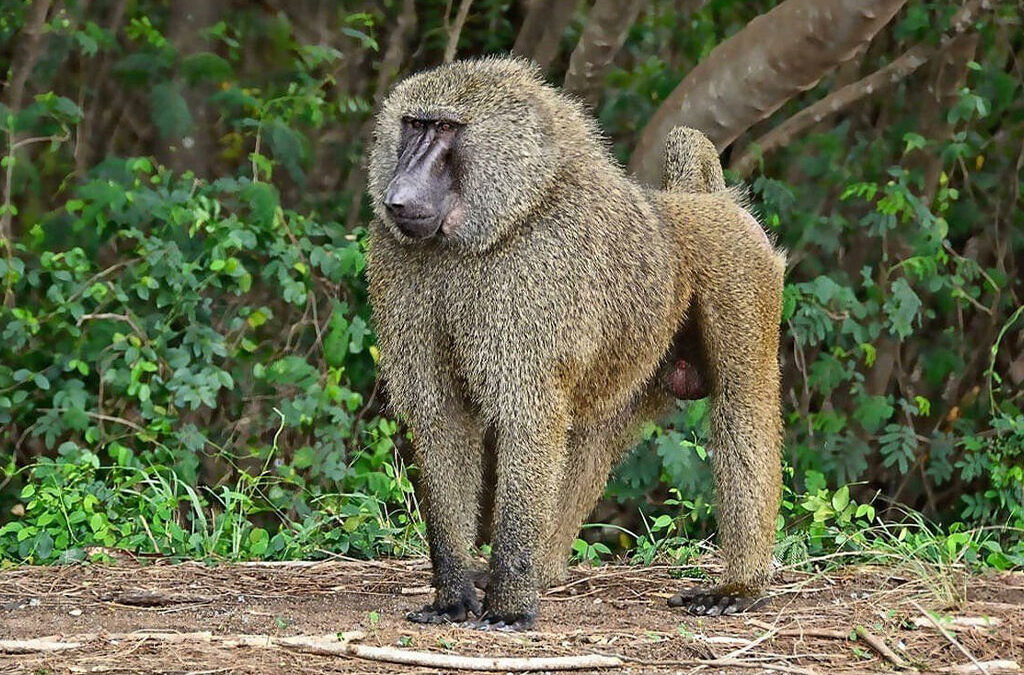
Uganda, often called the “Pearl of Africa,” offers one of the richest wildlife experiences on the continent. Beyond the iconic mountain gorillas and vast herds of elephants, the country is also home to the intelligent and highly adaptable Olive Baboon. These fascinating primates bring energy and character to Uganda’s landscapes, and spotting them in the wild adds a unique dimension to any safari.
In this guide, you’ll discover where to find Olive Baboons in Uganda, when to see them, and how to enjoy a safe, respectful encounter. Along the way, you’ll also understand why responsible tourism plays a key role in protecting these remarkable animals.
Understanding the Olive Baboon: Behavior and Habitat
Olive Baboons (Papio anubis) are among the most widespread primates in Africa, and Uganda provides ideal conditions for them to thrive. Their name comes from their olive-green to brownish coat, which blends seamlessly into woodland and savanna environments.
These primates are highly social and live in large troops that can exceed 100 individuals. Within each group, a clear hierarchy exists, led by dominant males, while females form the stable core of the troop. As a result, their social interactions—grooming, playing, and communicating—are constant and fascinating to observe.
In addition, Olive Baboons are diurnal, meaning they are active during the day. They spend most of their time foraging, and their omnivorous diet allows them to adapt easily. Fruits, seeds, insects, and even small animals all form part of their meals.
Because of this flexibility, they occupy a wide range of habitats. You will find them in open savannas, dense forests, riverbanks, and even rocky escarpments. However, they tend to stay close to water sources, which makes certain areas within Uganda’s parks particularly reliable for sightings.
Top National Parks to See Olive Baboons in Uganda
Uganda’s protected areas offer excellent opportunities to encounter Olive Baboons in their natural setting. Each park presents a slightly different experience, shaped by its landscape and biodiversity.
Queen Elizabeth National Park
To begin with, Queen Elizabeth National Park stands out as one of the best places to see Olive Baboons. Its diverse ecosystems—ranging from open savannas to wetlands—create perfect conditions for wildlife viewing.
You will often spot baboons along game drive tracks or near the Kazinga Channel, where they gather to drink and forage. Moreover, their presence near roads makes them relatively easy to observe, especially during morning drives.
Murchison Falls National Park
Further north, Murchison Falls National Park offers another exceptional location. As Uganda’s largest national park, it provides vast habitats where baboons thrive.
Here, Olive Baboons frequently appear along the banks of the Nile River and in woodland areas. While exploring the park, you may see them crossing roads, resting in shaded areas, or interacting in large troops. Their activity often adds excitement to both game drives and boat safaris.
Kibale National Park
In contrast, Kibale National Park delivers a more forested experience. Known as the primate capital of East Africa, Kibale hosts an impressive variety of species, including Olive Baboons.
While trekking through the forest in search of chimpanzees, you will likely encounter baboons moving through the trees or foraging on the forest floor. Their adaptability allows them to thrive even in dense rainforest environments, making sightings quite common.
Lake Mburo National Park
Meanwhile, Lake Mburo National Park provides a quieter, more intimate setting. Although smaller than other parks, it supports a healthy population of Olive Baboons.
You can often find them near the lakeshores or in acacia woodlands. Because of the park’s compact size, sightings tend to feel closer and more personal, especially during guided walks or short game drives.
Best Time to Spot Olive Baboons in Uganda
Timing plays an important role when planning your baboon-watching experience. Fortunately, Olive Baboons can be seen year-round, but certain seasons improve your chances.
During the dry seasons, which run from December to February and June to September, baboons gather around water sources. As vegetation thins out, visibility improves, making it easier to spot them across open landscapes.
On the other hand, the wet seasons—March to May and October to November—transform the environment into lush greenery. Although thicker vegetation can make sightings slightly more challenging, baboons become more active due to increased food availability. This is also a great time to observe social behaviors such as grooming and playful interactions.
Equally important is the time of day. Early mornings offer the best opportunities, as baboons leave their sleeping sites and begin foraging. Late afternoons also provide excellent sightings when they become active again before settling for the night.
How to Safely Observe Olive Baboons in the Wild
Watching Olive Baboons in their natural habitat is rewarding, but it requires a respectful approach. Their intelligence and social nature mean they are highly aware of human presence.
First, always maintain a safe distance. Staying at least 20 meters away allows you to observe without interfering with their behavior. At the same time, keep your movements slow and calm to avoid startling them.
It is equally important not to feed baboons. While they may appear approachable, feeding disrupts their natural diet and can lead to aggressive behavior. Instead, observe quietly and let them behave naturally.
You should also secure your belongings. Baboons are curious and quick to grab unattended items, especially food. Keeping everything packed away helps prevent unwanted encounters.
Finally, follow the guidance of park rangers or professional guides. Their experience ensures not only your safety but also the protection of the animals.
The Role of Sustainable Tourism in Baboon Conservation
Every wildlife encounter has an impact, and responsible tourism helps ensure that impact is positive. In Uganda, sustainable tourism plays a crucial role in protecting Olive Baboons and their habitats.
Park fees and guided tours contribute directly to conservation efforts. These funds support anti-poaching initiatives, habitat preservation, and community development programs. As a result, local communities benefit from tourism and become active participants in wildlife protection.
Moreover, ethical wildlife viewing reduces stress on animals and allows them to maintain their natural behaviors. By choosing responsible operators, you actively support conservation.
Plan Your Baboon Safari with Experiya Tour Company
Exploring Uganda’s wilderness becomes even more rewarding when you travel with experienced professionals. Experiya Tour Company designs safaris that combine comfort, knowledge, and authentic wildlife encounters.
From the savannas of Queen Elizabeth National Park to the forests of Kibale, their expert guides help you locate Olive Baboons while sharing insights into their behavior and ecology. In addition, carefully planned itineraries ensure you visit the best at the right time for optimal sightings.
Whether you are a first-time visitor or a seasoned traveler, Experiya Tour Company creates experiences that go beyond simple observation. You connect with nature, understand wildlife, and leave with lasting memories.
Final Thoughts
Finding Olive Baboons in Uganda is more than just a wildlife sighting—it is an opportunity to witness complex social structures, adaptability, and the rhythm of life in the wild. As you explore Uganda’s national parks, each encounter reveals a new layer of their behavior and environment.
With the right timing, guidance, and respect for nature, your baboon-watching experience can become one of the highlights of your safari. And as you travel responsibly, you also contribute to preserving these incredible primates for generations to come.