what’s the difference between cheetahs and leopards
January 13, 2026
Explore Tanzania’s Nyerere Game Reserve
January 18, 2026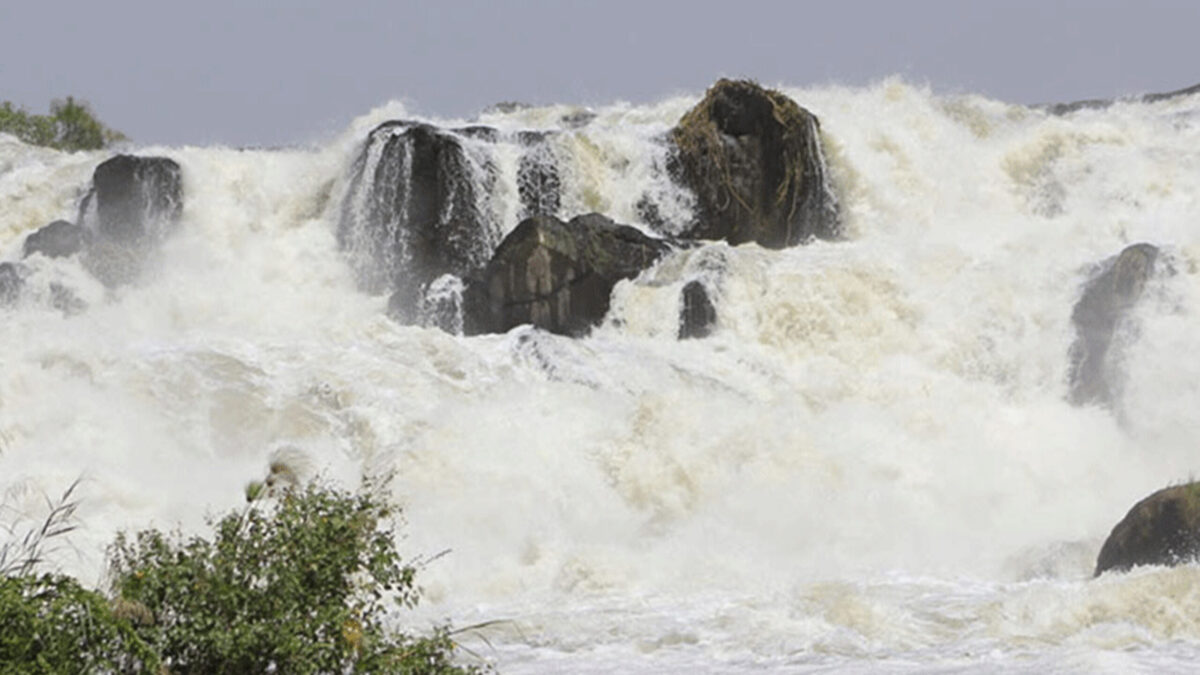
Karuma Falls stands among Uganda’s most striking natural landmarks along the Victoria Nile. Over time, this powerful stretch of river has evolved into a place where ancient geology, wildlife, culture, and modern engineering coexist in one dramatic setting. As of January 2026, Karuma is not only defined by furious rapids and spiritual legends, but also by a fully operational 600-megawatt hydroelectric power station that reshaped the river while preserving its character.
What you see today is a rare blend of nature’s raw force and human ambition an experience that feels both timeless and contemporary.
Location and Setting
Karuma Falls lies in Kiryandongo District, approximately 270 kilometers north of Kampala along the Kampala–Gulu Highway. The site sits at the famous Karuma Bridge, where the districts of Oyam and Masindi meet. Because of its position on a major highway, Karuma has become one of Uganda’s most accessible natural attractions and a familiar pause point for travelers heading to northern Uganda or West Nile.
At an elevation of about 1,000 meters above sea level, the landscape feels expansive, open, and commanding.
The Natural Personality of Karuma Falls
Unlike a single plunging waterfall, Karuma Falls reveals itself as a sequence of rapids and cascades. Here, the Nile narrows dramatically and accelerates as it forces its way over fractured granite outcrops. The result is foaming white water, continuous thunder, and drifting mist that intensifies during the rainy seasons from April to May and September to November.
Although the river’s most violent flows have been moderated, the falls still roar with unmistakable power. From the bridge and roadside viewpoints, visitors can watch the Nile churn, surge, and twist through rock formations shaped by millions of years of geological pressure.
The Modern Reality: Power Meets Nature
Today, the Karuma Hydropower Project regulates the river through a run-of-the-river design that relies on a gravity dam and an underground power station. Fully operational since mid-2024 and officially commissioned in September 2024, the facility now produces 600 megawatts of electricity through six turbines.
At full output, the station generates over 40 percent of Uganda’s electricity, making it a cornerstone of national energy supply and regional power exports. While the dam has softened the river’s wildest surges, impressive torrents of white water still surge visibly downstream, preserving the dramatic visual identity of Karuma Falls.
Why Karuma Falls Still Matters in 2026
Karuma Falls remains an essential stop not just because of what it has become, but because of what it represents.
This stretch of the Victoria Nile forms part of the longest river system in the world. Standing here places you along one of Earth’s most important natural arteries, a river that has shaped civilizations far beyond Uganda’s borders.
Geologically, Karuma tells a powerful story. Ancient basement granite forces the Nile into compressed channels, creating interlocking rock steps and relentless turbulence. The spectacle comes not from height, but from velocity and volume, which combine to produce unending motion and sound.
Culturally, the site holds deep spiritual meaning. The name “Karuma” translates to “great spirit” in Luo, and local tradition holds that the rocks were intentionally placed by spiritual forces to tame and test the river. This belief gives Karuma a sacred weight that many visitors feel instantly upon arrival.
Footsteps of Explorers and Engineers
Historically, Karuma Falls drew early explorers searching for the Nile’s source. In the 1860s, John Hanning Speke passed through this region during his landmark expeditions, adding Karuma to the river’s long narrative of discovery.
In contrast, the modern era introduced one of Africa’s largest underground power stations. Today, Karuma stands as a testament to Uganda’s pursuit of energy independence, demonstrating how large-scale infrastructure can coexist with natural landmarks when carefully designed.
Because the project avoids massive reservoirs, it reduces flooding and limits ecological disruption compared to traditional dams, striking a delicate balance between development and conservation.
Wildlife Along the Roadside
Karuma Falls also sits at the eastern edge of protected wildlife areas connected to Murchison Falls National Park and the Karuma Wildlife Reserve. As you approach the bridge, wildlife sightings become surprisingly common.
Baboons and vervet monkeys frequent the roadside, while elephants, buffaloes, Uganda kobs, antelopes, giraffes, and warthogs occasionally appear in nearby grasslands. Birdlife thrives along the riverbanks, making the area especially appealing to photographers and bird enthusiasts.
In many ways, Karuma offers a “roadside safari,” where nature unfolds without the need for park entry or extended planning.
The Historic Karuma Bridge
The Karuma Bridge, originally built in 1963 to transport cotton, remains one of Uganda’s most important north–south links. During periods of low water, the original structure becomes visible below the current bridge, serving as a reminder of Uganda’s post-independence infrastructure journey.
Today, the bridge frames the river beautifully, though visitors should avoid photographing the bridge directly due to security regulations.
From Conflict Zone to Safe Landmark
In the 1990s and early 2000s, Karuma gained notoriety as a dangerous stretch of road due to rebel ambushes. However, since the end of conflict in 2007, the area has transformed completely.
Now, Karuma ranks among Uganda’s safest and most relaxed highway stops. Travelers regularly pause here to stretch, admire the view, and absorb the atmosphere without concern.
Photography, Seasons, and Travel Flow
Karuma Falls rewards visitors year-round, but the rainy seasons amplify its drama. During these months, mist thickens, sound intensifies, and the river feels almost alive beneath your feet.
Because the falls sit directly on the Kampala–Gulu–Pakwach–Arua route, many buses slow down at the bridge, allowing passengers a moment to take in the scenery. The ease of access makes Karuma one of Uganda’s most low-commitment yet memorable natural attractions.
A Gateway to Greater Adventures
Just minutes away, travelers can continue onward to Murchison Falls National Park for game drives, boat safaris, and hikes to the top of the falls. In this way, Karuma serves as both an introduction and a transition bridging the open road with deeper wilderness experiences.
Final Thoughts
Karuma Falls is no longer just a waterfall. It is a living crossroads where spirit stones, explorer footsteps, wildlife corridors, national history, and clean energy converge in one unforgettable scene.
From a colonial-era bridge to years of conflict and now to 600 megawatts of renewable power, Karuma tells Uganda’s story of resilience, transformation, and progress. Whether you come for a brief roadside stop or linger to feel the mist and thunder, Karuma Falls continues to inspire awe, humility, and reflection.