

How Is Gorilla Trekking in the Nkuringo Sector?
January 2, 2026
Katwe Explosion Crater Lake in Queen Elizabeth National Park
January 2, 2026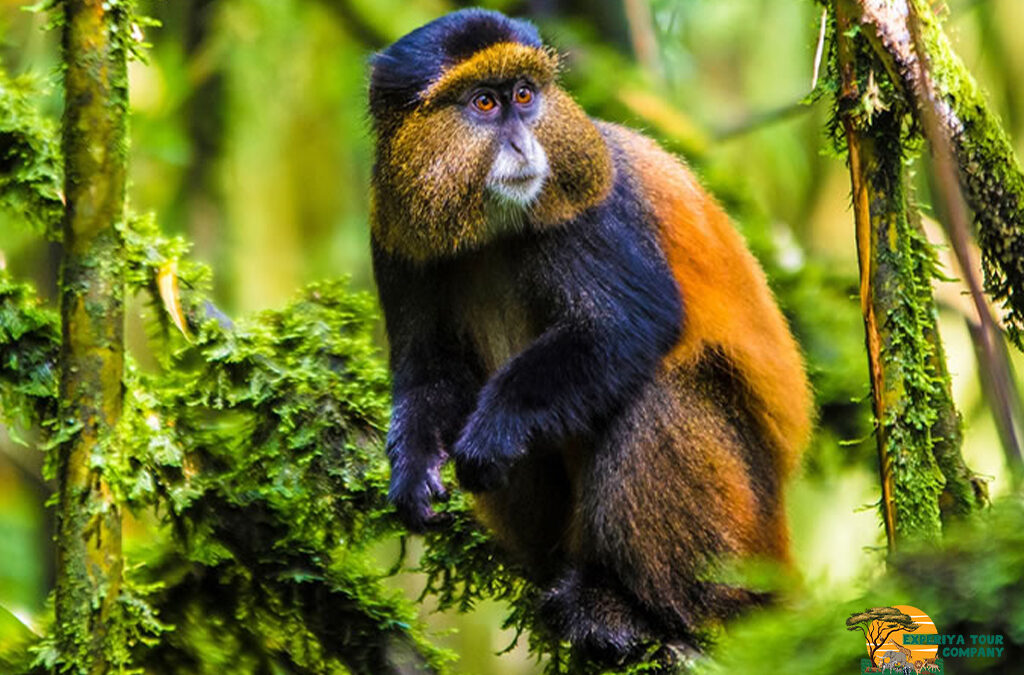
Rwanda is famous for its mountain gorillas, but its golden monkeys are equally captivating. These rare, vibrant primates inhabit the bamboo forests of Volcanoes National Park, offering wildlife photographers a unique and rewarding challenge. Capturing their playful energy and beauty requires preparation, patience, and respect for their natural environment. Here’s a comprehensive guide to photographing Rwanda’s golden monkeys.
Understanding the Habitat and Behavior of Golden Monkeys
Golden monkeys are an endangered species found in the Virunga Mountains and parts of Uganda. Knowing their habitat and behavior is essential for anticipating their movements and composing compelling shots. They thrive in dense bamboo forests at high altitudes. These monkeys are highly social and playful, often leaping between branches or feeding on bamboo shoots. They live in large groups, which makes it easier to find them but sometimes harder to isolate individual subjects for photography. Observing their interactions first can help you plan your shots more effectively.
Choosing the Right Photography Gear
Capturing fast-moving primates in dense forests demands versatile and reliable gear. A DSLR or mirrorless camera with fast autofocus is ideal, though compact cameras with strong zoom capabilities can work well for lightweight travel.
For lenses, a telephoto lens, such as a 70-200mm or 100-400mm, allows you to get close-ups and isolate your subjects, while a wide-angle lens, like a 16-35mm or 24-70mm, works well for environmental shots that place the golden monkeys within their bamboo habitat.
Accessories such as a monopod provide stability while trekking, and carrying extra batteries and memory cards ensures you won’t miss a moment. A rain cover is also essential, as weather in the forest can change quickly.
Preparing for Trekking Conditions
Golden monkey trekking is generally less strenuous than gorilla trekking, but preparation is key. Dressing appropriately makes a significant difference. Neutral-colored clothing helps you blend into the environment, while sturdy hiking boots provide support on uneven and muddy trails. A waterproof jacket will keep you comfortable during sudden rain showers.
Protecting your gear is equally important. Use a waterproof backpack or dry bags, and attach lens hoods to reduce glare while shielding lenses from rain or debris.
Mastering Photography Techniques
Capturing the essence of golden monkeys requires a mix of technical skill and adaptability. Focus on the eyes first—their expressive gaze reveals personality and emotion. Use single-point autofocus to ensure sharpness.
The bamboo forest often has low light, so increase your ISO (400–1600) and shoot with a wide aperture (f/2.8–f/5.6) to let in more light and create a pleasing background blur. To freeze motion during playful leaps and quick movements, use a fast shutter speed (1/500s or faster) and consider burst mode to capture sequences.
Composition also matters. The rule of thirds can help create dynamic shots, while including elements of the forest provides context. Isolating individual monkeys works well for portraits, but capturing group interactions can tell a more engaging story.
Overcoming Challenges
Photographing golden monkeys comes with unique challenges. Dense bamboo often obstructs clear shots, so use a telephoto lens to focus through gaps. Their rapid movements require anticipation—study their behavior before raising your camera. Lighting can be tricky, with shifting shadows and sunlight filtering through the canopy. Shooting in RAW gives you flexibility to adjust exposure and white balance later.
Making the Most of Your Trekking Time
Visits with golden monkeys are usually limited to about an hour, so make every moment count. Spend the first few minutes observing their behavior before taking photos. Alternate between wide-angle shots to capture the environment and close-ups to highlight details. Remember to pause and enjoy the experience without the camera; the encounter itself is a rare and magical opportunity.
Post-Processing Tips
Editing can enhance your images while remaining faithful to the monkeys’ natural beauty. Adjust exposure and contrast to emphasize the vibrant fur and bamboo surroundings. Crop carefully to highlight your subject without losing context, and apply subtle sharpening to the eyes and fur for added detail.
Ethical Considerations
Respect for the animals and their environment is crucial. Avoid using flash, as it can startle the monkeys, and maintain a safe distance to prevent disrupting their natural behavior. Follow your guide’s instructions to ensure both your safety and the monkeys’ well-being.
Exploring Additional Photography Opportunities
While in Volcanoes National Park, there are other photographic experiences worth pursuing. Gorilla trekking provides another chance to capture extraordinary primates, while the dramatic volcanic landscapes offer breathtaking scenery for landscape photography. Visiting local communities can also yield rich cultural photography opportunities.
Staying Present and Enjoying the Experience
While the goal of capturing the perfect shot is exciting, don’t forget to immerse yourself in the moment. Listen to the forest, watch the monkeys’ interactions, and take in the lush surroundings. These experiences often create the memories that last long after the photos are taken.
Conclusion
Photographing Rwanda’s golden monkeys is both challenging and immensely rewarding. With the right preparation, understanding of their behavior, and ethical approach, you can create images that capture the energy and spirit of these unique creatures while forging a deep connection with Rwanda’s extraordinary wildlife.
