2 Days Golden Monkey Trekking in Volcanoes National Park
February 11, 2026
Discovering the Coffee Culture in Rwanda
February 12, 2026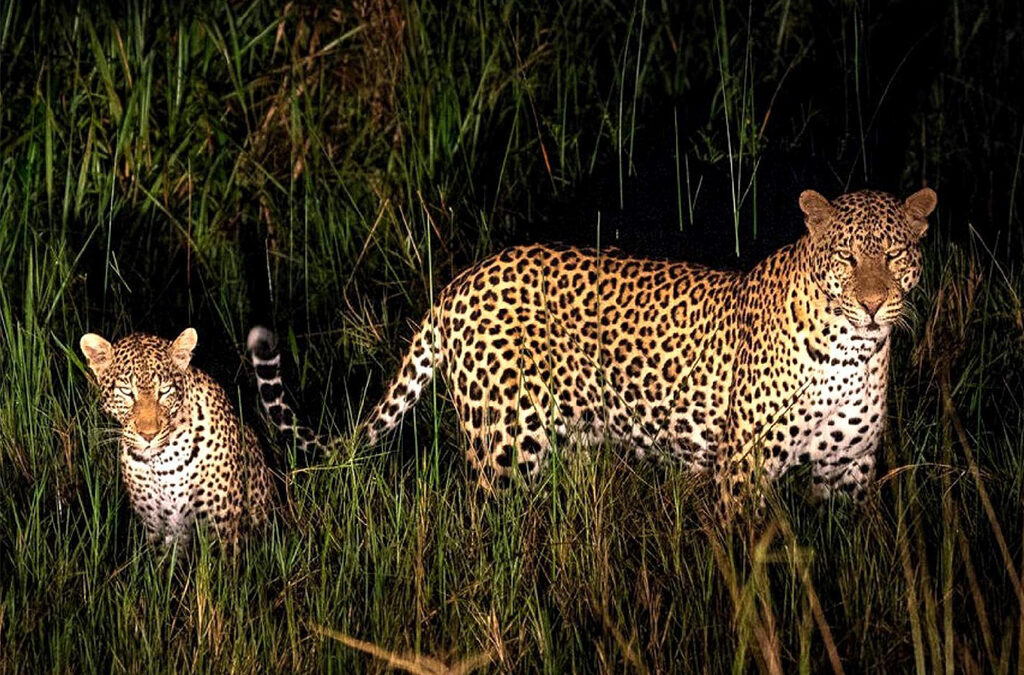
When most travelers imagine an African safari, they picture golden plains, grazing antelope herds, and predators basking under the sun. However, the wilderness transforms completely when darkness falls. As night settles over the savannah and forests, a hidden world awakens.
A nightlife safari reveals elusive species, heightened predator activity, and a symphony of sounds rarely heard during daytime game drives. More importantly, it offers a deeper understanding of wildlife behavior and survival strategies. With Experiya Tour Company, travelers experience this mysterious side of Africa safely, ethically, and memorably.
Why Nightlife Safaris Matter
During the day, safari drives focus on sun-loving animals such as elephants, giraffes, zebras, and various antelope species. In contrast, night safaris spotlight crepuscular and nocturnal creatures that avoid daytime heat and danger.
Darkness provides cooler temperatures, protective cover, and a strategic advantage for hunters. As a result, many species move more freely at night.
National parks and private conservancies that permit night drives allow trained guides to use filtered spotlights to detect eye shine, subtle movements, and distant sounds. Consequently, guests witness a more intimate and often dramatic side of the wild.
Predators of the Night
Many of Africa’s most effective hunters prefer the cover of darkness.
Lions
Lions typically begin hunting at sunset and continue through the night. They rely on stealth, teamwork, and ambush tactics. A nighttime encounter with a lion pride often reveals behaviors that remain hidden during daylight hours.
Leopards
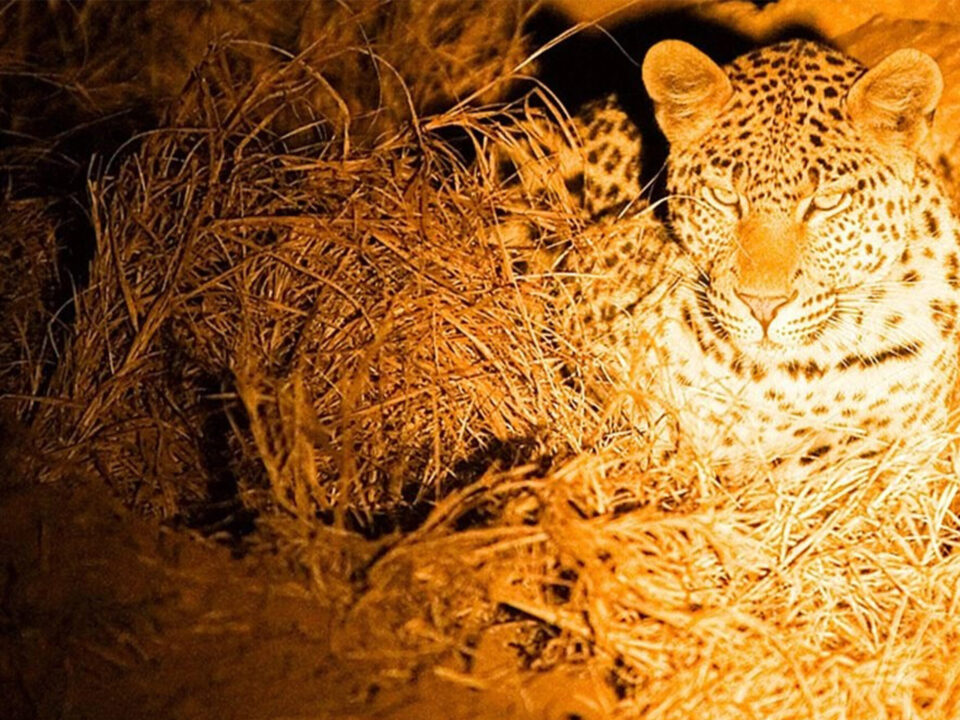
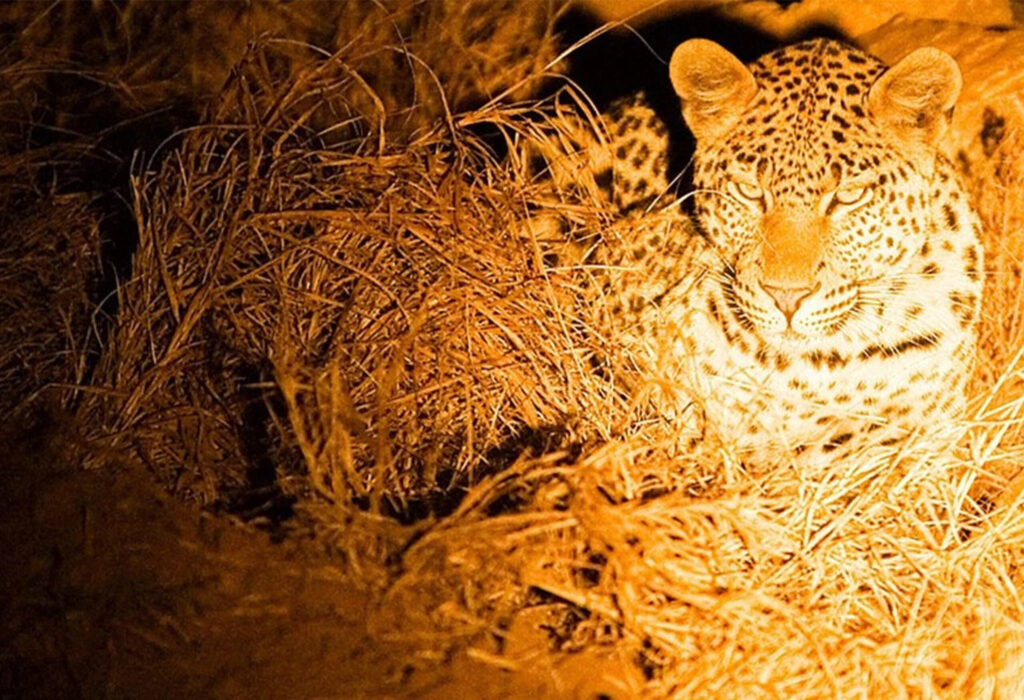
Leopards, famously elusive and solitary, become more active after dark. They move silently, hunt with precision, and often drag their prey into trees for safety. Because their eyes reflect light so clearly, night drives significantly increase your chances of spotting these magnificent cats.
Spotted Hyenas
Spotted hyenas patrol vast territories at night. Their haunting whoops echo across the savannah, signaling communication within their complex social groups. Observing hyenas hunt or scavenge after dark highlights their intelligence and their essential role in maintaining ecological balance.
Secretive Hunters and Smaller Carnivores
Beyond the iconic big cats, nightlife safaris introduce guests to smaller carnivores rarely seen during the day.
Genets glide gracefully through trees in search of insects and small mammals. Civets emerge cautiously along tracks and open areas. Meanwhile, servals, caracals, and African wildcats rely on exceptional hearing and night vision to locate prey hidden in tall grass.
One particularly special sighting is the aardwolf, a shy relative of the hyena that primarily feeds on termites. Because travelers seldom encounter it during daytime drives, spotting one at night feels like an extraordinary privilege.
Unique Nocturnal Herbivores
Not every nighttime sighting involves predators. In fact, several herbivores prefer to feed under the cover of darkness.
Bushbabies (Galagos)
These wide-eyed primates leap energetically between branches. Their sharp cries and quick movements make them a highlight of many night drives.
Porcupines
Porcupines venture out at night to forage for roots and bark. Their slow, deliberate movements and impressive quills showcase a survival strategy built on defense rather than speed.
Aardvarks
Among the most sought-after nocturnal animals, aardvarks spend their nights digging for termites and ants. Their powerful claws shape the landscape by creating burrows that other species later use. Because they are so elusive, seeing one often becomes the highlight of a nightlife safari.
The Sounds of the African Night
One of the most captivating aspects of a nightlife safari is the soundtrack.
As darkness deepens, the bush grows louder. Frogs croak rhythmically, insects hum continuously, and nocturnal birds call into the night. Verreaux’s eagle-owl and African wood owl become active hunters, their haunting calls echoing through the trees.
At the same time, unseen drama unfolds beyond the headlights. A distant lion’s roar, the whoop of hyenas, or the sudden alarm call of antelope all signal movement and tension in the darkness. Consequently, guests experience Africa not only visually but also through sound and atmosphere.
Nightlife Safaris Across Different Habitats
The experience varies depending on the landscape.
Savannah and Grasslands
Open plains offer clearer visibility. Travelers often observe large mammals moving between feeding grounds and predators actively hunting.
Forests and Woodlands
Dense vegetation limits visibility but increases excitement. Guides rely heavily on sound, tracks, and experience to locate rare species such as pangolins, forest genets, and nocturnal primates.
Wetlands
In wetland ecosystems, hippos leave rivers to graze while crocodiles guard the shoreline. Amphibians and waterbirds add depth to the nighttime chorus, creating a rich, layered sensory experience.
The Role of Expert Guides
A successful nightlife safari depends heavily on the skill of professional guides.
Experienced guides identify animals by eye shine color, interpret subtle sounds, and understand movement patterns shaped by years of fieldwork. Furthermore, they prioritize ethical wildlife viewing by using low-intensity lighting, maintaining respectful distances, and minimizing disturbance.
With Experiya Tour Company, guides transform simple sightings into meaningful learning experiences. They explain ecological relationships, hunting strategies, and conservation challenges, ensuring that every drive becomes both educational and inspiring.
Safety and Comfort During Night Drives
Although the darkness may seem intimidating, professional management ensures safety at every step.
Vehicles move slowly, and strict rules regulate lighting and noise levels. Guests should dress warmly, as temperatures often drop significantly after sunset.
Because guides maintain full control of the experience, most travelers find that mystery enhances excitement rather than fear. For many, a nightlife safari becomes one of the most unforgettable highlights of their journey.
Why Nightlife Safaris Complete the Safari Experience
Daytime drives showcase abundance and scale. In contrast, nightlife safaris reveal adaptability, survival, and intricate ecological relationships. Together, they provide a full 24-hour understanding of Africa’s ecosystems.
Moreover, the presence of diverse nocturnal species signals a healthy and protected environment. Conservation efforts play a crucial role in preserving these fragile nighttime worlds.
Ultimately, a nightlife safari unveils a dimension of Africa that many visitors never witness. From stealthy predators and shy herbivores to haunting sounds and rare encounters, nighttime exploration adds depth, thrill, and meaning to any safari adventure.
For travelers seeking more than a traditional game drive, Experiya Tour Company offers immersive nightlife safaris that connect you deeply with Africa’s wildlife. After all, the wild never sleeps. As the sun sets and darkness falls, nature’s true rhythm begins.