
5 Days Akagera and Nyungwe National Park Safari
March 10, 2026
Zip-Lining Safaris in Mabira Forest, Uganda
March 10, 2026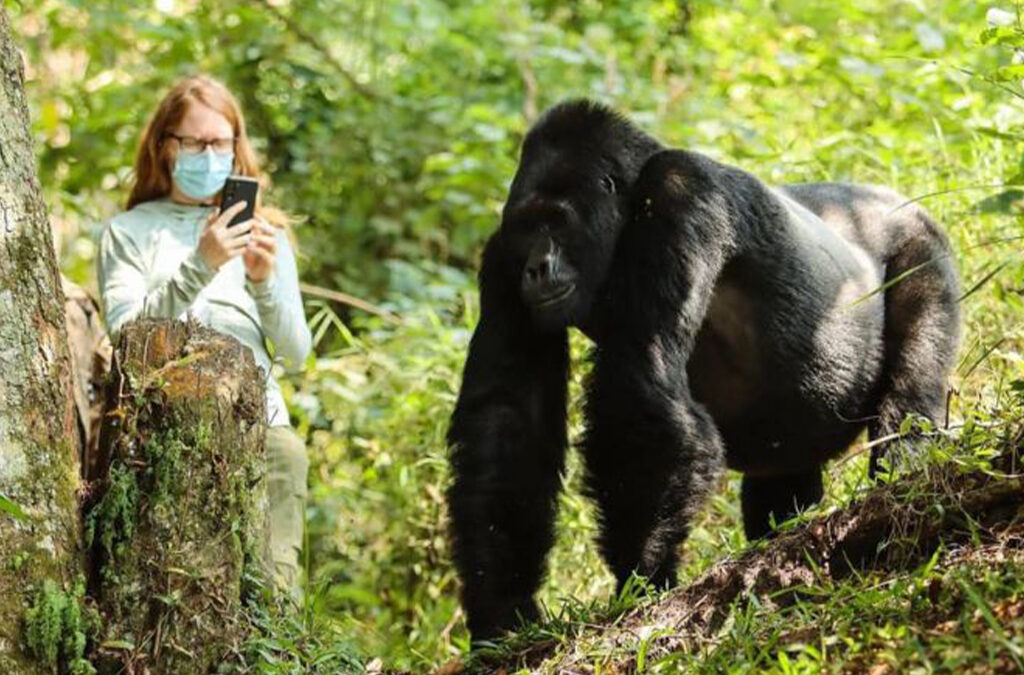
Gorilla trekking in Bwindi Impenetrable National Park is one of Africa’s most remarkable wildlife experiences. However, many travelers often ask how long the activity actually takes. The honest answer is that the duration of gorilla trekking varies widely. It can take anywhere from 1 hour to 8 hours, depending mainly on the location and movement of the gorilla family you are tracking on that particular day.
Because mountain gorillas move freely through the forest in search of food, their location changes daily. As a result, every trek is different. Some gorilla groups may be located relatively close to the starting point, while others may require a longer hike through the dense forest. Therefore, visitors should prepare for varying trekking times, changing weather conditions, and sometimes steep terrain.
In some cases, trekkers may spend about 2 to 3 hours hiking before locating the gorillas. In other situations, the search may take most of the day, occasionally lasting up to 8 hours, especially when the gorillas move deeper into the forest. For this reason, a reasonable level of physical fitness is recommended before embarking on this unforgettable adventure.
What Happens During a Gorilla Trek in Bwindi?
Gorilla trekking in Bwindi usually begins early in the morning. Visitors gather at the park headquarters in their respective sectors for a briefing from Uganda Wildlife Authority rangers. The briefing normally starts at 8:00 AM and covers important rules, safety guidelines, and expectations while trekking in the forest.
After the briefing, rangers divide visitors into small groups of eight people per gorilla family. Each group receives an experienced ranger guide, and in many cases an armed ranger accompanies the trek to ensure safety in the forest.
Once the trek begins, visitors follow forest trails through thick vegetation, valleys, and sometimes steep slopes while searching for the assigned gorilla family. Along the way, the forest offers many exciting surprises. Trekkers often spot birds, butterflies, monkeys, and other forest wildlife, making the journey itself an adventure.
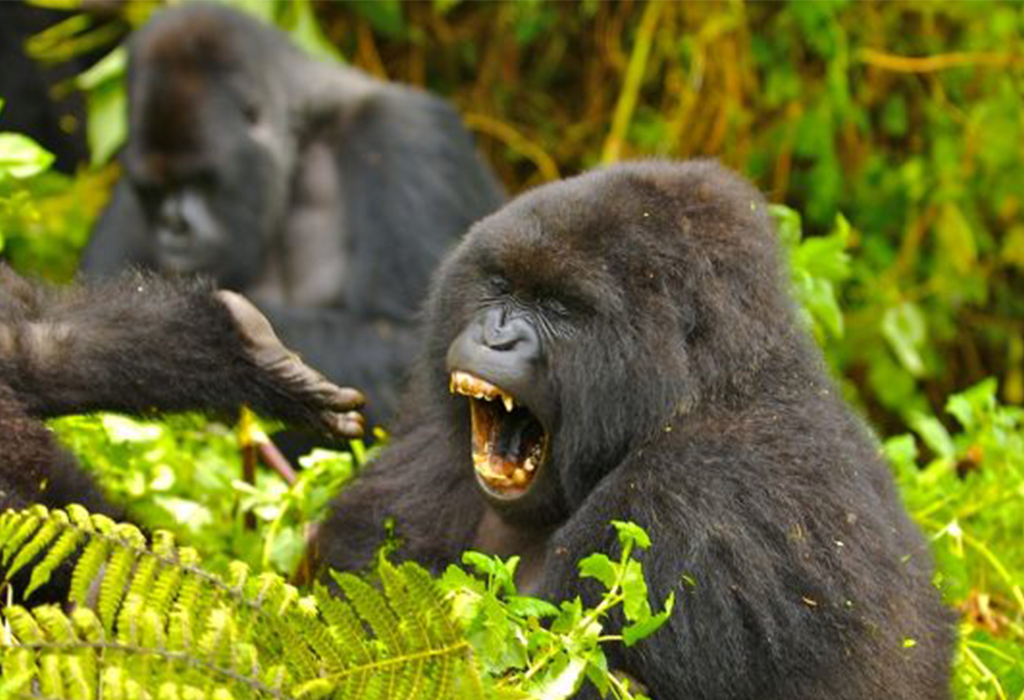
When the gorilla family is finally located, visitors are allowed one hour with the gorillas. During this time, you can quietly observe their behavior and watch them go about their daily lives. You may see them feeding, grooming, playing, or caring for their young, while photographers capture unforgettable moments.
Although the one-hour viewing rule is strictly observed to protect the gorillas, that short time often becomes the most memorable part of a safari in Uganda.
About Bwindi Impenetrable Forest National Park
Bwindi Impenetrable Forest National Park is one of the four national parks in the world where endangered mountain gorillas live. The other parks include Mgahinga Gorilla National Park in Uganda, Volcanoes National Park in Rwanda, and Virunga National Park in the Democratic Republic of Congo.
Bwindi is also one of Africa’s oldest and most biologically diverse rainforests. Because of its exceptional ecological importance, UNESCO designated it a World Heritage Site.
The park is home to an incredible variety of wildlife species. Researchers have recorded over 350 bird species, about 310 butterfly species, more than 200 tree species, 51 reptiles, 88 moths, and around 120 mammal species. Bwindi also supports several primates, including chimpanzees, L’Hoest’s monkeys, and the world-famous mountain gorillas.
Out of the global mountain gorilla population of approximately 1,064 individuals, nearly half live in Bwindi. This makes the park one of the most important conservation areas for these endangered primates.
Gorilla Families Available for Trekking in Bwindi
Bwindi Impenetrable National Park currently has over 20 habituated gorilla families available for trekking. These families live across four main sectors of the park: Buhoma, Ruhija, Rushaga, and Nkuringo.
Although the trekking routes and terrain differ slightly between sectors, the experience remains equally rewarding in all areas. Each gorilla family can be visited by only eight visitors per day, which helps reduce stress on the animals and protects their natural behavior.
In the Buhoma sector, visitors may track families such as Mubare, Habinyanja, Rushegura, and Katwe.
The Ruhija sector is home to the Bitukura, Oruzogo, Mukiza, and Kyaruguriro families.
The Rushaga sector, which has the largest number of families, includes Nshongi, Mishaya, Bweza, Bikingi, Kahungye, Busingye, Mucunguzi, and other groups.
Meanwhile, the Nkuringo sector hosts the Nkuringo, Bushaho, and Christmas gorilla families.
Regardless of the sector you visit, trekking these gentle giants remains a safe, well-managed, and life-changing wildlife encounter.
Best Time to See Gorillas in Bwindi
Gorilla trekking in Bwindi is possible throughout the year, but many travelers prefer visiting during the dry seasons when the trails are less slippery.
The most popular months include January, February, June, July, August, and early September. During these periods, rainfall is usually lower, which makes hiking easier.
However, the rainy seasons can also offer excellent trekking conditions. The forest becomes lush and green, and gorillas sometimes remain closer to the lower slopes where food is abundant. As a result, sightings can still be very rewarding.
How to Get to Bwindi Impenetrable National Park
There are several ways to reach Bwindi Impenetrable National Park.
Travelers can drive from Kampala or Entebbe, a journey that typically takes 9 to 10 hours. The scenic route passes through the Ugandan countryside, with common stops at the Equator for photos, lunch in Mbarara, and beautiful views along the way. Experiya Tour Company organizes these trips using comfortable 4×4 safari vehicles with experienced driver-guides.
Alternatively, visitors can take a domestic flight from Entebbe International Airport or Kajjansi Airstrip to Kihihi or Kisoro Airstrips, which serve Bwindi. The flight takes about 1 to 2 hours, followed by a short transfer to your lodge.
Another convenient option involves flying into Kigali International Airport in Rwanda and then driving to Bwindi through the Cyanika or Katuna border posts. This journey usually takes about 4 to 5 hours, making it a popular choice for travelers with limited time. Many visitors also obtain the East African Tourist Visa, which allows travel between Uganda, Rwanda, and Kenya.
Where to Stay During Gorilla Trekking in Bwindi
Bwindi offers a wide range of accommodation options to suit different budgets and travel styles. Visitors can choose from luxury lodges, mid-range properties, and budget-friendly camps, many of which sit close to the trekking starting points.
In the Rushaga sector, popular lodges include Rushaga Gorilla Camp, Four Gorillas Lodge, and Rushaga Gorilla Havens Lodge.
The Nkuringo sector offers beautiful stays such as Nkuringo Bwindi Gorilla Lodge and Clouds Mountain Gorilla Lodge.
Meanwhile, in the Buhoma sector, travelers can stay at Buhoma Lodge, Mahogany Springs Lodge, Bwindi Lodge, Trekkers Tavern Lodge, Bakiga Lodge, and Gorilla Forest Camp.
When planning your safari, Experiya Tour Company can help you select the best lodge based on your trekking sector, budget, and comfort preferences.