
Best Hiking Trails in Rwanda
December 18, 2025
Why You Should Hire a 4×4 Vehicle for a Ugandan Safari
December 18, 2025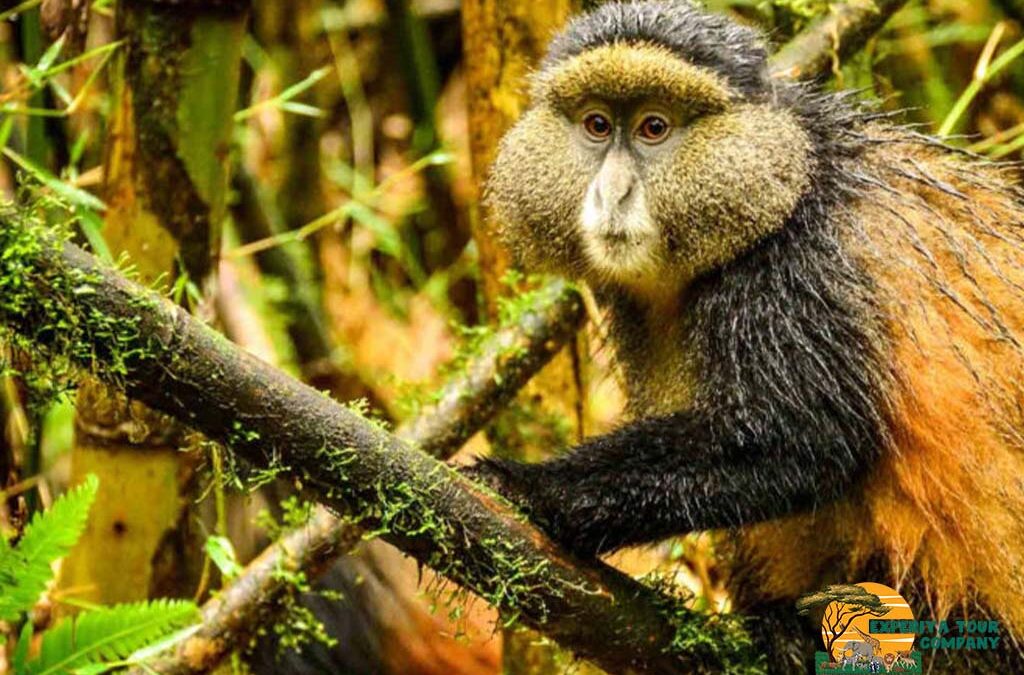
Golden monkey trekking is one of East Africa’s most rewarding and accessible wildlife experiences. These striking, playful primates live only in the Virunga Volcanoes region, thriving in the bamboo forests of Rwanda, Uganda, and the Democratic Republic of Congo. Naturally, many travelers wonder whether spotting them in the wild is difficult.
This guide answers that question clearly and honestly. By exploring accessibility, physical demands, timing, and locations, it helps you plan with confidence. Whether you intend to add golden monkey trekking to a gorilla safari or enjoy it as a stand-alone primate experience, you’ll know exactly what to expect.
Are Golden Monkeys Hard to Spot in the Wild?
In short, no. Golden monkeys are among the easiest primates to see in East Africa. They live in large, vocal troops that often exceed eighty individuals, making them far easier to locate than many other forest species. Park rangers track these groups daily, so their general movements and feeding areas are well known.
Moreover, golden monkeys are active during daylight hours and tend to remain within familiar bamboo zones. Because many groups are habituated, they rarely shy away from people. As a result, most treks locate the monkeys within an hour, offering highly reliable sightings.
What the Trekking Experience Feels Like
Although golden monkey trekking takes place in a natural forest environment, it is generally moderate to easy. The walk leads through lush bamboo and montane vegetation at elevations ranging from about 2,200 to 3,000 meters above sea level.
Most treks last between one and three hours round trip, depending on the monkeys’ location that day. The terrain is mostly gentle, though it can become muddy during rainy months. While the altitude may cause mild shortness of breath for some visitors, the pace is relaxed and well managed by guides.
Because of these factors, golden monkey trekking suits a wide range of travelers, including families, older visitors, and those who may find gorilla trekking too demanding.
Best Time of Year to See Golden Monkeys
Golden monkeys can be tracked throughout the year. However, seasonal conditions affect trail comfort rather than sighting success.
During the dry months from June to September and December to February, trails are firmer, skies are clearer, and walking is easier. For this reason, many travelers consider this period ideal.
That said, the wet seasons from March to May and October to November still offer excellent sightings. Although trails can be slippery, the forests are lush and vibrant, and fewer visitors mean a quieter experience.
Importantly, the dry seasons coincide with peak gorilla trekking periods, making it convenient to combine both experiences in one itinerary.
Where You Can See Golden Monkeys
Golden monkeys inhabit only a small part of the world, making encounters with them especially meaningful. They are found exclusively in the Virunga Mountains, across three protected areas.
Volcanoes National Park in Rwanda is the most popular destination. Treks begin near the park headquarters, and the country’s well-organized tourism infrastructure ensures smooth logistics and consistently high success rates.
Mgahinga Gorilla National Park in Uganda offers a quieter alternative. In addition to standard treks, the park provides a special habituation experience that allows visitors to spend extended time observing the monkeys’ behavior.
Virunga National Park in the Democratic Republic of Congo also hosts golden monkeys. However, due to logistical challenges and safety considerations, Rwanda and Uganda remain the most accessible options for most travelers.
Cost of Golden Monkey Trekking
Compared to gorilla trekking, golden monkey permits are relatively affordable. In both Rwanda and Uganda, standard permits cost about one hundred US dollars per person. Uganda also offers a longer habituation experience at a slightly higher fee.
These permits include park entry and the services of trained ranger guides. Since daily permits are limited, booking in advance is recommended, especially during peak travel seasons.
How Close You Get to the Monkeys
Once trackers locate the troop, visitors usually spend a full hour observing the monkeys. Because the animals are accustomed to human presence, they often come within just a few meters.
This proximity allows for exceptional viewing and photography. However, the monkeys move quickly through thick bamboo, so capturing sharp images requires patience and a fast camera shutter.
The Role of Guides During the Trek
Guided trekking is mandatory, and for good reason. Experienced rangers lead every group, navigating forest paths while ensuring safety and responsible wildlife viewing.
Beyond logistics, guides interpret golden monkey behavior, explain conservation efforts, and help visitors understand the forest ecosystem. Their knowledge transforms the walk into a meaningful learning experience rather than a simple hike.
Why Golden Monkey Trekking Is So Special
Several elements make this experience truly unique. Golden monkeys are rare and found nowhere else on Earth, which adds a sense of exclusivity to every sighting.
Equally important is their behavior. Their energetic movements, social interactions, and striking coloration create a lively and engaging encounter. Because group sizes are small, the experience feels personal and immersive.
In addition, golden monkey trekking fits easily into broader travel plans. It pairs well with gorilla trekking, volcano hikes, and cultural visits, offering variety without physical exhaustion.
How to Prepare for the Trek
Preparation is simple but important. Comfortable hiking shoes provide stability on uneven ground, while long trousers and sleeves protect against insects and vegetation. A light rain jacket is useful at any time of year.
Carrying water, a few snacks, and insect repellent ensures comfort throughout the walk. Most parks provide walking sticks at the trailhead, which can be especially helpful on muddy sections.
Is Golden Monkey Trekking Suitable for Children?
Yes, it is. Unlike gorilla trekking, which has a higher minimum age, golden monkey trekking often allows children from around twelve years old, depending on park regulations and fitness levels.
As a result, it serves as an excellent family-friendly wildlife activity, offering excitement without excessive physical strain.
Combining Golden Monkey Trekking with Other Activities
Because treks usually finish by late morning, they leave plenty of time for additional experiences. Many travelers combine them with gorilla trekking, volcano hiking, or scenic lake visits.
Cultural encounters and classic savanna safaris also fit easily into extended itineraries, making golden monkey trekking a flexible addition to a wider East African journey.
Final Verdict: Is It Hard to See Golden Monkeys?
Seeing golden monkeys is not difficult at all. In fact, it is one of Africa’s most accessible and reliable wildlife encounters. Their large troop sizes, predictable habitats, and habituated nature make sightings highly likely.
For first-time visitors and seasoned travelers alike, golden monkey trekking offers a low-effort yet deeply rewarding experience. With the right timing, proper preparation, and an appreciation for forest wildlife, you can look forward to an unforgettable moment in the Virunga Mountains face to face with one of the region’s most captivating primates.