Luxury Gorilla Trekking Safaris and Tours in Uganda
January 4, 2026
One Day White Water Rafting on the Nile in Jinja
January 5, 2026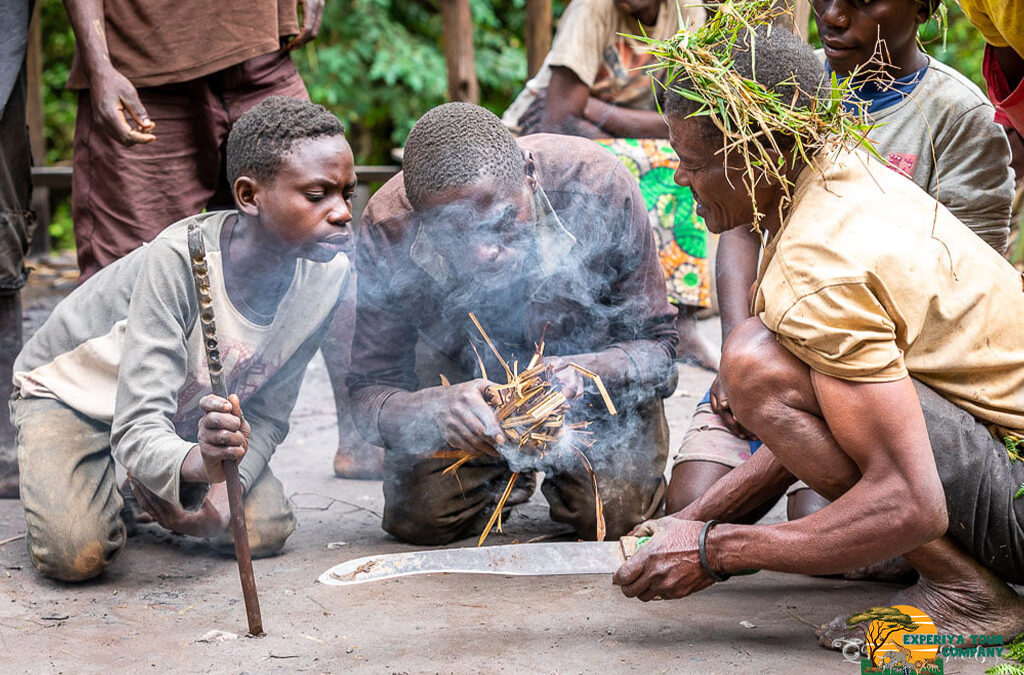
Filming the Batwa Pygmies in Uganda invites you on a powerful cinematic journey into the heart of one of Africa’s most endangered Indigenous communities. More than a visual experience, this journey tells a living story of resilience, displacement, and cultural survival.
With Experiya Tour Company as your trusted facilitator, filmmakers can responsibly document Batwa heritage while gaining rare insight into a community that once lived in harmony with Uganda’s ancient forests and wildlife. Through careful planning, ethical engagement, and professional local support, your film can capture authentic narratives that honor Batwa traditions, voices, and lived realities.
Unveiling the Batwa Pygmies of Uganda
Uganda remains one of the most compelling destinations for producing a documentary about the Batwa Pygmies in Africa. Historically, the Batwa were forest-dwelling hunter-gatherers spread across southern Uganda, eastern Democratic Republic of Congo, Rwanda, and Burundi. Today, their total population across the region is estimated at approximately 70,000 individuals.
However, despite their rich cultural heritage, the Batwa face severe endangerment. In Uganda, government-led conservation initiatives particularly the establishment of protected areas for endangered mountain gorillas resulted in the forced eviction of Batwa communities from their ancestral forests.
While these conservation efforts achieved global success in protecting wildlife, they simultaneously disrupted the Batwa’s traditional way of life. As a result, many communities were left landless, marginalized, and struggling to adapt to a rapidly changing world.
Consequently, filming the Batwa Pygmies becomes both an act of documentation and cultural preservation. Through film, storytellers can explore Batwa oral histories, spiritual beliefs, language, music, dance, and evolving identity. To navigate this sensitive environment successfully, Experiya Tour Company strongly recommends working with experienced local fixers who understand cultural protocols, filming regulations, and respectful community engagement.
Why Film the Batwa Pygmies?
A documentary on the Batwa people offers far more than compelling cultural imagery. Rather, it adds critical context to global conversations on conservation, Indigenous rights, and sustainable tourism.
Moreover, filmmaking provides a platform for Batwa elders and youth to share their stories in their own voices—stories that might otherwise remain unheard. When approached responsibly, your project contributes to cultural awareness, education, and advocacy.
Importantly, ethical filmmaking ensures that Batwa communities benefit directly from the process. This includes transparent permissions, fair participation, and narratives that are approved and respected by the community itself.
Where to Film the Batwa Pygmies in Uganda
Southern Uganda hosts several key locations where filmmakers can engage meaningfully with Batwa communities. Each destination presents unique landscapes, histories, and storytelling opportunities.
Bwindi Impenetrable Forest National Park
Bwindi Impenetrable Forest National Park stands out as one of the most emotionally powerful locations for filming the Batwa Pygmies. This UNESCO World Heritage Site was once the Batwa’s ancestral home, where they coexisted with mountain gorillas for centuries.
Following their eviction, many Batwa families resettled along the forest edges. Therefore, filming in Bwindi allows for a compelling contrast between past and present—ancient forest knowledge versus modern displacement.
Additionally, Bwindi protects more than half of the world’s remaining mountain gorillas. This dramatic ecological backdrop strengthens conservation narratives while deepening the emotional impact of your documentary.
Mgahinga Gorilla National Park
Mgahinga Gorilla National Park offers an immersive cultural experience through the renowned Batwa Cultural Trail. Along this guided route, Batwa elders demonstrate traditional hunting methods, medicinal plant use, storytelling, and sacred rituals.
Furthermore, historically significant sites such as Ngarama Cave, once home to Batwa kings, add depth and authenticity to your film. Set against the striking foothills of the Virunga Volcanoes, Mgahinga delivers dramatic visuals, cultural dances, and reenactments that vividly portray Batwa life before displacement.
Lake Bunyonyi and Echuya Forest
In contrast, Lake Bunyonyi provides a gentler yet equally compelling filming environment. Several Batwa families live on islands and along the lake’s shores near Echuya Forest Reserve.
Reaching these communities by traditional canoe enhances visual storytelling while symbolizing the Batwa’s adaptability. With 29 islands scattered across