

Why Kibale Forest Is the Primate Capital of the World
December 5, 2025
Midrange Accommodation in Uganda
December 6, 2025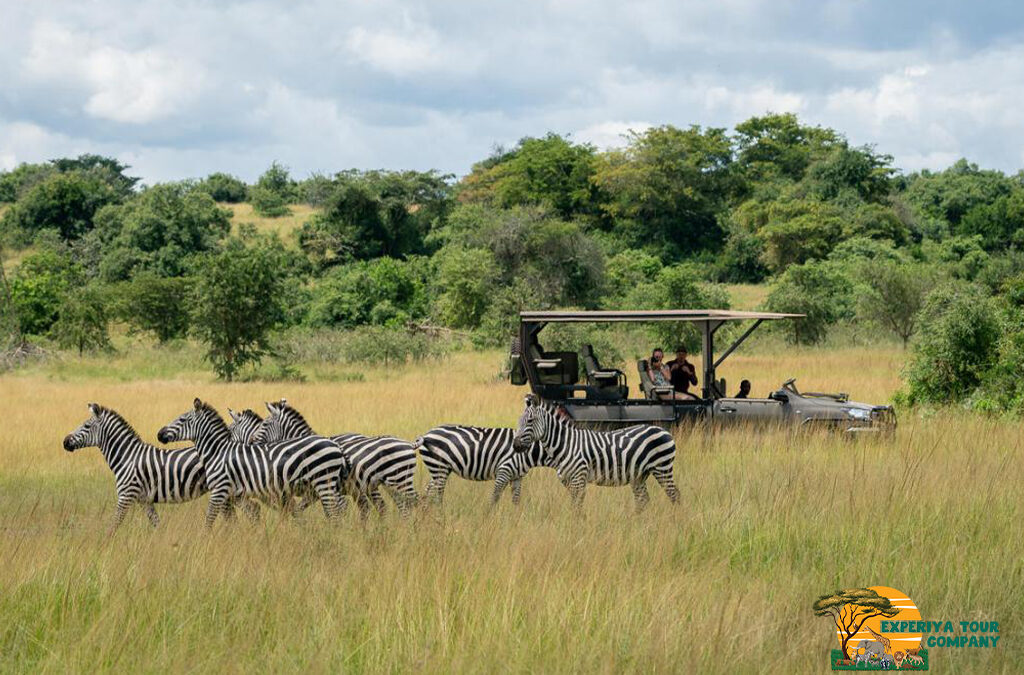
Exploring the Top Visited National Parks in Rwanda
Rwanda is home to four remarkable national parks, each offering a unique wilderness experience that draws travelers from around the world. Three of these parks boast incredible primate populations, making them ideal for wildlife enthusiasts eager to observe these fascinating creatures in their natural habitats. The fourth park, a stunning savanna ecosystem, delivers classic Big Five game viewing and is a must-visit on any Rwanda safari.
The four national parks in Rwanda include Akagera National Park, Nyungwe Forest National Park, Volcanoes National Park, and Gishwati-Mukura National Park. Among them, Akagera, Nyungwe, and Volcanoes National Park stand out as the most visited, thanks to their diverse ecosystems, breathtaking landscapes, and extraordinary wildlife encounters.
Akagera National Park
Akagera National Park is Rwanda’s largest protected area and the country’s only savanna park. Situated in eastern Rwanda, it covers 1,122 square kilometers and was gazetted in 1934. The park’s landscapes range from rolling savannas and woodlands to montane forests and extensive wetlands, creating a rich and varied ecosystem.
Akagera is famous for offering some of the best Big Five experiences in East Africa. Visitors can encounter elephants, buffaloes, lions, rhinos, and leopards during guided game drives along well-maintained tracks. The park also features exceptional boat safaris on Lake Ihema, where travelers can see hippos, crocodiles, and numerous waterbirds up close.
Beyond the Big Five, Akagera hosts an impressive variety of wildlife. Expect to spot zebras, giraffes, warthogs, impalas, bushbucks, hyenas, and a wide range of antelopes including roan antelopes, topis, klipspringers, oribis, Cape elands, waterbucks, and duikers.
Bird lovers find Akagera especially rewarding, with over 500 bird species recorded. Notable sightings include the Shoebill, Grey-crowned Cranes, Saddle-billed Storks, Papyrus Gonolek, Carruthers’ Cisticola, White-collared Oliveback, Northern Brown-throated Weaver, and many more.
Nyungwe Forest National Park
Nyungwe Forest National Park lies in the far southwestern region of Rwanda and stands out as a premier destination for primate tracking. Established in 2004, the park spans about 970 square kilometers and shelters 13 primate species, including an estimated 500 chimpanzees.
Visitors can encounter several remarkable primates such as L’Hoest’s monkeys, blue monkeys, red-tailed monkeys, golden monkeys, Hamlyn’s monkeys, owl-faced monkeys, gray-cheeked mangabeys, eastern needle-clawed galagos, vervet monkeys, bush babies, and olive baboons.
Nyungwe is also a paradise for birdwatchers. It protects over 322 bird species, including 29 Albertine Rift endemics. Species you may spot include the Great Blue Turaco, Red-breasted Sparrow Hawk, White-headed Wood-hoopoe, Rockefeller’s Sunbird, Rwenzori Turaco, Paradise Flycatcher, and Red-faced Woodland Warbler.
Beyond primates and birds, the park features more than 120 butterfly species, 32 amphibians, and 38 reptiles. Its popularity continues to grow thanks to activities such as chimpanzee trekking, the iconic canopy walkway, scenic hiking trails, birdwatching, and the multi-day Congo Nile Divide Trail.
Volcanoes National Park
Located in the Virunga Massif of northwestern Rwanda, Volcanoes National Park is one of Africa’s oldest conservation areas. Established in 1925 alongside Congo’s Virunga National Park, it was created to protect the endangered mountain gorillas that inhabit the mist-shrouded volcanic slopes.
Covering 160 square kilometers, the park is renowned for unforgettable mountain gorilla trekking and golden monkey tracking. It also contains five of the eight Virunga volcanoes Sabyinyo, Bisoke, Karisimbi, Muhabura, and Gahinga.
While primates take center stage, the park also shelters bushbucks, forest elephants, buffaloes, bush pigs, giant forest hogs, duikers, and spotted hyenas.
For birdwatchers, Volcanoes National Park is equally impressive, with over 200 bird species, including 29 Albertine Rift endemics. Expected sightings may include the Rwenzori Batis, Collared Apalis, Doherty’s Bush-shrike, Lovely Francolin, Dusky Crimsonwing, Rwenzori Double-collared Sunbird, Brown-necked Parrot, African Long-eared Owl, and Red-faced Woodland Warbler.
Its wide range of attractions from gorilla and golden monkey tracking to volcano hiking, birding, and visiting Dian Fossey’s tomb makes it one of Rwanda’s most iconic destinations.
Gishwati-Mukura National Park
Gishwati-Mukura National Park, located in western Rwanda, is the country’s newest park and was officially established in 2015 by merging the Gishwati and Mukura forest reserves. This restored rainforest is increasingly becoming a favorite among nature lovers.
The park hosts several primate species, including chimpanzees, golden monkeys, blue monkeys, L’Hoest’s monkeys, baboons, and black-and-white colobus monkeys.
Its birdlife is equally diverse, featuring species such as the Grey-crowned Crane, Martial Eagle, Mountain Yellow Warbler, Purple-breasted Sunbird, Regal Sunbird, Ruwenzori Batis, Ruwenzori Turaco, Strange Weaver, Stripe-breasted Tit, Dusky Crimsonwing, and Wood-hoopoes.
Gishwati-Mukura offers a quieter, more intimate forest experience, perfect for travelers seeking serenity and eco-focused adventures.
Best Time to Visit Rwanda
The best time to visit Rwanda is during the dry seasons, from June to September and December to February. These months offer ideal conditions for mountain gorilla trekking, chimpanzee tracking, golden monkey trekking, volcano hiking, birdwatching, game drives, and boat cruises.
While Rwanda is a year-round destination, visiting during the dry months ensures clearer trails, easier hiking, and better wildlife viewing.
What to Pack for a Rwanda Safari
When preparing for a safari in Rwanda, make sure to carry essential items that guarantee comfort and safety. These include:
- Waterproof hiking boots
- Valid passport and visa
- Yellow fever vaccination certificate
- Chimpanzee or gorilla trekking permit (if applicable)
- Light sweater or warm clothing for cold mornings
- Insect repellent
- Gardening gloves for gorilla or chimp trekking
- First-aid kit
- Refillable water bottle
- Binoculars and a good camera
- Rain jacket or poncho
