
The Ideal Time to See Lions in Uganda
January 8, 2026
Kigali City Tours and Local Cuisine Experiences
January 8, 2026
Birding in East Africa ranks among the most rewarding wildlife experiences anywhere in the world. Thanks to its remarkable landscapes, dramatic altitude changes, and diverse climates, the region supports more than 1,400 bird species. From tropical rainforests and open savannahs to wetlands and alpine zones, East Africa offers endless opportunities for discovery. Many species are endemic, migratory, or globally threatened, making every birding encounter both exciting and meaningful.
With expert planning and knowledgeable guiding, birding safaris in East Africa deliver accurate identification, relaxed pacing, and access to prime habitats ideal for both beginners and seasoned birders.
Why Birding in East Africa Is Truly World-Class
Birding in East Africa stands out because the region sits at the crossroads of several major ecological zones. The Afrotropical region dominates, while seasonal Palearctic migrants arrive in large numbers, enriching overall diversity. In addition, countries such as Uganda, Kenya, Tanzania, and Rwanda host outstanding birding hotspots within relatively short travel distances.
Importantly, birding remains productive throughout the year. Seasonal changes enhance sightings rather than restrict them, allowing travelers to enjoy vibrant breeding displays, migratory arrivals, and concentrated dry-season viewing.
Habitat Diversity: The Heart of East African Birding
One of the greatest strengths of birding in East Africa lies in its exceptional habitat diversity. Each ecosystem supports its own unique bird communities:
- Lowland rainforests shelter elusive forest specialists and colorful understory species.
- Open savannahs host raptors, bustards, and ground-dwelling birds.
- Wetlands and swamps attract storks, herons, cranes, and papyrus specialists.
- Montane and alpine forests protect rare Albertine Rift endemics.
As a result, birders often record impressive species lists within a single trip. This variety appeals equally to casual nature lovers and dedicated listers.
Top Countries for Birding in East Africa
Birding in East Africa spans several countries, each offering distinct ecosystems and signature species. While birds move freely across borders, well-managed national parks and reserves provide reliable and rewarding birding environments.
Uganda: Africa’s Birding Capital
Uganda consistently ranks among Africa’s top birding destinations, with more than 1,080 recorded species. Its central location and varied habitats create exceptional diversity. Key birding areas include Bwindi Impenetrable Forest, Mabamba Swamp, Queen Elizabeth National Park, and Kibale Forest.
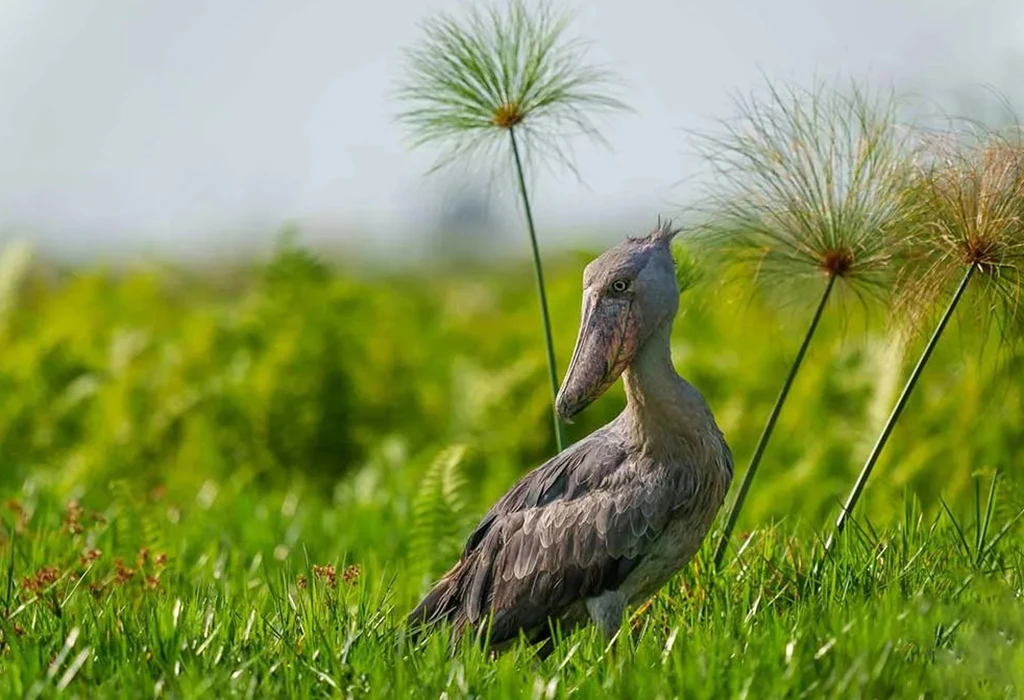
Uganda is famous for iconic species such as the Shoebill, Green-breasted Pitta, and African Green Broadbill. Forest walks, boat excursions, and savannah drives combine seamlessly, ensuring rich and balanced birding experiences.
Kenya: Classic Landscapes and Rich Birdlife
In Kenya, birding pairs dramatic scenery with outstanding species diversity. The Great Rift Valley lakes attract flamingos, pelicans, and migratory waterbirds, while Arabuko-Sokoke Forest shelters rare coastal endemics. Meanwhile, savannah parks support vultures, eagles, secretary birds, and bustards.
Strong guiding traditions and well-established reserves further enhance the birding experience, making Kenya ideal for both focused birding trips and combined wildlife safaris.
Tanzania: Vast Ecosystems and Endemics
Tanzania’s sheer size and ecological variety make it a powerhouse for birding in East Africa. The Serengeti ecosystem supports grassland birds and birds of prey, while the Eastern Arc Mountains protect ancient forests rich in endemics.
Wetlands near Lake Victoria and the Rufiji River attract large waterbird populations. During the northern winter, Palearctic migrants arrive in significant numbers, boosting overall species counts.
Rwanda: Compact Yet Exceptional
Although small, Rwanda delivers remarkable birding results. Nyungwe Forest National Park shelters many Albertine Rift endemics, including the Rwenzori Turaco and Red-collared Babbler. In contrast, Akagera National Park adds savannah and wetland species, including papyrus specialists.
Efficient infrastructure and short travel times allow birders to cover diverse habitats with ease, often combining birding with primate encounters.
Seasonal Advantages for Birding in East Africa
Birding in East Africa remains excellent year-round, though seasons influence bird behavior and visibility. During the wet seasons, breeding activity increases, and birds become more vocal an advantage for identification. From October to April, migratory species arrive, significantly increasing diversity.
Conversely, dry seasons improve road access and concentrate birds around water sources, making sightings more predictable. Choosing the right season depends on personal goals, whether photography, species listing, or relaxed observation.
The Value of Expert Bird Guides
Successful birding in East Africa relies heavily on skilled and experienced guides. Professional bird guides recognize calls, flight patterns, and subtle field marks that are easy to miss. They also understand habitat preferences and daily movement patterns.
Equally important, good guides practice patience, encourage ethical birding, and communicate clearly. This approach enhances sightings while respecting wildlife and habitats.
Birding as a Force for Conservation
Birding in East Africa plays a vital role in conservation and community development. Birding tourism generates revenue for protected areas, supports local employment, and encourages the preservation of wetlands and forests.
Responsible birding also raises awareness of threatened species and fragile ecosystems. When travelers observe birds respectfully, they contribute directly to long-term conservation success.
Meaningful Experiences Beyond Species Lists
Ultimately, birding in East Africa offers far more than long checklists. It promotes slow travel, careful observation, and a deep connection to nature. Each sighting tells a story of migration, adaptation, and survival.
With thoughtful planning and immersive exploration, birding journeys in East Africa balance learning, comfort, and adventure making the region one of the world’s most fulfilling destinations for passionate bird lovers.