
Boat Safari Opportunities in East Africa
November 9, 2026
Best Things to Do on Vacation at Nyungwe Forest National Park
November 9, 2026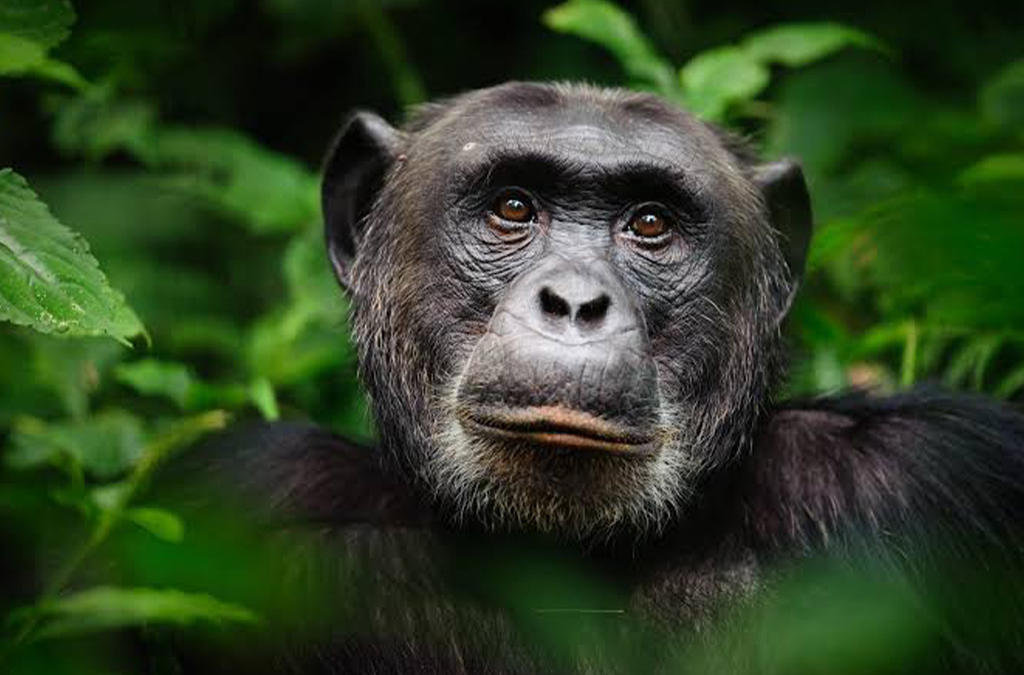
When exploring Africa’s tropical forests, few wildlife encounters are as fascinating as watching a wild chimpanzee move through the trees. With their expressive faces, playful movements and remarkable intelligence, chimpanzees often remind us of our own behaviour. They communicate with one another, care for their young, solve problems and form strong social relationships.
The Common Chimpanzee (Pan troglodytes) is one of our closest living relatives in the animal kingdom. Found across parts of equatorial Africa, this endangered great ape has attracted considerable attention from scientists, wildlife enthusiasts and conservationists. Its ability to use tools, recognise social relationships and learn from other members of its community makes it particularly interesting to study.
However, chimpanzees are much more than intelligent primates. They play an important role in maintaining healthy forest ecosystems, especially through seed dispersal. Unfortunately, habitat destruction, poaching, human-wildlife conflict and disease continue to threaten their survival.
Understanding these remarkable animals helps us appreciate why protecting their natural habitats matters. Below are five fascinating facts about the Common Chimpanzee that reveal its intelligence, social behaviour, natural habitat and importance to African wildlife conservation.
1. Common Chimpanzees Are Among Our Closest Living Relatives
One of the most fascinating facts about the Common Chimpanzee is its close genetic relationship with humans. Alongside bonobos, chimpanzees are our closest living biological relatives. Scientists estimate that the human and chimpanzee evolutionary lineages separated from a shared ancestral population approximately six to eight million years ago.
Genetic studies reveal that humans and chimpanzees share a remarkable amount of DNA. Depending on the method of comparison, commonly quoted figures are around 98.8% similarity in comparable DNA sequences. Nevertheless, this similarity does not mean that humans evolved directly from modern chimpanzees. Instead, both species developed independently from a common ancestor.
Chimpanzees belong to the genus Pan, which contains two living species:
- Common Chimpanzee (Pan troglodytes): Found across several countries in equatorial Africa, including Uganda, Rwanda, Tanzania and the Democratic Republic of Congo.
- Bonobo (Pan paniscus): Found naturally in the Democratic Republic of Congo, mainly in forests south of the Congo River.
Although these two species share many physical characteristics, their social structures and behaviours differ. Common chimpanzees generally live in male-dominated communities, where males establish alliances and compete for social influence. Bonobos, on the other hand, are known for their relatively female-centred social relationships.
Furthermore, chimpanzees share several characteristics with humans, including emotional expression, cooperation, curiosity and the ability to learn through observation. Their close evolutionary relationship makes them valuable subjects for understanding primate behaviour and human evolution.
2. Common Chimpanzees Live in Diverse African Habitats
The Common Chimpanzee naturally occurs across a wide geographical range in equatorial Africa. Although people often associate chimpanzees with dense tropical rainforests, these adaptable primates also inhabit woodland savannas, forest edges, swamp forests and gallery forests.
Their distribution stretches from West Africa, including Senegal and Guinea, through Central Africa and towards East African countries such as Uganda and Tanzania. However, chimpanzees do not occupy every suitable forest within this range. Their populations remain separated in different habitats, and some communities face increasing isolation because of human activities.
In Uganda, chimpanzees inhabit several important forest ecosystems, making the country an excellent destination for primate conservation and wildlife experiences.
Some notable places where visitors can encounter chimpanzees include:
- Kibale National Park: Often called the primate capital of the world, Kibale protects a large population of chimpanzees and offers guided chimpanzee tracking experiences.
- Budongo Forest: Located within the greater Murchison Falls conservation landscape, this forest supports chimpanzees alongside numerous other primates and bird species.
- Kyambura Gorge: Situated in Queen Elizabeth National Park, this dramatic forested gorge provides habitat for a community of chimpanzees living within a largely savannah-dominated landscape.
- Kalinzu Forest: Located in southwestern Uganda, Kalinzu offers another opportunity to explore chimpanzee habitats through guided forest walks and tracking activities.
Chimpanzees spend much of their time feeding, resting, socialising and travelling through their territories. Although they are excellent climbers, they also spend considerable time on the ground, particularly when moving between feeding areas.
Their diet consists mainly of fruits, leaves, seeds, flowers and other plant materials. However, chimpanzees are omnivorous and occasionally hunt smaller animals, including monkeys and other mammals.
Unfortunately, these natural habitats face increasing pressure from agricultural expansion, settlement, illegal logging and other human activities. Protecting forest corridors and maintaining suitable feeding and nesting areas are therefore essential for the long-term survival of chimpanzees.
3. Chimpanzees Are Remarkably Intelligent and Skilled Tool Users
Chimpanzee intelligence is one of the most impressive aspects of their behaviour. Unlike many other animals, chimpanzees do not simply rely on instinct when solving everyday challenges. They observe their surroundings, select useful objects and sometimes modify them to achieve particular goals.
Researchers have documented numerous examples of wild chimpanzees making and using tools. These discoveries demonstrate their ability to learn, adapt and pass useful knowledge between generations.
For example, chimpanzees use different natural materials to obtain food and solve practical problems.
Some fascinating examples include:
- Sticks: Chimpanzees select and prepare suitable sticks to extract termites and ants from their nests.
- Leaves: They sometimes fold or chew leaves into absorbent sponges to collect drinking water from tree holes.
- Stones: Certain communities use stones as hammers and anvils to crack hard-shelled nuts.
- Plant stems: They use specially selected stems to collect insects from narrow openings.
- Branches: They may use branches to investigate spaces or access otherwise difficult-to-reach food.
Interestingly, not every chimpanzee community uses tools in exactly the same way. Researchers have identified differences in tool selection and preparation between populations. These differences suggest that chimpanzees develop community-specific traditions by learning from one another.
In some African forests, chimpanzees even carry tools to locations where they expect to use them. Such behaviour demonstrates an ability to anticipate future needs rather than simply responding to whatever happens immediately.
Moreover, young chimpanzees learn many of these skills by watching their mothers and other experienced members of their communities. They gradually develop their own techniques through observation and practice.
This remarkable combination of intelligence, memory and learning makes the Common Chimpanzee one of the most interesting animals to observe in its natural environment.
4. Chimpanzees Have Complex Social Lives and Communication Skills
Chimpanzees are highly social animals that live in communities with complicated relationships and changing group dynamics. Unlike animals that remain together in one large group throughout the day, chimpanzees practise a social arrangement known as a fission-fusion system.
This means that members of a community frequently separate into smaller subgroups and later come together again. The size and composition of these subgroups depend on food availability, social relationships, mating opportunities and other environmental conditions.
A chimpanzee community may contain several dozen individuals, although community sizes vary considerably between habitats.
Within these communities, males often compete for dominance and establish alliances that influence their social positions. Females also maintain important relationships, particularly through maternal bonds, grooming and cooperation.
Communication plays an essential role in maintaining these relationships. Chimpanzees use different methods to express emotions, share information and respond to situations around them.
Their communication includes:
- Vocalisations: Pant-hoots, screams, barks and other calls help individuals communicate across the forest.
- Facial expressions: Different expressions can communicate excitement, fear, submission or aggression.
- Gestures: Chimpanzees use hand and body movements to request attention, initiate play or communicate their intentions.
- Grooming: Individuals strengthen social relationships by cleaning one another’s fur and removing parasites.
- Physical contact: Touching, embracing and holding hands can reinforce social bonds and provide reassurance.
One particularly interesting aspect of chimpanzee behaviour is their capacity for emotional attachment. Mothers maintain close relationships with their offspring, while other community members sometimes comfort distressed individuals.
Scientists have also studied chimpanzees’ ability to learn symbols and gestures in controlled research settings. The famous case of Washoe, a female chimpanzee involved in sign-language research, attracted considerable attention. She learned and used a number of signs, although scientists continue to debate how closely such abilities compare with human language.
These observations remind us that chimpanzees possess sophisticated social and communication skills, even though their communication systems differ fundamentally from human language.
5. Chimpanzees Have Unique Cultural Traditions and Emotional Behaviours
Perhaps one of the most surprising things about the Common Chimpanzee is that different communities develop their own behavioural traditions. These traditions can include particular feeding techniques, grooming habits, courtship behaviours and methods of using tools.
Scientists often describe these differences as chimpanzee culture because individuals learn certain behaviours from other members of their communities rather than developing them entirely through instinct.
For example, one chimpanzee community may regularly use stones to crack nuts, while another community living in a different forest may not practise the same technique. Similarly, communities can develop different ways of collecting insects or communicating during social interactions.
Learning from others allows useful behaviours to spread through a community and continue across generations.
Chimpanzees also demonstrate a wide range of emotional behaviours. Anyone who studies their social interactions quickly discovers that their relationships involve much more than competition for food or dominance.
They can display:
- Affection through grooming, embracing and close physical contact.
- Excitement during play and social gatherings.
- Protective behaviour towards infants and vulnerable individuals.
- Distress when separated from close companions.
- Aggression during territorial disputes and competition for dominance.
Mothers, in particular, invest considerable time and attention in raising their young. Infant chimpanzees depend on their mothers for protection, feeding, transportation and opportunities to learn essential survival skills.
Young chimpanzees gradually become more independent as they grow, although the bond between mothers and offspring can remain strong for many years.
Additionally, chimpanzees play a valuable ecological role. By feeding on fruits and dispersing seeds throughout the forest, they help regenerate vegetation and maintain plant diversity. Their survival therefore contributes to the health of the wider African forest ecosystem.