Are Chimpanzees Friendly to Humans?
September 28, 2026
Bird Watching in Mgahinga Gorilla National Park
September 28, 2026Adaptations of Chimpanzees in the Forest
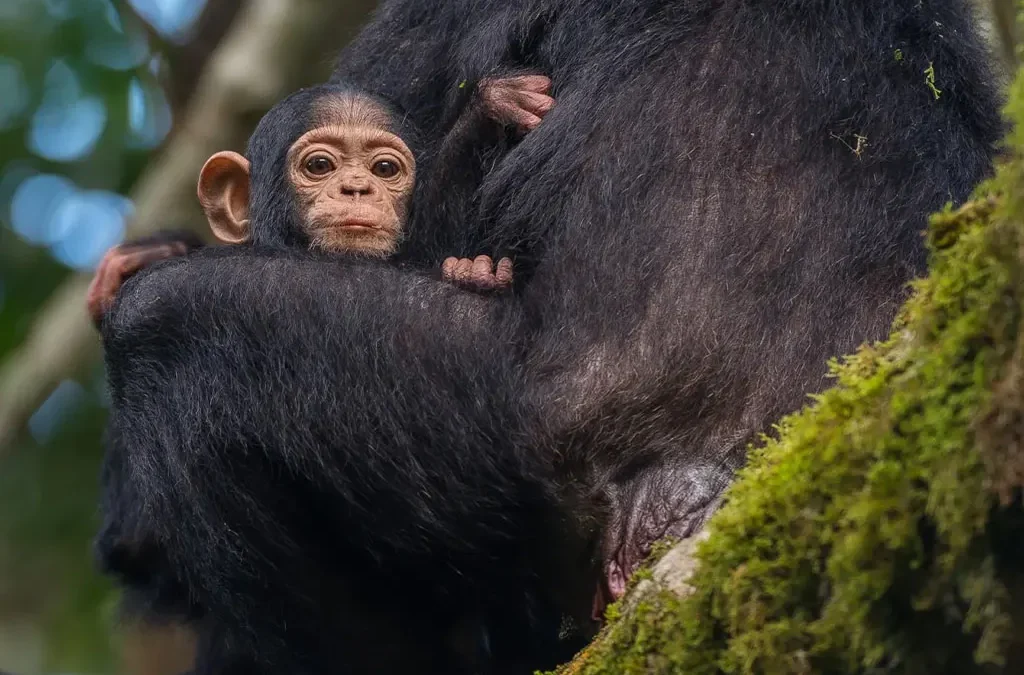
Chimpanzees are among the closest living relatives of humans, sharing roughly 98% of their DNA with us. They live mainly in the forests and woodland habitats of tropical Africa, where they must find food, avoid danger, communicate, and raise their young in constantly changing environments.
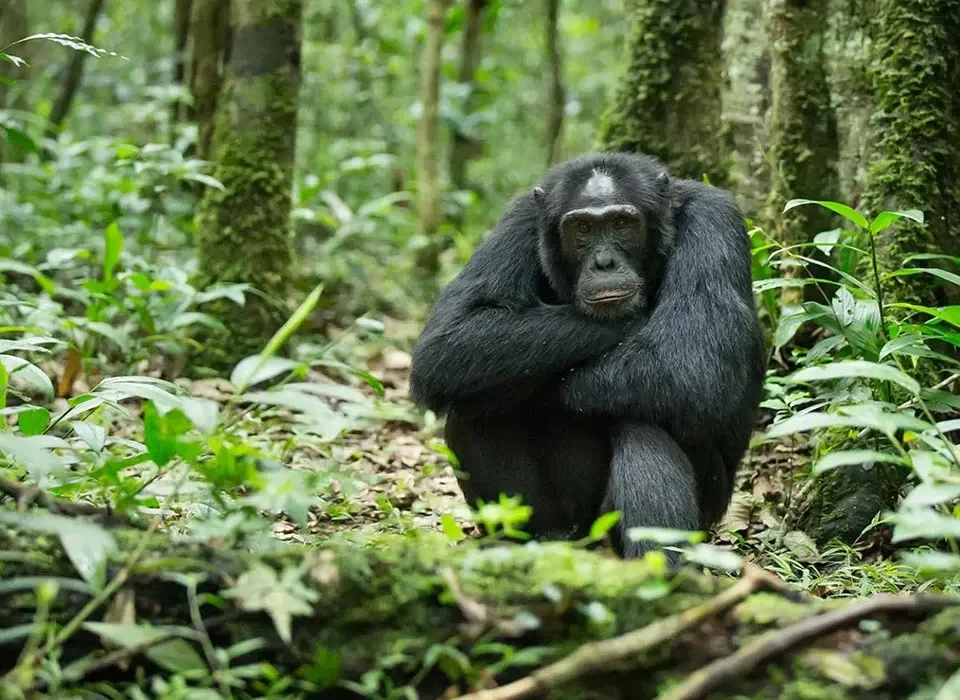
The adaptations of chimpanzees in the forest reveal just how effectively these intelligent primates respond to their surroundings. Their strong arms and hands help them move through trees, while their flexible diets allow them to cope with changing food availability. At the same time, their intelligence, social relationships, communication skills, and ability to use tools give them additional advantages.
For travelers interested in chimpanzee tracking, understanding these adaptations can make a forest encounter even more fascinating. Experiya Tour Company can help travelers explore destinations such as Kibale National Park while learning more about chimpanzee behavior and forest ecosystems.
What Are the Main Adaptations of Chimpanzees in the Forest?
Chimpanzees have developed a combination of physical, behavioral, cognitive, and sensory adaptations. Rather than relying on one particular characteristic, they use several adaptations together to survive.
Their lives are closely connected to the forest canopy, forest floor, seasonal food supplies, and social communities. Consequently, their bodies and behavior have developed in ways that help them exploit available resources while responding to threats.
The most important chimpanzee adaptations include:
-
Strong arms and flexible hands for climbing and feeding.
-
Excellent coordination for moving through branches.
-
Tool use for obtaining difficult-to-reach food.
-
Flexible feeding habits when resources change.
-
Complex communication and social behavior.
-
Strong learning and problem-solving abilities.
-
Good vision, hearing, smell, and spatial awareness.
-
Ability to modify behavior according to environmental conditions.
Physical Adaptations Help Chimpanzees Move Through the Forest
One of the most obvious chimpanzee adaptations for forest life is their body structure. Chimpanzees spend considerable time both in trees and on the ground, so they need strength, balance, and coordination.
Long Arms and Strong Hands
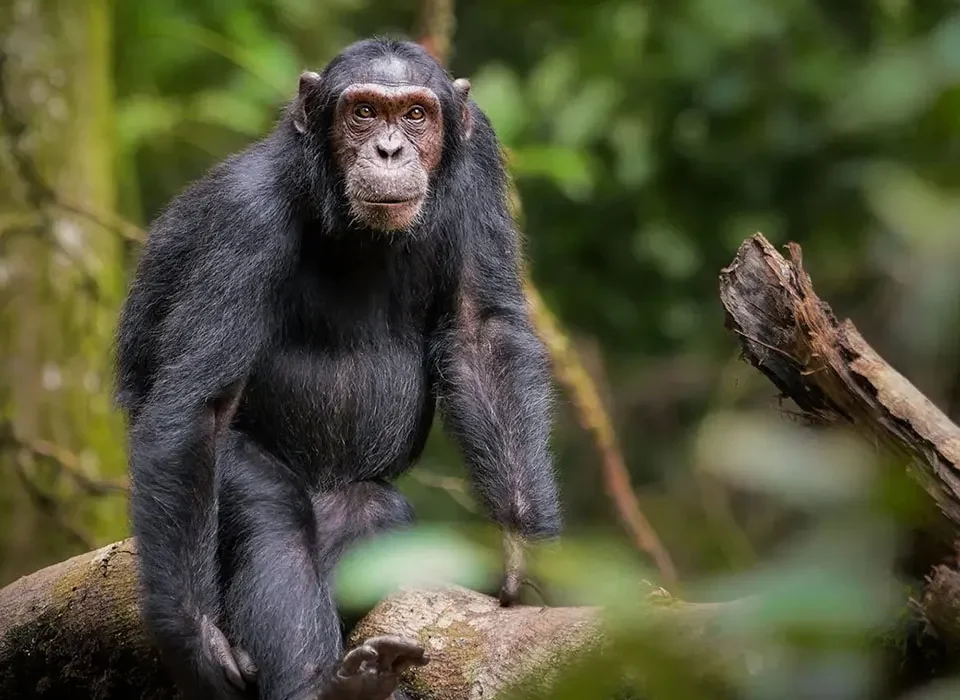
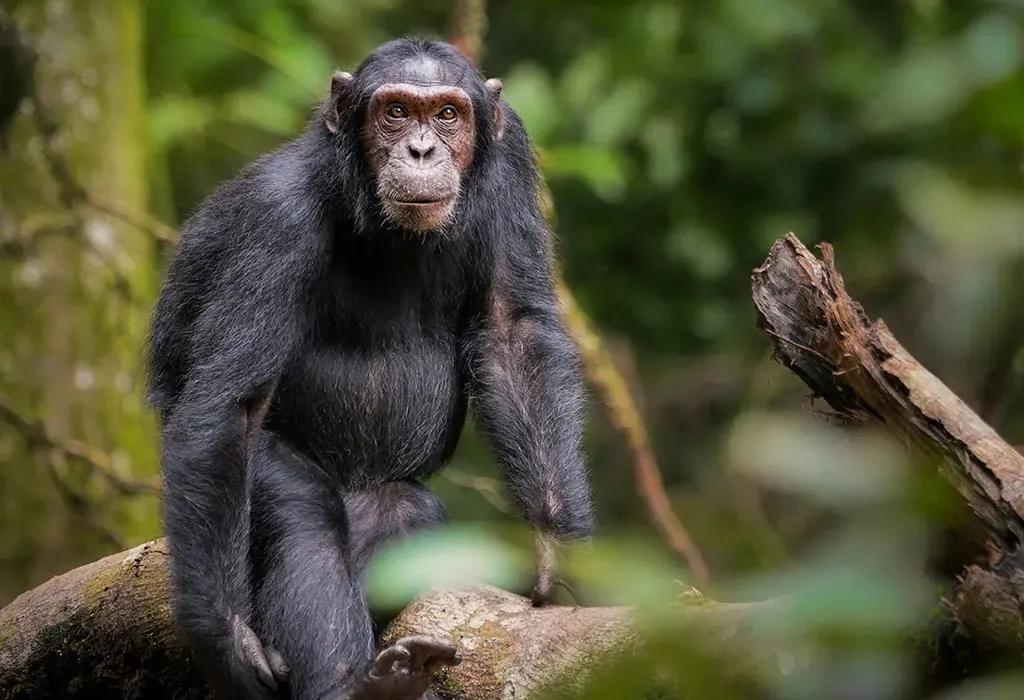
Chimpanzees have long arms that help them climb, reach branches, and move through the forest canopy. Their hands are highly capable of grasping branches and manipulating food and objects.
Their fingers and thumbs also provide considerable dexterity. As a result, chimpanzees can pick fruits, open certain foods, handle objects, and use natural materials as tools.
Although chimpanzees can move on the ground using all four limbs, their anatomy also supports climbing and other forms of arboreal movement. This versatility allows them to exploit resources at different levels of the forest.
Powerful Upper Bodies
Chimpanzees have considerable upper-body strength. This strength helps them climb trees, pull themselves onto branches, travel through vegetation, and defend themselves when necessary.
Moreover, their physical strength works together with their coordination. A chimpanzee does not simply need power to survive in the forest; it also needs precise movements to reach food and move safely among branches.
Tool Use Is a Major Chimpanzee Adaptation
Perhaps one of the most fascinating adaptations of chimpanzees in the forest is their ability to use tools.
Chimpanzees have been observed using sticks to extract termites and other insects. In some populations, they also use stones to crack hard foods such as nuts. Other examples include using leaves or plant materials in particular feeding and drinking behaviors.
Importantly, tool use is not completely identical across all chimpanzee communities. Researchers have documented differences in tool-use traditions between populations. This suggests that chimpanzees can learn behaviors socially and pass useful knowledge from one generation to another.
Therefore, tool use provides more than a way of obtaining food. It demonstrates learning, memory, innovation, and behavioral flexibility.
Chimpanzees Adapt Through Flexible Feeding Habits
Food availability changes throughout the year. Fruits may become abundant during one season and less available during another. Chimpanzees therefore need a flexible approach to feeding.
Their diet can include fruits, leaves, seeds, flowers, insects, honey, and other foods. They may also eat meat on occasion, including small vertebrates and prey obtained during hunting.
This dietary flexibility gives chimpanzees more options when preferred foods become scarce. Instead of depending entirely on one food source, they can adjust their feeding behavior according to what the forest provides.
Furthermore, their hands and intelligence help them process foods that would otherwise be difficult to access.
Social Behavior Helps Chimpanzees Survive
Chimpanzees are highly social animals. They typically live in communities with complex relationships between individuals, and these relationships play an important role in their daily lives.
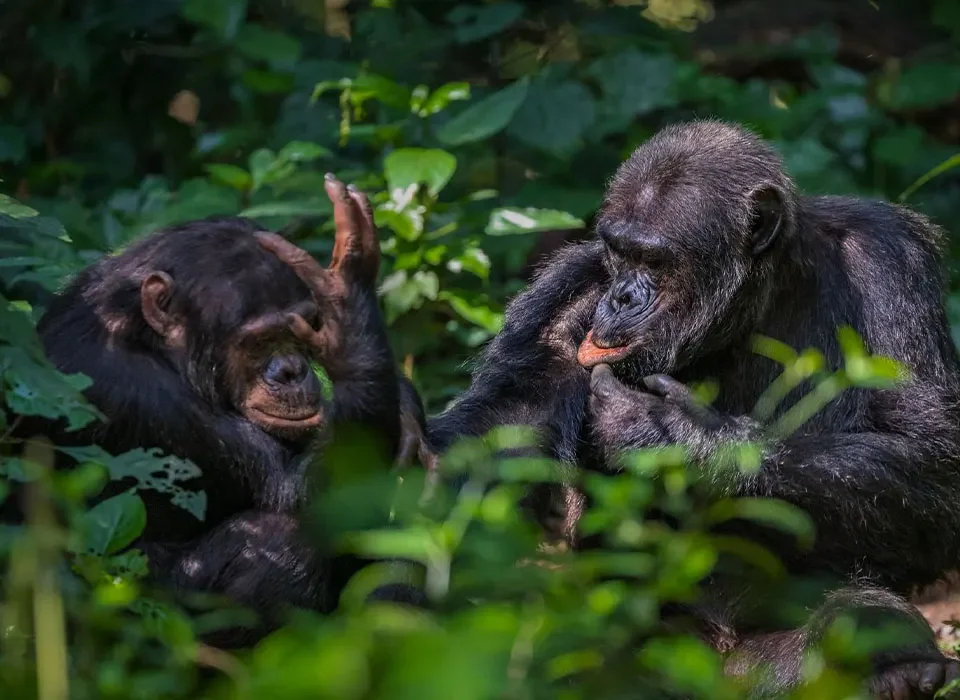
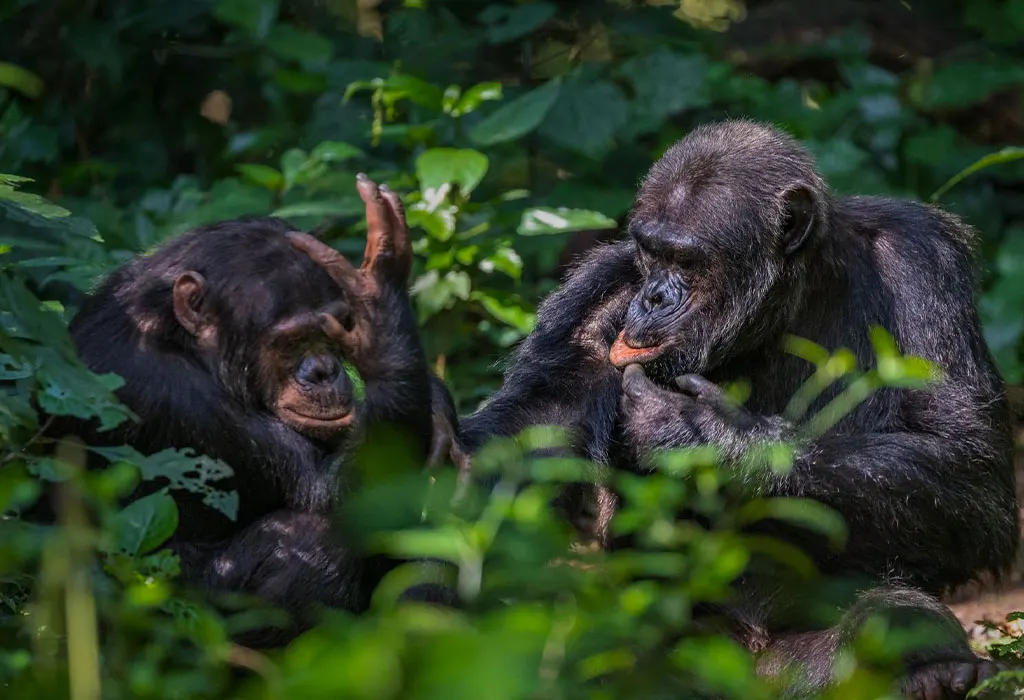
Chimpanzees form alliances, cooperate in different situations, groom one another, communicate, and care for young members of the community. These social relationships can help individuals navigate competition and maintain relationships within the group.
Grooming, for example, is not simply a way of maintaining the body. It also helps establish and strengthen social bonds.
Additionally, living within a community provides opportunities for young chimpanzees to observe older individuals and learn important behaviors. This social learning contributes to the development of feeding techniques, communication, and tool use.
Communication Is Essential in the Forest
Dense forests can make it difficult for chimpanzees to maintain visual contact with every member of their community. Consequently, communication plays an important role.
Chimpanzees use vocalizations, facial expressions, gestures, body movements, and physical contact to communicate. Different sounds can convey information about food, danger, social interactions, and the location or activities of other individuals.
Their communication becomes particularly useful when vegetation blocks visibility. A vocal signal can travel through the forest even when chimpanzees cannot see one another clearly.
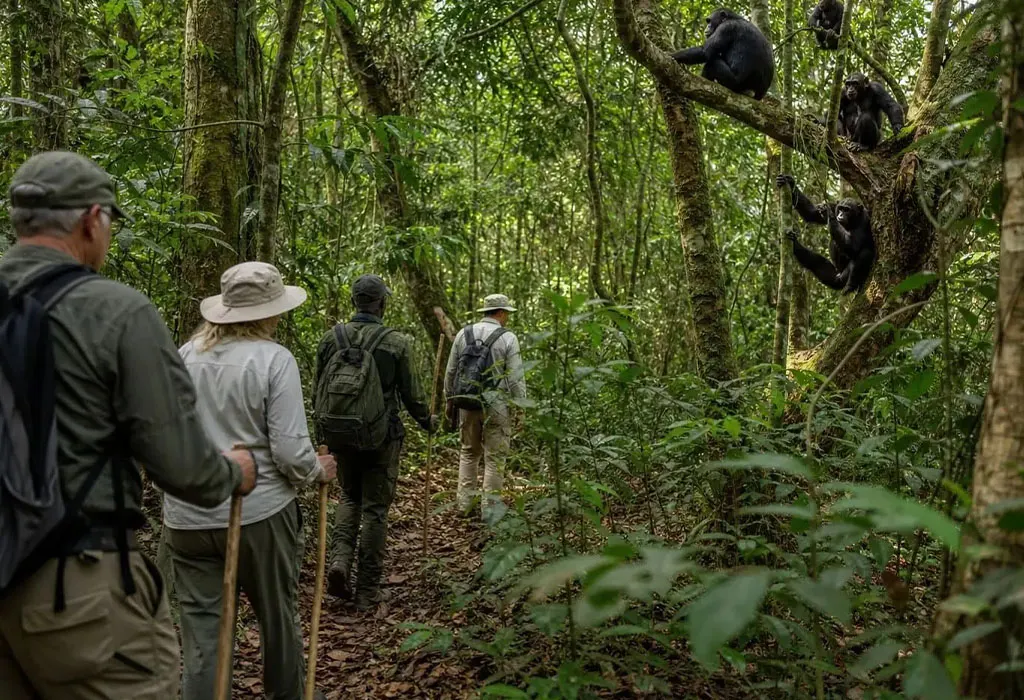
For anyone interested in chimpanzee behavior in Uganda, observing these interactions during a guided trek can provide valuable insight into how the animals function as a community.
Intelligence and Learning Improve Forest Survival
Chimpanzees possess advanced cognitive abilities that help them respond to problems in their environment.
For example, a chimpanzee may need to work out how to reach food, manipulate an object, remember the location of resources, or respond to changing social circumstances. Learning from previous experiences allows it to make better decisions in similar situations.
Young chimpanzees also spend considerable time observing adults. Through observation and practice, they gradually develop skills needed for feeding, movement, social interaction, and tool use.
This ability to learn is particularly valuable because forest environments are not static. Food availability, weather, competition, and other conditions can change.
Sensory Adaptations Help Chimpanzees Find Food and Detect Danger
Chimpanzees depend on several senses while moving through their habitat.
Vision
Good vision helps chimpanzees identify fruits, navigate branches, recognize other individuals, and monitor their surroundings. Their ability to judge distances and coordinate movements is especially important when traveling through trees.
Hearing
Hearing also plays an important role. Chimpanzees can detect vocalizations from other members of their community and respond to sounds coming from their surroundings.
In dense vegetation, sound can provide useful information when visibility is limited.
Smell and Taste
Chimpanzees also use smell and taste when assessing foods and their surroundings. These senses complement their vision and help them identify and evaluate potential food sources.
Together, these sensory abilities support feeding, communication, navigation, and awareness of possible threats.
How Do Chimpanzees Adapt to Changes in Their Environment?
Chimpanzees can modify aspects of their behavior when environmental conditions change. For instance, when preferred fruit becomes less available, they may increase their use of other food sources.
They can also adjust their movements and feeding patterns according to resource availability. Their intelligence and social learning further increase their ability to respond to new circumstances.
However, there are limits to this adaptability.
Human activities can transform forests much faster and more extensively than chimpanzees can naturally adjust. Consequently, habitat fragmentation, hunting, disease, and other pressures remain major conservation concerns.
How Does Climate Change Affect Chimpanzees?
Climate change can influence chimpanzee habitats by altering rainfall patterns, temperatures, vegetation, and the timing and availability of food.
At the same time, forest loss caused by agriculture, logging, infrastructure development, and other human activities can reduce suitable habitat and divide populations into smaller areas.
These pressures are particularly concerning because chimpanzees require healthy forest landscapes with sufficient food, shelter, and space.
Protecting forests therefore remains an essential part of chimpanzee conservation.
Why Is Chimpanzee Habitat Conservation Important?
Chimpanzees contribute to forest ecosystems in several ways. As they move through forests and consume fruits, they can help disperse seeds, contributing to forest regeneration.
Protecting their habitat also benefits numerous other species that depend on the same forests.
Conservation therefore involves more than protecting individual chimpanzees. It also means maintaining connected forests, reducing illegal hunting, supporting local communities, and promoting responsible tourism.
In Uganda, destinations such as Kibale National Park provide important opportunities for visitors to observe chimpanzees while supporting conservation and tourism-related livelihoods. Experiya Tour Company can assist travelers planning chimpanzee trekking experiences in Uganda.
Chimpanzee Adaptations and Responsible Tourism
Chimpanzee trekking provides an opportunity to observe these animals in their natural environment. However, responsible tourism is important because close contact between humans and wildlife can create risks if appropriate guidelines are ignored.
Visitors should follow instructions from guides, maintain the required distance from animals, avoid feeding wildlife, and never attempt to touch chimpanzees.
Responsible tourism can also contribute to conservation by generating revenue for protected areas and supporting communities around wildlife destinations.
Conclusion: How Chimpanzees Survive in the Forest
The adaptations of chimpanzees in the forest demonstrate the remarkable relationship between these primates and their environment. Their strong bodies help them climb and move through vegetation, while their hands allow them to manipulate food and use tools.
At the same time, flexible diets, sophisticated communication, social relationships, learning, and problem-solving skills help chimpanzees respond to the challenges of forest life.
Nevertheless, natural adaptability cannot completely protect chimpanzees from rapid habitat destruction and other human-driven pressures. Protecting forests and supporting responsible conservation practices remain essential for maintaining wild chimpanzee populations.
For travelers who want to learn more about these fascinating primates, chimpanzee trekking in Uganda offers an opportunity to observe their behavior and adaptations in a natural forest setting.
Frequently Asked Questions
What are the main adaptations of chimpanzees in the forest?
The main adaptations include strong arms, grasping hands, climbing ability, flexible feeding habits, tool use, complex social behavior, communication, learning, and strong problem-solving abilities.
How do chimpanzees use tools?
Chimpanzees use natural materials such as sticks and stones for different purposes, including obtaining food. Tool use varies between populations and can be learned socially.
What do chimpanzees eat?
Chimpanzees eat a varied diet that can include fruits, leaves, seeds, flowers, insects, honey, and occasionally meat.
Can chimpanzees adapt to environmental changes?
Chimpanzees can modify their feeding and movement patterns when conditions change. However, severe habitat loss and fragmentation can limit their ability to adapt.
Where can I see chimpanzees in Uganda?
Kibale National Park is one of Uganda’s well-known destinations for chimpanzee trekking. Other areas also support chimpanzee populations, depending on the specific tourism and conservation arrangements.
Are chimpanzees endangered?
Chimpanzees face significant conservation threats, including habitat loss, hunting, disease, and other human pressures. The International Union for Conservation of Nature (IUCN) classifies the common chimpanzee as Endangered.

Related posts