Can Older Travellers Go Gorilla Trekking in Uganda?
August 28, 2026
Food and Dining in Uganda for an Authentic Safari Experience
August 28, 2026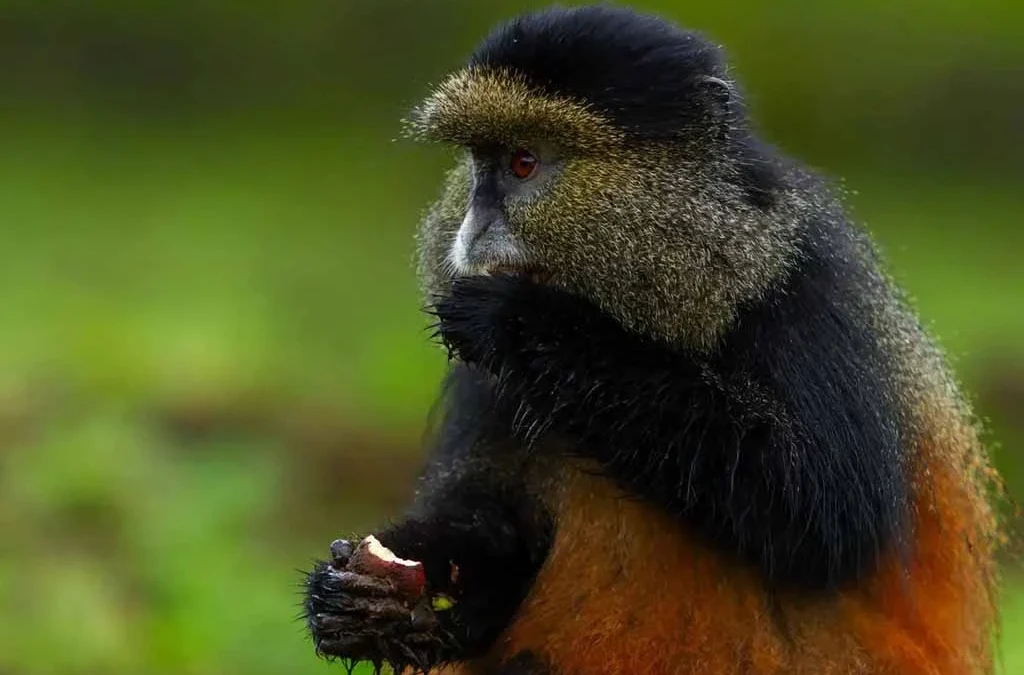
Rwanda is a small country with an extraordinary natural heritage. Known for its rolling green hills, volcanic mountains, lush forests, and welcoming communities, Rwanda has become one of Africa’s leading destinations for wildlife and nature tourism. Among its greatest attractions are the remarkable primates that live in its forests.
From the endangered mountain gorillas of Volcanoes National Park to chimpanzees moving through the ancient trees of Nyungwe, Rwanda gives travelers opportunities to observe some of Africa’s most fascinating animals in their natural habitats. Golden monkeys, colobus monkeys, blue monkeys, and other forest species add even more variety to the experience.
However, Rwanda’s primate tourism is about more than simply seeing animals. It connects travelers with conservation, forest ecosystems, local communities, and the importance of protecting wildlife for future generations.
What Are Primates?
Primates are a diverse group of mammals that includes humans, gorillas, chimpanzees, monkeys, and other closely related species. They are particularly interesting because of their intelligence, social behavior, communication skills, and physical characteristics.
Many primates have forward-facing eyes that help them judge distance, while their hands and feet are adapted for climbing and grasping branches. Their relatively large brains also allow them to learn, solve problems, recognize individuals, and interact within complex social groups.
Depending on the species, primates feed on fruits, leaves, seeds, flowers, insects, and other foods available in their environment. Forests provide them with food, shelter, and safe places to raise their young.
Rwanda is especially important for primate conservation because several species survive within its protected forests. Consequently, visiting these areas provides an opportunity to support conservation while experiencing wildlife in a responsible way.
Volcanoes National Park: The Home of Mountain Gorillas
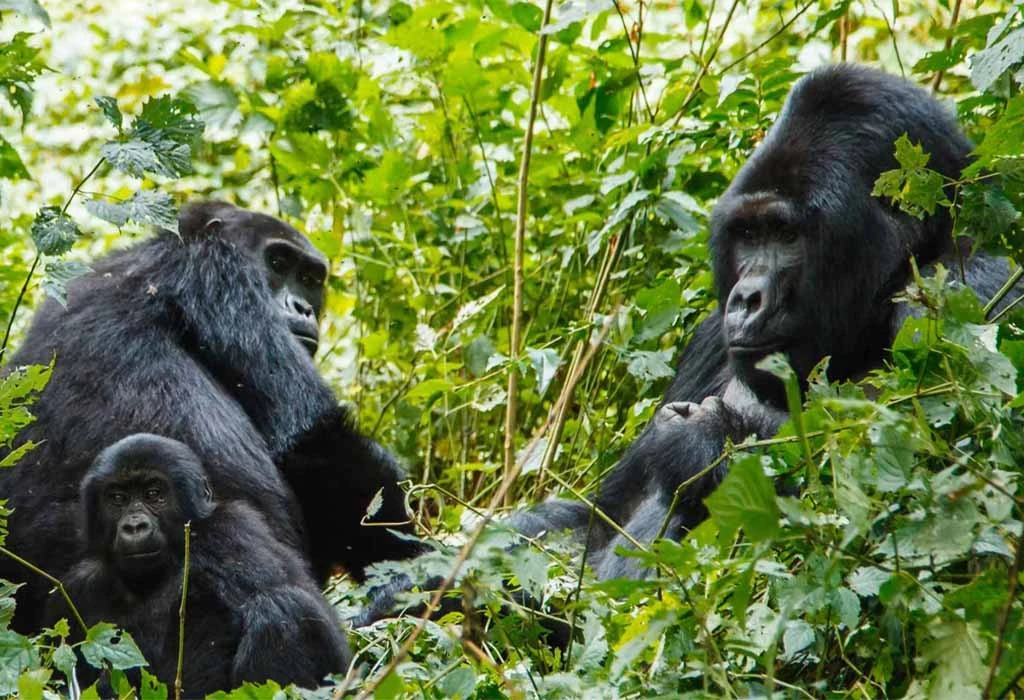
When people think about primates in Rwanda, mountain gorillas are usually the first animals that come to mind. Volcanoes National Park, in the northwestern part of the country, is one of the world’s most famous destinations for mountain gorilla trekking.
The park forms part of the larger Virunga ecosystem, which extends across Rwanda, Uganda, and the Democratic Republic of Congo. Its dramatic volcanic landscape, thick forests, and mist-covered slopes create a spectacular setting for wildlife encounters.
Gorilla trekking involves hiking through the forest with trained guides and trackers in search of a habituated gorilla family. The journey can take varying amounts of time depending on where the gorillas have moved that day. Although the hike can be physically demanding, the experience becomes incredibly rewarding when trekkers finally encounter the gorillas.
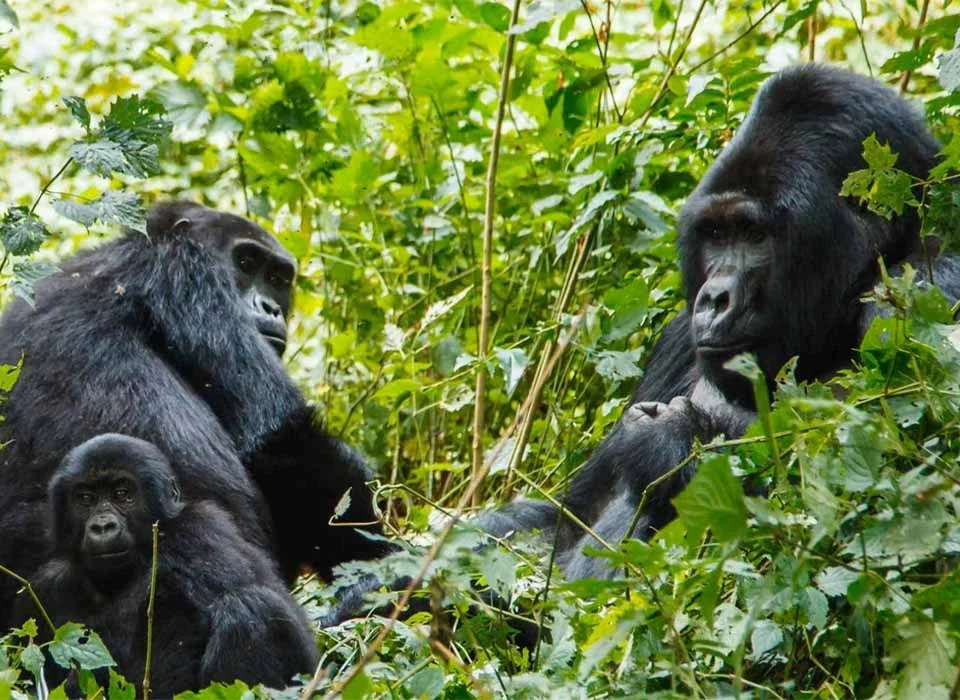
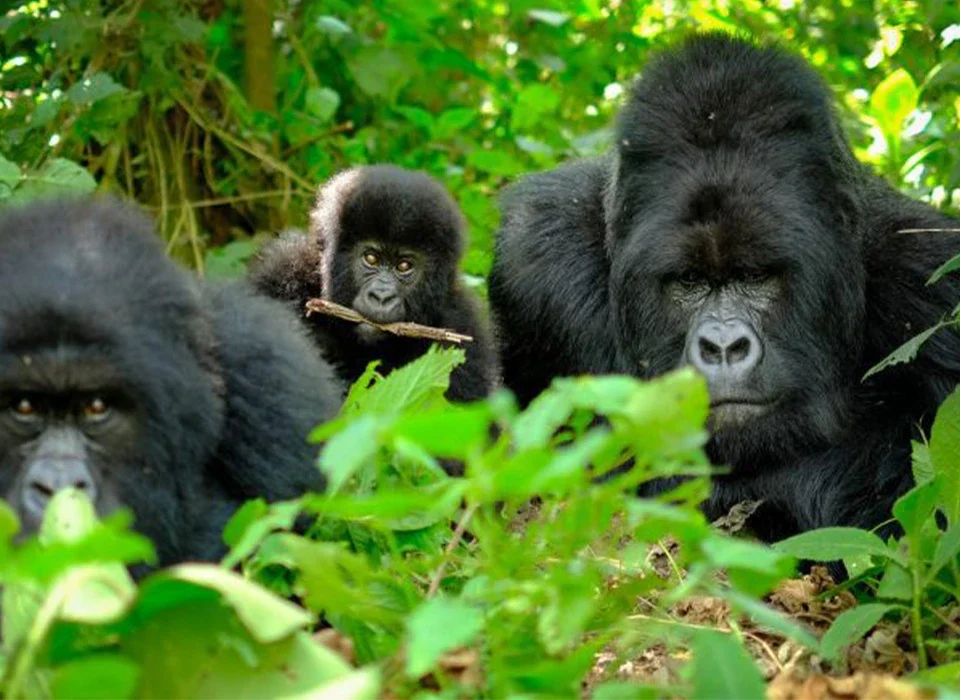
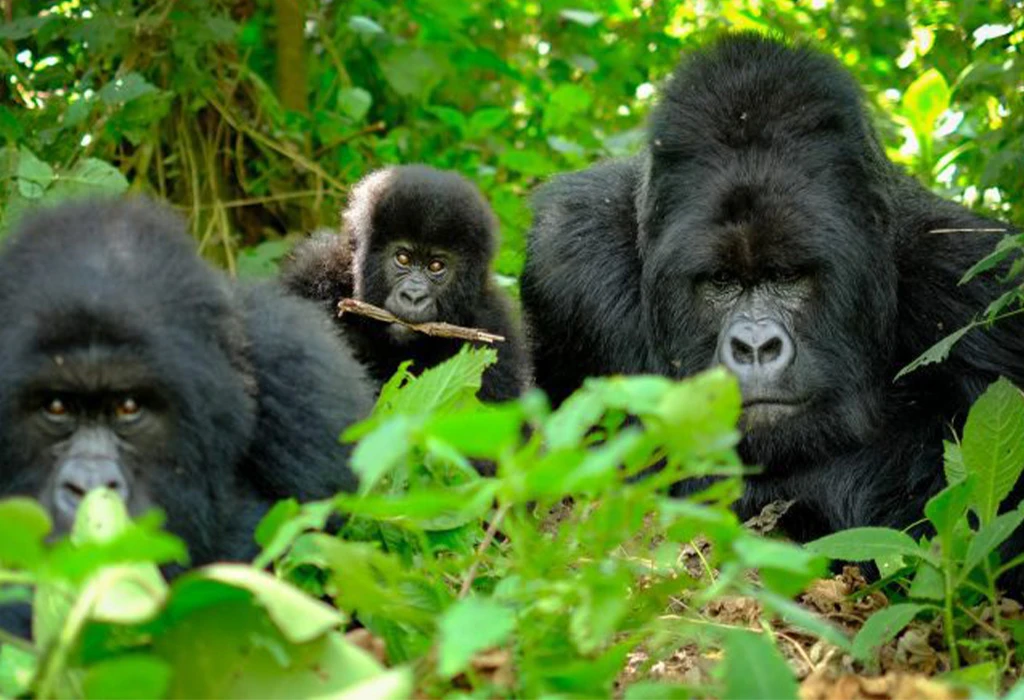
Watching a silverback protect his family, mothers caring for their infants, or young gorillas playing among the vegetation offers a fascinating glimpse into their social lives. Their expressions, gestures, and interactions can sometimes appear remarkably familiar to human observers.
Importantly, gorilla trekking also contributes to conservation. Tourism revenue helps support wildlife protection and provides economic opportunities for people living around protected areas. Therefore, every responsible trekking experience can contribute to the long-term survival of these endangered animals.
Golden Monkeys in Rwanda’s Bamboo Forests
Mountain gorillas are not the only primates that make Volcanoes National Park special. The park is also home to the endangered golden monkey, a colorful species found within the Virunga region.
Golden monkeys are particularly associated with bamboo forests, where they spend much of their time feeding, climbing, and moving through the vegetation. Their golden-orange coats make them relatively easy to identify, although following a fast-moving troop through dense vegetation can still be an exciting challenge.
Golden monkey trekking provides a different experience from gorilla trekking. The animals are often energetic and playful, and visitors may see them jumping between branches or moving quickly through the forest.
For travelers interested in experiencing more than one type of primate, adding golden monkey tracking to a Rwanda safari can make a trip even more rewarding.
Nyungwe National Park: A Primate Haven
After Volcanoes National Park, Nyungwe National Park is another essential destination for anyone interested in Rwanda’s primates. Located in southwestern Rwanda, Nyungwe protects one of the region’s most important remaining montane rainforests.
The forest is exceptionally rich in biodiversity and provides habitat for numerous primate species. Among the most sought-after experiences here is chimpanzee trekking.
Chimpanzees are among humanity’s closest living relatives. Their intelligence, communication, social relationships, and ability to use tools make them particularly fascinating to observe. Unlike gorillas, which often spend considerable time on the ground, chimpanzees can move rapidly through the forest canopy.
Chimpanzee tracking normally begins early in the morning. After receiving a briefing, visitors enter the forest with experienced guides and trackers. Once the chimpanzees are located, travelers can observe their behavior from a safe and respectful distance.
The experience can be unpredictable because chimpanzees do not always remain in one place. They may climb trees, call to one another, feed, or disappear deeper into the forest. This uncertainty is part of what makes chimpanzee trekking so exciting.
More Primates to Discover in Nyungwe
Nyungwe’s appeal extends well beyond chimpanzees. The forest shelters several other primate species, making it one of Rwanda’s most rewarding destinations for wildlife enthusiasts.
Among the species travelers may encounter are black-and-white colobus monkeys, blue monkeys, L’Hoest’s monkeys, and grey-cheeked mangabeys. Their different appearances, behaviors, and social structures make every forest walk a little different.
The black-and-white colobus is particularly impressive. Large troops can move through the treetops, creating spectacular scenes as the monkeys leap from branch to branch. In addition, the forest’s rich birdlife and diverse plant species make Nyungwe an excellent destination for nature lovers.
Beyond primate tracking, visitors can explore attractions such as the Nyungwe canopy walkway, which provides an elevated view over the forest. Waterfalls, hiking trails, and birdwatching opportunities further enhance the experience.
Gishwati-Mukura National Park and Forest Conservation
Rwanda’s primate story does not end with Volcanoes and Nyungwe. Gishwati-Mukura National Park in western Rwanda offers another important example of how conservation can restore damaged ecosystems.
The park protects the Gishwati and Mukura forests and provides habitat for several wildlife species, including chimpanzees and monkeys. Although it receives less attention from international visitors than Rwanda’s better-known parks, that is part of its appeal.
Travelers looking for quieter nature experiences may appreciate the opportunity to explore a developing conservation destination while learning about forest restoration.
Historically, parts of the forest experienced extensive pressure from agriculture, settlement, and deforestation. Conservation and restoration initiatives have since worked to improve forest cover and create better conditions for wildlife.
As the ecosystem continues to recover, Gishwati-Mukura demonstrates why protecting and restoring natural habitats remains essential for Rwanda’s biodiversity.
Why Rwanda’s Primates Matter
Primates play important roles within forest ecosystems. For example, many species consume fruits and later disperse seeds across the forest. In this way, they help support natural regeneration and maintain healthy forests.
Their importance also extends beyond ecology. Primate tourism generates revenue that can contribute to conservation and support communities surrounding protected areas. Guides, trackers, drivers, accommodation providers, craftspeople, and other local businesses can all benefit from tourism.
At the same time, primates face growing threats. Habitat loss, human-wildlife conflict, disease, illegal hunting, and climate-related changes can affect their survival.
For that reason, responsible tourism is extremely important. Visitors should follow instructions from guides, respect wildlife, avoid unnecessary noise, never feed animals, and maintain the required distance. They should also avoid leaving waste behind in protected areas.
By following these practices, travelers can enjoy remarkable encounters without placing additional pressure on the animals they came to see.
Plan Your Rwanda Primate Safari with Experiya Tour Company
Exploring Rwanda’s primates becomes easier when your safari is carefully planned. Experiya Tour Company can help travelers organize memorable Rwanda wildlife experiences, including gorilla trekking, chimpanzee tracking, golden monkey adventures, cultural encounters, accommodation, transportation, and customized safari itineraries.
Whether you are planning a luxury wildlife holiday, a carefully budgeted primate safari, or a combined Rwanda and Uganda adventure, a well-organized itinerary allows you to make the most of your time in East Africa.
Experiya Tour Company can also help travelers choose suitable destinations based on their interests, available time, budget, and preferred travel style.
From the volcanic landscapes of Volcanoes National Park to the ancient rainforest of Nyungwe and the recovering forests of Gishwati-Mukura, Rwanda offers remarkable opportunities to connect with nature.
Experience Rwanda’s Primate Wonders
Rwanda’s primates are among the country’s greatest natural treasures. Mountain gorillas offer one of Africa’s most powerful wildlife encounters, while chimpanzees provide an exciting look at the intelligence and social lives of our closest relatives. Golden monkeys and other forest species add even more diversity to the country’s remarkable wildlife experiences.
More importantly, primate tourism gives travelers an opportunity to become part of a larger conservation story. Every responsible visit can help generate income for conservation initiatives and communities while encouraging continued protection of Rwanda’s forests.
For anyone seeking wildlife, adventure, conservation, and meaningful travel experiences, Rwanda provides an exceptional destination. With Experiya Tour Company, travelers can discover these extraordinary primates while exploring the country’s beautiful landscapes and experiencing the unforgettable spirit of East Africa.