Facts About Akagera National Park: Rwanda’s Remarkable Conservation Success
March 31, 2026
Which parks allow night game drives in Uganda?
March 31, 2026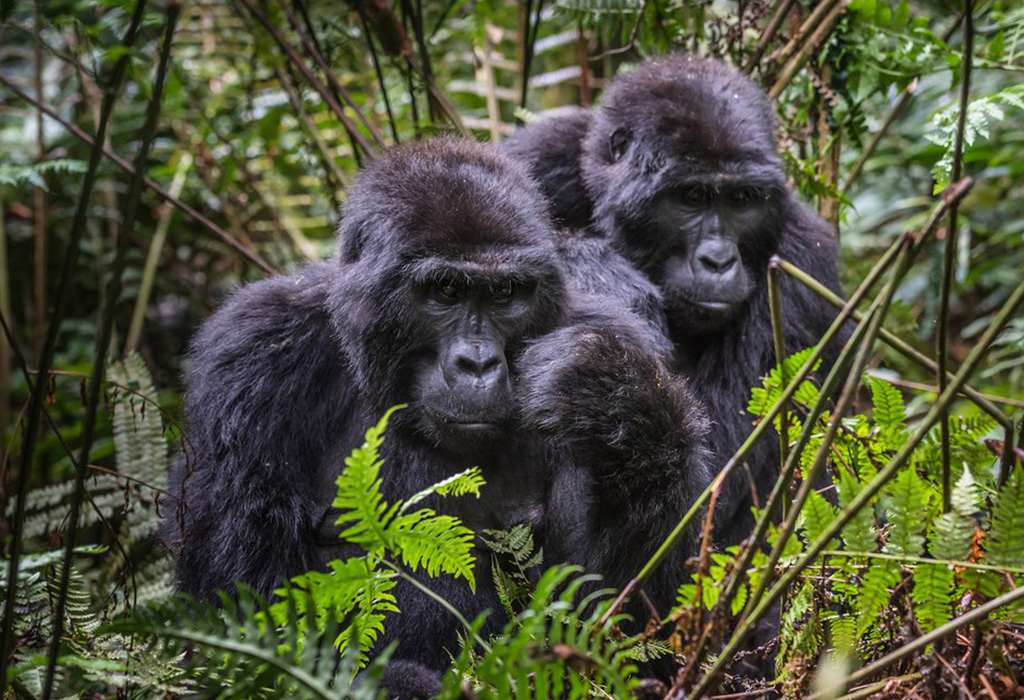
Gorilla watching tours in Uganda offer one of the most profound wildlife experiences on Earth the rare chance to observe critically endangered mountain gorillas in their natural rainforest home. Uganda protects more than half of the world’s remaining mountain gorilla population, which firmly places it among the top destinations for this once-in-a-lifetime adventure.
As you trek through dense, ancient forests, anticipation steadily builds. Eventually, you come face-to-face with a habituated gorilla family. In that quiet moment, time seems to slow. You watch them feed, play, groom, and interact in ways that feel strikingly human. Altogether, the experience is not just memorable it is deeply moving.
Moreover, with two exceptional national parks and a range of tour options suited to different budgets and fitness levels, Uganda makes this extraordinary journey both accessible and transformative.
Understanding Uganda’s Gorilla Watching Destinations
Uganda’s mountain gorillas live in two protected areas. While both offer incredible encounters, each delivers a distinct atmosphere and experience. Therefore, choosing the right destination depends on your travel style, expectations, and interests.
Bwindi Impenetrable National Park: The Gorilla Stronghold
Bwindi Impenetrable National Park stands as Uganda’s premier gorilla destination and one of Africa’s most biologically diverse ecosystems. This UNESCO World Heritage Site covers about 331 square kilometers of lush montane and lowland forest. True to its name, Bwindi’s thick vegetation, steep ridges, and deep valleys create an environment that feels both mysterious and untamed.
Despite its “impenetrable” reputation, well-maintained trails and skilled guides make trekking manageable for visitors with moderate fitness. As you move through the forest, every step reveals something new from towering trees to hidden wildlife.
A Remarkable Gorilla Population
What truly sets Bwindi apart is its extraordinary gorilla population. The park shelters nearly half of the world’s remaining mountain gorillas, with over 400 individuals recorded. Because of this, authorities have successfully habituated multiple gorilla families, allowing more visitors to experience these encounters while still protecting the animals and their habitat.
Bwindi’s Gorilla Trekking Sectors
Bwindi is divided into four trekking sectors, each offering a unique experience. Understanding these regions helps you choose what suits you best.
Buhoma Sector: The Classic Experience
Located in the north, Buhoma is the oldest and most developed sector. It offers well-established trails and a wide range of accommodation options. As a result, it is ideal for first-time visitors seeking convenience and accessibility.
Ruhija Sector: Quiet and Elevated
Positioned in the east, Ruhija sits at higher altitudes. Consequently, it offers cooler temperatures and fewer crowds. It is also a favorite for birdwatchers, thanks to its rare Albertine Rift species.
Nkuringo Sector: Scenic and Challenging
In the southwest, Nkuringo rewards effort with breathtaking scenery. The terrain is steeper and more demanding, yet the sweeping views of the Virunga volcanoes make every step worthwhile.
Rushaga Sector: Flexible and Popular
Also in the south, Rushaga has become increasingly popular. Not only does it offer the highest number of habituated gorilla families, but it also provides the best permit availability. In addition, it is the only sector where you can experience gorilla habituation.
Beyond Gorilla Trekking in Bwindi
Although gorilla trekking is the highlight, Bwindi offers much more. For instance, cultural visits introduce you to the Batwa people, who once lived in these forests as hunter-gatherers. Their stories add depth and context to your journey.
At the same time, guided nature walks reveal an astonishing variety of plant life, including over 1,000 flowering species. Bird lovers will also find Bwindi exceptional, with more than 350 species recorded, including several endemics.
Mgahinga Gorilla National Park: The Volcanic Alternative
In contrast, Mgahinga Gorilla National Park offers a completely different setting. Though much smaller just 33.7 square kilometers it sits within the dramatic Virunga mountain range. Here, bamboo forests rise into alpine zones, creating a striking volcanic landscape.
A Unique Primate Experience
Mgahinga is the only place in Uganda where you can see both mountain gorillas and golden monkeys. Therefore, it provides a rare opportunity to combine two primate experiences in one trip.
Additionally, adventurous travelers can hike Mount Sabinyo, where the borders of Uganda, Rwanda, and the Democratic Republic of Congo meet. Standing at this point, you can be in three countries at once an experience few places in the world can offer.
The Nyakagezi Gorilla Family
Mgahinga is home to one habituated gorilla group, the Nyakagezi family. This group is known for its stability and multiple silverbacks. However, since gorillas move freely across borders, the group occasionally crosses into neighboring countries. As a result, trekking here can sometimes require flexibility.
For this reason, Bwindi remains the more reliable option, while Mgahinga suits travelers looking for a quieter, more varied adventure.
Understanding Gorilla Permits
At the heart of every gorilla tour is the permit. Without it, trekking is not possible. Therefore, understanding permit options is essential.
Standard Gorilla Trekking Permit
As of 2025, a standard permit costs $800 per person. It allows you to join a small group up to eight people to track a habituated gorilla family. Once found, you spend one unforgettable hour observing them.
Importantly, this fee includes park entry, professional guides, trackers, and ranger protection. Compared to neighboring Rwanda, where permits cost $1,500, Uganda offers excellent value for a similar experience.
Gorilla Habituation Experience
For a deeper encounter, the gorilla habituation experience offers something truly special. Priced at $1,500 per person, it allows up to four hours with a semi-habituated gorilla family.
Unlike standard trekking, this experience places you alongside researchers as they help gorillas become accustomed to human presence. Consequently, you gain richer insights into their behavior, social dynamics, and personalities.
Because only four permits are issued daily, this experience feels far more exclusive and immersive.
Booking Your Gorilla Watching Tour
Planning ahead is essential. Gorilla permits are limited, and demand is high throughout the year.
When to Book
Ideally, you should book your permit three to six months in advance. However, if you plan to travel during peak seasons June to September or December to February you may need to secure permits even earlier.
During these dry months, trekking conditions are easier, which makes them the most popular times to visit. As a result, permits often sell out quickly.
On the other hand, the rainy seasons (March to May and October to November) offer fewer crowds and a more lush forest environment. Although trails can be muddy, the experience remains equally rewarding.
Final Thoughts: Why Uganda Stands Out
Ultimately, gorilla watching in Uganda is more than just a wildlife activity it is an emotional and transformative journey. The moment you lock eyes with a mountain gorilla, something shifts. You begin to understand not only their world, but also our shared connection to it.
Whether you choose Bwindi’s dense forests or Mgahinga’s volcanic landscapes, the experience will stay with you long after you leave.