Top 10 Reasons to Visit Murchison Falls National Park in 2026
March 4, 2026
The Best Spots in Uganda to See Zebras
March 4, 2026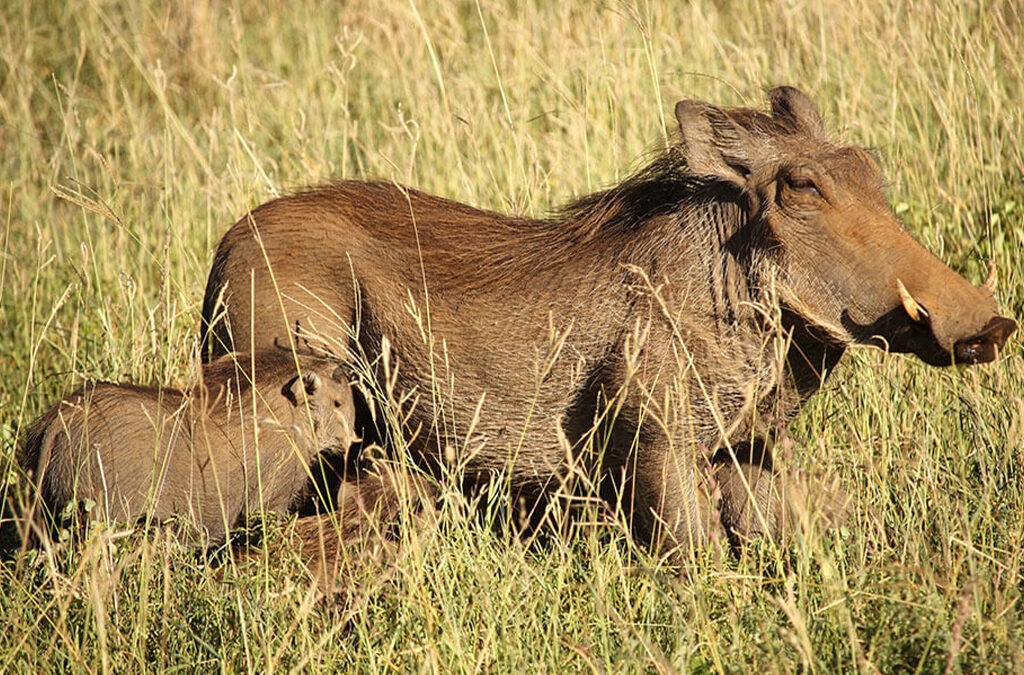
The common warthog is one of Africa’s most recognizable and surprisingly charismatic animals. Many people first met this rugged little pig through Pumbaa in The Lion King. However, beyond the animated fame lies a truly remarkable wild creature with unusual features, clever survival strategies, and fascinating social behavior.
At first glance, the warthog’s appearance seems almost comical. Its large, flattened head contrasts sharply with its slimmer hindquarters. Add in curved tusks, bristly whiskers, and those distinctive wart-like facial pads especially prominent in males and you have a creature that is impossible to ignore. Yet, the more you learn about the warthog, the more impressive it becomes.
Below are five fascinating facts that reveal why this tough survivor deserves far more respect than it often gets.
A Face Built for Survival
To begin with, the warthog’s most striking feature its tusks is not just for show. These upward-curving canine teeth are powerful tools designed for defense and digging. The upper tusks can grow up to 25 centimeters long, forming impressive arcs that frame the animal’s face.
Meanwhile, the lower tusks are shorter but incredibly sharp. Every time the warthog opens and closes its mouth, the lower tusks rub against the upper ones. As a result, they sharpen themselves naturally, forming razor-like edges. This built-in sharpening system ensures the animal always carries effective weapons.
Warthogs use their tusks for a variety of purposes. For instance, they dig for roots and tubers hidden beneath the soil. They also rely on them when battling rivals during mating season. Most importantly, they use their tusks to defend themselves from predators. When threatened, a warthog can charge suddenly and slash with surprising speed and accuracy.
Although tusks have historically been used in ornamental carving as a substitute for ivory, today conservation awareness has helped reduce this pressure. Nonetheless, habitat loss and other environmental factors still challenge their populations in some regions.
Odd Habits That Actually Make Perfect Sense
At first glance, warthogs seem to have some truly peculiar habits. However, each behavior serves a practical purpose.
One of their most amusing traits is the way they trot across the savannah with their tail sticking straight up like a radio antenna. While this may look humorous, it actually helps young piglets follow their mother through tall grass. The raised tail acts like a visual signal, keeping the family group together while moving quickly.
Even more intriguing is how warthogs enter their burrows. Rather than walking in headfirst, they back in. This clever maneuver allows them to face outward while inside, so they can defend themselves immediately if a predator approaches. Since they often use abandoned aardvark burrows for shelter, this backward entry strategy provides a strong defensive advantage.
Additionally, when grazing, warthogs kneel on their front knees instead of bending down in the usual way. Over time, they develop thick, calloused pads on their wrists. Remarkably, these pads begin forming early in fetal development, showing how deeply ingrained this behavior is in their biology. Thanks to these natural knee pads, warthogs can graze comfortably on short grasses for extended periods.
Masters of Mud and Temperature Control
Because warthogs have sparse hair and relatively thin skin, they must carefully manage their body temperature under the hot African sun. Unlike many other mammals, they lack abundant sweat glands. Therefore, they rely on mud wallowing as a cooling and protective strategy.
After feeding, you will often see warthogs rolling joyfully in muddy pools. The mud coats their skin, providing relief from heat while also forming a protective barrier against biting insects and parasites. Once the mud dries, it falls away, taking ticks and other pests with it.
In addition to wallowing, warthogs sometimes seek shade during the hottest hours of the day. By resting in burrows or under trees, they conserve energy and avoid overheating. These simple yet effective strategies help them survive in both open savannahs and semi-arid environments.
Constantly on Guard in a Dangerous World
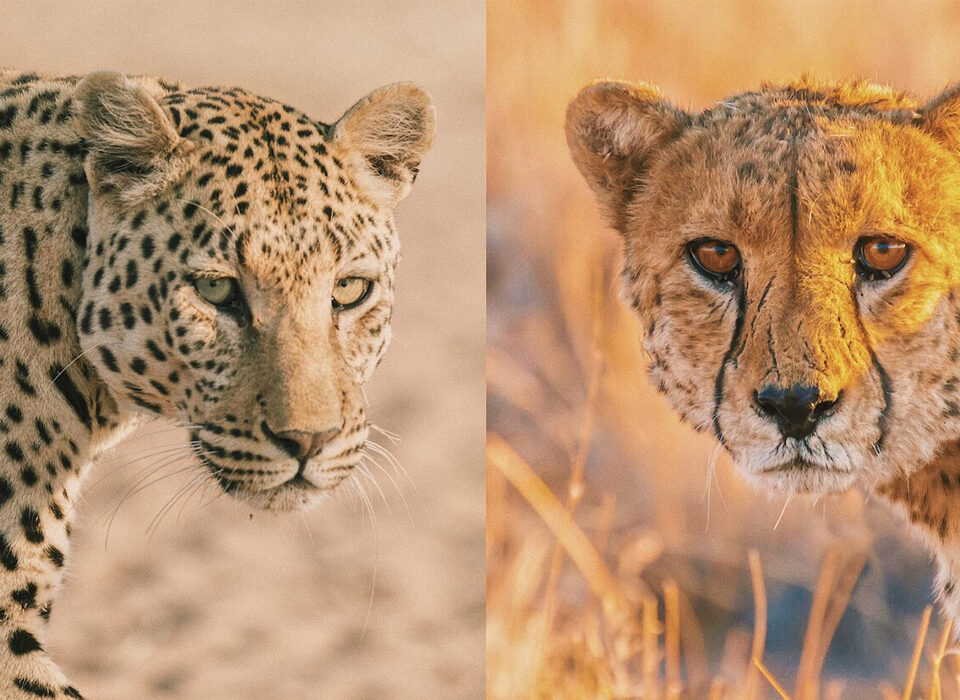
Life in the African wilderness is never easy, and warthogs face a long list of predators. Lions, leopards, cheetahs, hyenas, African wild dogs, and even crocodiles readily prey on them. For piglets, the dangers are even greater. Large birds of prey, such as Verreaux’s eagle owls and powerful eagles, can snatch young piglets if they stray too far from safety.
Despite these threats, warthogs are far from defenseless. When startled, they can sprint at speeds of up to 55 kilometers per hour. If escape is not possible, they stand their ground. Adult females, especially those with piglets, display fierce bravery. A mother warthog will charge an attacker and slash with her tusks, sometimes inflicting serious injuries. In certain situations, she may even turn the tables on a predator.
Their alert nature also helps them survive. Warthogs often flick their tails, pause suddenly, and scan their surroundings while feeding. This constant vigilance, combined with their speed and weaponry, allows many to live long enough to reproduce successfully.
Surprisingly Social and Cooperative
Beyond their tough exterior, warthogs display surprisingly complex social behavior. Female warthogs, known as sows, typically live in small family groups with their piglets. These groups provide protection and shared vigilance, increasing the survival chances of the young.
Interestingly, warthogs have been observed forming mutually beneficial relationships with other animals. For example, banded mongooses and vervet monkeys sometimes groom them, removing ticks from their nearly hairless skin. This cleaning service benefits both species: the groomers gain a meal, and the warthogs enjoy relief from parasites.
Even more fascinating is the behavior known as allosucking. When a sow loses her own litter, she may adopt and nurse orphaned piglets. Researchers believe this is not a case of mistaken identity or milk theft. Instead, it appears to be a form of altruism. Such behavior places warthogs among what scientists call “cooperative breeders,” species in which individuals assist in raising young that are not their own. This unexpected generosity reveals a softer, more communal side to these rugged animals.
A Resilient Yet Vulnerable Survivor
The common warthog remains widespread across sub-Saharan Africa. Meanwhile, the desert warthog, a distinct species, inhabits the Horn of Africa and northern Kenya. Although warthogs reproduce relatively quickly, certain populations have shown signs of decline due to habitat fragmentation, human-wildlife conflict, and environmental pressures.
Nevertheless, their adaptability continues to impress researchers and wildlife enthusiasts alike. They thrive in grasslands, savannahs, and even lightly wooded areas, provided water and shelter are available.
Ultimately, the warthog is far more than a comic character or an odd-looking pig. It is a resilient survivor, a devoted parent, and a vital part of Africa’s ecosystems. The next time you see one trotting across the plains with its tail held high, you may notice not just its unusual appearance but the remarkable intelligence and determination behind it.