6 Days Gorilla Safari in Uganda & Rwanda
February 2, 2026
Can I Explore Bwindi Without Trekking Mountain Gorillas
February 3, 2026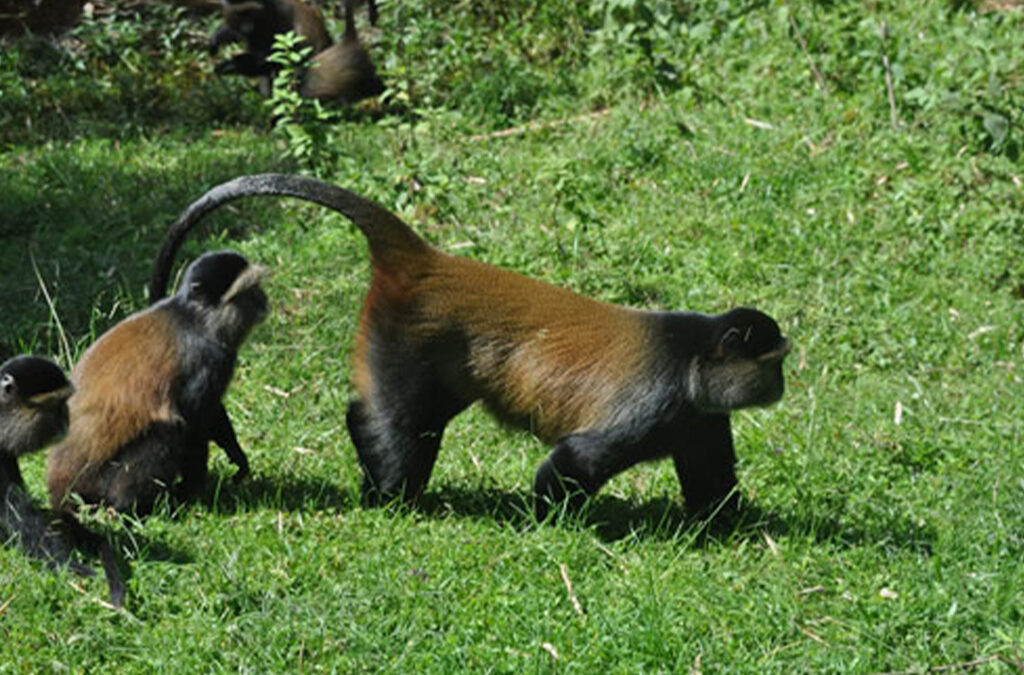
The Virunga Conservation Area—encompassing Uganda’s Mgahinga Gorilla National Park, Rwanda’s Volcanoes National Park, and the Virunga National Park in the DRC—is one of the most biodiverse regions in the world. It is home to two of the area’s most iconic primates: the endangered mountain gorilla and the rare, vibrant golden monkey.
While mountain gorilla studies began as early as the 1960s, thanks to Dian Fossey’s groundbreaking research along the slopes of Bisoke and Karisimbi Volcanoes in Rwanda’s Volcanoes National Park, golden monkeys remained largely overlooked. It is only in recent decades that scientists and conservationists have started tracking and studying these beautiful monkeys.
Today, there are approximately 1,063 mountain gorillas and 4,620 golden monkeys worldwide. Continuous research and monitoring have provided enough data to compare these two species across several aspects, including diet, reproduction, social life, habitat, and even tracking requirements.
Diet: Herbivores with Different Preferences
Both mountain gorillas and golden monkeys are herbivores, yet their diets differ significantly.
-
Golden monkeys primarily feed on bamboo branchlets, young leaves, and bamboo shoots, supplementing their diet with fruits, shrubs, and flowers. As a result, they are commonly found in bamboo zones on the slopes of the Virunga Volcanoes.
-
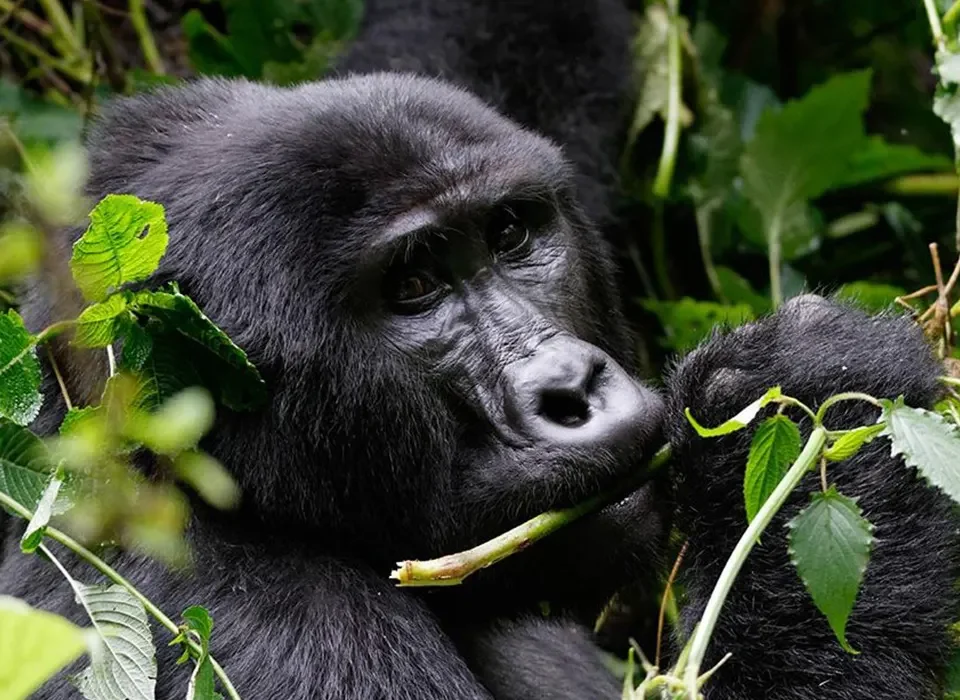
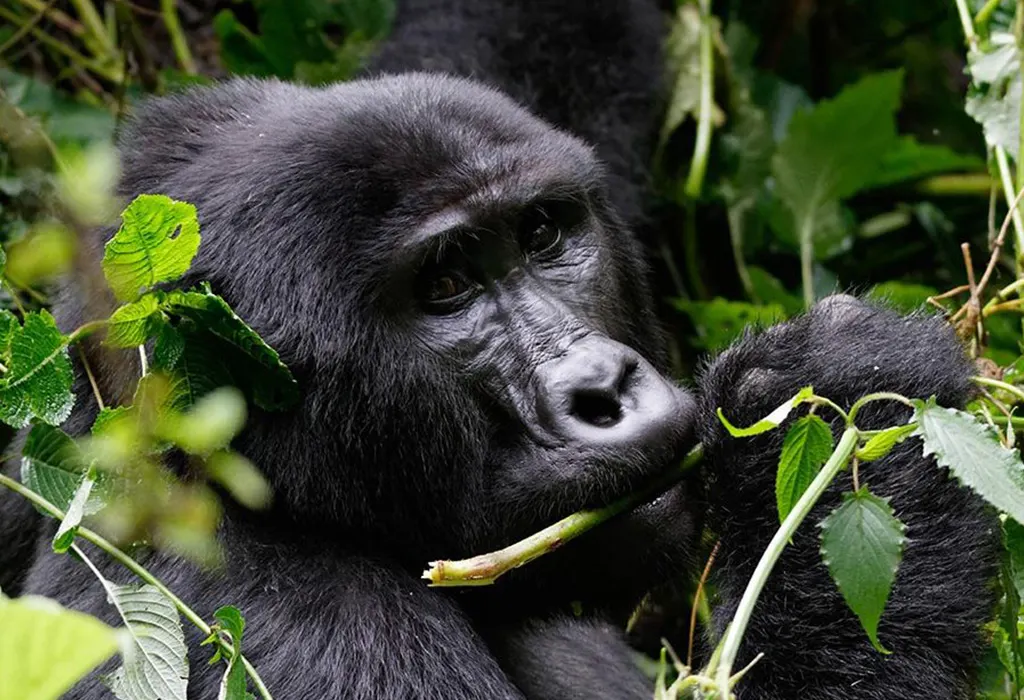
Mountain gorillas, on the other hand, consume a wider variety of plant species, including leaves, stems, roots, bamboo shoots, vines, and buds from over 140 different plants.
Thus, while both rely on plants, their foraging patterns and preferred food sources are distinctly different.
Reproduction: Seasonal vs. Year-Round
Reproductive behaviors also differ between these primates:
-
Golden monkeys are seasonal breeders, timing their reproduction to coincide with periods of abundant food.
-
Mountain gorillas, in contrast, breed year-round, without strong dependence on seasonal food availability.
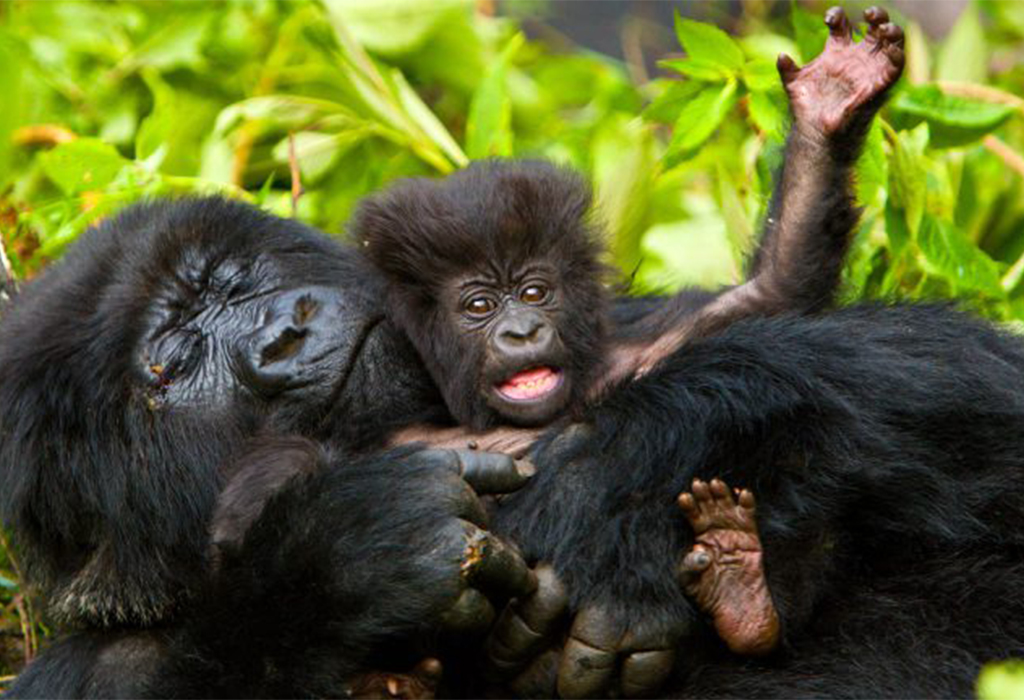
When it comes to caring for their young, mountain gorillas display strikingly human-like behavior, carrying infants on their backs once they are strong enough. Golden monkeys, however, carry their young close to their chests, ventrally, for safety and mobility.
Size and Physical Features
The difference in size between these two species is stark:
-
Mountain gorillas are massive, with mature males weighing 300–480 pounds and standing 1.2–1.8 meters tall.
-
Golden monkeys are much smaller, weighing only 10–15 pounds.
Physically, golden monkeys have long tails, which gorillas, as great apes, lack. These differences in size and anatomy influence not only their behavior but also their nesting habits.
Nesting: Ground vs. Tree Nests
Nesting behavior reflects their size and strength:
-
Golden monkeys, being smaller and more agile, build nests on tree branches or bamboo.
-
Mountain gorillas, due to their bulk, construct nests on the ground.
Social Life: Group Dynamics
Both species live in social groups, but the size and structure of these groups differ:
-
Golden monkey troops can reach up to 150 individuals, forming complex hierarchies with males actively seeking mating opportunities.
-
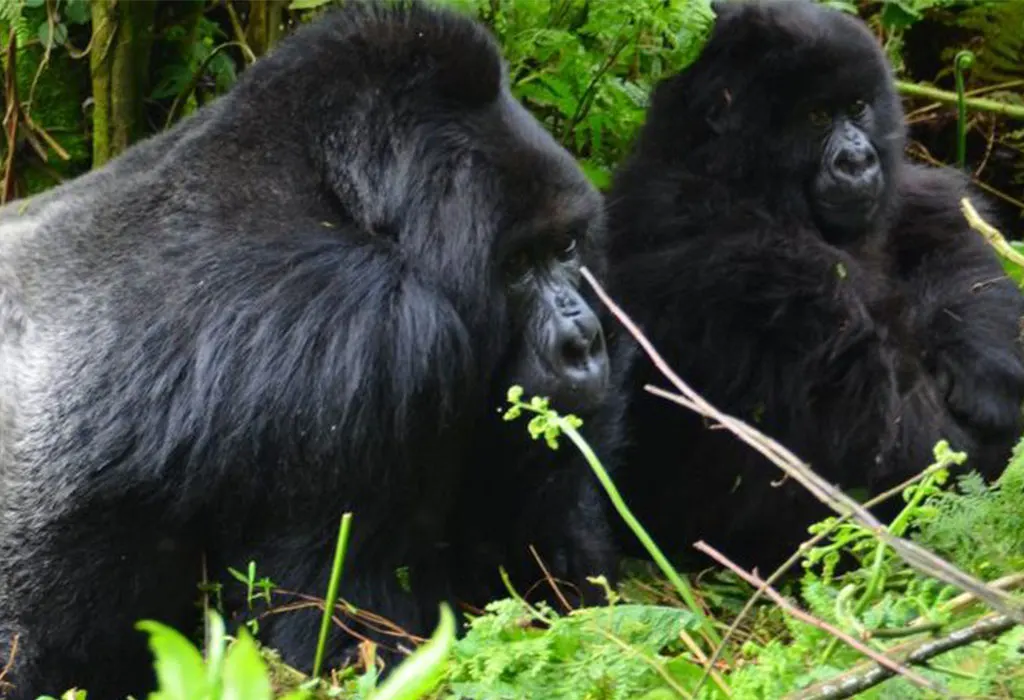
Mountain gorilla groups are smaller, typically 5–30 individuals, with females leaving their natal groups to join others for reproduction.
These differences reflect adaptations to their environments and social strategies.
Cost of Seeing Them
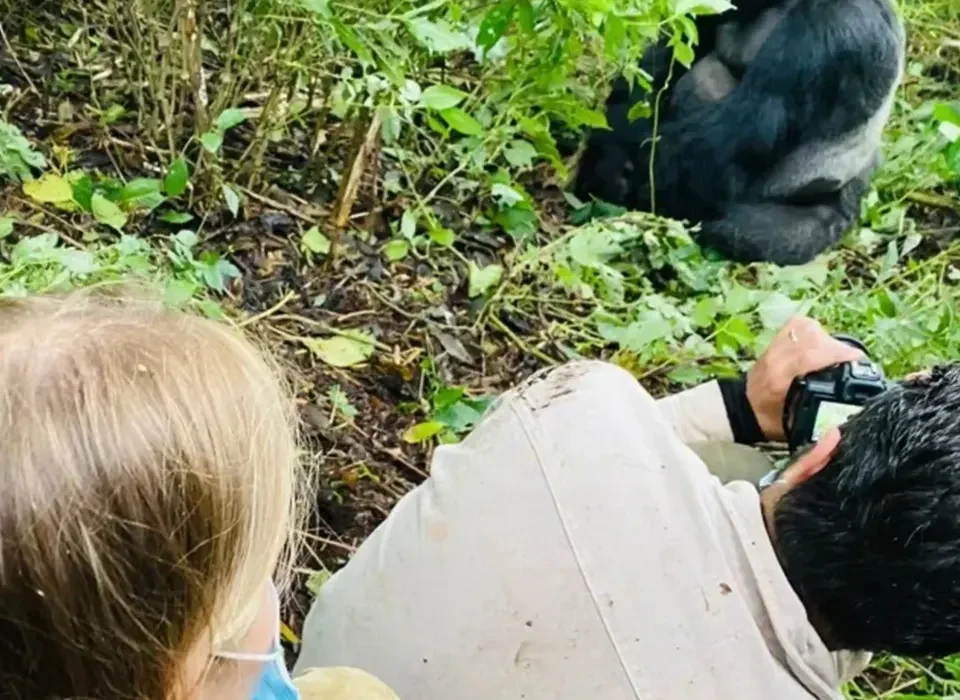
A permit is required to see either species, but prices vary widely:
-
Golden monkey permits:
-
Rwanda: $100 per person
-
Uganda: $60 for foreign non-residents, $50 for foreign residents, Shs. 40,000 for East African citizens
-
-
Mountain gorilla permits:
-
Rwanda: $1,500 per person
-
Uganda: $800 for foreign non-residents, $700 for foreign residents, Shs. 300,000 for East African citizens
-
Clearly, tracking golden monkeys is far more affordable and accessible than trekking mountain gorillas.
Best Time to Visit
The ideal periods to visit either species are during dry months, when forest trails are less muddy and slippery:
-
June–September
-
December–February
Avoid March–May and October–November, as these are typically the wettest months. However, climate change has made weather patterns less predictable, so it’s wise to check current conditions before planning your trek.
Conclusion
While mountain gorillas and golden monkeys share the same habitat, their diet, social behavior, size, reproduction, and nesting habits reveal fascinating differences. Observing both species offers a richer understanding of the Virunga Conservation Area’s biodiversity and the conservation efforts that protect these extraordinary primates.