
Discover Fort Portal’s Enchanting Crater Lakes: Uganda’s Hidden Treasure
January 19, 2026
Fun Facts About Kampala, Uganda
January 19, 2026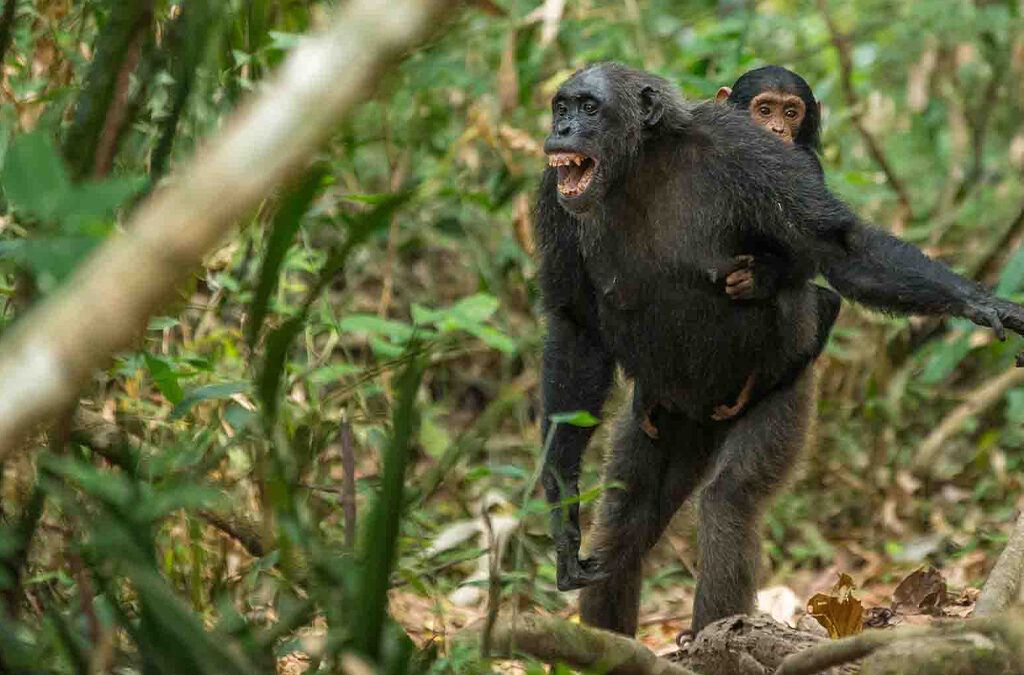
Mountain gorillas and chimpanzees are two of our closest living relatives, sharing a common ancestor that lived millions of years ago. Both belong to the biological family Hominidae and the order Primates. Despite these similarities, they are distinct species with different physical characteristics, social behaviors, and ecological needs. These differences explain why mountain gorillas and chimpanzees rarely coexist in the same habitats.
Physical Differences: Size and Adaptation
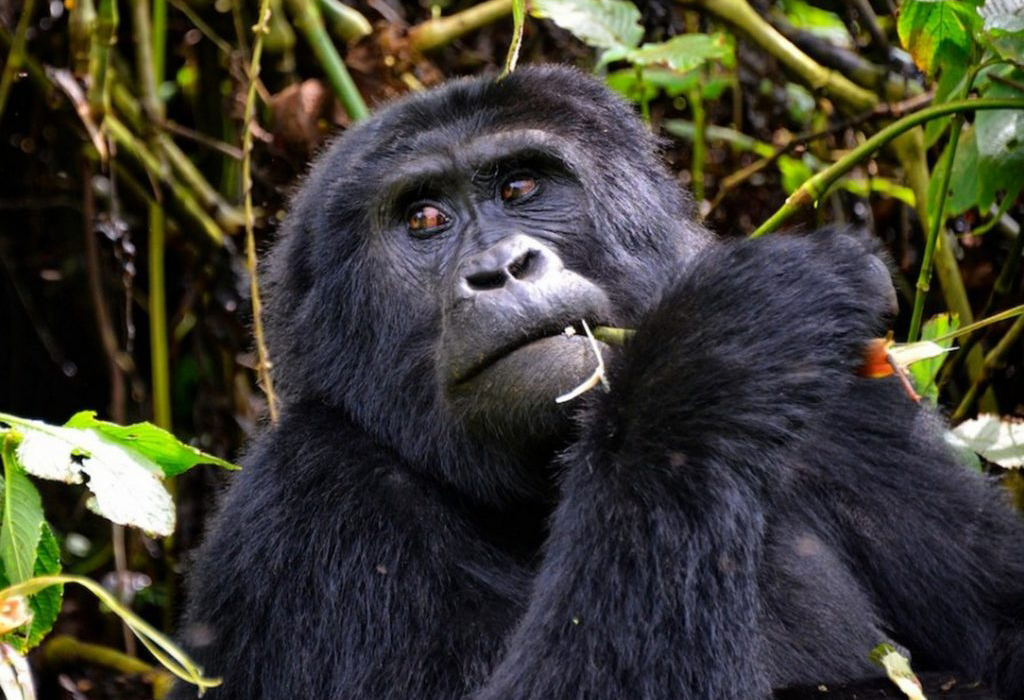
Mountain gorillas are among the largest primates on Earth. Adult males, often referred to as silverbacks due to the characteristic patch of silver hair on their backs, are immensely powerful and broad-chested. Their large, muscular bodies are complemented by long arms, which make them exceptionally suited for climbing and navigating dense forests. Gorillas’ faces are wide, their eyes small, and their fur varies in color and texture depending on the species. These physical adaptations allow them to thrive in the lush, montane forests of central Africa, where they spend much of their time foraging on leaves, stems, and fruits.
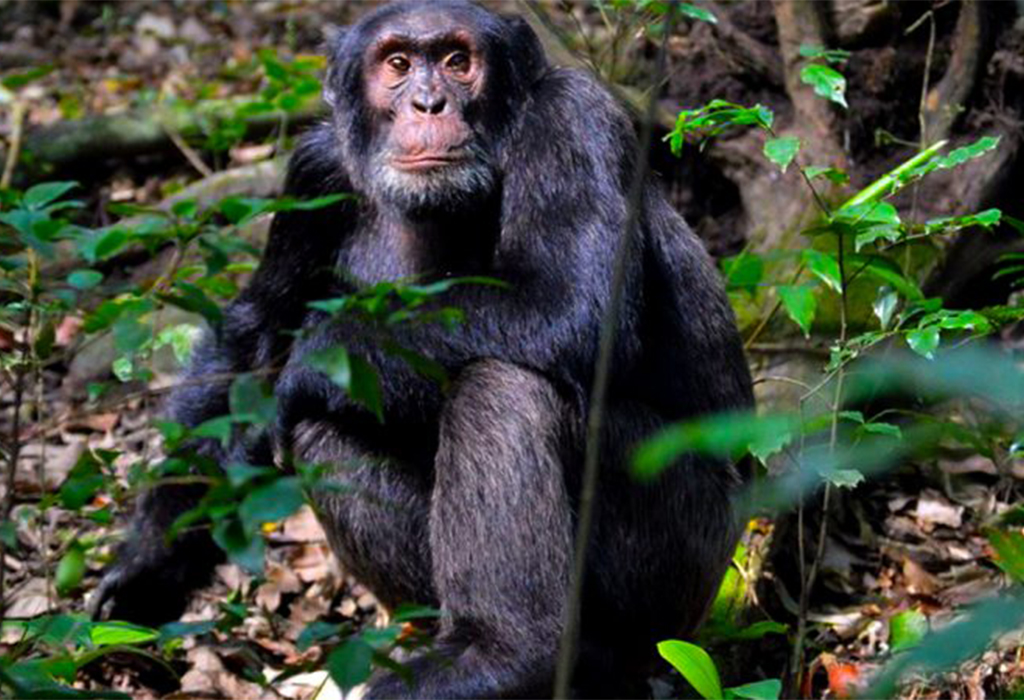
In contrast, chimpanzees are smaller and more agile. Adult males weigh between 45 to 60 kilograms (100–130 pounds), while females are slightly lighter. Their long arms, short legs, and opposable hands and feet enable them to climb trees, travel on the ground, and manipulate objects with remarkable precision. Chimpanzees’ smaller stature and greater flexibility allow them to exploit a wider variety of habitats, from tropical forests to open woodlands, and to adapt to a diverse diet that includes fruits, leaves, seeds, insects, and even small mammals.
These physical differences are crucial in shaping the ecological niches that gorillas and chimpanzees occupy. Gorillas, with their massive size and herbivorous diet, require dense vegetation for both food and protection, while chimpanzees benefit from greater mobility and an omnivorous diet that allows them to exploit different food sources.
Social Structures: Leadership and Group Dynamics
Gorilla society revolves around the silverback, an adult male who leads the group. A typical gorilla troop consists of several females and their offspring, with the silverback making decisions, mediating conflicts, and ensuring the group’s safety. Gorilla groups are generally cohesive and non-territorial. Although confrontations with rival groups can occur, they are usually brief and non-violent. Communication within gorilla troops relies on vocalizations, facial expressions, and body postures, all of which reinforce social bonds and coordinate movement through their forested habitats.
Chimpanzees, by contrast, live in larger and more fluid communities led by an alpha male. These communities can include hundreds of individuals, who often split into smaller subgroups for foraging or other activities. The alpha male’s status is constantly negotiated, often through displays of strength, alliances, and strategic intelligence. Chimpanzee social life is remarkably complex, featuring cooperation, competition, and sophisticated problem-solving behaviors. They communicate through vocalizations, gestures, and facial expressions, and their interactions often involve subtle social strategies that maintain group cohesion and hierarchy.
The contrast between the relatively stable, hierarchical society of gorillas and the dynamic, strategic social networks of chimpanzees highlights why these species occupy different ecological niches. Gorillas’ slower, less confrontational lifestyle is compatible with a limited home range rich in vegetation, whereas chimpanzees’ more aggressive and adaptable social behavior allows them to roam and exploit diverse environments.
Diet and Feeding Behavior
Dietary habits further separate gorillas from chimpanzees. Mountain gorillas are primarily herbivorous, consuming leaves, stems, roots, and fruits. Their digestive system is specialized to extract nutrients from fibrous plant matter, and they spend a significant portion of their day feeding. This diet ties gorillas closely to forested areas where these resources are abundant and predictable.
Chimpanzees, on the other hand, are omnivores with a remarkably varied diet. While they consume fruits, leaves, and seeds similar to gorillas, they also hunt small mammals, capture insects, and occasionally scavenge. Chimpanzees’ use of tools sticks to fish termites, rocks to crack nuts, or leaves to drink water demonstrates their cognitive flexibility in obtaining food. Their omnivorous habits allow them to thrive in areas with fluctuating food availability, further reducing the likelihood of long-term overlap with gorilla territories.
The difference in diet is not merely a matter of preference; it drives the separation of habitats. Gorillas require large amounts of leafy vegetation and fruits in relatively concentrated areas, whereas chimpanzees’ opportunistic feeding allows them to move over larger ranges and exploit multiple ecological zones.
Behavior and Habitat Use
Behavioral tendencies reinforce the separation of gorillas and chimpanzees. Gorillas are generally gentle and avoid unnecessary conflict, both within their troop and with outsiders. They are predominantly terrestrial, moving slowly through the forest floor, and they construct simple nests for resting at night. Their non-territorial behavior and reliance on dense vegetation for safety keep them within specific forested areas, minimizing contact with other primates, including chimpanzees.
Chimpanzees, by contrast, are more active and aggressive. They travel widely in search of food, patrol their territories, and defend them from rival communities. Their intelligence allows them to exploit various food sources and adjust to environmental changes, making them more adaptable than gorillas in overlapping landscapes. As a result, even when gorillas and chimpanzees inhabit the same general forest regions, they tend to avoid direct interaction, occupying different strata and feeding zones.
Conservation Challenges
Both mountain gorillas and chimpanzees face severe threats, including habitat loss due to agriculture, logging, and human settlement. Poaching and disease further jeopardize their survival. Despite these challenges, conservation efforts have achieved notable successes. Anti-poaching patrols, protected areas, and ecotourism initiatives have helped stabilize some populations. Yet, the ongoing fragmentation of habitats continues to limit areas where these primates could potentially coexist.
Ecological Niches and Coexistence
Ultimately, the separation of mountain gorillas and chimpanzees is the result of evolutionary adaptation. Gorillas have evolved to thrive as large, herbivorous, forest-dwelling primates with stable social groups, while chimpanzees have developed the skills and behaviors of omnivorous, highly mobile, and socially complex animals. Even within overlapping ranges, differences in diet, social structure, behavior, and physical characteristics create distinct ecological niches. These adaptations reduce competition for resources and ensure that both species can survive independently within their respective environments.
While mountain gorillas and chimpanzees may occasionally encounter each other in shared habitats, their divergent lifestyles and ecological needs prevent long-term coexistence. Understanding these differences not only deepens our appreciation for these incredible primates but also highlights the importance of conserving the unique habitats each species requires.
Through careful conservation and habitat protection, we can ensure that both mountain gorillas and chimpanzees continue to thrive as separate, remarkable chapters in the story of our closest animal relatives.
