Ruhija vs Buhoma for First-Time Gorilla Trekkers
January 13, 2026
Things to Know About Karuma Falls
January 18, 2026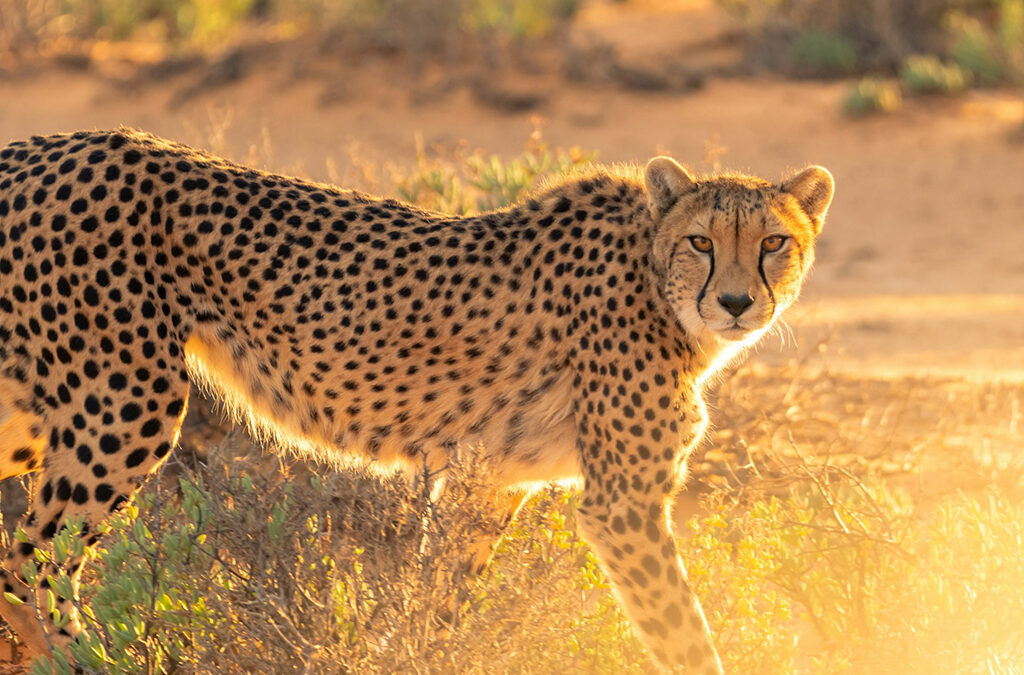
Out on the sprawling African savannah, a golden shape glides silently through the tall brown grass, its sleek coat shimmering under the sun but only for those paying close attention. Is it a cheetah or a leopard? To the untrained eye, these big cats may look similar, but a closer look reveals they are remarkably different.
Knowing how to distinguish them not only sharpens your wildlife knowledge but also elevates your safari experience. Spotting the difference is a skill few have and it certainly earns serious safari cred!
Cheetahs: The Animal Kingdom’s Speed Demons
If you’ve ever asked, “Which animal runs the fastest?” the answer is the cheetah. These big cats are built for speed. With long legs, flexible spines, and lightweight frames, cheetahs can sprint from zero to seventy-five miles per hour in seconds, making them the fastest land animal on the planet. While speed defines them, cheetahs also play a vital role in ecosystems. By hunting weak or young prey, they help maintain healthy animal populations and prevent overgrazing.
Cheetahs are instantly recognizable by their golden coats, evenly covered with solid black spots. Black tear-like lines run from the eyes to the mouth, reducing glare during high-speed chases. Their slim, aerodynamic bodies and small, rounded heads make them perfectly adapted for the sprinting lifestyle.
Unlike many other predators, cheetahs are diurnal hunters, preferring daylight hours to avoid competing with lions and leopards. Their hunts are short and intense, often lasting less than a minute. Socially, males may form coalitions with their brothers, while females raise cubs alone, teaching them essential survival skills.
Cheetahs thrive in open grasslands where they can fully unleash their speed. Some of the best places to see them include the Serengeti in Tanzania, Etosha National Park in Namibia, and Kgalagadi Transfrontier Park in South Africa. Sadly, today fewer than 7,000 cheetahs remain in the wild, making conservation efforts critical.
Leopards: The Stealthy Shadows of the Bush
If the cheetah is a sprinter, the leopard is a master of stealth. Unlike cheetahs, leopards rely on power, patience, and cunning. Muscular and agile, leopards can drag prey twice their body weight into trees to protect it from scavengers. Their adaptability is unmatched they can climb, swim, and hunt across dense forests, rocky hills, and riverbanks, which has helped them become one of the most widespread big cats in the world.
Leopards have golden coats adorned with rosette-shaped spots, dark outlines with lighter centers, providing excellent camouflage in forests and rocky terrain. They have stocky, muscular bodies and broad heads with powerful jaws, perfect for subduing larger prey.
Solitary by nature, leopards cover large territories and hunt primarily at night, relying on stealth to ambush their prey. Encounters between individuals are rare and typically limited to mating. Some of the best places to spot leopards include Kruger National Park in South Africa, the Okavango Delta in Botswana, and forested regions in India and Sri Lanka.
Spotting the Differences
At first glance, cheetahs and leopards may appear similar, but their differences are striking. Cheetahs have small, evenly spaced black spots and a slender, long-legged frame, while leopards boast rosette-shaped markings and a stocky, muscular build. Cheetahs feature distinctive black tear marks from the eyes to the mouth and hunt in open grasslands during the day. Leopards lack tear marks, often have striking amber or green eyes, and rely on nocturnal stealth across varied terrains.
Even in fashion, these distinctions are clear. Leopard print evokes luxury and boldness, while cheetah print conveys speed, energy, and simplicity.
Who’s Stronger?
In terms of raw strength, the leopard wins hands down. Cheetahs sacrifice muscle for speed, whereas leopards are powerhouse hunters, capable of taking down larger prey and defending their meals. Leopards have a bite force of around 300 psi, compared to the cheetah’s weaker bite suited for smaller prey. Each employs a unique hunting strategy: cheetahs rely on speed and precision, leopards on stealth, power, and adaptability. Direct confrontations are rare survival is about strategy, not just strength.
Conservation Matters
Both species face serious threats, including habitat loss, human-wildlife conflict, and declining prey populations. Protecting these majestic predators requires conserving their habitats, reducing poaching, and promoting coexistence with local communities. Every sighting in the wild is a reminder of their beauty, strength, and the urgent need to protect them.
Out on safari, spotting a cheetah sprinting across the grasslands or a leopard slinking silently through the trees is a memory you’ll never forget. Each big cat is a marvel of evolution speed and elegance versus stealth and power each vital to the African wilderness.