
Where to See Spotted Hyenas in Uganda
January 10, 2026
What to Do in Nairobi City: A Complete Travel Guide
January 12, 2026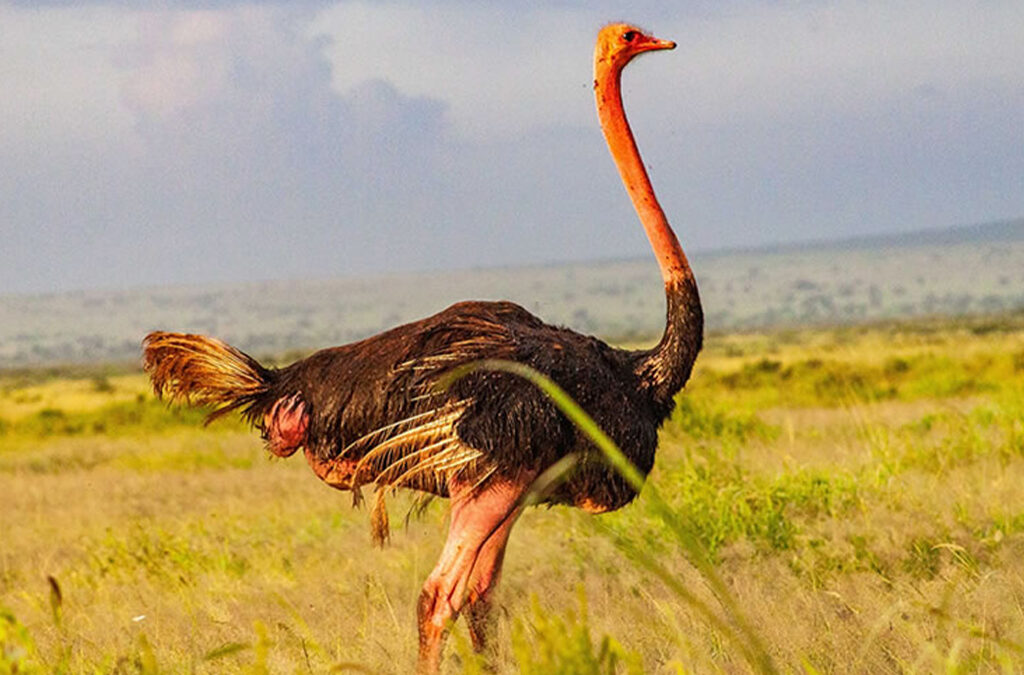
Kidepo Valley National Park, located in the north-eastern part of Uganda, is one of the best destinations for wildlife and birding safaris. Among the park’s fascinating inhabitants, the ostrich stands out as the largest and strongest bird on the planet. With their long necks, small heads, and powerful legs ending in two large pointed toes, ostriches are truly remarkable creatures. Visiting this remote wilderness offers a unique opportunity to observe them in their natural habitat and experience the untamed beauty of Uganda.
The Unique Appearance of Ostriches
Ostriches are huge, flightless birds native to Africa and are the only living members of the genus Struthio in the ratite order. They measure between 1.7 and 2.8 meters in height and can weigh up to 150 kilograms. Male ostriches display striking black feathers with white wings and tail feathers, while females have brownish-grey plumage. During the breeding season, both sexes show pinkish necks, and their legs are always brighter in color.
Their large eyes, measuring nearly 4.5 centimeters across, allow them to spot predators such as lions, cheetahs, and hyenas from a considerable distance. This incredible vision, combined with their long legs, makes them highly efficient at avoiding threats.
Incredible Speed and Strength
While ostriches typically walk at a steady pace of 3.7 to 4.2 km/h, they can sprint at astonishing speeds of 58 km/h and, in rare cases, up to 70 km/h—the fastest land speed of any bird. Their powerful legs are not only built for running but also for defense. An ostrich can kick with incredible force, potentially harming predators like lions, cheetahs, and even humans if threatened.
Visitors on a wildlife safari should admire these birds from a safe distance, especially near their eggs, as disturbing them may trigger a swift escape.
Behavior and Communication
Ostriches are generally quiet but become vocal during the mating season. Males emit booming calls that can travel over 1.2 kilometers, while both males and females may hiss or roar when threatened. These social and vocal behaviors are a key part of their complex interactions within the wild.
Ostriches also enjoy dust bathing and may often bury their heads in the sand, leaving the rest of their bodies visible—a behavior that has intrigued many wildlife enthusiasts.
Reproduction and Nesting
Ostriches have a fascinating and intricate breeding system. A single nest may host eggs from one dominant female (the major) and several subordinate females (the minors). The male prepares the laying ground by digging a shallow hole about 1 meter wide and filling it with sand to help incubate the eggs.
Each female lays up to 14–15 eggs per season, typically from February to June. The dominant female incubates the eggs during the day, while the male takes over at night. After approximately six weeks, the chicks hatch and leave the nest within four days, reaching full maturity at three to four years of age.
Diet and Survival
Ostriches are omnivores, feeding on seeds, fruits, flowers, insects, and even small pebbles, which help grind their food in the absence of teeth. Remarkably, they can survive for several days without drinking water, obtaining moisture from the food they consume.
Predators and Threats
While adult ostriches are fast and strong, their eggs are vulnerable. Egyptian vultures are notorious for preying on ostrich eggs, sometimes using stones to break them—a rare example of tool use in birds. Lions and cheetahs also pose threats to adult ostriches in the wild.
Where to See Ostriches in Uganda
Ostriches are primarily found in Uganda’s Karamoja region, including Kidepo Valley National Park, Pian Upe Game Reserve, Bokora Game Reserve, and Matheniko Game Reserve. These areas offer adventurous safari experiences far in the northeastern part of the country, where wildlife thrives in relatively untouched wilderness.
Kidepo Valley National Park, in particular, stands out as one of Africa’s premier wilderness destinations. For travelers seeking unforgettable wildlife encounters, seeing ostriches in this natural environment is an absolute must.
