
Congo vs Uganda and Rwanda: Where Should You Go Gorilla Trekking?
January 10, 2026
Explore Ostriches in Kidepo Valley National Park
January 10, 2026
Are you planning a wildlife safari in Uganda and hoping to spot one of Africa’s most misunderstood predators? Spotted hyenas often suffer from a negative reputation, but these remarkable animals are among Uganda’s most successful hunters. They display extraordinary intelligence, complex social bonds, and behaviors that rival those of primates. While you can see hyenas in several parks across Uganda, Queen Elizabeth National Park offers the most reliable viewing opportunities.
About the Spotted Hyena
Physical Features
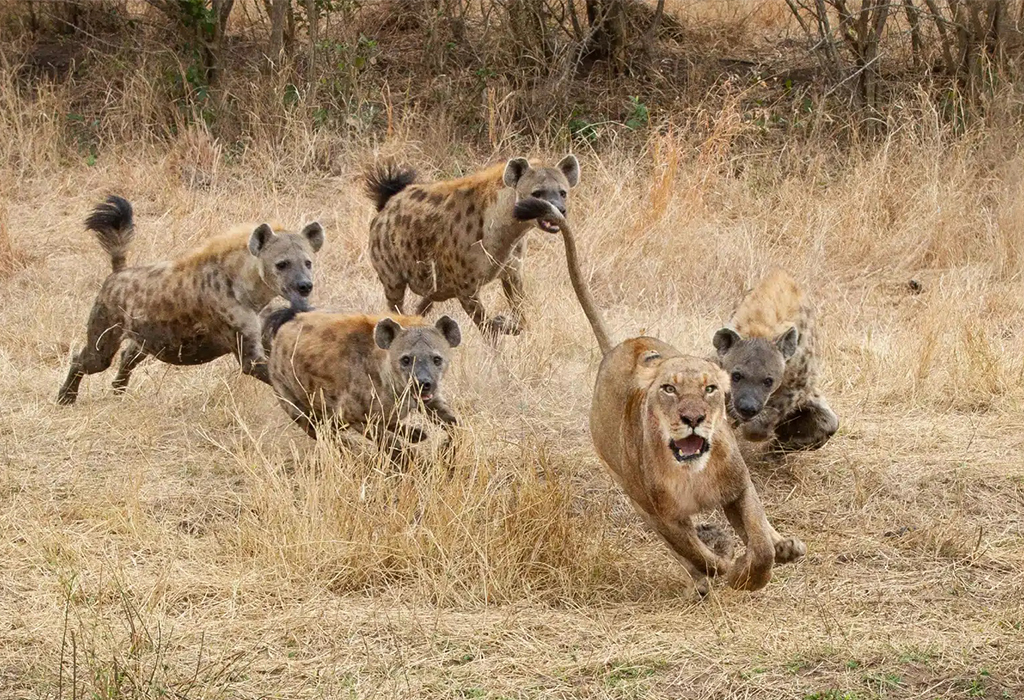
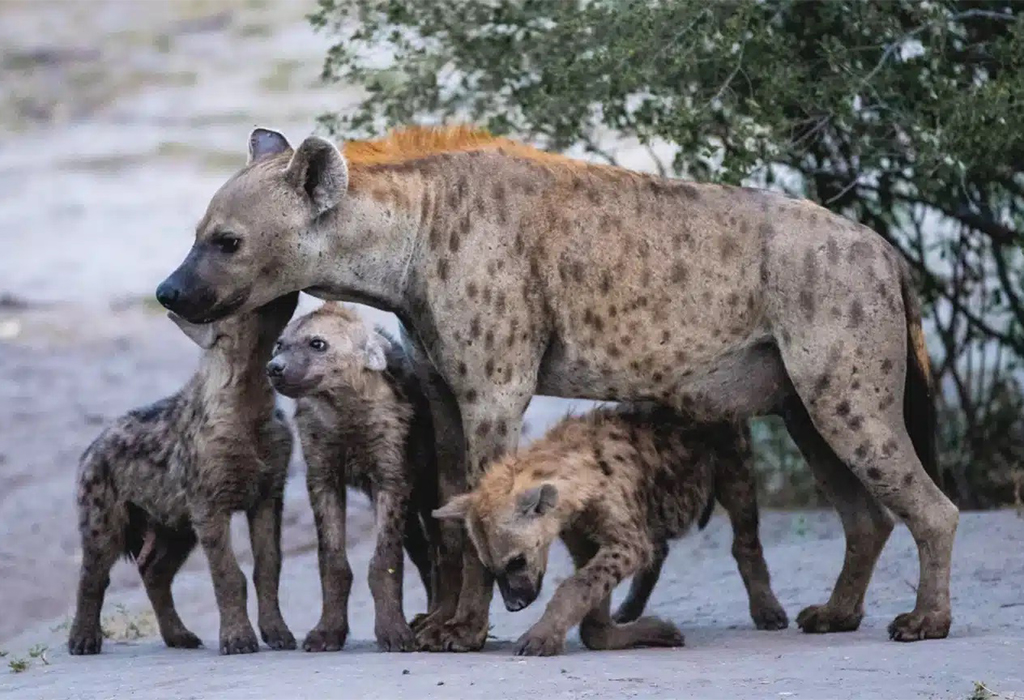
The spotted hyena (Crocuta crocuta) is the largest member of the Hyaenidae family. With a powerful, muscular body and a distinctive sloping back, these predators can skillfully take down prey as large as wildebeest. Their light-brown coats, adorned with dark spots, make them easy to identify on safari.
One of the hyena’s most impressive features is its exceptionally strong jaw, capable of crushing bones and slicing through thick hides. This allows them to access nutrients that many other predators cannot reach. Spotted hyenas have a bear-like build, rounded ears, and a less prominent mane than other hyena species. Unique female anatomy, including a pseudo-penis, sometimes confuses observers but is a fascinating aspect of their biology.
Evolutionary Background
Despite their dog-like appearance, spotted hyenas are more closely related to mongooses and cats than to canines. This evolutionary lineage explains their intelligence, complex hunting strategies, and social structures behaviors that often surprise visitors who assume they are “silly scavengers.”
Where to Find Spotted Hyenas in Uganda
Prime Locations
Queen Elizabeth National Park is the best place to see spotted hyenas in Uganda. Game drives, both during the day and at night, regularly offer excellent sightings. The park’s diverse ecosystems savanna plains, woodlands, and open clearings provide ideal hunting grounds for these adaptable predators.
Other parks also host spotted hyenas, though sightings are less frequent:
- Murchison Falls National Park: Healthy populations exist, especially in the northern sectors.
- Kidepo Valley National Park: Northeastern Uganda provides excellent habitats for these carnivores.
- Mgahinga National Park: Even the montane forests here support hyenas, demonstrating their remarkable adaptability.
Best Viewing Times
Spotted hyenas are most active during the cooler parts of the day. Early morning and late evening game drives maximize your chances of seeing them hunt or patrol their territories. Night drives in Queen Elizabeth National Park also frequently reward visitors with exceptional encounters.
Understanding Hyena Behavior
Social Structure
Spotted hyenas live in matriarchal clans, where the largest and strongest females lead with absolute authority. Cubs inherit ranks immediately below their mothers, creating a monarchy-like social hierarchy. Clans typically consist of around ten individuals, though some can be much larger depending on prey availability. Maintaining these complex social structures requires remarkable intelligence, contrary to myths portraying hyenas as “stupid.”
Communication Methods
Hyenas communicate with a variety of sounds. Their iconic “whoop” alerts clan members during hunts or signals territorial claims. The famous “laugh” is actually a stress or submission signal used by lower-ranking animals rather than an expression of joy.
Habitat and Distribution
Preferred Environments
Spotted hyenas thrive in diverse habitats across Uganda and Africa, including savannas, deserts, swamplands, woodlands, and montane forests up to 4,000 meters. They are less common in dense, uninterrupted rainforests but excel in forest-savanna mosaics and tropical forests with open clearings. They also survive in arid regions, relying on prey for water when necessary.
Water and Population Density
Hyenas are highly water-efficient. In dry areas, they obtain most of their moisture from prey and can survive over a week without drinking. Their highest population densities occur in prey-rich areas, such as the savanna plains of Queen Elizabeth National Park, often providing more than one hyena per square kilometer perfect for safari sightings.
Debunking Common Myths
Intelligence and Ecological Role
Spotted hyenas are highly intelligent predators. Their social relationships rival those of primates, and managing large clans requires sophisticated cognitive abilities. Hyenas also play a critical ecological role by controlling prey populations, preventing disease, and cleaning up carcasses including bones which benefits the entire ecosystem.
Hunting Versus Scavenging
Contrary to popular belief, hyenas do not rely solely on scavenging. Research shows that they make their own kills about 53% of the time, even sharing prey with lions. These skilled hunters can take down buffalo and even young elephants, either alone or in coordinated group attacks. Yet, like any practical predator, they opportunistically scavenge when the chance arises.
Physical Capabilities
Hyenas possess impressive endurance, walking an average of 15 miles per night while hunting. Their body design maximizes energy efficiency, with strong hearts, large lungs, stubby hind legs, and wide nostrils that support extended hunting excursions.
Scent Characteristics
Contrary to myths, hyenas do not naturally smell bad. They produce a substance called “hyena butter” from anal glands to mark territory, which smells more like mulch and is essential for communication within the clan.
Safari Tips for Hyena Watching
- Choose experienced tour operators familiar with hyena behavior for the best encounters.
- Early morning and late evening game drives increase your chances of sightings.
- Bring binoculars and cameras with good zoom, as hyenas often keep a safe distance.
- Consider staying near Queen Elizabeth National Park to maximize opportunities for observation.
With patience and careful observation, watching spotted hyenas in Uganda can be one of the most fascinating experiences on your safari, revealing the intelligence, adaptability, and ecological importance of this often-misunderstood predator.
