What to See and Do in Queen Elizabeth National Park
December 26, 2025
Best Local Restaurants in Rwanda
December 26, 2025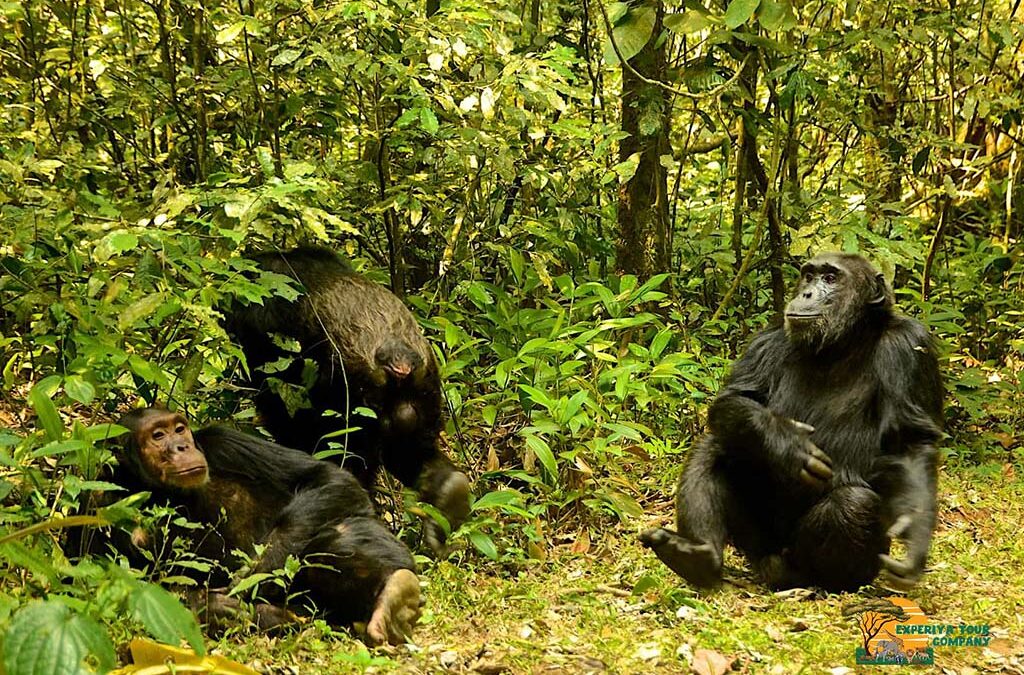
Chimpanzee trekking in Rwanda takes place primarily in Nyungwe National Park, one of Africa’s most important and biodiverse rainforests. Stretching across Rwanda’s southwest, Nyungwe is the largest remaining montane rainforest in Africa and a vital conservation area that attracts researchers, scientists, and nature lovers from around the world.
Today, Nyungwe National Park also includes the Cyamudongo Forest, further strengthening its role as a biodiversity hotspot. The forest acts as a crucial water catchment area, generating rainfall that feeds major rivers flowing toward the Nile in Uganda and the Congo Basin.
Beyond primates, Nyungwe is a paradise for birders, with over 310 bird species, including paradise flycatchers, Chapin’s flycatcher, purple-breasted sunbirds, Rockefeller’s sunbird, red-collared mountain babblers, and the striking Ruwenzori turaco.
Chimpanzee Trekking in Nyungwe Forest
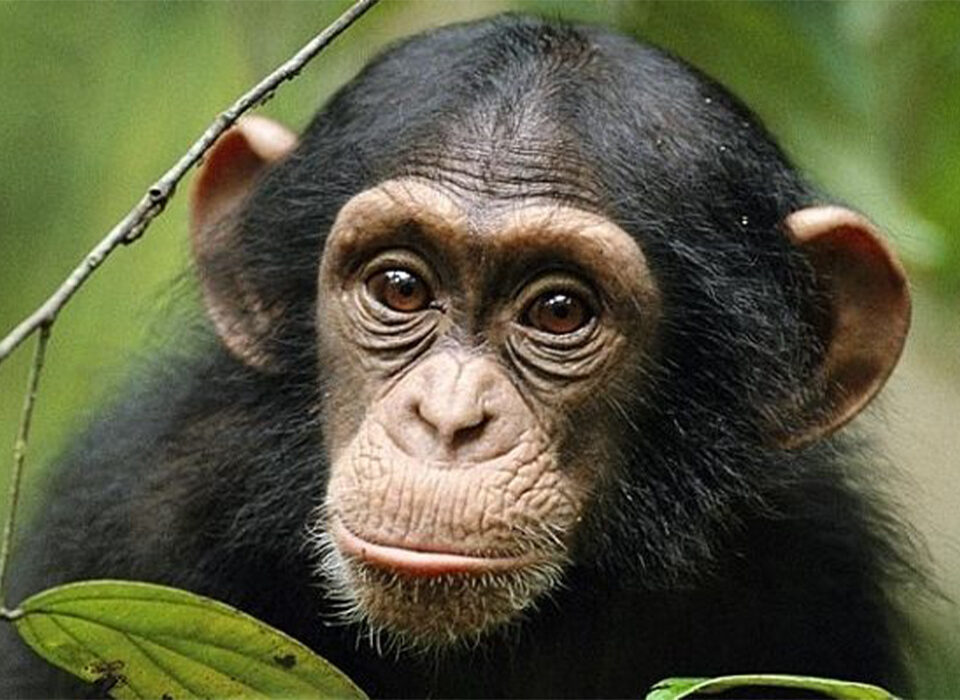
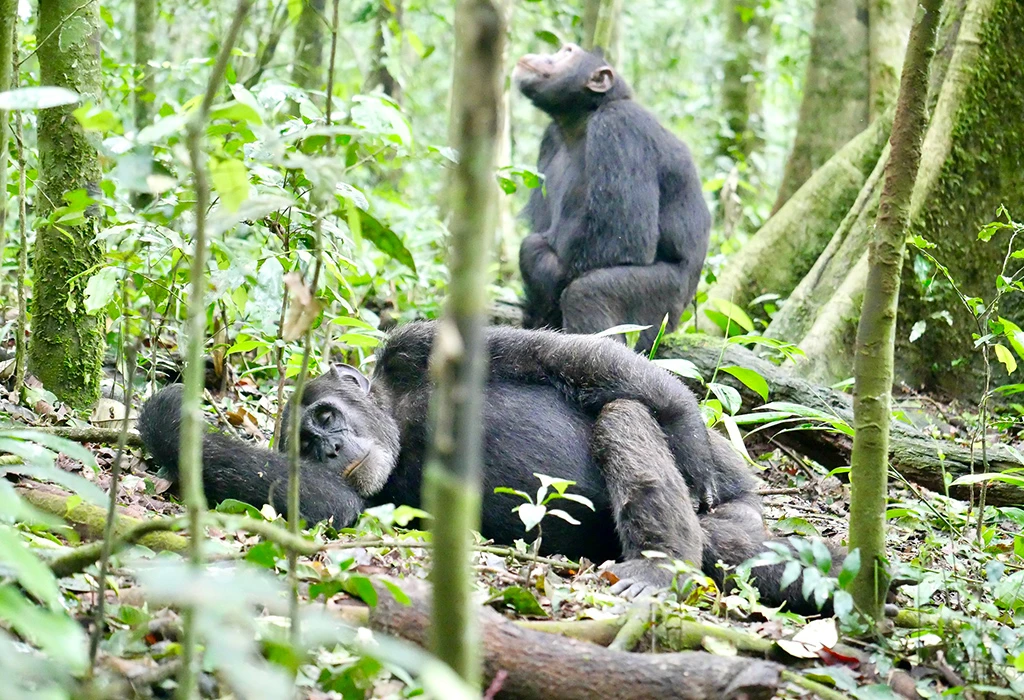
Chimpanzees are our closest living relatives, sharing many human traits such as intelligence, emotional expression, and complex social behavior. In the wild, they live dynamic lives filled with cooperation, conflict, play, and communication.
In Rwanda, chimpanzees live in three main areas:
- Nyungwe Forest
- Cyamudongo Forest
- Gishwati–Mukura National Park
Nyungwe National Park hosts the largest chimpanzee population in Rwanda, with over 400 individuals. The park is also home to 13 different primate species, making it one of Africa’s top primate destinations.
Two chimpanzee communities have been partially habituated:
- Around 60 individuals live in the main Nyungwe Forest
- About 30 individuals live in Cyamudongo Forest
Other primates you may encounter include blue monkeys, silver monkeys, owl-faced monkeys, Dent’s monkeys, L’Hoest’s monkeys, grey-cheeked mangabeys, Ruwenzori colobus, black-and-white colobus, baboons, and more.
Chimpanzee Trekking vs. Gorilla Trekking: Key Differences
Chimpanzee trekking is very different from gorilla trekking and tends to be more physically demanding.
Chimpanzees are:
- Highly energetic and noisy
- Extremely mobile
- Often found high in the forest canopy
Because chimps are lighter and agile climbers, they spend much of their time in trees. In contrast, mountain gorillas are heavier, calmer, and spend most of their time on the ground. Gorillas move slowly, feed peacefully, and display minimal group drama.
Chimpanzee tracking requires good physical fitness. You may walk for long distances as the chimps move quickly through dense forest, both on the ground and in the treetops, before eventually settling.
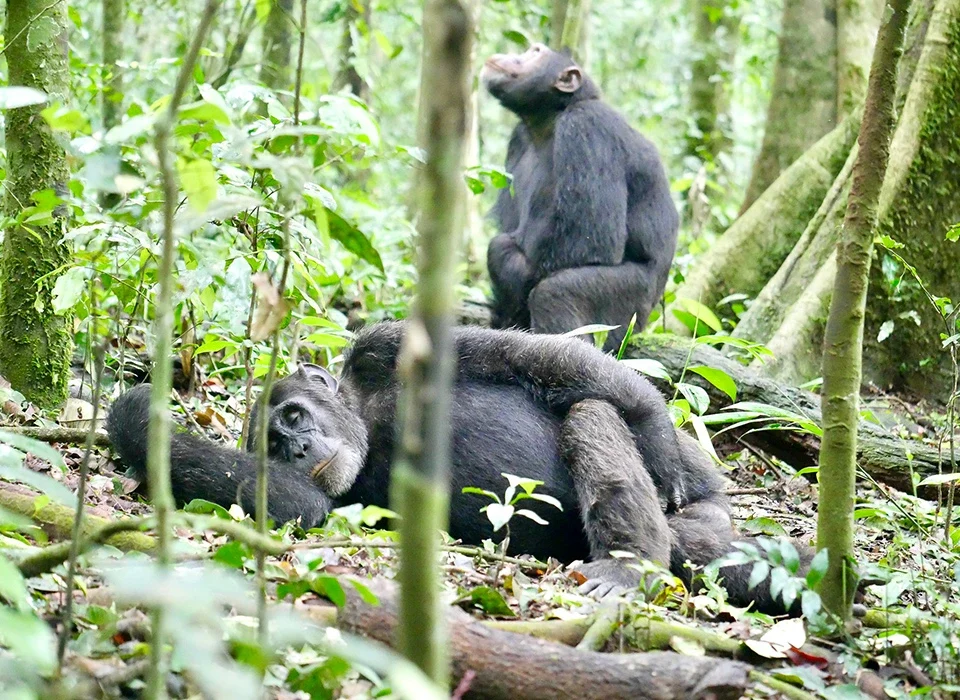
Once you find them, you can observe fascinating behaviors such as grooming, feeding, breastfeeding, mating, playing, and even group conflicts. Each chimpanzee has a distinct personality, and group politics are clearly visible. Although curious about humans, chimps usually keep their distance.
How Long Does Chimpanzee Tracking Take?
Chimpanzee trekking in Nyungwe Forest typically lasts between 2 and 6 hours, though it can take longer depending on chimp movement. Unlike gorilla trekking, there is no strict one-hour viewing limit, allowing for longer observation if conditions permit.
Best Time for Chimpanzee Trekking in Nyungwe
Chimpanzee trekking takes place year-round, but the best time is during the wet (rainy) season.
During this period:
- Fruit is abundant
- Chimpanzees move less
- Tracking becomes slightly easier
In the dry season, chimpanzees travel deeper into the vast forest in search of food, making tracking more challenging. However, dry months are ideal for canopy walks and nature hikes.
Importantly, chimp sightings are not guaranteed, especially in the main Nyungwe Forest. Tracking in Cyamudongo Forest offers a higher success rate because the forest is smaller and more contained.
Getting to Nyungwe National Park
Nyungwe National Park lies about four hours by road from Kigali. Travelers can also take a domestic flight to a nearby airstrip, followed by a short transfer to the park headquarters.
What to Pack for Chimpanzee Trekking
Proper preparation greatly improves your experience. Be sure to pack:
- Plenty of drinking water
- Energy snacks
- A lightweight rain jacket
- Sturdy hiking shoes
- Long-sleeved shirts and trousers
- Sunglasses
- Insect repellent
- A good camera
- Binoculars
Other Activities in Nyungwe National Park
Although chimpanzee trekking is the highlight, Nyungwe offers a wide range of rewarding experiences.
Spotting Other Primates
Nyungwe ranks among the best primate-viewing destinations in Africa, comparable to Kibale National Park in Uganda. After chimpanzees, visitors often seek the Rwenzori colobus and the Angola colobus, a species now extinct in Angola itself.
Approximately 400 Angola colobus monkeys in Nyungwe are semi-habituated. Golden monkeys also exist in the forest, although they are not habituated.
Canopy Walk Experience
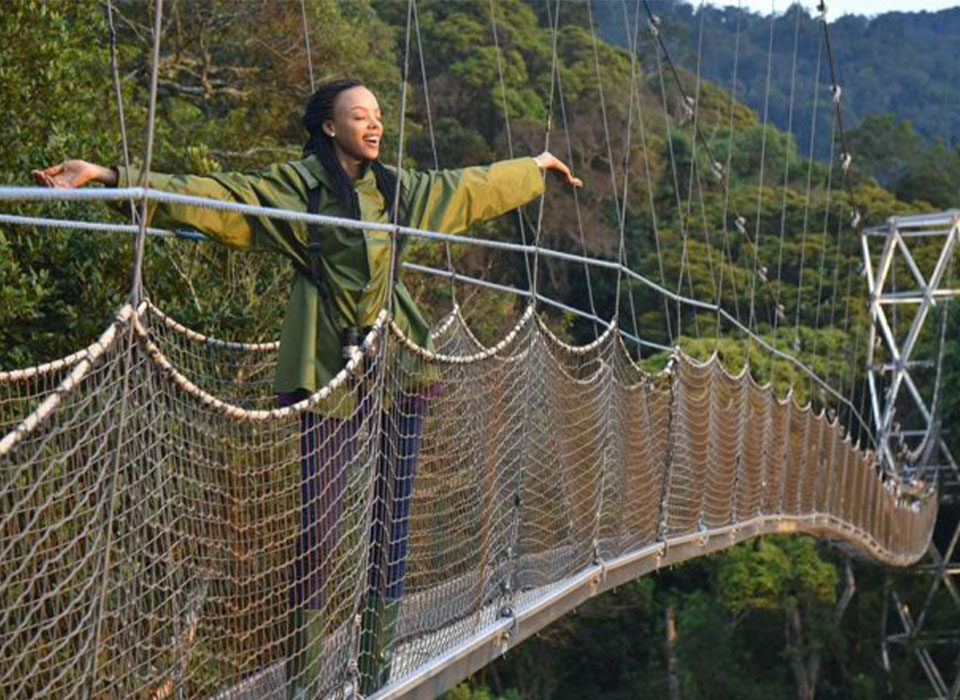
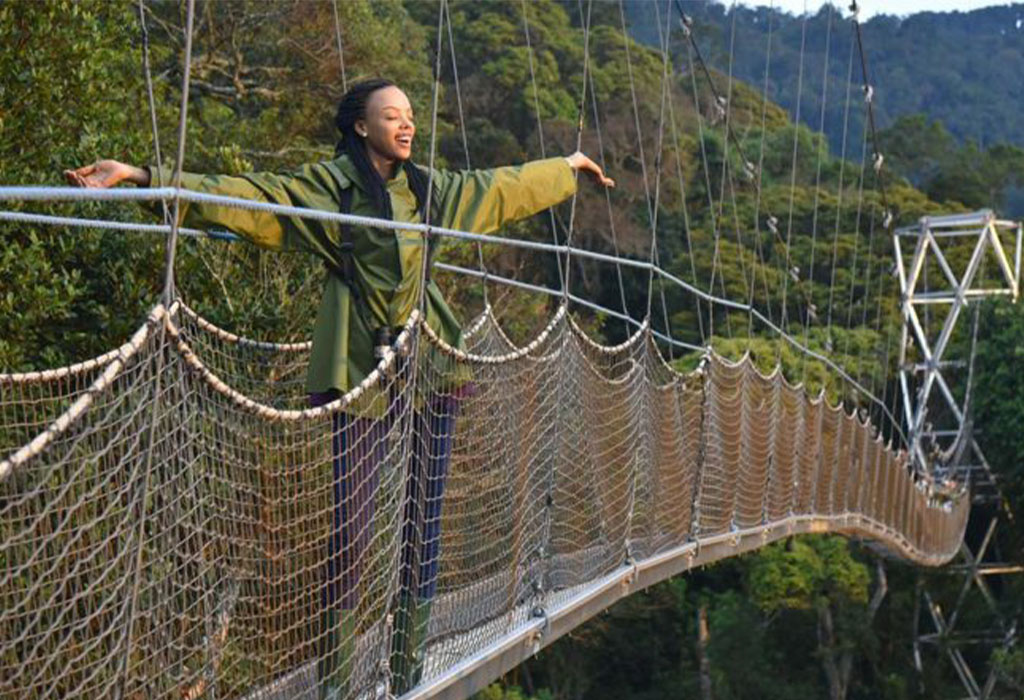
The Nyungwe Canopy Walkway offers one of the most thrilling ways to explore the forest. This 60-meter-high steel bridge, suspended above the treetops, provides breathtaking aerial views of birds, primates, and endless rainforest.
The walk begins at the Uwinka Visitor Center and takes about two hours. Several viewing platforms allow visitors to rest, take photos, and enjoy the scenery.
Bird Watching
Nyungwe National Park is Rwanda’s premier birding destination. Over 300 bird species live here, including 26 Albertine Rift endemics.
Notable species include:
- Apalis argentea
- Archer’s robin-chat
- Dusky crimsonwing
- Grauer’s warbler
- Handsome francolin
- Kungwe apalis
- Large blue turaco
- Ruwenzori apalis
- Ruwenzori batis
- Ruwenzori nightjar
- Shelley’s crimsonwing
- Neumann’s warbler
Birding often starts right from your lodge and continues along forest trails and canopy walks.
Nature Walks and Forest Hikes
Nyungwe features an extensive network of trails totaling about 130 kilometers. Completing all trails would take roughly one full week.
Popular trails include:
- Bigugu Trail
- Igishigishigi Trail
- Kamiranzovu Marsh Trail
- Congo Nile Trail
- Karamba Birding Trail
- Irebero Trail
- Isumo Waterfall Trail
The terrain can be steep and slippery, so good fitness is essential. In return, hikers enjoy encounters with primates, birds, butterflies, rivers, insects, and rare forest plants.
Visiting the Isumo Waterfall
The Isumo Waterfall is Nyungwe’s most famous waterfall. The trail involves steep and sometimes slippery sections before descending into dense forest.
At the end, the waterfall bursts through a narrow rock channel before plunging into the forest below. Cool mist, forest sounds, and scenic beauty reward the effort, while wildlife sightings often continue along the return hike.
Visiting the Gisakura Tea Plantation
A visit to the Gisakura Tea Plantation offers a peaceful contrast to forest trekking. Guests learn how tea is grown, harvested, and processed, and may even try tea picking themselves.
The plantation provides stunning views of the surrounding forest and Mount Bigugu in the distance.
Climbing Mount Bigugu
Mount Bigugu rises to 2,950 meters above sea level within Nyungwe Forest. Reaching the summit rewards hikers with sweeping views of the rainforest and, on clear days, distant Virunga volcanoes such as Karisimbi, Bisoke, and Muhabura.
Cultural and Community Visits
Nyungwe also offers meaningful cultural experiences. Nearby communities share Rwanda’s traditions through dance, music, storytelling, and drama.
Visitors can explore cultural villages, watch live performances, and purchase locally made crafts and artwork, supporting community livelihoods.
Accommodation in Nyungwe National Park
Nyungwe National Park offers accommodation options ranging from budget to super-luxury. Choices include guesthouses, mid-range lodges, and high-end forest retreats, allowing travelers to match comfort with budget while staying close to nature.