
Best Activities to Do in Gombe National Park on a Tanzania Chimpanzee Trekking Tour
December 10, 2025
Exploring Uganda’s Majestic Elephants: A Journey Into the Heart of the Wild
December 10, 2025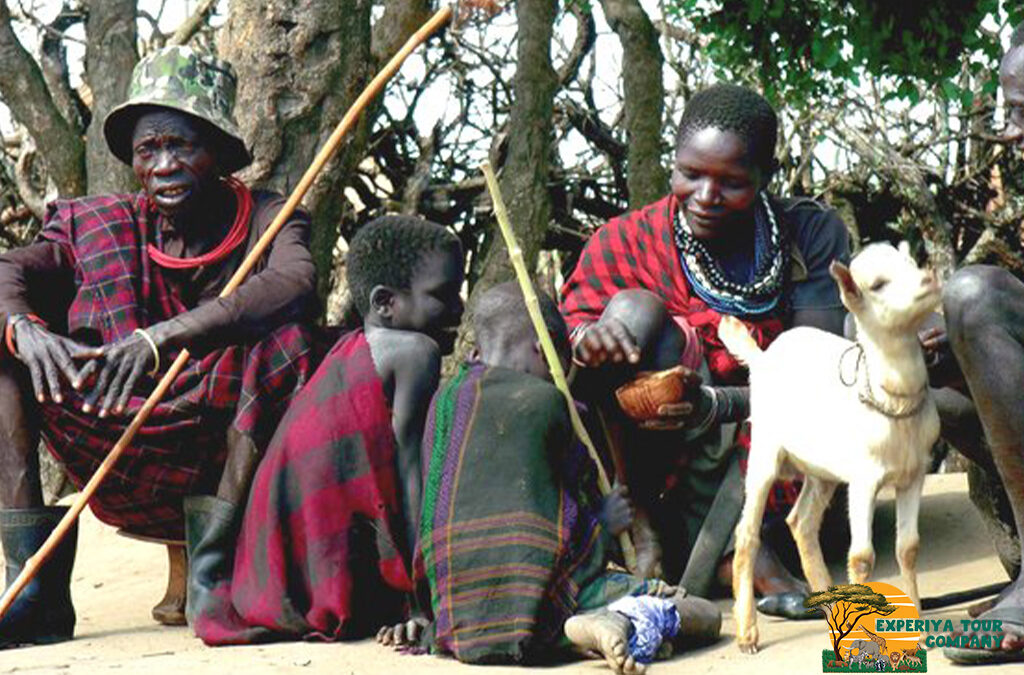
High on the rugged, wind-swept slopes of Mount Morungole in Kaabong District lives one of Uganda’s most intriguing and least-known indigenous communities—the Ik people. Their remote homesteads overlook the vast wilderness of Kidepo Valley National Park, placing them among East Africa’s most isolated tribes. Despite their seclusion, the Ik have preserved a deeply rooted cultural identity, one shaped by resilience, migration, and an intimate relationship with the land.
Today, the Ik population stands at a little over 15,000 people. Their survival depends heavily on subsistence farming, and their daily life revolves around cultivating millet, sorghum, corn, and medicinal herbs. Many families also keep chickens and small livestock, while men specialize in the ancient craft of beekeeping. Honey remains both a livelihood and a cultural treasure, symbolizing wealth and social status within the community.
The Meaning Behind the Name “Ik”
The name “Ik” carries the meaning “head of migration.” This powerful phrase reflects their long history of displacement. Oral tradition explains that the Ik were once pushed from their ancestral lands by Kenya’s Pokot people. In search of safety and fertile ground, they journeyed northwards until they finally settled on Mount Morungole. Over generations, these highlands became their permanent home, shaping not just their lifestyle but their worldview.
Traditional Customs and Way of Life
Subsistence Farming as the Heart of Survival
Farming is more than just an economic activity among the Ik it is a unifying force that binds families and clans. Every member of the household takes part in planting, weeding, and harvesting. While women often manage the fields and food storage, men tend to the beehives scattered across the hillsides. Beekeeping isn’t simply an income-generating activity; among the Ik, it symbolizes strength, resilience, and the ability to provide. Honey is frequently used in trade, ceremonies, and even as bride price, making it integral to social life.
Marriage Traditions and Family Values
Marriage holds deep cultural significance, and forming a family is considered a mark of maturity and honor. Most unions are arranged by families, and young couples are typically betrothed long before reaching adulthood. As the two grow older, their families prepare them for marriage through various ceremonies and teachings.
The bride price usually includes beehives, goats, chickens, and sometimes money. These items demonstrate a groom’s ability to sustain his future household. Since the Ik enforce strict clan boundaries, incest is completely forbidden, and marriage must occur between different clans to maintain purity and harmony within the community.
Rituals That Mark Life’s Milestones
Rituals play a vital role in Ik society, guiding individuals through life’s major transitions. One of the most important marriage rituals is the Tsan-es, also known as the Oil Ritual. During this ceremony, the betrothed couple is anointed with oil as a symbol of purity, commitment, and readiness for married life. Shortly afterwards, the groom undergoes the Spearing Ceremony. By spearing a special tree, he demonstrates strength, hunting skill, and his capacity to protect and provide for his future family.
The bride, on the other hand, undergoes a traditional vetting process that highlights her homemaking skills, nurturing nature, and hospitality. Once both families approve, the groom’s relatives deliver the dowry. The marriage is then celebrated with music, communal feasts, and a locally brewed millet-sorghum beer that flows generously throughout the day.
Initiation rituals are equally significant. Young boys participate in the Ipeye-es rite of passage, during which they slaughter and skin a goat using only a spear. This test showcases their discipline and their transition toward adulthood. Older men, meanwhile, take part in the Tasapet initiation. They shave their heads and retreat into the wilderness for more than a month. When they return, a bull is slaughtered, and those who successfully complete the process earn the revered title of elder.
Ceremonies Connected to the Land
As an agricultural community, the Ik honor the land with ceremonies that bless their crops. Between late December and early January, the community gathers under a sacred tree for the Itowe-es planting ritual. They place blessed seeds beneath the tree and dance together, calling upon ancestral spirits for a fruitful and abundant harvest.
Beer brewing is another essential tradition, woven into daily life. The locally made millet and sorghum beer is enjoyed casually among friends, and it also plays a central role in cultural ceremonies and communal gatherings. Hunting continues to supplement their diet, and although it is less common today, preserved meat remains a delicacy enjoyed during special events.
Polygamy is also accepted among the Ik. Since bride price is paid mainly through beehives, a man with many beehives can afford several wives. Some men may marry up to five wives if they possess enough wealth in the form of honey and livestock.
Challenges Facing the Ik Community
Despite their vibrant culture, the Ik face numerous challenges that threaten their survival. One of the most pressing issues is the risk of cultural extinction. Their small population size makes intermarriage difficult, reducing the community’s long-term sustainability.
Transport remains another major challenge. Mount Morungole’s steep and rocky terrain makes road construction extremely complicated. As a result, access to healthcare facilities is limited, particularly for pregnant women and small children. Many Ik children walk long distances to reach basic schools or medical centers, contributing to high illiteracy rates and persistent health issues.
Drought is a frequent threat in this semi-arid region. Temperatures often soar above 40°C (104°F), leading to crop failure, food scarcity, and malnutrition. Combined with political marginalization, the Ik receive minimal government support, which further limits their development opportunities.
Why You Should Visit the Ik People
Despite these challenges, the Ik remain warm, welcoming, and eager to share their culture with visitors. Traveling to their homeland is not only a journey into one of Uganda’s remotest corners but also an extraordinary cultural experience.
A visit offers authentic encounters that feel untouched by time. You may witness traditional dances, listen to ancient stories, or even taste their locally brewed beer while learning about their way of life. The hike to reach their settlements is an adventure in itself. As you climb Mount Morungole, the dramatic views of Kidepo Valley National Park stretch far into the horizon, revealing one of the most breathtaking landscapes in East Africa.
Visitors also have the opportunity to support the community directly. The Ik create beautifully handcrafted souvenirs that make meaningful gifts or keepsakes. By purchasing these items, you help sustain their livelihoods while honoring their unique cultural heritage.
