
Facts About Kyambura Gorge: Discover Uganda’s Sunken Rainforest
December 2, 2025
Abseiling at Sipi Falls: A Thrilling Adventure with Experiya Tour Company
December 2, 2025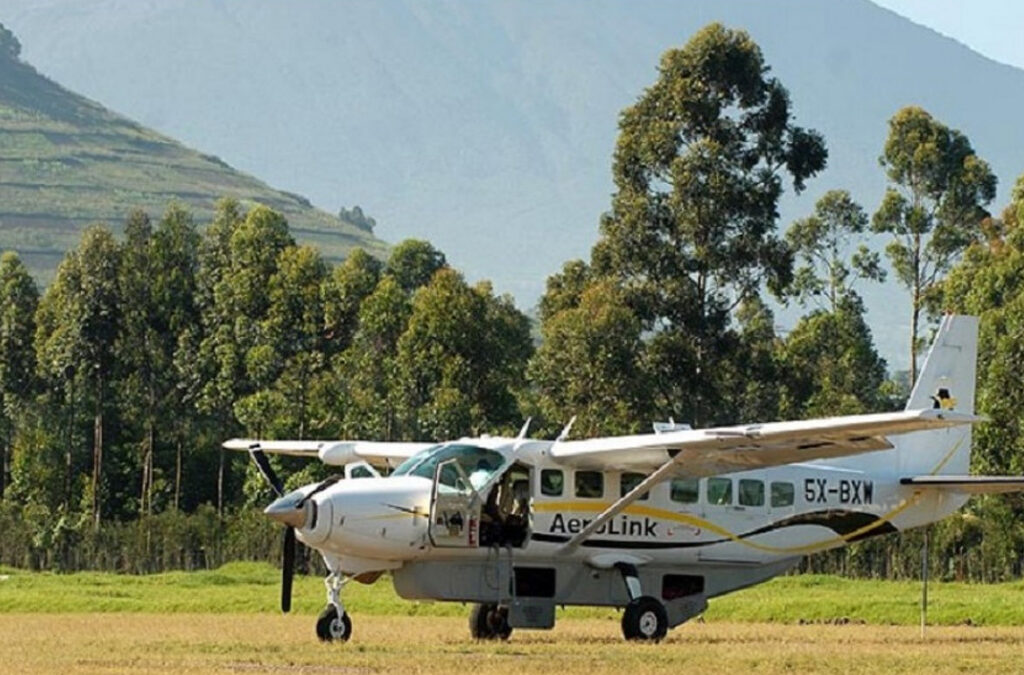
A Seamless, Scenic, and Luxurious Journey into Uganda’s Wild Frontier
Flying to Kidepo Valley National Park from Entebbe is one of the most rewarding ways to begin a safari adventure in one of Africa’s most remote wilderness areas. This option offers travelers a seamless, time-saving, and scenic journey into a landscape often described as Uganda’s last frontier. Kidepo is famous for its untouched beauty, dramatic landscapes, and extraordinary wildlife densities, which thrive in a mix of dry mountain forests, rolling savannah plains, and ancient rocky outcrops.
While the journey by road is a fascinating cultural and geographical experience, it requires at least twelve hours of driving from Kampala. For many guests, flying becomes the perfect alternative—fast, comfortable, and ideal for maximizing time spent exploring the park rather than navigating long road distances. As soon as the aircraft begins its descent over the sweeping valleys of Karamoja, travelers are greeted by a panorama of rugged mountains, golden grasslands, and scattered wildlife that instantly sets the tone for the adventure ahead.
The Unmatched Beauty of Kidepo Valley National Park
Kidepo Valley National Park stands proudly in Uganda’s northeastern corner, near the borders of South Sudan and Kenya. Its isolation has preserved its raw beauty, making it one of the most untouched protected areas in East Africa. The park spreads across 1,442 square kilometers of open savannahs that stretch endlessly into the horizon, broken only by rugged hills, seasonal rivers, and isolated rock kopjes.
This is one of the few places in Uganda where you can witness vast herds of buffalo, roaming prides of lions, cheetahs sprinting across the plains, and rare species such as the Greater Kudu and the elusive Striped Hyena. Beyond its wildlife, the park is home to the IK and Karamojong peoples, whose rich culture gives visitors a chance to experience some of the most authentic cultural encounters in Uganda.
Travelers who choose to fly often comment that Kidepo feels like stepping into an untouched world far from crowds, modern distractions, and fast-paced city life. The air is crisp, the landscapes endless, and the silence inspiring.
How Flights to Kidepo Operate
Flights to Kidepo Valley National Park depart from Entebbe International Airport or Kajjansi Airfield and land at the Apoka Airstrip inside the park. The journey usually takes about two hours, depending on routing and weather conditions.
Flights operate three times a week, typically on Wednesday, Friday, and Sunday. The schedule may vary slightly, but the standard departure from Entebbe is around 12:30 p.m., with arrival at approximately 2:45 p.m. The return flight usually leaves Kidepo around 3:00 p.m. and lands in Entebbe by 4:30 p.m. These flights create perfect connections for travelers continuing to other parks or heading back to the capital.
The region features several airstrips, including Apoka, Kidepo, and Lomeja. Among them, Apoka Airstrip is the most reliable. It sits conveniently close to most lodges and offers a safer, smoother landing experience, thanks to its strategic location and well-maintained landing surface.
There are ongoing plans to upgrade Apoka Airstrip into an international-standard airfield, a development that could allow direct flights from neighboring countries to Kidepo Valley—an upgrade that would greatly enhance accessibility for international travelers.
Preparing for Your Flight to Kidepo
Flying to Kidepo is straightforward, but preparing well ensures a smooth trip. Travelers often arrive at Entebbe a few hours before takeoff, especially those transferring from international flights. Because luggage space on small aircraft is limited, travelers are encouraged to pack light soft bags are preferred, and the luggage allowance is usually lower than that of large commercial flights.
Before boarding, passengers are welcomed by stunning views from the terminal, and once the plane lifts into the sky, the journey becomes just as much a part of the experience as the destination itself. The flight offers breathtaking aerial views of Lake Victoria, the rolling countryside of central Uganda, the dramatic Eastern highlands, and eventually the wide-open spaces of Karamoja. As the aircraft approaches Apoka, wildlife such as buffalo, hartebeest, and zebras often come into view directly below, offering a spectacular introduction to the park.
Connecting to Other National Parks by Air
One of the greatest advantages of flying to Kidepo is the ease of connecting to other protected areas across Uganda. Travelers can enjoy seamless transfers to airstrips in Murchison Falls National Park (Pakuba, Chobe, or Bugungu), Semuliki National Park (Semuliki Airstrip), Queen Elizabeth National Park (Kasese or Mweya), Bwindi Impenetrable National Park (Kihihi or Kisoro), and Lake Mburo National Park (Mbarara Airstrip). This network of flights makes it possible to build multi-park itineraries without spending long hours on the road.
For example, after exploring Kidepo, visitors can fly directly to Bwindi for gorilla trekking, Queen Elizabeth for game drives and boat cruises, or Murchison Falls for wildlife viewing and the iconic waterfall. This flexibility creates endless possibilities for unique safari combinations.
Experiencing Kidepo After You Land
Once the aircraft touches down at Apoka Airstrip, the adventure unfolds immediately. The air in Kidepo feels different—warm, dry, and infused with the scent of wild grass carried by the valley winds. Visitors are welcomed by sweeping views of the Narus and Kidepo Valleys and a horizon dominated by distant ranges such as the Morungole Mountains.
After settling into accommodation, travelers can begin exploring the park’s major activities. Game drives top the list, especially along the Narus Valley, where wildlife congregates around the few permanent water sources. Lions often rest on rock kopjes or atop termite mounds, while herds of buffalo graze peacefully nearby. Elephants wander gracefully across the plains, and giraffes browse the acacia trees.
Nature walks offer another way to experience the wilderness more intimately. Guided by knowledgeable rangers, travelers can explore the areas around Apoka at a relaxed pace. These walks reveal the smaller details of the ecosystem—from tracks and plant species to birdlife hidden among the trees.
Cultural encounters are another highlight. The Karamojong communities welcome visitors to learn about their traditions, pastoral lifestyle, music, dance, and the significance of cattle in their social structure. For those seeking a more remote experience, hiking to the summit of Morungole Mountain leads to the territory of the IK people, one of Uganda’s most isolated indigenous groups whose culture and way of life remain largely untouched.
Birdwatchers also find Kidepo a paradise. The park hosts more than 475 recorded species, making it one of the best destinations for birding in East Africa. Species such as the ostrich, the Karamoja Apalis, and the Secretary Bird are often spotted here.
Why Flying Remains the Best Way to Reach Kidepo
Although traveling by road offers its own charm, the long distance makes flying the preferred option for most visitors. Splitting the drive into two days is possible, but flying provides an effortless transition from city life to wilderness. It saves time, increases comfort, and offers unrivaled scenic views from the sky.
Once on the ground, the ease of travel continues. With minimal traffic inside the park and lodges located close to the airstrip, the experience flows naturally from landing to exploration. Ultimately, flying enhances the magic of Kidepo, allowing travelers to immerse themselves fully in the park’s tranquility, landscapes, and extraordinary wildlife moments.